Adapting to Turbulence through Fintech Innovations
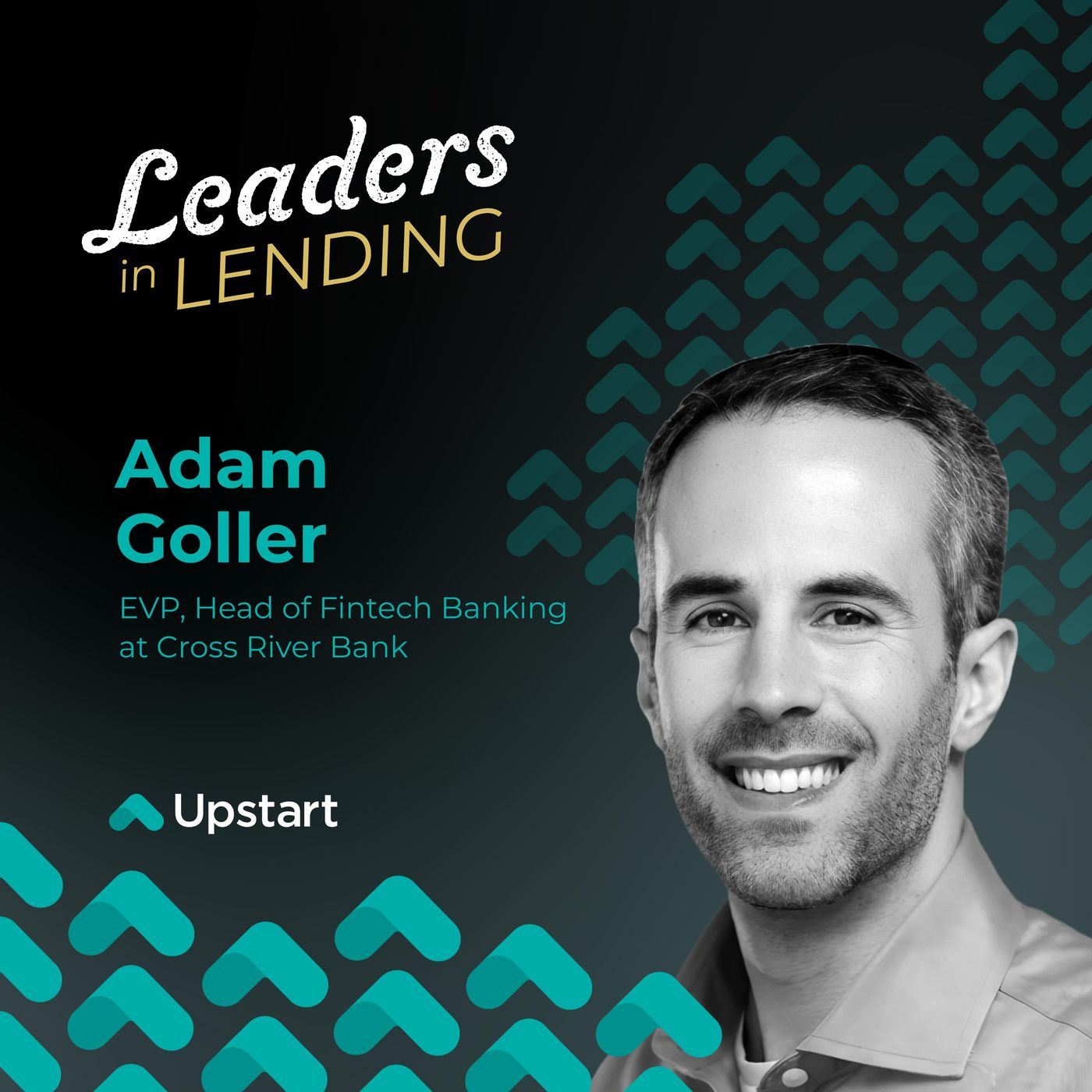
Things need to change, oftentimes more than we’d like. This week, host Matt Snow is joined by https://www.linkedin.com/in/adam-goller-7188a94/, EVP and Head of Fintech Banking at https://www.crossriver.com/, for a conversation about transformation...


Things need to change, oftentimes more than we’d like.
This week, host Matt Snow is joined by Adam Goller, EVP and Head of Fintech Banking at Cross River Bank, for a conversation about transformation and innovation within fintech in the face of turbulent times and shifting preferences. Adam shares his insights on how smart strategy, rapidly evolving technology, and—most importantly—a willingness to adapt, is resulting in creative solutions for today and tomorrow’s challenges.
Join us as we discuss:
- The shifts in entrepreneurship and banking during global events like the 2008 Financial Crisis and Covid-19
- Why user experience solutions need to accommodate shorter attention spans
- The challenges of integrating AI in heavily regulated sectors like banking
- How the expanded skill sets of today’s students impacts what technical knowledge is required in finance
0:02 You are listening to Leaders in Lending from Upstart, a podcast dedicated to helping consumer lenders grow their programs and improve their product offerings. Each week, here decision makers in the finance industry offer insights into the future of the lending industry, best practices around digital transformation, and more. Let's get into the show. Welcome to another episode of Leaders in Lending. I'm your host, Matt Snow, joined this week by Am Gawler from Cross River Bank. Adam, thanks for joining me. Thank you, Matt. Really great to be here. Yeah, always good to catch up with you. Maybe why don't you start by introducing yourself a little bit and telling everyone what you do across River today.
0:43 Absolutely so, I have been the Cross River filledness that the better part of sixteen years, since the very beginning, and it's been quite a journey. And my current title today I run all of fintech banking and really what that is is really relevant to this call because we are essentially powering non banks offer banking products. We started with lending many many years ago and they have really transitioned to be a full stack, full product, robust supplier of banking products for non banks and so today what we offer is you know, lending capabilities, card capabilities to pothitic capabilities. As well as a lot of payment capabilities. Great and you know, I've been really interested lately and was thinking about our conversation about companies that started in you know, maybe more tumultuous times in history. So you're part of the founding team back in you know, the wake of the GFC starting Cross River. Maybe talk a little bit about that, like what generated the idea, like, hey, here's a great time to start a bank.
1:36 That's funny. We actually had a philosophy that our CEO, Jill always talks about is that hire people who have been through some bad times as well. People have only been through positive cycles or good times tend not to know how to react when things don't go well. And so many of us were working in industries or companies that were impacted by the GSC, the Great Financial Crisis, mostly around the mortgage industry. Myself, prior to Across, I came from a rating agency. I was specifically focused on residential mortgage back securities our mbs, and so obviously we were significantly impacted at the time, and so I saw really the peak of the mortgage industry, and also the big downfall from all the CEOs and the creative underwriting that was done over a number of years. So it was a really interesting time of former bank. As you can probably imagine, there were not many banks that were lending at that time, and so what it really brought was an opportunity for us to do something a little different.
2:30 The initial idea. Was really to raise money to build a bank that was going to have fresh capital, sort of no bad habits, and start anew at a time when banks weren't really lending at all. And so that was the first strategy. It wasn't really a fintech play to begin with. What happened over time as we started to build, we realized that scaling a bank is really tough when you're going only direct to customer, and so we started learning about these partnerships, initially through a company called Queen Sky, where we. Could leverage the expertise of others. To build not only our balance sheet, but also to build programs that would enable banking not only to be direct banking support. Interesting, you know, and I've I don't know if you follow the podcast founders. Dave of our founder and CEO.
3:13 It's very fond of that one as well, And I think something interesting similar about that. I think, you know, with entrepreneurs or founders, it seems like there's always a really strong idea for a company, but also like the ability to pivot, Like how did you guys find that balance of like, here's something that we're going to go like a you know, full steam ahead against an idea, and then also being nimble enough to pivot when and stay true to that. In my view, that starts with the culture. I think you mentioned Dave, and Dave honestly you know from came from from Google and other companies he worked at. But to me, if the CEO has a culture of. Being an entrepreneur and being open minded to ideas, I think that shriggles down to all the employees. What really we learned from an early you know, our early years, was that if we look at every opportunity, have many opportunities to pursue. And so if we saw ten ideas and only two of them came to fruition, that's absolutely fine.
4:07 But for us, it's about being open ninety is going in with a fresh outlook and not turning over every rock. Assuming that everything with possibility, and if you go in with the attitude that everything's possible, you wind up with something great. Yeah. I like that approach. Did you find were there consistent themes are ways that you evaluate those opportunities? Was everyone kind of aligned on that same type of approach or was there a lot of debate around like, no, this is the opportunity and why? Yeah? So I don't think there was a ton of debate. I think you know, as a young institution with a limited capital at the time, we had to be very efficient, and so I think there was a balance between what is the most scalable opportunity, so it has to have a lot of scale because you're not going to invest in it. Did enough scale at the same time, like what is the capital required to turn a profit? Because if a lead time or though the life was you know, three four years out to turn a dollar of profit, it wouldn't make sense to pursue that as well. So it was almost the balance of the fish between cost and profit as well as sort of the you know, heech required and other investments of time that it sort of did not allow us to pursue.
5:10 Yeah, that makes sense, and actually so I went out and did a little research to see what other companies were founded kind of in the wake of the GFC. I'm sure you've heard of these, but you know, nerd Wallet, Uber, Venmo, groupon Groupon I was surprised to see is actually still around. I think they have like maybe half the customer base that they did at their peak. But you know, those other companies seem to do pretty well starting at that time as well. It's not a coincidence, I think, you know, if you think about zooming out of the business industries, but in banking industries, if you think about life in general, it's not uncommon that many of the best things come out of you know, trials and tribulations, and the best ideas are firmly out of need. You know, when they say that, you know, necessity is the mother of inventioned that's not a lie. Right, When someone has a problem they need to solve, that's the quickest way to get to a solution, because when you're just ideating around the room and throwing ideas out, Okay, we'll pursue this, we'll pursue that, when you're actually in crisis mode, and COVID was a good example of that. When so much came out of COVID and even the GFC. Right when you think about the proliferation of banking and the access to banking that happened post GFC the last ten years, that was accelerated thirty to forty years of banking life.
6:22 Yeah, I totally agree. And you mentioned, you know, coming out of COVID too. I did a quick search, but didn't find any like meaningful companies maybe that were started are still around since then. I saw one stat that you know, the IRS saw a huge increase of the number of companies started. So I think there's an average of like one hundred to one hundred and twenty five thousand applications a month for new new companies that peaked up over one hundred and fifty thousand, and that trend has seemed to stick around. Any companies that you've seen, like start out of COVID that kind of capitalized on that environment that you were mentioning or think have some staying power or changed even change the landscape for FinTechs and banks. I'm trying to remember the names of companies, but there are definitely products that we saw that came out of COVID.
7:05 I think I know we were involved, I want to say the name in building a product with a current customer of ours that was a unique spin on an existing product, and it was really almost like came out of the idea that people aren't leaving the house anymore and types of financing maybe that would enable that to be easier for customers who weren't going to the point of sale anymore in one case, and the same thing for other areas of banking, where there were folks who understood some of the core problems that COVID showed us, and whether it be healthcare financing, there were solutions that came about from people realizing that certain things just weren't going to continue to exist the way they were before. Yeah. And I've heard you talk before too about you know, maybe the speed or the accessibility of banking and the innovation that continues to happen. There is that something you continued to see or think it is still a lot of opportunity within financial services.
7:56 Yeah, it's so interesting. We're still seeing a lot of that. It's a great question, and I think there's almost this balance where on one hand, we're still seeing a ton of creativity in banking, A lot of folks who are trying to do things slightly differently to the next competitor. At the same time, because it's financial services, there's this inherent almost slow slowness to it is regulatory pressure. You know, the rigor of the process to get them something off the ground is so much stronger than perhaps in other industries, So it does balance itself out. There is a lot of like creative you know, ingenuity coming out of companies that we work with. At the same time, there's natural rigor to the process and filtering of the process that's created by the regulatory environment.
8:43 Yeah, what other things do you think enabled that? I mean, I can think of one just being kind of the digital nature of so much of our currency and how much you know, the reliance on physical currency decreasing over time. Technology, Like what other enablers are maybe newer that are helping companies to advantage of that. It may not be new or you're alluding to almost things like AI as an example, things that are accelerating, maybe some of the banking services. But to me, in my own view, there's just the proliferation of things becoming more commonplace. As an example, the comfort of people who use their phones for everything, right, Whereas in the past, applying for a loan on your phone would have been insane, right, But today people are willing to go into his store, you know, using just their phone and clicking on a button and taking financing for that. Transactions that are happening in real time, like real time payments would have been a real scary thing for people, you know, five ten years ago. But money is moving so quickly and people's willingness to move that money quickly understanding that there are risks involved in the in the lack of friction in the process. That really says a lot about people's trust in the controls, trust in the systems, and the advancement of thought amongst the general population.
9:57 Yeah, that is a really good point. I hadn't thought of that, you know, the consumer's comfort and using other technology. That maybe paves the way for banking to take advantage of the idea of using a phone as a primary way of transacting. Opening new accounts, moving money definitely couldn't have been led by banking. I don't think until other companies made that much more safe, comfortable, you know technology. It's funny because if you think about it, my kids are this way. I literally with with my kids where my kids. Last week we were going out somewhere and I said to my son, who drives now he's seventeen, I said, do you have your phone? He said yes, And I said you have your wallet? He said no.
10:39 And can you imagine a world where someone is more likely to take their phone with them their wallet because to him at his age, his generation, the wallet is insignificant, but the phone, that's not insignificant. Yeah, I've noticed that a little bit too in my life. And I know you're a bit of a runner, but like even you know, I used to have like the really thick wallet with all the cards, like everything, like everything in there. And I get to the point where, you know, maybe I can just run with my watch and if I need to pay, like I can, you know, want to just stuff for a cup of coffee afterwards, or I get lost, I can pull up a GPS like even on my watch, and I may not even need the phone. It's funny because when you run a marathon, depending on where you're going to get there can be a challenge, like because you want to drive because it turned to park and then getting a car over at the end of the race, and so what do you take with you?
11:28 So usually the starry lander's already food, there's drinks, you do need anything like that. But for me, it's it's obviously my phone, so I can listen to something, so I can reach people. And then it's as little as possible, so you have something like the little pockets in your shorts you can fit a credit card in or an ID in, but essentially your phone is the only thing you're really taking with you and you're carrying on you other than a few bucks in case you want to buy something. But so to me, like that whole process, you know, just reinforces the fact that, like we're realizing more and more that like our digital footprint, our identity footprint, our banking foot print, everything we do is really embedded in that device. And the more that the banking financial services are enabling their product to be offered and engaged through that device, I think the more prolific the adoption will be.
12:16 Yeah, and that's probably enabled a little more consumer choice or have you seen that in terms of who they choose to bank with and the types of products and services and versus having to go to like your local branch and talk to a banker and kind of you know, interact with the financial industry through through a person or a physical location. Now I could download an app, I can search for loans, I can figure out who has the best deposit rates, and you know, move that money around pretty easily just on that device. The best example of like like my kids, that kids today have so little patience to talk to anyone for a long period of time. Their attention spend is a lot shorter, and so the less they have to talk to someone and get something done, the better. They'd rather interact on their phone, have maybe a short conversation. So yeah, the more you can do to reduce friction in the process.
12:59 It's interesting saying that what I see a lot here in the companies we work with is that there's so much energy expanded and dollars expended on improving the UX. And you think about it, like, if a product is the same, why does the UX matter so much? And it's exactly what you pointed out, which is that if the friction is even one iota less and conversion is a second shorter, you. Will get a far higher adoption rate and conversion rate. And it's really meaningful again without naming names, that there's a company we work with who we're talking about a certain change we want them to make to a disclosure in an online form and they were somehow able to run stats and they thought there would be up to a seventy percent reduction and conversion from one change in the UX and that that was about a year ago.
13:43 That was the eye opening for me because they have it down to a science where they can actually tell you if you change this one feature or one part of the experience, you actually will see a meaningful change and adoption conversion, whatever you want to call it, and therefore revenue and profit. Yeah, I think that you know, data driven approach is so important where every interaction can interaction can have such a dramatic impact. So knowing and testing and learning those things is critical to say ahead. Absolutely, I mean I think that you know that that will become even more important over time the more we moved to a completely digital environment. It's funny because even I'll call it like a older generations or adopting some of the technology and they're getting more comfortable interacting online.
14:27 I mean, I have my my father's a good example where like you know, I'll buy something for the whole family. The don't want to pay me back. And he used to write a check and leave it an m O bit my door, and I said, Dad, that's it's kind of its kind of it's kind of annoying. And so one day I was at his house. This goes back probably a year and a half ago, and I went to his phone. I downloaded Zell to the Chase app. I'm like, you can send money this way to me. And he's done it now twice successfully over the last year, and our lives have changed forever for the better. Right, Yeah, you've converted him to that that way of our awesome. Hey there, former host Jeff Kelner here to let you know about an exciting opportunity to strengthen your understanding of artificial intelligence and financial services. If you want to better understand the fundamentals of how AI models work and how they will impact the financial services industry, your in Luck Upstart is launched an online course and certification designed to do just that. This course will give you the knowledge you need to lead the conversation about how your organization can best leverage and manage this revolutionary technology. If that sounds interesting. Check out the course as it's currently free for a limited time. You can learn more at upstart dot com slash ai Certification. Again, that's upstart dot Com slash ai Certification.
15:39 Thanks and now back to the show. So what other things are you seeing partners do to innovate, Like, is the use of API or the idea of open banking continuing to be something that people are adopting. Yeah, I think so. I think that having a centralized location for controlling all of your financial services, I think is really important to people. So when you think about these apps that will allow you to have all your accounts sort of routed visible from one place, that's super important. Just as one example, last week, I was realizing that, you know, I've been at now called three and a half companies over my career, and you have your four one K from the first one and the second one and keep rolling them over.
16:21 But sometimes you also want that like diversity of like you know who's the vendor on that account and they perform differently, and so an app now that they can you could basically consolidate and centralize all of your retirement accounts into one place in your broader portfolio and see everything in one place. That's really powerful for a customer because again, time is important to them, efficiency is important to them, and control is important to them. Yeah, I think the control is the key point that you mentioned in that diversity. I think a little bit about maybe this isn't a perfect analogy, but you know, like an entertainment where we had the cable industry that no one loved and you're paying these huge fees for all these channels you never watch, and then we start to get streaming services and now everyone's like, I've got you know, twenty different apps. I don't know where to go to find the show I want. So how do you like balance that control? Yes, you know, it's great that we have all these new players creating really interesting content and you've got a lot more control over what maybe what you can watch and what you want to pay for. But now there's such a diversity of providers, Like, I just want things simpler again.
17:24 Yeah, simple, it's hard to come by. I would say. Banking has become simplified, Like even if I go into my own banking, I bank with Chase personally, and for most things that I do, I can do most things from that one app, not going externally. So I think that even the bigger banks have adopted, have adapted and adopted, you know, I guess, uh internal capabilities for allowing people to do things in one centralized location. I think, unlike maybe entertainment, which is someone's driven by like you know, okay, I have one person in the family who wants to watch this, and one party want to here, there's really generally one person's controlling sort of all the accounts for the family in many cases, and so it's easier to be centralized. There's not lots of yelling at you to get different apps.
18:06 Yeah, yeah, that's fair. And maybe I want to circle back to something you alluded to earlier around you know, the starting of cross River and the idea of culture, Like when you think about building a team, you know, how do you quantify something that maybe is harder to pin down, like culture? What makes a good founding team, a good you know, start up, a good company that really can operate efficiently together? Great point. Actually, this is actually a great question. I thought about this a lot. One of the things I think it's important to understand is that at different stages of life of the company, it requires different people and what I mean by that is that we were starting a new company. You need a couple of things. People who are creative because you're building from the ground up. People who have patience because it takes time to build something. It takes time to get to the public offering, it takes time to build the product build a company. And then in addition to that, I think you need people who are less stuck in their ways, people who are flexible. As you as the company matures, you start, you start having this need for people who have a lot more rigor and have a lot more process focused, you know, ideals, and have have backgrounds that enable them to create those controls to make sure that as you're growing, you have the right controls in place. And so there is like this like life cycle where you need different skill sets at different points of the company's history. But overall, I think when you're interviewing people, you have to ask a very diverse set of questions. I know, I remember interviewing for a company
19:37 for a job on Wall Street one time and they asked you like this, like a riddle, and it was the first time I had heard it was like a there's one apple and a hat, and then you leave these two apples and you come back. I don't know there are riddle exactly, but it was something where I. Was like, like, is this an interview for a banking like product or a company or this is like something else, And so it's it's coming with the question that can test you know, almost personality along with skill set real scenarios, asking them questions that force them to provide real life examples of situations where they're able to be able to solve problems and deal with things that have come up. So you got to test for like how they deal with adversity and how they deal with you know, you mentioned before change in direction, right to be very nimble, So those are all important things and that's the skill.
20:25 Yeah, yeah, I totally agree. I think you mentioned translating the interview to back to reality how these people going to operate in an in the actual job can be kind of hard because interviewing itself can be a bit of a skill that people can get really good at answering those riddles or stereotypical interview questions. Do you have like a go to set of questions or a way that you like to assess folks ability to handle adversity or change in direction. Well, I always ask questions like tell me something you feel that, and they're always like caught off guard, like, you know, because everyone suspin it to a positive, you know direction, And so it's like they start telling you what they failed at, and then you want to drill down further. Okay, why did you fail? How would you do it differently the next time you were in the same situation? So to me, it's like and they oftentimes take it as like I told them they fail, but I'm really asking them, like show me that you're a you know, humble enough to meet you failed, b you are thoughtful enough to understand why it failed. And then three you've actually cared enough to look at for the fact and say, I know how I do this next time better?
21:33 Yeah? I like that. I think that's key. I look for things like that too around you know, self awareness or you know, nothing ever goes perfectly. So what did you learn from the situation? Were you overwhelmed by it or were you able to actually reflect, adapt and learn from it from the next time. I think those are key, exactly right, And I think that that willingness alone, I think tell a lot about a person and so those are good questions for me. Some of my go to questions, gotcha, Yeah, I. Had leaders very early on as I was starting managing in my career in part upon me that you know, hiring is one of the most important responsibilities within a company. Getting it right is very important. So taking the time, I think is also important when you're screening interview with people to make sure you're not making rash judgments because it can be very painful when you get it wrong.
22:22 Well, I agree, and the hardest thing as you become more senior in an organization, you often have a media and candidate if they've already been screened by HR, and then the direct report and then the senior manager. And so if you're the person of significance and they're coming to you and you're the fifth person that they're meeting, to go through the regular interview questions almost as silly and pointless. You want to do some of it to make your own assessment, but at the same time, you've got to find a way to be more thoughtful about what are like the key questions to differentiate yours from others who already asked that question. Yeah, and well, so then how do you balance that, you know, the more approach or the mentality standpoint, and just the technical especially you know with things like you guys are trying to do maybe haven't been done yet, So you can't evaluate someone's track record, like how do you do something that maybe hasn't been done? How do you evaluate just that technical ability?
23:14 Here's the good news. And this also speaks to things that have changed in our system. So in the education system, as an example, everyone who's in school today, it used to be, you know, if you were on a track for financial services call it accounting finance, right, you were learning a specific skill set, some idea of general education, but a certain skill set. And if you're you know, in the you know, going for a law degree, you're learning a certain skill set. I think that the baseline has expanded, Like there isn't a skill set you're targeting today or that you're going for it today that wouldn't provide you with a solid foundation in things like computer usage, like basic technical skills. And so I think when you're meeting selling today, even someone. Who has a law degree is going to be a lawyer for your firm or in compliance, they're coming with a knowledge of Excel, and they know how to use certain like a system that they would use in the past, and it's almost like taking you through granted, whereas in the past, perhaps if you were in pursuing a technical.
24:06 Area, you were in train in an area. And that's why you're seeing, in my view, between LinkedIn learning and other forms of education are what I call continuing education. You're seeing a. Lot of people upskill themselves in later years of their career because they realize that some of the folks that they're competing with are folks who are quote quote unquote cross trained and dual trained, whereas they have a specific skill set. And so you're seeing a lot of folks educate themselves further along in their career to sort of help bridge the knowledge gap they had previously with some of the more technical areas of banking and other other areas. Yeah, I like that. I think that's so true. And that's usually something I ask in interviews as well as you know, I'll see from their resume maybe they list a software package or something they use, or ask how did you learn that, what's your favorite hack or like shortcut you found that becomes part of it, just to see like are they happy with the status quo? How do they continue evolve use tools maybe a new and novel way.
25:02 Absolutely, I mean I think it's kind of like the basics today. And if you're coming into a company in any industry and you have no technical knowledge of the of the tools that are going to use in that industry, you're obviously you know, you're your chance of being hired a far less. Yeah, definitely, And I think Ai you mentioned earlier, you know, one of those areas that does continue to change. There's tons of thought leadership out there, YouTube videos, cours erara courses, whatever to stay educated. What are where the adoption you're seeing within your partners or you know, maybe just your general observations. Where where are we in the hype cycle, Like are there real applications that are starting to take hold or is there still a lot of experimentation?
25:44 You know what your perspective, there's a lot of experimentation. I feel like it's like everyone has to have access to something, so I know, right right away when when it first came out, like we had a lot of demand internally, I think forty five requests for like chat ebt right, but a lot of it was wasn't because they were like, you know, insisting on AI. It's more like, Hey, if they can prepare my PowerPoint for me for my meeting next week, I'm all in. And so I think in different use cases, it's not in the case that people are like it's about AI. It's about like, what can AI do to make me more efficient, allow me to focus on the things that I know I'm good at, and then take some of the burden off of me for things that I'm not good at or don't want to spend time on. And so I think there's a lot of experimentation going on even today. That said, there are a fair number of companies, including Upstart as you well know, who've been using really some form of AI for a really long time. And so now it got like a buzzword name. But at the end of the day, when you're using alternative variables and you're able to provide scenarios that are more predictive of performance in lending as an example, that's essentially AI. And so it's almost like it got a formal name. There are more people using it today, but really it's not something that's actually truly new.
26:52 It's just become more ubiquitous. Yeah, I think you're right, and maybe using the phones as the analogy again, I'm sure we'll look back like twenty thirty years from now and it will be so commonplace it almost seems silly that we were thinking about it and the way we do some sometimes today. But I'm sure other spaces will pave the way and then banking will catch up and find the use cases once it's kind of been sorted out. Yeah. And the reason why I think, and again a personal opinion, the banking is generally often behind is because again you have that rigor you can't. It's a very heavily regulated industry. You can just jump in and start using new tools without some concern of what those tools will do from a security standpoint, from a predictability standpoint, from a fair lending and government standpoint. So there's so many unintended consequences of that technology, but adoption can happen as fast. At the same time, I think over time you'll see adoption become more ubiquitous. You'll see banking services leverage AI. You're seeing it already in part today, and I think removing the friction for banking transactions, we'll use the I as well.
27:56 Yeah, I think that's true, and I think you're right, like the pace of change is necessarily maybe slower in some spaces, But it's a matter of sorting out where are the safe applications, where maybe are we getting it wrong today in a manual way that AI can actually increase, you know, for lending, compliance, ability to manage risk insecurity, and how do you insert it into those places where it's beneficial. Yeah, I mean in some ways, I know, like one of the big folks is today, you know, in financial services certainly fraud, right, it could be fun lending, certainly, fund and payments. That's where the I think the most amount of fraud potentially is. But you think about what a I could do for fraud in terms of, you know, weeding out on the front end, you know, weeding out folks who are trying to use your identity and providing better questioning upfront or better verifications upfront. On the back end, for banks who are reviewing transactions, it can provide ways to make sure that they have you know, keywords you know that are coming up in different searches to flag certain transactions. There's so many things that I can do to help make banks more effa get them to look at more transactions, the right transactions that made false positives.
29:04 That's an example. And so there's so much that the technology can do to help really proliferate banking and make it more efficiently. Yeah, I totally agree. Well, maybe it's a good time to pivot into a final question we can give in like the landscape of AI the ever changing landscape in banking. Is there someone you follow, like a thought leader, journalist, podcast authors, maybe some bit of thought leadership you can leave us with, like who should we add to our library or podcast subscriptions. So I'm not a big podcast guy. I listened to most of my podcasts and I'm running on Sunday mornings, and they're very I listened to the things I used to listen to to Peter Renn's podcast all the time. But there's folks who send like weekly or semi weekly emails. Alex Johnson and the Museum comes to mind. There are others who I think send out really helpful. There's one called money Stuff that I get every Wednesday. If focused on credit cards and other other similar products. So there's some good ones out there that are industry focused that I like a lot. That said, as you can imagine, I'm sure you're the same way.
30:07 I'm inundated with emails in my inbox and different things to read, and so it's almost like you click open and then you hope that by Friday afternoon, over the weekend, you have time to catch up and all the things you've opened over the course of the week. If I tee doesn't make your computer restart, right, so hopefully still there at the end of the week. Yeah. Yeah, the number of tabs open. Maybe there's an AI app out there to like take and consolidate all the tabs I open into some digest. Real or read them for you and summarize them, like, hey, can you read these twenty articles and summarize the most salient points so I can look out over the weekend. That's right, well, Adam, always good to catch up. I appreciate the time today and thanks again as well, Thanks so much. I'll start partners with banks and credit unions to grow households and expand consumer lending through its leading AI lending platform.
30:52 I'll start powered banks and credit unions leverage AI to offer higher approval rates and experience lower loss rates while simultaneously delivering the exceptional digital first lending experience that consumers demand. Whether you're looking to grow and enhance your existing personal and auto lending programs, or you're just getting started, upstart can help. Upstart offers an end to end solution that can help you find more credit worthy borrowers within your risk profile with all digital underwriting, verification, loan closing, and servicing. It's all possible with Upstart in your corner. Learn more about finding new borrowers, enhancing your credit decisioning process, and growing your business by visiting upstart dot com slash Lenders.
31:33 That's upstart dot com slash lenders

