Adopting an Entrepreneurial Mindset in Banking

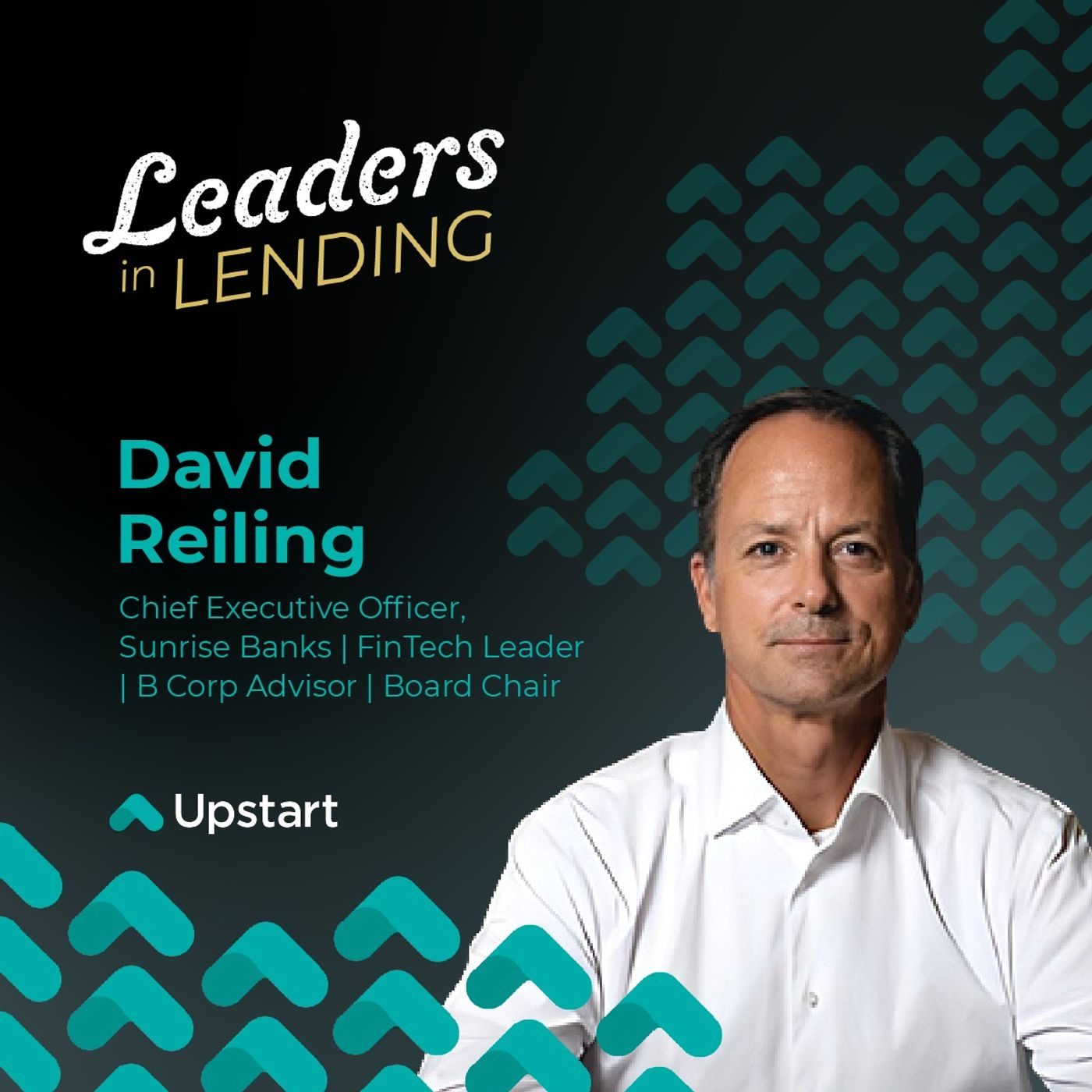
After being robbed three times in two weeks as a teller, https://www.linkedin.com/in/david-reiling-7a60a14/ took quite the interest in bank security. Now serving as the Chief Executive Officer, FinTech Leader, B Corp Advisor and Board Chair at...


After being robbed three times in two weeks as a teller, David Reiling took quite the interest in bank security.
Now serving as the Chief Executive Officer, FinTech Leader, B Corp Advisor and Board Chair at Sunrise Banks, David joined the show to share invaluable expertise gained through years of operational experience ensuring security in every area of banking. Forming fintech partnerships can alleviate a host of difficulties plaguing banks, but banks must also ensure they have proper cybersecurity in place.
Join us as we discuss:
- Cybersecurity, liquidity management, and bank collapses
- Fintech partnership risk management
- Community banking: creating long-term franchise value
0:02 You're listening to Leaders and Lending from Upstart, a podcast dedicated to helping consumer lenders grow their programs and improve their product offerings. Each week, here decision makers in the finance industry offer insights into the future of the lending industry, best practices around digital transformation, and more. Let's giving to the show. Welcome to Leaders in Lending. I'm your host, Jeff Keltner. This week's episode features my conversation with David Riling, the CEO of Sunrise Banks. We dialed into a lot of topics. I don't know that's delver dive, but we did both. We talked about liquidity and interest rate risk, kind of how you think about managing through those environments. Talked a lot about Sunrise's focus on fintech partnerships. How do you think about finding the right partners managing those partnerships for ultimate success through the cycle, through the whole kind of life cycle of the environment. We also talked about cybersecurity and what community banks ought to be thinking about when it comes to dealing with the emerging and evolving threats around cybersecurity. And lastly, people will go into a little bit of one of those really interesting topic around what creates a franchise value for a bank historically, what creates it today, and how you think about really being the most valuable bank you can be and leveraging the assets you have to do that. So I think it's a really fascinating conversation. I hope you enjoy it as much as I did. This is my conversation with David Riling of Sunrise Bank.
1:26 David, thanks for making the time to join us on the podcast today. I really appreciate it. Jeff, great to be with you. So I'm looking forward to this conversation. We got a couple of topics. Maybe we'll go maybe we'll go off topic a little bit too perfect, But let me just start with how did you get into the banking financial services space? I always like to ask people as questions. I feel like it's not the childhood dreamed career path, and I'm kind of curious what the route people took to bring them into place. Dude, I was born a banker, right out of the womb. I had a suit in a tie. No, I love it, Honestly. I was a teller one summer, and I loved being a teller. Now every other summer I work construct and so there was maybe a little air conditioning might have played a little bit of a role in that, But I really I enjoyed being a teller the cash and just so happens to the bank I was in got robbed twice that summer, which I thought was super exciting. Many event I went out to college. I started a business in college, built it up, sold it. But once I sold it, you know, I thought I was going to be a banker based on my two and a half month experience, and so I became a trainee in a bank and lo and behold, the first two weeks I was on the job in this particular bank in Los Angeles, it got robbed three times, and so I thought this was just normal for banks. Long story short. I quickly got sent to south central Los Angeles because I seemed to be comfortable in a bank robbery, and of which the time was the bank robbery capital world. And so I've seen my fair share of not only bank robberies, but gangs and drugs and cops and riots and Rodney King in the day, so very much an urban experience there. But I would tell you the third time I had a gun to my head I didn't think my luck
2:58 would hold. So I went on to work in downtown Los Angeles for City Bank for a while. I had a great experience there as well. And my father called me and said, Hey, there's a bank for sale where you grew up in Saint Paul. It's about to fail. You should come and take a look at it. And so we bought that bank, and he's my minority shareholder to this day. Look, I gotta say, do you do you keep comfortable in a bank robbery? And your LinkedIn on your skills? I haven't seen that on the LinkedIn lists of skills, but I feel like you ought to cool under pressure doesn't quite doesn't quite cover that multiple bank robbers. It's no, it's not. It's not the lead on the profile on LinkedIn, but it's it is a characteristic that I do possess. So maybe I should drive an ambulance or something. I don't know. Maybe I'm filled for something else. I gotta say, I've had a lot of people who start off as tellers, but I never had a bank robbery story.
3:43 In the intro to the podcast, that's pretty perfect diversity and march our story base. Let me just start with this What are the what are the kind of key topics you see on the minds of community bankers? Right? Is it pretty It's a pretty wild time in the world in general, but in banking in particular. One of the things you see that are top of mind for folks these days. You know, there are a whole host of them, Jeff, I mean, the laundry list is long, but I would say, you know, some of the critical ones. There's just a general sense of anxiety given the bank failures of SVB and first Republican signature and so forth, and so there's a bit of just on knees there, and that I would say is predicated on liquidity. Right, how much liquidity does a bank have can it keep lending? Really important to the lifeblood and growth of a bank. And so in addition to that, there's going to be some credit quality issues, as you know, the talk of recession and interest rates are higher, and so all those are various topics. Then you know, one thing community bank is really, I say, are not very well equipped for is do they really have their cybersecurity tight and in check? And and that is always it's a battle for any business bank or otherwise. But it's always in the back of your mind, are we safe enough? Are we doing enough? And obviously the regulators are in there making sure that banks are safe and sound and protected, but there's always that worry of that type of an attack. So a lot of issues on the forefront of a bank these days, particularly, I'd say maybe one if you're a bank owner as a different perspective, is what does this franchise value look like? And how
5:15 big does a bank need to be to be sustainable a long term as opposed to just a lifestyle business. And it seems, you know, in these days, being in the middle, if you're not the largest, and if you're not the smallest, that middle is a little risky as well, as we've seen. What are you seeing people do about the liquidity issue immunity it is. It's such a striking contrast to me, because if you came to be a two months ago and so what's the most common thing you hear from a bank? Or I go too much cash, not enough loans, that's the most common thing. It's like the exact opposite of here today. So what are you seeing is the response to that from the community banks or other banks, Like how do you deal with what is a very real liquidity crunch that can turn quickly into you know, bigger issues for the bank because we've seen i mean bank runs driving the this with the issues at STP or first going not just not just the kind of deposit round to the liquidity issue certainly from the center. What are people doing to respond to that? Yeah, you know, I think the biggest response is that they're being more cautious with their lending, and so maybe the impact of what the FED is doing and so forth, and these recent bank failures have really put a slowdown or cooling in regards to the amount of lending that banks are looking to do. So in regards to liquidity and protecting that the liquidity that they have, they will they only lend of their existing customers or they'll only selectively take on new customers in order to protect their existing book of business and kind of ride this out.
6:38 But I would say, you know, there's maybe two things to kind of gleam from the recent bank failures and so forth, and that is one is when you look at your typical community bank, I don't think there's going to be a run on any of those deposits for your institutions let's say below ten billion. I mean, we know a lot of the customers. We reach out to them if there's anything maybe we learned in the Great Recession is diverse. Deify your deposit base as well as your loan book of business. Right you can't just be concentrated and let's say construction lending or something. So now there's a focus is to can we keep and maintain and retain our existing liquidity, can we grow it in certain areas, and can we diversify it? And so all that I think pertains to different particular strategies. And in some cases, if you're stuck, and if you're a small bank in a small community, you don't have a lot of options. I mean, you can go online, but that opens up a whole nother plethora of kind of risks in terms of gathering liquidity. But diversification is definitely forefront in terms of the quality of liquidity. Yeah, it's interesting. I do think it's interesting question for the community bank because they do have I would say the online deposits are also the scariest to me because they are the least stable, most likely and the most price sensitive. So though you know, if you're trying to restrict lending for liquidity, but also fighting a battle to maintain deposits that are very rate sensitive as many online mean people are going sayings accounts to stats, who's extra twenty five fifts for me on all my money? Like that's a you can't you can't take that money and to not lend it. That's a great way to go bankrupt if you're taking that money at four or five percent
8:09 and then sitting on it is cash, not put it out the door to higher yield, Like that's that's a good business model. No. And on top of that, if you're a smaller bank, your customers might be moving to a large institution, right because they perceive they're gonna want maybe they don't want six different bank accounts with two hundred and fifty thousand or something of that nature. There's going to go to a too big to fail bank and and make it up and put it all put all on there, put it. When you talk about the restriction in lending, do you see that shifting? I mean, like, because we've near what most people think is something like the end of the interest rates rising, it feels like the interest rate risks that really hit some of the recent bank failures hard is on the other end. I mean, you're unlikely to originate assets today. They're going to be worth substantially less assuming they perform a year or two than they are today because interest rates are probably not going a whole heck of a lot higher. They's really not going five hundred basis points higher, and they're probably coming down.
8:58 Are you see is as we start to see some signs of a positive motion in the economy and maybe the nearing of the interest rates heights, some opening up of that lending or changing strategies on that front. Yeah, except that I you know, banks are generally slow learners and they're slow movers. This is not the entrepreneurial community. And so the fact is is that they're slow to this game. So they were slow to raise deposit rates, and they're getting there quickly obviously to protect the liquidity. Now they're going to take up they're going to take a pause. Now. The one thing that I would suggest, which I do to all bankers, but bankers should know this. You don't bet on interest rates going up or down. You're going to manage your portfolio within a certain bandwidth. So you're not. You may not be gaining everything you can gain in an up or down market, but you're not going to lose everything in an upper down market. So you need to be prudent in terms of how you manage that. And maybe SPB is a great example of not doing that well. And that's just fundamental asset liability management and protect your up and downside. And don't bet the charter on you predicting interest rates because obviously you can be wrong. And given the way the world is today, you know, somebody lobs a bomb over somebody's border. The game changes overnight, and so why we think we're at the top of the rate cycle. And I would agree with you from a momentum standpoint where we're getting there. I wouldn't bet everything on it. No, I wouldn't bet in everything on anything that's not the smart not the way I play the game anyway.
10:24 Interesting, But I want to hop to your second topic, this topic of cybersecurity. You talked about top of mind and the investment. I'm curious, what are the trends you see, what are people doing? It certainly is I think one of the hardest problems because it's an evolving landscape it's not. I mean, bank robberies occurred in a certain way, but but cybersecuritys have tended to shift approaches much much more rapidly. And I'm curious how you see people dealing with that and what the trends on the horizon are. Yeah. Well, some of the big trends in banking and community banking particularly is if you're going to look at your core system, are you moving into the cloud? That's going to be one thing. Do you have the right core system to start with to meet your needs? And are you moving into the cloud. So, just as a basic of what that might mean for someone, and that is so over let's say the course of a bank's history and so our sunrises like this, Right, we've got applications and things layered on top of applications built up over thirty years. You don't want to patch all that. I mean, you really need to start narrowing everything down. You need to simplify and get robust. But also you need to automate your patching and your vulnerabilities that are coming out weekly. So you really need to stay at a You don't only have to address everything that you have right and get a steady state then you just got to maintain it. So every Tuesday it's you know, patch Tuesday or release Tuesday on what they call it in the IT world. You've got to be able to sustain whatever that number is, and you don't know what it is from week to weeks. So there's definitely a pulse to this and it requires you being on top of it because obviously the hackers, the bad guys, whether it's a government or whether it's some
11:54 other organized group, they're getting better and better. So making sure that not only from an infrastructure standpoint, you're there, But the hardest part is your people. Right what's coming in on your email server every day? What are people clicking on? I have to tell you our IT department it become masters masters at testing us in terms of phishing, So every email and they're just I am brainwashed every email. I'm suspect though, and so but that's the psychology you need to have. It's a bit like a bank robbery. To go back if every morning you go to the bank and the procedures that you follow to get into banks safely, If you think there's going to be a bank robbery and you practice that, you're good at it. Right, because your awareness is there. So that's the type of culture that you need to have, I think in a bank these days in order to really protect the institution. So you need the hard stuff, but you also need to soften the people to be good. That's challenging. I want to go back because you said at the beginning, ask yourself the question are you in the cloud?
12:50 How do you see the cloud relating to this question of cybersecurity? Is that something you see as an advantage a disadvantage, something you recommend doing, like you brought that up, and I really to the end of your thought on what the you know, the pros cons of thoughts around the cloud and how it relates the cybersecurity are Yeah, you know, I would say the one thing that I probably should say is as you go to the cloud, you're really going to look at all your applications that you're going to put up there, Right, You're going to scrub everything that you're you're using today, even if it's something fairly simple, you're going to need to do some risk assessment on it. So there's you're just at this place in space that you're like, you know, particularly if you're a bank in the fintech or let's just say in the consumer lending space. You know, these are these are programs that have scale to them, So you're going to want to be able to scale up your capacity as well as you're going to need the sophistication in terms of the data mining you're going to want. So you do need, in my opinion, the economics and capabilities of being in the cloud. So you have the capacity to do large volumes of business, but then you also have the ability to manage and oversee the security around that. So I think there's a multiple facet to cloud computing as well. As we were a bank that hosted our data center on prem and so now we're exiting that business.
14:07 We should not be in that business. There's better places that are more economical and safer to do it. Interesting. Yeah, I think this shift to the cloud is to your point, about one of the benefits of the cloud or else fourcing and somebody is it's just like that patch Tuesday becomes somebody else's job. Yeah, is somebody who's doing lots of institutions, somebody who's doing it at scale. To your point, people who are kind of expert in that particular in that particular skill. That's a pretty pretty valuable capacity for you to free up your resource for the other things that you need to focus on exactly. Can I ask you one other topic I'm really curious about, which is you know, I've been following the emergence of these generative AI tools. It's really fascinating time. I'm in the AI space a little bit, so I just like every day I'm on like five newsletters and I it's I've never seen a pace of innovation like this, And recently one of the kind of originators of the neural network left Google, and you know, I want to speak more freely about the risk in his most immediate rights. It's not one of these existentials. It's the ability to have much more realistic misinformation, false information kind of lying about things online in a very convincing way. And it occurs to me to things like synthetic identity fraud, how we fool people into social engineering kinds of issues become like really possible in a scalable way, in a very scary way with these And I'm curious that's something you've seen because it's it's a little different than the traditional cybersecurity threat, right, It's a little bit more in the social engineering, you know, either synthetic identity fraud or first person fraud, or I've got somebody who's being fooled into taking some action that they're not intending to take with their bank accountant, wire money to the
15:39 Nigerian prints or whatever. It always is that it's going to give you your nice return. But are you seeing any emergence as these tools or is that something you're watching because it feels like the capabilities of those tools that have all so rapidly and now I'm going, well, where is it going to pop its head up and be a danger or risk? And how do I think about dealing with that? Yeah, it's a great question, and it's a great it's real. It's all a real threat. And so I would say Sunrise, particularly since we are a bank to FinTechs and act as banking as a service, if you will, in a lot of regards. So we do have obviously protocols and procedures and so forth in which you're going to either you're going to try to affirm the identity of somebody, right, and so that is not only at the origination time when somebody actually gets an account or gets a loan, but then look atting at the characteristics afterwards. So are you monitoring alerts? Is the activity in the account typical of this or is it outside? What are your alerts telling you is are you refining your alerts In the case of Oh, I'm coming online to do a business account, Well great, why do you have all these micro transactions? That's a typical And so you need the help of other AI tools and so forth in which to alert you to abnormal behavior that you can if you miss it on the very front end, if you get fooled by the social engineering, if you will that you can identify characteristics that are not common an account like that, and so there's multiple lines of defense. I think when it comes to the synthetic identities, and we're going to have to get better at identifying them,
17:11 and so there's going to have to be you know that multi factor authentification is going to have to become more and more robust, may have to be biometric in some cases, it's going to be different. And I think that we're going to have to implement some of these new tools quickly because once you open the door and something works, it will be exploited. Significantly and quickly. Hey there, Sarah butch here, VP of Consumer Lending at First Federal Bank of Kansas City. Three years ago, we had plans to improve our lending to load to modern income communities. Fast forward three years, we've grown our lending distribution to LAMI communities by over ten percent thanks to Upstart. If you'd like to learn more about fb case's journey with Upstart, check out the free case study at upstart Forward slash Lenders. That's upstart dot com Forward slash Lenders.
18:06 All right. Back to the show. And I think that we're going to have to implement some of these new tools quickly because once you open the door and something works, it will be exploited significantly and quickly. Interesting, and how do you think as a bank that supports FinTechs? How does that you think change your risk profile? Because you've got kind of different brands, different acquisition sources, different partners doing different things, Like how do you how do you think about how that changes? I mean, in some ways you're maybe more cognizant of it, but also more at risk and differing ways than maybe a more traditional bank that doesn't have those kind of partnerships. How do you think about managing that risk as it comes not just in the customers with the direct relationship with your institution, with those coming through some of the fintech partnerships you have. Yeah, you know, the way that we think about it is really from the very beginning of the relationship that you're looking to develop with a particular fintech, if you will, are we values aligned? Like are we trying to be a hero the same consumer? Let's say, is our goal to provide some value and have the return to be reasonable. It's not just extraction of value. I think coming at things from at the very beginning of what is good for the consumer or the ultimate user of the product is a very intentional type of screening that we're going to look for At the beginning, it's really kind of a values based screening. It really leads into the next I would say, big filter as we take a look at our risk, and that is how does that particular fintech think about compliance? I mean, I can give you some examples of whether it's Blue Ridge or most recently across River, there are others that are likely to find out soon that
19:40 are under regulatory restrictions or compliance restrictions. So compliance will win the day in the long term of a partnership. But it also that compliance mindset not only needs to be at the bank, it needs to be in the fintech partner and the two teams have to work together. It's not the physic compat of relationship about every little detail that's not going to work. The idea is to run a safe and secure product or financial service or offering, and in that particular space both have you have a sustainable business as a result. And so I do think compliance is one of the aspects where the intentionality and integration of it between the two partnerships ultimately is the long term benefit. It may seem like it's a bit more from a financial burden upfront, but the long term tail certainly pays off because you'll win the day, you'll be the one in the marketplace, and you'll have a business that is sustainable. Got it like it? So, if you were going to give advice to any bank looking at fintech partnerships and being effective in that space outside of the compliance is key.
20:45 How do you think about, you know, finding the right partners finding that alignment, Like, how do you measure that thing? That feels like the kind of thing that people you know. It's like, it's like the thing when I ask my kids if you you know the question, they know the answer, they know what I want to hear. That may not be the truth answer, but anyway, And then you got to figure out the like, how do I really understand if I'm comfortable with that answer, if I believe what's being said there, or I want to ask the questions? How do you think about finding the right partners and managing through that challenge in your space? Yeah, you know, I'll put it this way. Everything up until right now in this moment was just practice. It was just practice for what's going to come at you tomorrow. You might get the greatest opportunity, or you may find one of your partners did something horribly wrong and you're going to have to adapt and adjust and you're going to learn. And so every day is game day, but it's a learning day in which to take it to the next one, to say what opportunities and what threats are being presented to me? And I think of Sunrise as an opportunistic bank that wants to do good. So we're looking for people that obviously share the value component.
21:45 We're also looking for ones that have an abundant mindset that want to scale and do and have the ability to do that really well. That is just a great combination for us. That is when we dive in all in, because we know that there's kind of a win win way scenario to be had here, and it's going to be sustainable from the regulatory side, from the financial side, and you're gonna have great stories to tell about consumer customer impact. And as a result, he got a good gig. All right, So one more question on this topic, which is you know you earlier describe banks as not the most entrepreneurial, fast moving cultures, and then you gave me an answer right here, this like every day is a learning gay. So how do you think about shifting or at least building a culture that is accepting of that in an industry where typically, you know, there's a little bit more of the Hey, we can go slow as long as we get it right. And there's here I think a little balance like we need to learn how to do it right, but also move quickly and to adapt and to learn and adjust on the fly. And I feel like that's culturally different than most of these financial institutions are used to operating, and I'm curious how you build a culture or a set of incentives that empower people to do that, because it doesn't feel like the natural outcome for an institution, for a bank, for a credit union to behave that way. And yet I think you're right. There's probably critical for the future that they learn to do it.
22:59 So you are correct, And so you're taking bankers who, yes, I think the profile of being more conservative and slow and careful and deliberate and wanting to be right over taking some risk. I don't think that luxury exists really anymore from a strategic risk standpoint, and I would tell you that the regulators are very focused on smaller community banks as to what is your strategic plan because the plan of not doing anything isn't a plan. That's a plan to either go out of business or to ultimately sell the organization and maybe not at it's high its value. And so as a result of this, bankers are going to need to think more progressively an entrepreneurial and they're going to have to quite frankly, the person sitting in the leadership chair, as well as the leadership team, including the board of directors, and we can talk about that dynamic. They have got to encourage and live that entrepreneurial the ability to take risk, the right risk, the risk that you have an appetite for, get rid of stuff that you don't. But you're going to need to take risk. You're going to need to experiment and invest in what your future is.
24:03 If you don't do that, I just don't think you have a franchise anymore. You stop growing and as a result, costs keep going up, compliance becomes more. You will not have the ability to sustain yourself and obviously you're losing franchise value. Whether you make some money a little bit or not, you really whether that charter retains itself in time is very suspect. And so the world of banking has changed, the economics of it has changed, and so do bankers and the way that they're managed and run. And it's I'll give you one tip where I've done some consulting work. Sometimes you have a management team that is very excited about trying new things, but you don't have a board of directors. That doesn't work. Sometimes you have a board of directors that's very excited about doing things, but you don't have a management team, and that doesn't go anywhere. In fact, is you need both of those to run in parallel, to change the culture of the bank, to hire the right people, to fire the wrong people, and move the organization forward. Not easy, but it's necessary. It's necessary. I just want to love You've used a phrase franchise value a few times, and I'm curious how you think about where a banks franchise value derives from. Days said, you know, I think you used to have a sense of like physical footprint of retail branches equal coverage of some consumer base, equal some durable advantage, and that I think in the current world, like it's clearly not the not the bottom though, right, it's not your branch footprint. And how many people are within how many miles of a branch? And how do you think about what really drives the franchise value of a financial institution today? What is it somebody should be focused on to drive up their franchise value? Where does it really derive from? You know, it's probably as relevant today as
25:37 ever it ever has been. We lost sight of this in the past number of years, but a huge portion of the franchise value of a bank is in the deposits. The deposits always sell at a premium. The loans always sell at a discount. Right, You're gonna look at your loan book and then people are gonna go that it's a bad loan, that's a bad loan. They're going to pick things out or they're going to discount. Now, the better quality of portfolio that you have on the loan side and investment side, the few the discount, the higher quality of your deposit portfolio. It's diversification, it's characteristics in terms of both stability and diversification and growth. That is a key. So if you take Sunrise, we have one of the component of our deposit portfolios certainly local, but it's also in the payments business as well as fintech. But let's just pick apart prepaid cards for a second.
26:22 So I don't know, we have fifty million prepaid cards. Those are contractually in the bank, and they're in you anywhere from five dollars to maybe five hundred dollars on the high end, and there's millions and millions of them. Those deposits aren't going anywhere, so it's a very stable base. And so but it just adds to the diversification of the local deposits that we take in from businesses and consumers and so forth, and so again, different models in which to get that liquidity. But in that base, the franchise value I think is centered really on that. The next thing I think that we will see in the future in terms of franchise value is where you alluded to do. There is there's some type of IP that the bank has in terms of a business model. I think more and more, whether it's the use of AI in some type of way to assess credit risk, or to move payments faster and more accurately identify someone all of that, I think IP will become more and more of a component of the value of a bank. Interesting, Dabe, this has been a fascinating conversation. We've we've ranged a lot of different places. I got three questions I'd like to ask everybody at the end of the podcast I'm going to throw into you now. The first one is what's the best piece of career advice you've ever got? The first one?
27:33 Show up to show up. If you show up, great things happen. But I don't know what I personally, professionally volunteer. Do you name it? Show up good, great things happen. I love that. I'm reminded so often when I get good advice and advice the best advice isn't hard. It's just not easy. It's not complicated, it's not sophisticated, it's not difficult. It's just not easy to execute. It's simple yet challenging. And I think that's a good example of advice. It is. I mean, i'd have to tell you. My board would always question me. They're like, Dave, why are you going on so many trips? Like why are you out in DC? Why are you in Chicago? Why are you that? I'm like, I learned something every time in a trip. I meet new people every trip. Trips equal deals, and I go it's not easy. I got to do the full time job, but I also got to travel. But I'm telling you, show up, good things happen.
28:18 When you show up, good things happen. All right. Second question, what's the best advice you've ever gotten about that kind of consumer banking space in general? You know, I would have to say compliance wins the day. It really if you have compliance programs, you will have a business model. If you don't you really don't have a business compliance wins. Compliance fins a lot of chief compliance officers cheering about how to answer you up and compliance is sexy at Sunrise side. It's kind of plant anyway. Well, but I think it speaks to the desire. That's an interesting comment because I think if compliance wins the day, then there's a lot of advantage of being good at compliance making compliance. You know. I remember when I was first getting into my career, somebody's told me I was I was a technologist. I said, you want to be in a technology business, and this guy wasn't, but he kind of said, when you're not, you're cost center, and when you are, you're a profit center, and you want to be on the value add side, not the hurdles and cost side of the business.
29:12 I think very often compliance is seen on the hurdles and costs side, and if you can turn it into a value side, make compliance sexy something that's like a value add for the business. It's a very different way to think about it. But if you think compliance wins the day in the end, and it's a pretty strategic thing for you to do as an institution to turn compliance into that kind of function, yeah. One ass and test for that is do you bring your compliance team to the sales to the sales process because a lot of the hardest questions are going to be around compliance with the partners sitting across from you, and if your compliance team can answer it accurately with potential solutions, then it's a big key to selling. It's a big key to the sale because generally it's seen as that obstacle. But you can see those options and pathways to do things compliantly, but get it done. That's the key. I love it. And my last question, what's one bold prediction for the future? Sweking, we can bring it back and compare notes on how this one turned out. Fantastic. My bold prediction for the future is, I think AI is going to be awesome for good. I think people are there's so much focused on the negative. I see so much opportunity for AI to do great things from an inclusionary standpoint, providing access to credit where it wasn't before, marginalized groups getting into the financial institution, helping people save avoid predatory products. I think AI for good is way underrated. I think it's going to be fantastic. All right, that's a nice optimistic note to end it on. David, thanks for joining us today. I really appreciate you making the time. Upstart partners with banks and credit unions to help
30:42 grow their consumer loan portfolios and deliver a modern, all digital lending experience. As the average consumer becomes more digitally savvy, it only makes sense that their bank does too. Upstarts AI lending platform uses sophisticated machine learning models to more accurately identify risk and approve more applicants than traditional credit models. With fraud rates near zero, Upstarts all digital experience reduces manual processing for banks and offers a simple and convenient experience for consumers. Whether you're looking to grow and enhance your existing personal and auto lending programs or you're just getting started, Upstart can help. Upstart offers an end to end solution that can help you find more credit worthy borrowers within your risk profile. With all digital underwriting, onboarding, loan closing, and servicing, It's all possible with Upstart in your quarter. Learn more about finding new borrowers, enhancing your credit decisioning process, and growing your business by visiting upstart dot com Slash four dash banks that's upstart dot com, Slash four dash banks. You've been listening to Leaders and Lending from Upstart.
31:51 Make sure you never miss an episode. Subscribe to Leaders in Lending in your favorite podcast player using Apple Podcasts. Leave us a quick rating by tapping the number of dars you think the show deserves. Thanks for listening, until next time,

