Automated Excellence and Adaptive Automotive

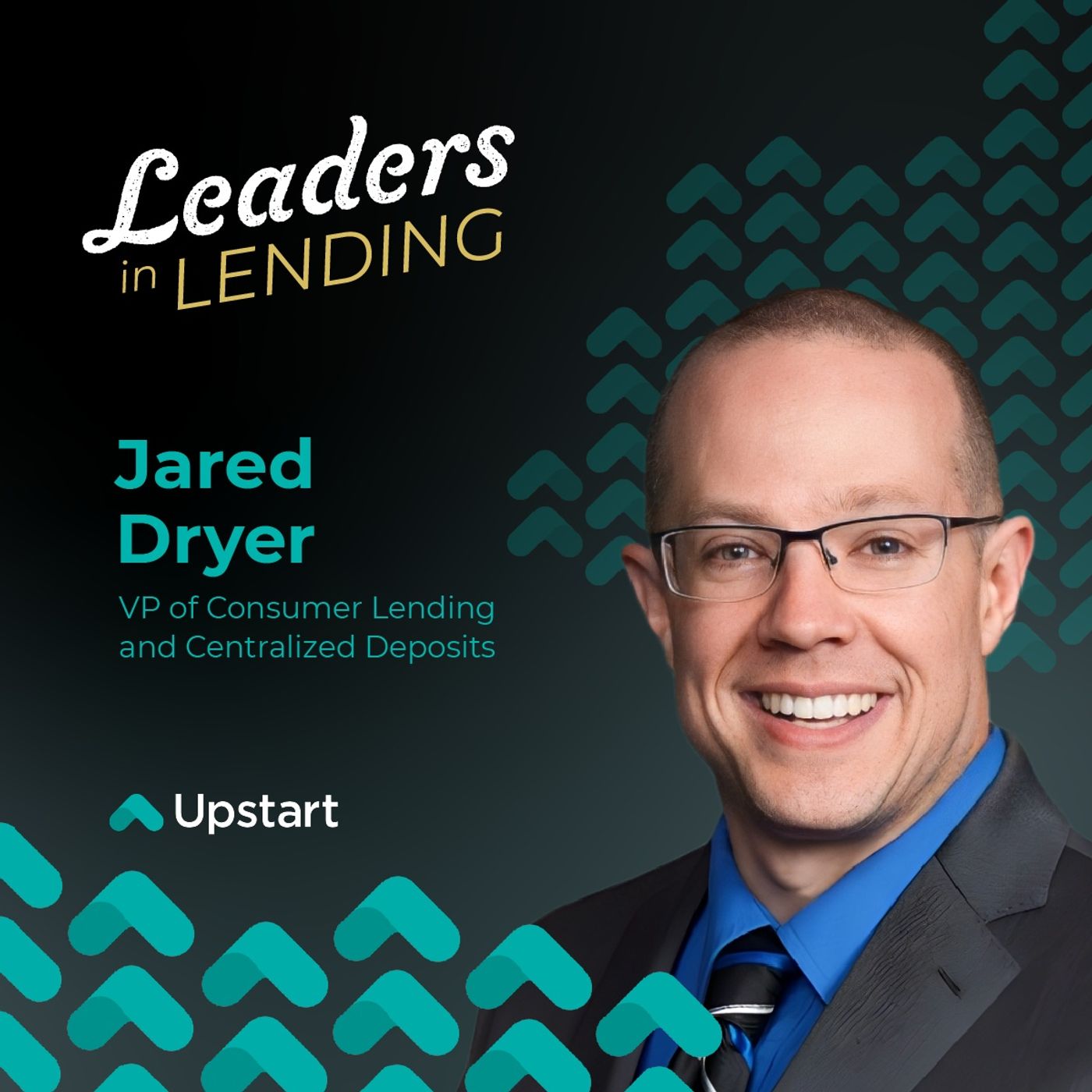
Joining our host Drew Megrey is https://www.linkedin.com/in/jared-dryer-72744054/, VP of Consumer Lending and Centralized Deposits at https://www.linkedin.com/company/westerra-credit-union/. Jared brings a passion for streamlining processes for...


Joining our host Drew Megrey is Jared Dryer, VP of Consumer Lending and Centralized Deposits at Westerra Credit Union. Jared brings a passion for streamlining processes for employees and consumers alike—and he shares insights from his experience in building and implementing an automated decision engine and rethinking the process for underwriting adaptive auto loans.
Discussed in this episode:
- The challenges of rebuilding a consumer lending program
- What factors influence the loan-to-value (LTD) ratio
- Underwriting adaptive auto loans to serve the community
- Predictions about blockchain’s impact on the banking industry
0:02 You are listening to Leaders in Lending from Upstart, a podcast dedicated to helping consumer lenders grow their programs and improve their product offerings. Each week, here decision makers in the finance industry offer insights into the future of the lending industry, best practices around digital transformation, and more. Let's get into the show. Hello and welcome to Leaders in Lending. I'm your host, Drew Megory, and this episode features my conversation with Jared Dreyer, the vice president of Consumer Lending and Centralized Deposits at Westera Credit Union in Denver, Colorado. In this episode, Jared and I first discussed was Stara's approach to building its own in house automated decisioning engine, followed by an interesting conversation about the adaptive auto space. I hope you enjoy this week's topics, and without further ado, here's my conversation with Jared. Hello, Jared, welcome to the podcast, and thank you for making the time to join me today. Thank you so much for having me. It's a plaasure to be here. Thanks. So, as we typically do on the podcast, let's start our conversation by by rewinding a little bit. I don't know about you, Jared, but for me as a child, a career in the financial services space definitely was not something that was top of my mind. So can we start by giving the listeners a bit about your journey and how you got to West Era, And on top of that, what's the day to day like as the VP of Consumer Lending and Deposits. Sure happy to and like you were just saying, that wasn't my intent either. You know. I went to college to do biology as my undergrad and wanted to study sharks in their natural environments out in
1:34 the ocean. So I went to school in San Diego and decided to come back to Denver, where my family was, and I got into mortgage lending and was quickly recruited by Wells Fargo and they wanted me to run some of their retail branches, and so I got into the retail side of the business and did that for a few years until they merged with Wacovia, at which point I jumped over to Belco just because I really liked the credit uni movement and wanted to be a part of it. I had some family members that were part of it historically, so I knew a lot about credit unions, and I wanted to be a part of that environment. So I came over to Belco, did retail there for a few years, and then actually led some of the retail team, and then because of my background in lending with doing mortgages and then also teaching a lot of the branch managers how to underwrite loans because we did have decentralized underwriting over at Belco at that point in time, I was able then to transition my career over into consumer lending at Belco and really loved the opportunity of building new products and services and helping better serve our members through the different lending opportunities that we had. And I found it a challenge to try to grow our portfolios while at the same time look for new areas of origination that maybe others wouldn't be in at that point in time either, and so we did a lot of cool, unique things at Belco.
2:50 From there, Westair had an opportunity because they had actually shut off consumer lending back in twenty nineteen with a new executive team and the executive staff that came on board, so they asked, Hey, will you come over here and help us rebuild the consumer lending platform. We'd like to start kind of from scratch, and the good news was it wasn't completely from scratch, but they said, we'd like to start over and really make sure that we're mitigating risk but also helping our members with the types of financing that they need. And so I jumped at the opportunity to kind of build something from the ground up. And I really love the team over here and the leadership, so it was an easy move. And I've been very happy coming over to west Era and really love what I do because I've had that opportunity. So I've gotten into some new types of origination. I've stood up some new software as well as we've automated our decision engine to industry high standards, and we've had a lot of fun doing it, and we've been able to grow. Now.
3:44 Of course, with COVID and with the recent recession and liquidity concerns, it's been a little bit of a challenge. So like you were asking, day to day, you know, we're watching all those numbers and trying to do our best to balance serving our members' needs as well as keeping the credit union financially sound. So we've had to lever and d lever some of the stuff that we're doing. But I really love that because it's very strategic, and it's very tactful, and it's a lot of fun to do. So I've got a great team that I'm working with over here, and I just love every day coming in and working with them and finding these opportunities to help our members succeed. Thank you for that. That is awesome. I would have liked to hear the path to becoming a shark expert as well, if you could have funneled into the part of your career, but I think that would have kept you overly busy compared to how busy you probably already are.
4:29 But thank you for that. One thing I wanted to touch on though, that you started to talk about there is around the decisioning engine, and something I found interesting when we spoke prior is, especially since I work in the space of automation within lending, is that Westara has automated their own decision engine. Right so Jared on this topic, can we at least start by talking a bit about the reasoning as to why wes Stara decided to build this engine, and then we can expand from there, sure, definitely. So when I came on board, Westerair was currently only automating about eight percent of the decisions that were coming in through our LOS and we use rcs through origins and it's a great system. It's built with Boolean logic, and you know, I'll talk about that more as we talk about how we design this engine.
5:13 But when I came on board, I knew that we were making inconsistent decisions. So you know, you may have one member that's trying to get an AUTO in their specific situation and another member that may look alike, and one may be approved, one may be denied based on some outside factors or just a difference in underwriter. If they got one underwriter who is a little bit more lenient versus someone who's a little bit more conservative, there's a difference there. And I knew by automating our decision engine we would have more consistent and fair decisions. But in addition to that, we really wanted to get back into the indirect auto space here in the Denver metro area because that had been turned off in twenty nineteen. And in getting into the indirect auto space, you need to be very consistent with your decisions. The dealers want to see the same decisions time and time again. So if they have that look alike customer that comes into their dealership, they want to have that loan get approved time and time again as long as it meets our criteria, and they don't want to be going back and forth with the underwriters all day, rehashing deals, trying to get something to work. So I knew automation was going to be key to growing those dealer relationships and growing that volume of loan originations through the indirect network. And like I said, since it had been turned off, we were at zero, and we quickly over the next couple of years were able to grow it to the ballpark of about twenty five to thirty million a month in new originations, and they've performed very, very well. So it's been awesome to see the growth and to see the great opportunity out there.
6:39 That's great, and automation, of course is something that is top of mind, and in credit unions as an industry as a whole, have always been the ones that have been kind of in the background and didn't automate or they're not up to the most recent piece of technology. So when you guys were thinking about this automation piece. How did you leverage? Did you say, Hey, let's get a room filled with engineers to build this. Did you out like what was that kind of transition of Hey, we want to do this, but how are we going to ASCU? Sure? So, the team had already met with one of our credit bureau reporting agencies and they had done a deep dive for us and they had some recommendations on what we could do. But coming over from Belco, I had the privilege of working with Cuddle back then so Are and it was actually CUDC before Cuddle purchased them and then transferred over to Origins. But with CUDC we had Tom Helmers who's now at Grow Credit Union down in Tampa, and he and I worked together on a decision engine for Belco where we used a custom score and so taking the learnings I had from that, what I told the team at Westara was, Hey, without needing to pay for this or going through a third party provider out there, we can actually build it ourselves. And I told the team it's going to take a lot of work, it's going to take a lot of time, and so everybody needs to be very patient, but we're going to be able to build it ourselves. And I've shared this with other people in the industry, you know, through the CUNA Lending conference, or I did a white paper actually for QUNA on it. What I've told people is is exactly what I just said. It takes a lot of time and it takes a lot of work, but it is totally worth it. So to build it out, we did a five year regression analysis of data from
8:11 twenty thirteen to twenty eighteen. And the reason we picked those years is because in twenty twenty one, those loans at all seasoned at least a minimum of three years, and most charge offs happened between twelve and day eighteen months. So we knew that the data we had was clean and that we knew what was performing and what wasn't. And we were able to take all this data for five years and break it into FYCO classes, into loan to value classes, debt to income, unsecured to income, and payment to income groupings. And what we did is we did heat maps, So where were we normally approving the loans, where were we normally declining them, and then what was the ultimate disposition? Did they perform or did they not? And by doing an overlay of all these heat maps, and like I said, it was a lot of work because we did this product by product. So we started with autos because that's where we wanted to go to first, into unsecured after that, and then we even did home equity, and home equity had its own challenges on top of it, but we layered these heat maps on top of each other and were able to draw rule sets by saying, Okay, so we like this Fiico band, but we want to start cutting off our DTI at this point, are cutting off our LTVs at this point, And we wrote those rule sets into our cos and our automation went through the rough.
9:24 So when we first turned it on, our autos were at seventy percent automation for both approvals and declines combined, and our unsecured products were over sixty percent. Our helocks, like I said, we had some challenges, and that's just because when you're dealing with the credit Euros, you don't always know which mortgage is tied to which property, especially if there's multiple out there. But we were able to automate twenty five percent of those as well, so We've got some really cool automation built into our system now. So to expand off that kind of a two prong approach here is one a lot around the decision, right is there anything in regard to automation piece full end to end, So applicant goes through either branch experience online experience, the decision happens in there as told Hey, yes you qualify or know or is it just simply the decision engine. And then second to that is you started talking a bit about we started with auto went to the personal loan space. Helock. Are you doing this today for just those three asset classes or is it expanded across all? Yeah, great question. So to answer your first part, the member does get communicated to their decision based on how they apply. So if they do it through our online channel, they are of course going to get that response online. We actually stood up a relationship with a loan Star so we do point of sale lending through rcs as well. In those cases, not only do they do the application through the lone Star system, they get a text response, as does the contractor that they're working with, and they can go full end to end from application all the way through closing digitally, So that's a really cool feature that we've been able to deploy to them where we can do closings through DocuSign and send all those out. So for the
10:56 second part of the question as to what asset classes we're doing today, Yeah, we started with auto, our personal unsecured group, and our home equity. Since then we grew, like I was saying earlier, we stood up Loan Star point of sale lending, so we have now contractor loans for solar home improvement, and we also did a west Era energy efficient loan. We have added those three also to this space now and we really look at them like an unsecured loan for the most part, even though we can do a UCC one filing and we've automated those pieces as well. The really cool thing though is solar. Since we work with the state and the Colorado Renew Project here for our state of Colorado, we have set guidelines on what they want those loans to look like, and you know who they want us to be able to help. So we have fully automated our renew program to one hundred percent, so all the decisions are made by the system. We don't even have an underwriter look at it unless there's something that pops up like a fraud alert or a mismatch like on a social Security number. And if we get one of those types of alerts, then of course, yeah, the underwriter's going to take a peek at it and validate all the information they can.
11:58 But if everything comes through clear and pass all the fraud checks, those loans are decisioned and ready to move forward right away. That's awesome. And you often hear, especially on the home equity align or even the mortgage product, the amount of time that that takes and then the real time that you're able to say yes or no to your members I'm sure is much appreciated. Yes, so cus to you your team. I know that was probably a long time coming of building this and being able to supply to your members. So again, kudos to you. Yeah, thank you. I want to make a pivot here and talk about something that I know that you're very passionate about, and of that passion, I will preface that most lenders are not willing to touch this or they probably don't know too much about it, and this is being the space of what's called adaptive auto. Can you first start by explaining one what adaptive auto is for those who may not know, and then why you're passionate about this space. Sure, So, adaptive auto are handicap accessible vehicles. So for our members that are in wheelchairs or have different paralysis that keeps them from being able to use gas pedals, brake pedals, and whatnot, they're able to build these vehicles so that they can drive them.
13:03 And adaptive auto is definitely an underserved community nationally, so not only in Denver, but anywhere that you guys live or any of your listeners live. They're definitely underserved there. And the reason they're underserved is a lot of lenders don't know how to underwrite those deals and they don't know what to look at. So let's rewind back in time. So this is back when I started with Belco. One of the branches that I ran, I would drive to work every single day, and at the off ramp the exit to get to that branch was an adaptive Auto dealership. So it was less than a mile from our location, and I saw them every day coming in and I kept thinking, I wonder who's doing their auto loans and who's taking care of them? So I drove over and I asked, and they said, unfortunately, no one. They said, we can't get anyone to do loans for us.
13:46 It's really up to the purchaser, the customer to find their own financing for this type of deal. And they said most of them are doing home equity or trying to get money put together from friends and family to buy a vehicle so that they can be just even their daily basic needs. A lot of times, you know, they may have a child who's disabled and they need to get them to the school, or may be an adult who's trying to take care of their family and they may live on their own, but they just don't have reliable transportation to even get to the grocery store and back. So at that point in time, I realized, Hey, this is what a credit unions for. We need to be able to help the members of our community and help them thrive. And so what I did is I started talking to our lending team at Belco about it, and I said, what makes the difference between an adaptive auto, so a vehicle that has a lift built in or some wheelchair assistance, versus a truck that has a lift on it, you know, to lift it up higher so they can put the bigger wheels on, or maybe the bigger exhaust. And I said, when we look at those vehicles that have those aftermarket customizations, we'll go into the KBB or we will go into NAD eight and we'll adjust the value for those upgrades that they've done. And unfortunately, you know, you don't have the adaptive equipment listed. But I asked, what's the difference between this, and they said, really, there's nothing. So I came back and said, okay, so if we have an invoice and the invoice says that you know, they put fifteen thousand dollars into this vehicle to put the lift in and the joysticks or whatever they needed to do so they could operate it, I said, why wouldn't we add that to the value of the vehicle and they said, we certainly can. And so we started looking at individual deals just
15:20 as a one off, and through working with that local dealer that was just a mile away from my branch, they started sending their customers over to us at Belco into my location. And because we had decentralized underwriting and I had authority, I was able to work on some of those deals and don't get me wrong. It wasn't a lot. It was maybe one or two deals a month at the most, but we would be able to find financing for them and help those members into those vehicles. So fast forward now that I'm over at west Era and we regrew our indirect group and started working on that. We started looking at a wider scale of how do we help these dealers across the whole state of Colorado. And in Colorado, none of them are on an indirect platform just because they don't do enough deals to justify it, and they'll say no one understands how to underwrite them. So we partnered and used our lone Star partnership and said, hey, we've got a retail point of sale platform we can give you that you can use in your dealership.
16:11 You can submit an auto loan directly to us, and we'll treat you like any other dealer. So we'll pay you a dealer flat on these and we'll give you the same kind of income that you'd get if you worked for an AutoNation or a bigger franchise store out there, and these deals will come straight to us. You'll get an immediate decision and we can fund them through ACHT you and the member can close by DocuSign and they said that they loved it, So we got that turned on and we're now helping three different franchise dealers out there that have multiple locations that do adaptive auto and they absolutely love it. So it's it's been really awesome to do. We definitely want to grow that program, but we're definitely doing the crawl walk run and we're kind of in the walk stages now we can close remotely, so that's awesome. One thing I wanted to touch on too is you said that not many people know how to underwrite this. Yes, can you talk a little bit about the differentiation besides LTV using KBB or NADA and such, of how to underwrite this type of asset class in correlation to all other type of consumer lending. Yeah, So talking to these dealers that do adapt to auto, they said, every single finance company that they've worked with has always used just the basic KBB or NADA value and they come in over the LTVs that are allowed at that financial institution. So whether it's a credit union or bank, a lot of them start capping out anywhere from you know, one hundred and twenty percent LTV one forty one fifty and they just can't do the deal. And they said, you know, hey, we're financing a sixty thousand dollars Honda Odyssey minivan that's five years old and you know, kbb on it is thirty thousand dollars
17:44 and we just we can't get the deal done anywhere. And it's because they aren't adding in those additional add ons, you know, the pieces that were manufactured and built for that van that increase its value. And because they don't add those in and they don't have the box to click, you know, when they're going through their automated los to say yeah it's got the spoiler or yeah it's got the running boards or whatever. They don't have the adaptive equipment there, so they just don't ever add it in or think about it, and then it doesn't meet their LTV criteria, so it gets kicked out. So what we do is we get an invoice on every single deal that we do with them, and we will add dollar for dollar the equipment, so maybe not the labor, but we'll add the equipment dollar for dollar into the value of the vehicle. And the best part is when we started doing this years ago, both west Aara and Belko asked the same question, is whatever happens if we do, unfortunately have to repull one of these vehicles. You know, we can't sell it at auction. What does that look like?
18:37 And every single Adaptive dealer has they've come to us begging, hey, if you ever get one of these vehicles, please bring it back to us because we can resell it and we can't find them at auction. So we've got a source that we can take them to to offload the vehicle if we need to. Now, at the end of the day, we haven't needed to. I think that this asset class is actually very very safe and very low risk because these families need these vehicles to survive. I've not had one ever even go delinquent. And I say that knock on wit at the same time that I say that, But I've been doing this for years and I've never had one delinquency because they need these vehicles. So I don't think we would ever get into the position where the Credit Union would have to repossess one. But if we did, we do have an outlet by taking it back to the dealer if we needed to, And that makes total sense. In that same regard, though, let's think about like in the auto industry as a whole. They might not be going delinquent, but they may get in an accident or have other type of itsues such as job lost, debts, so on and so forth. Can you talk a little bit about, like is there ancillary products that also come a part of a debt of mode as well.
19:37 Yeah, so just like any of our other autos, we can sell any of our gap products, We can sell our debt protection products onto these loans as well. When we do those adjustments, like I said, adding that equipment is just the same as having those additions onto a truck or you know, the running boards, things like that. So it's all part of the vehicle. It's all documented, We have it all in the file and because of that, we get an accurate LTV and the coverage applies to that vehicle just like it would any other. So we definitely recommend those products. We do get all of our products through CUNA, and we love our relationship with CUNA, which is now and I keep saying CUNA, but it's true stage they just swapped over their name recently, but we love our relationship with them. And they take great care of our members with those That's great.
20:18 That is an interesting asset class. In another kudos to you your team of exploring that asset class that many many people of course need, but you don't really think about it too much when you're sitting in your chair. So, Jared, I think this is a good spot to transition, as we always do. I like to close the podcast out with let's call them three off the wall questions. Sure, So, the first being what is the latest either application or piece of technology that you cannot live without? Sure? So I'm going to start from a personal level. I am really big into Internet of Things and automation even at home, and so I use obviously home Kit through Apple products, but I really love Home Assistant. And the reason is the Internet of Things is so new, and it's so goofy, and you have so many different products out there. They don't all talk to each other and they don't all work very well together. And then things like Apple home Kit have built in the safety measures that if you're doing automations when you leave the house or come home, it's always asking you to confirm it and do you really want to open your garage? And it kind of it takes away the purpose of having the home automation right to even change things like your thermostat.
21:26 Are you sure you want to change it? Yes, I'm sure I'm coming home. Using Home Assistant, I've been able to go in and build a whole bunch of virtual switches, and by using these switches, you kind of bypass what home kit protections are out there, and so you can just do a switch that hey, Jared just came home. It flips the switch, and then I run automations based on those switches. So back to the boolean logic, which is what we used to build our decision engine, which is really if this, then that type of logic. I've been able to do the same thing and automate almost everything in my house, and so I absolutely love it when it works, and it works eighty five percent of the time, But that other five percent of the time I'll troubleshooting and rebuilding it and making it work. So it's something that I just I can't live without anymore. Now when it breaks, Like do you have full access or do wife and kids also have full access? But they can't mess with it?
22:12 Right? Yep, exactly right, it's only me I'm the only one who can go and fix it. And so, and I keep telling my wife, if there's something you would like to have happen, you know, or that you'd like to do, let me know. I can figure out a way to build it. And we have found really creative ways to kind of chain the logic to make certain things happen when you come home, when you leave here in Denver, when it snows, you know, we've got some heat mats outside, stuff like that. And so building this logic into home assistant has been awesome. That's great. I like that. I definitely like that. I'm gonna have to look into it. Fast forwarding question number two. Hopefully it's not shark oriented or it maybe if you could switch jobs for anyone for a day, who would it be and why, Without a doubt, it would be a Disney imagineer working on park rides and the next theme park iterations. You can see me. I've got some Disney stuff. We are big Disney fans. We absolutely love going to the Parts. That is our go to vacation. And I really love the imagineer mentality of you know, yes and and just kind of building off of things and just imagining what is possible and how do we solve for it? And you know, they come up with some really cool technology. They've come up with some really cool tricks of you know, how they do distractions and things like that with their rides that they have today, and it just completely astounds me, and I want to learn more. And so if I could do anything for a day, that would one hundred percent be it, And I'd want to learn all this tips and tricks and all the secrets that they have going on behind the scenes. Running trend of more tech focus and behind the scenes. I like
23:44 it. And then I'll close with with the last one. It doesn't need to be in the confine of consumer lending, But what is one bold prediction for the future? Sure, So looking forward, you know, if you would have asked me this about four or five years ago, I would have been talking about autonoymous car so on the cars that were self driving that were out there, you know, just doing their own thing, like what Tesla's been doing. And you know, there was a lot of rumors about Google or maybe even like a Facebook company dropping a huge fleet into these major cities where they're autonomous and they don't have anyone driving them, but you could ride share them and do all that. I think COVID really derailed all that and took all the air out of that opportunity there. So you know, I know, Apple's still working on a car. I'm watching that one pretty closely.
24:26 Google's working on a car, but I don't think we're going to see it on that type of scale. What I think though, happened at that same time that COVID happened, was we saw a real surge in the bitcoin and the not just the cryptocurrency, but the blockchain technology and blockchain really started coming to the forefront. And so my bold prediction for the future is I really think credit unions and potentially even banks, and it may even start with banks and then move to credit unions will start to adopt blockchain technology and even abandon potentially abandoned their core systems. Because blockchain is verified by you know, computers worldwide. Every transaction is multi factor authenticated, but it's verified unanimously across the world. I think it's more secure than what we've seen today with core systems and obviously hackers getting into those, and I think we'll start to see a move towards that. Now, will it be a full one hundred percent you know people are going all in into that. Probably not, But I think it'll start easing its way into things like titles, so anything from like a auto title to a deed on a house, and they'll be verifying all those pieces of paper instead of filing actual papers with the county. And then I think from there it'll start moving in even into core systems and into online systems to verify transactions. That's an interesting perspective, and I think it is going to be a crawl, walk, jog run approach. Yeah, but that's all going to be determined, of course. I would think more around how it's regulated, So it'll be interesting to see how that space expands.
26:00 Well, Jared, again, thank you for taking the time to join me today. I really appreciated our conversation. Yeah, thank you so much for having me. This has been great. Upstart partners with banks and credit unions to grow households and expand consumer lending through its leading AI lending platform. Upstart powered banks and credit unions leverage AI to offer higher approval rates and experience lower loss rates while simultaneously delivering the exceptional digital first lending experience that consumers demand. Whether you're looking to grow and enhance your existing personal and auto lending programs, or you're just getting started, Upstart can help. Upstart offers an end to end solution that can help you find more credit worthy borrowers within your risk profile with all digital underwriting, verification, loan closing, and servicing. It's all possible with Upstart in your corner. Learn more about finding new borrowers, enhancing your credit decisioning process, and growing your business by visiting upstart dot com slash lenders. That's upstart dot com slash lenders

