“Bank Your Size” - The Community Bank Difference
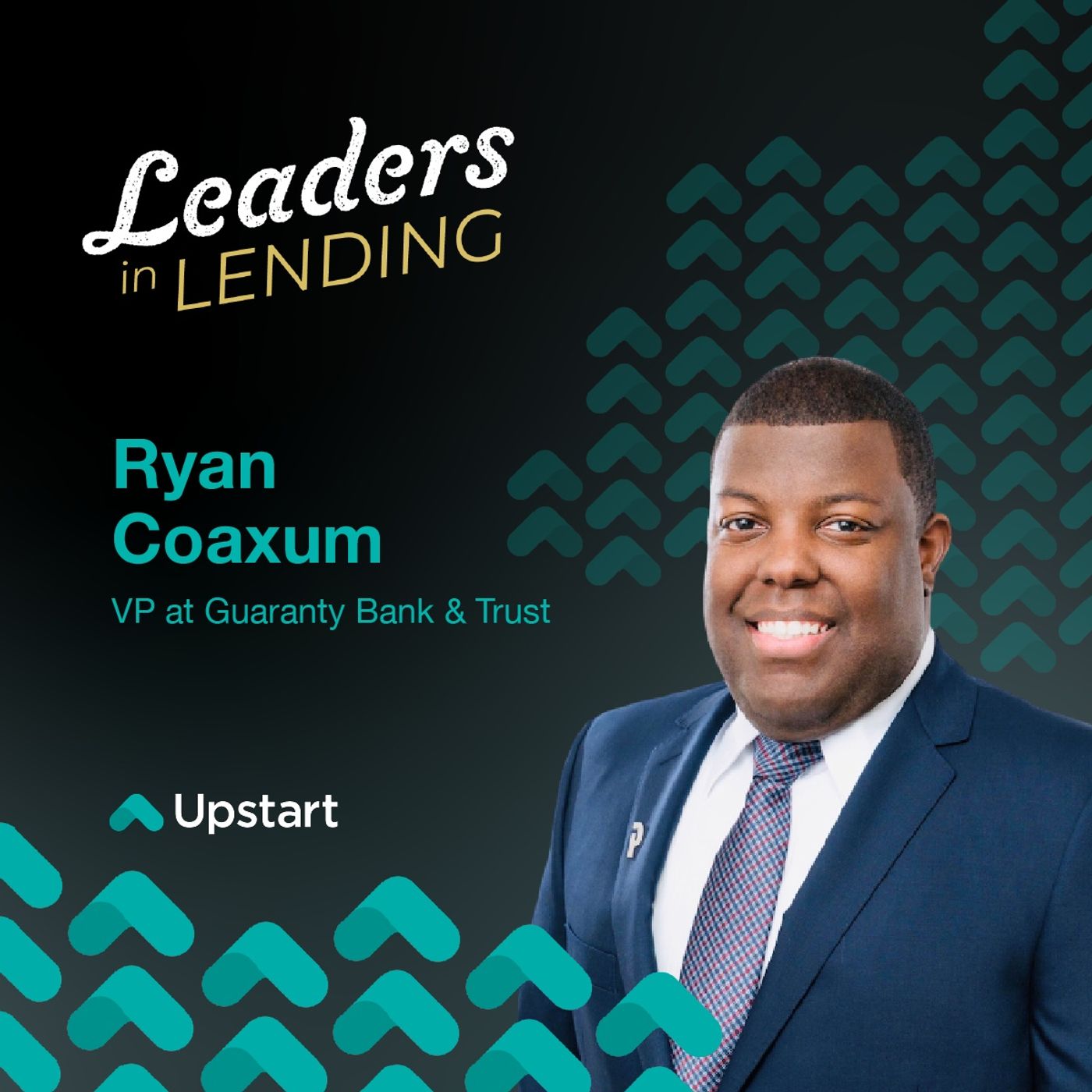


Small businesses are the backbone of America. But, too often, they partner with banks that don’t offer the personal touch, care and attention their business deserves.
On this episode, we speak with Ryan Coaxum, VP at Guaranty Bank & Trust, and one of eleven inaugural American Bankers Association Emerging Leader Award recipients this year, about the positive impact that banking your size can have on your business.
Join us as Jeff and Ryan discuss:
- Coaxum’s experience opening Guaranty Bank & Trust’s first Texas branch, including challenges and advantages
- Having a personalized approach to small business banking
- Prioritizing financial literacy and affordable housing
0:02 You're listening to Leaders and Lending from Upstart, a podcast dedicated to helping consumer lenders grow their programs and improve their product offerings. Each week, here, decision makers in the finance industry offer insights into the future of the lending industry, best practices around digital transformation, and more. Let's get into the show. Welcome to Leaders in Lending. I'm your host, Jeff Keltner. This week's episode features my conversation with Ryan coax On, the VP of Guarantee Bank and Trust. It's maybe not a unique name of them banks. I feel like Guaranteed Bank is out there a few places, but it's a pretty unique story. Ryan helped start the branch of this bank in Austin area, grew it from just a couple of people and basically no assets to over four hundred and fifty million dollars in assets and loans, one hundred fifty million deposits.
0:53 More than thirty people work in there. It's a really interesting story of kind of starting up a banking segment from scrap. We really dive into how they did it. Lessons learn things you would do different if you could. Biggest surprise, What was the most fun so kind of it's just exploring that kind of startup founder type story for early stage bank, and then also delve into Ryan's work in community development. He does that for the bank, and it's kind of broader reach outside of the Austin area, which I thought was really interesting. He is really focused on kind of workforce of the future development of that workforce, and that's I think, in a very holistic way as interesting construct to think of it in because really it's about people and how you develop in nurture and train people in communities. So I thought that was really interesting.
1:40 And Ryan is one of the first people to described to me being a banker and particularly a lender as a very intimate job, and I thought that was a fascinating description. And you'll have to listen to the episode to figure out why he feels that way. So please enjoy my conversation with Ryan Coason. Ryan, thanks for joining us today the podcast. I really appreciate your making the time. Oh, thank you for having me. This is exciting in my first podcast. Your first part, well, I remember that we did our prep call and there was an ice storm and you had no power, So hopefully fingers crossed the technical gods shine on us today and we don't have any problems yep, yep, hopefully, or I think we're doing good in Austin now, So you know, fingers crossed. The fingers crossed. Well, I've started recently all my podcasts asking my guests kind of to give me a little bit of the background of how you got into banking and where you're at. It's not the most common, like childhood ambition for most of us to get into the banking space, and yet we all kind of found our ways here. And I always like to hear a little bit about the story of what brought you into the space. Yeah, mine definitely was not a regular story, but I love it no matter what. So I started out as a part time teller, and I only actually got into tellering because I was actually selling residential real estate. And then my mom came in one day and was like, hey, you kind of kind of gotta get off the insurance and so I was like, Okay, well, what can I get in at this time? And I didn't have my degree at the time that I could be like, this is a great profession and I can just kind of ride all the way through. And I chose banking and I went from part time teller to full time to personal banker to banking officer, did
3:16 a little analyst work, and then in twenty seventeen, my boss and I, I took a leap of faith with him and I just went with him to start a guarantee banking trust in the Central text area. So this is a really interesting story because not many people kind of start a bank from scratch, or at least, you know, open up a bank in a new area. So walk me through what kind of what kind of banking services and what that was like kind of gone from zero to like you know where you where you're rinning an office where you're working out of a car and a Starbucks the way a lot of start startups to like, what what's the experience of kind of starting from scratch in this space? Yeah, so it was really interesting. I mean I always tell people it felt like we were in a startup yet we still had a three billion dollar bank behind us. And what I mean by that is there they had no locations here in the Central Texas area. It was so when we started, it was my boss and I in his child's playroom. They came and gave us all our equipment, and then we bought this little table from home depot that I would sit at right next to his and our phones were daisy chained to each other, and it was really like, hey, we're doing this. And then after that we actually went and got a Regus office and then we shared that and that was equally kind of horrible and great at the same time. I mean, when he when he got sick, I would get sick, and it's like, Wow, we're really in this box together. Were you in one, like
4:48 one little room in reds or did you have did you get your It was one little room and you know, for a while it was just us working in there. And I remember we hired a lending assistant and and like he's like, okay, we have a lenit assistant coming in barn. We have this other little table, and so I'm like, I'm going to clean our little area so we can make it look like, you know, we're a big time and I guarantee she came in there was like this is the bank, So what have I done? What have I done? What have I done? And so then after that we did hire her, and then we went into a office building where we kind of the team went from the three to then I think we kind of packed that with five and then we got the building that we're currently in, and then we then spread out from downtown Austin to Lakeway, to Georgetown and to Westlake and we here we are now with thirty plus people in about four hundred and sixty million dollars in loans and that was since August twenty seventeen. That is quite the experience. What what kind of loans? Like, what's the what was the nature of the business that you built in terms of the kinds of lending the deposit It's like with the kind of customers you were serving, what was and I'll put this in there as a side that like, is where you ended up where you started aiming. I mean so often we hear about in the startup world to pivot, but the like, we had this this vision of where we were going to go, and then like you know, the market came and told us
6:21 a little something different and we changed strategies. So I'm curious kind of like the nature of the kind of business you've built there and whether or not it's really what you intended to build or there were some lessons along the way. That change your direction a little bit. No, definitely, I think it wasn't what we intended to build. I mean, so my boss, Travis Brown, I will say, he is a genius. He has a genius credit mind, and so he did primarily commercial real estate lending, and so that was kind of our jump off. That's kind of what paid the bills. However, with me, I love being out in the community. I love meeting people, talking to people, and so a lot of mind were small business. And so when you think about it, it's kind of the best of both worlds. You have your big commercial real estate, sexy loans that actually pay the bills, and then you have the you know, the small business that are coming inside the bank and you know using the drive through, and you know, those are the people in the community. Is awesome to see them, you know, go from you know, a little architecture affirmed to a big one and that for me is everything. And so I would say that, you know, just the trajectory. I mean, as we look back, would we think just in five years we would be at four hundred and sixty million in loans just in the Austin area. Probably not, you know, you can't think that I think that's a lot of know how just on our part. And then I think Austin is just booming, and you know, everybody wants to live here, and so I think,
7:51 I think it's a lot of things. Um, but you know, left the good times, roll left the good times role who I think I've spoken in a language in this podcast make some first day I want to ask you. You talked about your desire to get out in the community and kind of like, I think that really energizes you. And you had described the role of being a banker, particularly to small businesses when I talked to you earlier, as what you call an intimate job, which I thought was a really interesting description. I think a lot of people can view it as a very impersonal job in many ways, right, like mediated by piles of forums and kind of process and procedure. But you've viewed it as a very intimate role.
8:31 So talk to people about about what you mean and why that's important to you and the way you approach that the banking you do. Yeah, So you know, my start of just being in the community stems from my father being a Baptist minister here in a suburb in Austin and you know, I was able to grow up in the church and see my mom and dad just really give their all making sure, you know, people had that foundation. So obviously they're in the community. And I always tell people, well, I'm not, you know, trying to do a sermon anytime soon. You don't want that. However, the need for just being in the community definitely stuck. I definitely draw just you know, power from within with that, and people are really just that energy that just gets me just just going.
9:18 And you know, with that, I think, you know, I think we have a huge responsibility to our community to give back in so many ways. And I say banking is intimate because it is I feel like people come to you in good times, they come to you in bad times, they come to you in times of struggle, and they basically say, you know, here I am in a folder, this is my financial history, and here you go. I mean, I don't know many people that actually want to just give their whole financial history to somebody and just let your burn or you know, somebody just look at that, you know. And so I really think it's a very intimate thing because they're trusting you with, you know, something that they just don't talk about with anybody. I mean, you've always had that friend that's like, oh, how's the stock market doing?
10:05 You know, my Ferrari goes, you know, one eighty and then you know they're looking at their actual online banking and it's like they can't even buy their Starbucks. So so you know, and that's why I just, you know, I'm I really really understand the trust that people give us as bankers, and I take it very seriously. Yeah, it's not and it's not even just handing you their lives and their financial history and a folder. It's handing it to you and asking to be judged in a way that I think it feels very uncomfortable. Right, they're kind of great. I can't teach how am I doing? Do I qualify or not? It's a very I think anxiety adducing thing for most people to do. Yes, And I mean you gotta think as bankers, that is what we are doing. We are risk management, and we are judging people, and it's just kind of like, you know, and that's one of the reason why I think, you know, that's why I think it's so important because that's a big job.
10:58 And so you know that leads into the conversations that I'm sure wor'll get too well. I would ask this because you've got this unique experience of having grown this thing from you know, with the backing of a larger bank, but from kind of zero to four hundred and six. I would say zero to sixty for carnology before hundred and sixties is yeah, yeah, there are four sixty. There were four sixty in my card. I'n get that fast. But um, I wanted to ask, like, what would the you know, if you could think about the biggest challenge that came from kind of starting in the biggest like, um benefit, I think they are oftentimes like they're like you can think about the nobody knows who we are, whatever, the challenges of being kind of a startup. At the same time, there's a lot of advantages to that. And I'm curious, looking back on the past five years or so, what do you think were the biggest challenges and biggest advantages you've got out of being kind of a startup or a starting from zero kind of experience. Yeah, you know, the biggest challenges I would say is when we first first started, no one knew the name and Guarante and then I will say Guarantee Bank. There's actually a lot of guarantee banks out there, so people would be like, oh, are you guarantee you out of blah blah blah. No, oh I had a banking account with Guarantee.
12:05 No, that's not that one. So we had to get over that hump. And then then once we got over that hump, it's it's not the people that we maybe have banked in previous banks, but it's kind of that newer that newer set that would come in and be like, okay, so where is Guarantee And then that's when I say, well, you know, we're based out of Mount Pleasant, Texas. I will tell you not a lot of Austin Nights know where Mount Pleasant is on the map. And then I would say, because we didn't actually have a brick and mortar bank with our name on the side of it, it's just kind of like, okay, so we're giving you these things, y'all are opened these accounts.
12:45 And mind you, in the early days, I would have to send all the stuff to College Station because that was the closest branch. They would open it for me overnight. The stuff back to me and then I would get it to my customers. So it was really like, you know what we spend in post said postage at that time, but it's probably crazy wow, But yeah, No, then I would say the physical building because you know there's something about you know, even if you never go to the bank, because most of your bank is banking is done online, people wanted to see that physical building. And I will tell you once we got into that physical building and we and to our luck, we got into an amazing building right in the heart of downtown. And right when you come in you can see the big G on the side of the building. And that's when people are like, oh, okay, you know it kind of like legitimized you, Like we're not just you know, taking this money and driving around and rain drovers or anything. How about the biggest advantages, like were you there are things you leap frogging in technology or experience where you said, hey, we're not tied down by the by the history of the past, and we can kind of do something different. It gives us a leg up on maybe I'm more traditional competition. That's got some of the some of the baggers come up with them. So I will say that as a bank guarantee. Bank and Trust does a very good job in terms of technology and or technology is really really strong. However, we're still that hometown bank that was founded in East Texas one hundred and ten years ago. And so when you combine those two, it's one of the greatest combinations that you can do. Because I will tell you, you know, I have no problem or any qualms with any
14:18 banks, but I do think you should always bank your size. And I think a lot of times people will be at larger banking institutions and there are a small business and they don't feel that they're getting the service that they need. And so that was our kind of entree, if you will, saying, hey, look we have the tech that you want. However we can give you that same great service. Here's my cell phone number, call me when you need me. And I think those two combine really really gave us an edge on the market. And you know, I'm very just kind of thankful for that. And plus again we've been in business one hundred to ten years, so that would probably be another one that's a very strong is that our people know what we're doing. You know, they've they've been through the challenges in banking history and we're still standing to this day. And you know that's you know, that's kind of the success story in Texas alone. So you know, I'm very very happy with you know, our tech that we have here, our leadership that we have here, and just our people that we have. UM. I would say that would probably be the last thing is too, is we don't have a lot of turnover um. And so you know, when you get to know us. As for your small business, you're alway he's dealing with the same person. And you know that's a that's a fun thing when somebody calls and it's like, hey, we know what's happening in your business. We know where we're trying to grow you too, and I just I just love that. I love it. Let me
15:48 ask you that just double click a little bit on the phrase you used, bank your size? What do you what do you mean that's I'm not that's a phrase I haven't heard before. I'm always looking for the little tidbits or soundbites, but like, interesting concept. What do you mean by you always want to bank your size? So I think so what I mean by bank your size is there will be some businesses and let's just say they just let's say you have a pie business and you really know how to bank some pies, and you do it very well. And however, you're just kind of starting out of your kitchen and you got your LLC. A lot of people will go to the bigger institutions to open up an account, and you know, I think that's good. You know that's probably right around the corner from you, so you know that's good. However, when you start needing that kind of everyday touch of like oh I need a cash just check here, Oh I need to make a wire here, Oh I'm ready for a small business loan. You know, a lot of bigger institutions don't pay attention to that very very important segment. And that's the you know, the small business, which I like to say is the backbone of America. And they don't pay attention to that. So you know, they'll end up getting denied or they won't get the service that they want, you know, as a small institution, because you you know, you are a small business, are a smaller institution, they'll give you all the time you want. I mean, you can go in there and they'll roll out the red carpet for you and say, hey, we love these pies. Let's not only do this, but I'm going to tell my friend about this, or we actually bank this
17:22 other business that I want y'all to meet each other. And that's really community banking, right there, is that you're just kind of taking care of the size. And then I will say it goes to the other opposite end of you know, sometimes I think you know your business is you know, now it's those same pies, but we've based all this other stuff and now you have kind of a Walmart esque business that will probably be a good business for one of the larger institutions just because they will have the kind of capacity to really handle, you know, what you need. And that's why I say I never talk about bad about any banks, because I just think they all are great in our own type of ways. And so that's what I mean by kind of bank your size. You know, if you want, if you're a small business and you want that friend or you want that partner, come to a community. But I heard a really interesting podcast with an investor or something. Now I'm like talking about other podcasts on my podcast is bad.
18:17 But he made an interesting comment about some SaaS businesses where they really knew their market size and like, hey, we're going to work for you from excise employee to why and we kind of like we don't view it as bad when you hit why and you go somewhere else, because that's not our You kind of outgrown what we do and we that's not like it's churned and it's bad, but it's like we think of it as a good thing because we know our our spot, we know where we add the most value. We want to really serve those customers well. And if you get to the high end, the larger size and go we need a different set of stuff. Like that's okay. You know that you know your space, you fit it well, and you're kind of our you know, almost celebrating your customers moving past you because they've grown to a point that that's what they need you you are in a big way. And I almost feel like that baby bird flying out the nest, like you want them to spread their wings and fly and you're almost you know, in the you know for me because I've had a handful of customers do that, and you almost feel that sense of pride just because this is like you know, I remember when the big bank didn't want to give you the loan, and we were the first ones to take that chance and give you the loan. And we saw the loan go from twenty five thousand dollars until now you have million dollar loans. And that's one of the greatest kind of success stories that you can have. I mean, you know, for me, I'll tell you on the flip side, I'm always like, Hey, that money market account, you know, I can still have that here. So if you wanted to leave, you know, a couple of millions, look, you know, look that's when you go back.
19:45 Hey, I do remember when you were little. Uh, But you know, I think it's I think it's a good thing, and I think it's bankers. That's for me. That's what you want to see. So I want to get to your role and kind of community development engagement. But but I want to ask one question because you before I get there, which is you talked about this is you said most of your partners. So if you want to duck it, that's fine. But you talked about building a big business in commercial real estate. That was kind of his you know, genius and credit risk and you were more on the SMB side, But it seems like this really interesting moment from a commercial real estate point of view as we see companies that you know, got a lot of real estate pre COVID are going through remote work or you know, this is shift in the nature of utilization of office space. And I'm just curious if you've got any thoughts on what the future of commercial real estate what's kind of shaking out over there, because I don't I don't know how to make heads or tails of quite what's going on. There's still a lot of building, a lot of places, but there's a lot of empty space, and I'm curious if you got any thoughts on like what's going to happen in the commercial real estate space over the next couple of years, because it feels like this kind of strange moment of dislocation in terms of what we expect the utilization of those kinds of spaces to be. Yeah, No, this this moment that we're sitting in right now, and this year that we're going to go through as bankers, it's going to be kind of a weird, quirky year just in terms of you know, loans that we were doing six two months to a year ago that we would have said, oh, definitely, yeah, let's go. Now we're kind of you know, pumping the brakes on it, saying, okay, let's let's look at this, but let's look at it in a couple
21:18 other ways now that we have to. And you know, Austin is kind of tricky. Austin is a tricky one because, like we like to say, you know, we are going to be the last one's in, first one out in terms of you know, we don't want to use the recession word, but you know, hey, what comes what comes. And you know, so I think in terms of when you're talking about commercial real estate, it's one of those things you really have to pay attention to the articles. You have to pay attention to the news, you have to pay attention to the FED, you have to pay attention to all these things and just kind of make sure that you're really on top of it in that knowledge level. It's really high. Again, you know, I don't want to toot my bank's horn, but that's one of the things that they are really really kind of good at in terms of just we have the right people in place to make sure that every one of these things that I am talking about, we have somebody paying attention to. And so those are one of those things that really really helpful when you have the right people and right people in charge and right people looking at the things, and guarantee Bank and Trust does a very good job of that. And I will say that, you know, there are times that I think, especially like right now, there's a lot of banks kind of going and blowing and they're like, hey, we want to give you this interest rates, and you know, they're trying to get market you know, get market share, and you know, we're like, hold on, you know again, we're about relationships. So that is what we are really focused on right now. It's not that where Okay, we
22:52 just want to do alone and you don't have anything over here. You know, this is a this is a back and forth, This is a give and take. This is a relationship that we want again. Kind of the thing that we've been echoing through the conversation is we want to see you go from you this over here, and we want to help you get to that next step because when it comes to times like these and other banks are trying to take market share and they're trying to give you a better raid or they're trying to do these That's when that loyalty comes back and play and says, you know what, Ryan was able to get me through times that nobody else wanted to get me through. And so now just because the rates a little better at somewhere else, I'll pass because guess what, my bank has tried and true, and I believe in these people, just like you know we believe in their businesses. Hey, Sarah buch here, the VP of Consumer Landing at First Federal Bank of Kansas City. A few years back, our executive team knew we needed to grow our unsecured personal loan portfolio, so we turned to Upstart. Three years later, I am proud to share that we've scaled our loan volume target from five hundred thousand a month twelve million a month, and acquired over a thousand new customers. If you want to hear more about our partnership, check out the full case study on Upstart dot com forward slash Lenders. Once again, that's Upstart dot Com forward slash Lenders. All right, let's get back to the show. Maybe that's a good point to transition to. You know, you've had a role in the kind of the
24:22 community development engagement of both in the kind of Austin area part of the bank that you started, but I think also in the larger institution. Talk to me a little bit about how you think about what that role is and what your objectives are. I think it's it's a really interesting aspect of banks for the community banks. I mean, it's kind of like the heart and soul of the banking industry is kind of engaging with the community and both financial in other ways. But how do you think about what your objectives are and what you're trying to do in the context of community development within the bank. Yeah. So back in November of twenty twenty two, my bank came to me, by my surprise, it was like, hey, we got this new role that we think you would be perfect and we've never done it here at this bank and we want you to do it. And that is the first community development officer for a Guarantee bank and trust. This is something that I've been doing since I've started, and that's just being in the community. I'm always here there. I'm probably out at least four to five nights a week just in different avenues in the community, just because I think you know, if we're gonna I really take the word community seriously. If we're gonna be a community bank, we need to be in the community. And that looks like a lot of things. That's giving my time, talent, treasure, all those things and making sure that, you know, guarantee banking is doing their job. And so when they came to me and gave me this, obviously I said yes. Obviously, I was like, oh my gosh.
25:52 And then so they basically were like, hey, we love what you're doing in Austin. Now we want you to do it in all our metro areas. So now you are over Austin, Dallas, Fort Worth, in Houston and everywhere in between. And you know, that's a big responsibility. You know. I was so happy, and I remember they told me and then I closed my office door and I was like yes. And then I'm like, oh my gosh, I am I gonna do this. You gotta be out two days a week, not ten days in the week to be out and about in the different communities anymore. Ran you gotta you gotta pick and choose correct what you know, what does that look like? And so then I thought to myself, like, you know, what I know what that looks like, that looks like exactly what we're doing here. And you know, so one of the things that I've been fortunate is UM the Association.
26:33 I work with Texas Bankers Association in a big way and I'm on about three different committees with them, and that works throughout the state of Texas, just you know, kind of lobbying for community banks and making sure you know the avenues that we want to take. We have all the banks kind of in one voice, and then we can actually take that fight to Washington if we feel that you know, the policies that we are trying to change, we can tell the laws. Actually that's where I came back from from a day ago. I was in Washington, DC meeting the one hundred and eighteenth of Congress the new freshman, the freshman congressman from Texas. And so why those relationships are important is because obviously, if you want something, you know, change, you might have to do with policy wise. So that's why that's important. But it gives me an opportunity to talk to all our different markets and say, oh my gosh, you know, we're focused on these areas.
27:32 So at the bank, we are focused on financial literacy and education, affordable housing, in economic and workforce development. So corporately, those are kind of our big things that we just kind of focus on. Every other market can have their own things, and they're great nonprofits like Habitat for Humanity or if you have a ballet there, or you know anything, dogs and cats. We love it all, we love it all, but probably those are the things that we focus on. And I will tell you one thing that I truly, truly love is I've been able to meet other community development officers at other banks, both large and small. And the cool thing about that is, you know we're not actually working against each other. We're working together.
28:18 So if something cool comes up in Fort Worth and says, hey, where you're trying to do affordable housing here, you know that bank may may only be able to give twenty five thousand to that, and so then you take my twenty five thousand, and then Bank of America comes and says, hey, we're going to give a million dollars. We can really make some good magic happen in techs serving our communities. So that's why this role is amazing. Obviously, I get to talk to people, not just in Austin, but around you know, around Texas now, and it really I mean basically, they really just gave me a bigger runway. And so I am so just you know, thankful to them being able just to make my impact bigger. And that's it for me. That's all I want. I just want to do really good work and I want to be very impactful. So I'll ask two things to fall up on that. Because you mentioned a couple of things. Affordable housing, I think a lot of people are familiar with kind of like the it's a well worn path in terms of what we do and how you support that. But the topics of financial literacy and education I think is one at least I find difficult and I we've often compared to like getting people to eat their broccoli, like people don't always want that education.
29:30 And you know, like even me or my kids, I got to try to force feed my kids financial education, saying grow up smart about different products. Have you. I'm curious if you've seen things at work in that space, because I feel like it's a space where we all know the information that needs to get conveyed, but the ways that make it engaging and where the community really embraces what you're doing and you can actually drive successful holds. I'm curious of what you've seen or what's worked well for you in that space, and a similar question around workforce development, I think, but I'd like to start with the financial education as well as it's like near and dear to my heart that I feel like and I think it's a practically criminal that we don't have real financial education part as part of our educational attainment for everybody come out of high school. You don't know anything about basic financial products, interest rates, market. I think that's criminal, to be honest, because it's such a critical life skill and just would love any insights you have on what's been effective at helping you drive real results in because I think it's such an important thing for us as a country to get better at doing. No. I couldn't agree with you more and so there's a lot of things in there.
30:30 But yeah, so with the financial education piece, it's it's such an important piece, and like you said, why is this not taught? My CEO even told me that he's like, you know what, Ryan, I would be willing to put a whole lot of money if we could somehow get this in schools and he was just kind of saying it. But I took it and I'm like, hey, if my CEOs is saying that's what he wants, let's make it happen. So literally I sat there, Yeah, let's go do it. And I sat there and I'm like, how am I going to make this happen? Again? I leaned on Texas Bankers Association, and I said, and I talked to, you know, the CEO, Chris Furlough, who I love and he acts as a great just mentor.
31:11 I don't even really make a move without askually talking to him. But I talked to Chris and I said, hey, how do we make this happen? And He's like, hey, we know enough people where we can. And so with Texas Bankers Association, I'm a part of American Bankers Association too, and so we have now kind of set a plan in place where we are going to work with the state of Texas in terms of getting a couple of school districts and using them kind of as you know, kind of a program to see, Okay, we want to put financial literacy courses in here. Let's kind of see how this takes off. And so I will tell you right now with that, a lot of states are paying attention to Texas right now, just because we have the tools we have of what we need to make that happen. Until we went into a couple of school districts and said, hey, this is the course courses that we need you to teach.
32:09 And I will tell you this came from somebody that's very important to me, and you know a little genius herself is my wife. We were literally sitting at this conference where I was receiving an award, and so she was there and they were talking about financial literacy and you know the state of Texas, and she used to work for TA Texas Education Agency and she's like, of course. She goes in and she's like, right, well, why aren't y'all doing this? They already have courses here. You could just put those courses together and we can do teach something. And I'm thinking, yeah, that's what we were doing already. You're just saying it out loud, but really, she literally, I will tell you how that went. That conversation went between me and her. She told me I was kind of like blown away. And then I called Chris Furlough and I was like, hey, Laura, just thought about how we were going to do this, and we thought of a plan, and that's how we got the curriculum. And then we're gonna put it in you know, these kind of school these school districts that we think would it work, and we're just gonna see how it works. And you know, I think it's actually is going to work.
33:16 And so a lot of other association presidents around the nation have actually started talking to Chris and saying, hey, we like what y'all are doing over here. So you know, before you know it, it's gonna you know, kind of catch like wildfire. And then again that's where no one, you know, these members of Congress can help too, because they actually have big microphones and you know they can they're the ones that are appropriating the money. And so that's just kind of how it works. So I cannot wait until you know, this really gets off the ground and I can go back to my CEO and say, hey, you said you would love to do this. Boom, we got it, you know, and again you can see and you can see how excited I am about it because you know, it's important. And another thing you said it is affordable house One reason why affordable housing to me is important is because I don't feel that anybody will care about financial literacy. If you have nowhere to stay, that's fair, you know what I'm saying, Like that that goes, that goes, keeps on going down on the list because you're worried about how am I going to take care of my family? And the thing is, you know, in America right now, housing and four one case, those are some of our biggest ways that we you know, we get wealth. And so if communities don't know about these things, you know, that's not going to happen. And my whole thing in life is I don't want it to be where I'm sitting there, you know, reflecting on life and I'm saying, wow, I've done this, I've got to do this, I've got to go places around the
34:46 world. Is that really fun? If I don't bring anybody with me sort of speak in terms of if my neighbor can't do that, or the neighbor down the street can't do that, it's really not you know, it's it's really sad in a way. And so that's our job, you know, your job, my job to make sure that you know your neighbor, your community member has the tools that they can to fly. And so, you know, affordable housing is one of those things that it's really hurting our bigger cities. You know, I will say that a lot of frontline staff and most industries can't live within the city anymore that they're working in, and so we have to figure this out. And so one thing that Guarantee was allowed me to do is we actually did a million dollar investment into Austin affordable housing.
35:42 And so what that looks like is there is a private group of investors in Austin that have purchased multifamily units and they are then renting them out to frontline workers. So you're our nurses, our teachers, and they are putting it at a rate where they can actually afford. And so with that why they're actually can afford this rate, we're putting through the financial literacy classes. So not only that money that you're saving, we can actually put that to work, and we can then get down payments and we're working with people on down payment assists and it kind of just snowballs into the thing to where now they can afford a home for their family and then they have financial literacy and then they're going to be great people to contribute to our workforce. And then you know, then the economic stability happened. So that's where when we talk about the areas that Guarantee is trying to make an impact in, that's where they all kind of go together. And I hope you can now see kind of the bigger picture of what the plan that we're kind of attack or to speak. It's I love how it all connects together. I do want to double click a little bit more on the last area you talked about, and then then Wenna have to write the same up because we're running over I'm sorry, which force development and is when there's souch so much interesting things to talk about. Is just stuff happens, And it's fine, there's it's a beauty of podcasts. There's no like, there's no set time period. You've got to be done before the commercial break and the next show. We get to go as long as we want. But what are your priorities or what are
37:15 you seeing in terms of workforce development? Because I feel like the nature of work is shifting so much. This idea of how do we develop the workforce for the future and for what's what's coming down the pipe. It's such an important one. What are you guys areas of focus or what are you doing on that front? Yes, I was just so. I was just talking last night to somebody in there just uh. We were talking about how a lot of these jobs with these skills are really kind of going away. Because I will tell you, the tech industry has done a really good job of marketing themselves saying, hey, come be in tech. I mean, obviously that works because of these big paychecks that they are offering, you know, college graduates right out the back. So I see why it's working. What's happening is that our skilled labor force is kind of going away. And so if we take banking for instance, you know, one of the biggest things that I want to make sure that it happens is that I see more people of color in my industry. And then I would say that's one and then one A would be women as well, and not just women in the industry in terms of oh Ryan, but are we have like seventy five women working at this bank? No, no, no, no, I'm talking about women in leadership that gets to that executive level. And so one of the things that we're doing in banking is at Texas Southern University in Houston. They have opened the first banking program at HBCU in the nation and HBCU historically Black College University. And so when I saw that they were doing that, and
38:46 actually TBA Texas Bank Association gave the first hundred thousand dollars of seed money for that and now I think they've raised over four million. And well, so when I saw that, I came, you know, came to my bank. It was like, hey, I know the first place that I want to write a check too. And you know, they just gave me those role in you know, November December, and they're like, okay, let's let's go. And so I explain that to them. And why that's important is because not only do I want to write a check to the program, but you know, I also want their interns. You know, I want I want you know, young men and women come and say hey, look, come come intern here. I want to get you used to working in a bank environment. And then after that, you know, once they graduate, I want them to say, hey, come back here, come work for here. You know, some people might want to go to a bigger bank or any kind of bank. But at least that is helping, you know, the industry as a whole, because I do know that like a lot of banks, we're having trouble hiring frontline workers. And again that goes back to that affordability and all those kind of problems. However, I do think if we start putting money into places, into universities, into programs that can help that that's one way of many that can help us with this whole workforce problem. And I think every industry probably has something where you couldn't pour money into it in terms of helping. And sometimes it's just not money.
40:14 I know that you know, at Texas Southern and probably a lot of other banking schools, they would really love the help of some of these seasoned bankers coming in here and saying, hey, can you teach class on credit or you know, financial analysis. They're going through all that kind of stuff. And so again that's kind of my PSA in terms of, hey, you don't have to just give your money, but you can give your time as well. And so yeah, no, workforce development is just it's huge. But again, if you look at that kind of circle graph that I'm saying it all kind of relates to each other and all makes sense, and if we can do it all together, we can definitely uplift these communities that we live in, because you know, I love to say that, you know, if you can see, you can be it. And I think a lot of these kids coming out of some of these communities they didn't really know that banking was an option because, like you said, when we started, like people just kind of fall into it. And so I've decided, hey, we have to do a better job of marketing ourselves. Yeah we might not be as sexy as a tech company, but we can also promote stability.
41:21 You know, as all these layoffs happen in the tech industry, you know those aren't happening in the banking industry. And you can still make some really good money in the banking industry, and like I like to say, you can have a meaning and a purpose and help out your community. So I think it's a way and win. And plus you get to work with people like Jeff. Come on now, who don't want to do that? I can think of a few, but I think it's a good point in the role. Ryan. I appreciate all this. I also have I got three standard questions I ask everybody at the end of the podcast. If you don't mind, I'm gonna throw them at you now and see what you got for. Yeah, you're ready, my lightning round. All right, here's a one. What's the best piece of career advice you've ever gotten from My dad? He would always tell me, Hey, I don't know everything about everything. So when you get somebody in front of you that's willing to teach you about something, take it their advice. Sit there, pen and pad, let's go. All right, take your opportunities to learn. I love advice from parents. I think it's some of the best best to we get on the show. Second question, what's the best piece of advice you've gotten about the banking or lending space in general? Always be a learner, I mean, always be a student. Always be a student ready to learn.
42:34 I was actually just sitting at a dinner the other night and I had the just pleasure of sitting with four bank CEOs in me, and I told him, I said, I am not taking this opportunity and not asking y'all question. And you know, one of them, and actually it was Jeff Austin out of Austin Bank out of Jacksonville, Texas. He told me he's like, you know, always be willing to be a learner, and he is so right. I'm ready just to soak it all up, all right, lots lots of emphasis on learning. And my last question for you, what's one bold prediction for the future. Something we can bring you back and hold your feet to the fire. See if you got got your prediction right, But something you know, buld prediction of what's coming down the pipe, what's coming down in fine Well, what's coming down pike? And banking is it is no longer gonna look like banking of yesteryear. Banking is going to look very differently. That could be That means the workforce is going to look differently.
43:30 That means the customers are going to look differently. That means our train of thought of how we you know, got this far from for one hundred and ten years. That means that you have to be progressive enough to say, hey, we see this coming and we have to be ready to kind of pivot, duck and weave. And like I said, our bank is doing a very great job of that. And so I guess that's not really a prediction, that's what is going to happen. But I think if you kind of stay true to values and make sure you're just really kind of charting the course, you'll be just fine. And if you're a constant learner looking for opportunities to learn and being willing to take notice when you find them, then you're probably going to be good on well served by that in changing environment.
44:15 You got it all right, Ryan. I appreciate your joining us today and sharing your perspective. This is a fascinating conversation. Thank you, Thank you for making the time. No, thank you, Jeff, this has been amazing. Thank you for the opportunity. Upstart partners with banks and credit unions to help grow their consumer loan portfolios and deliver a modern all digital lending experience. As the average consumer becomes more digitally savvy, it only makes sense that their bank does too. Upstarts AI lending platform uses sophisticated machine learning models to more accurately identify risk and approve more applicants than traditional credit models. With fraud rates near zero, Upstarts All Digital experience reduces manual processing for banks and offers a simple and convenient experience for consumer whether you're looking to grow and enhance your existing personal and auto lending programs, or you're just getting started. Upstart can help. Upstart offers an end to end solution that can help you find more credit worthy borrowers within your risk profile with all digital underwriting, onboarding, loan closing, and servicing. It's all possible with Upstart in your quarner.
45:22 Learn more about finding new borrowers, enhancing your credit decisioning process, and growing your business by visiting upstart dot com Slash four dash banks. That's upstart dot com Slash four dash banks. You've been listening to leaders and lending from upstart, make sure you never missed an episode. Subscribe to leaders in Hi. I'm David brand scup of Lending Operations as share in the Federal Credit Union number of stars you think after we saw a spike in both mobile activity and personal loans, we

