Building a Fintech Partner Ecosystem



Turning your perceived competitor into a partner is not a new strategy, but leveraging partners in the digital financial space to gain a competitive edge is increasingly important.
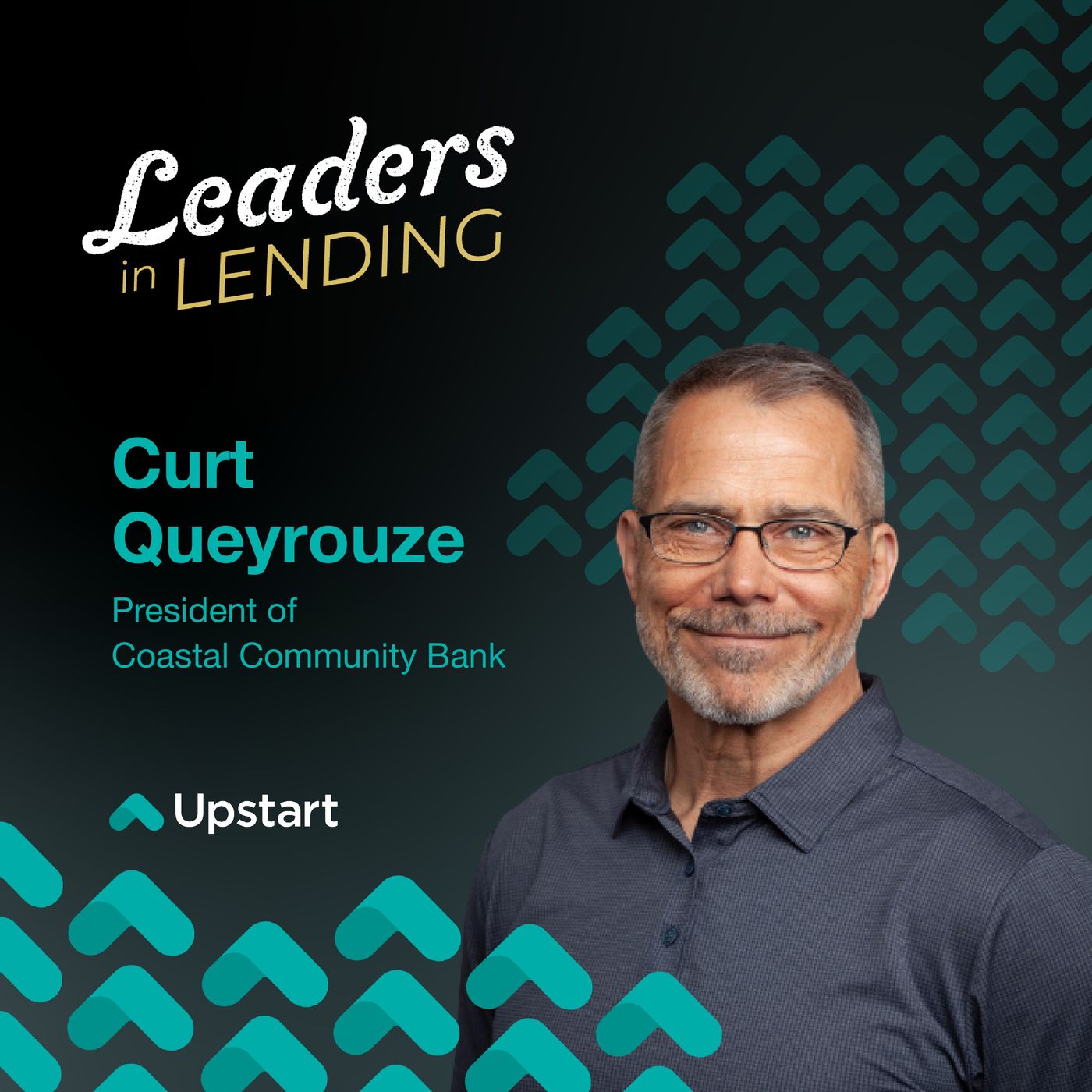
In this episode, Curt Queyrouze, President of Coastal Community Bank, talks about his experience working with multiple partners and gaining an understanding of how these partnerships work best for everyone involved.
Join us as Jeff and Curt discuss:
- Advice for banks and credit unions in the fintech space
- What a metaverse banking experience looks like
Want to learn more about how Upstart partners with credit unions? Check out this case study mentioned in the episode.
0:02 You're listening to Leaders and Lending from Upstart, a podcast dedicated to helping consumer lenders grow their programs and improve their product offerings. Each week, here, decision makers in the finance industry offer insights into the future of the lending industry, best practices around digital transformation, and more. Let's get into the show. Welcome to Leaders in Lending. I'm your host, Jeff Kellner. This week's episode features my conversation with Kurt Kreus, the president of Coastal Community Bank. Kurt and I cover a lot of topics, starting with his family connections to the banking industry and his long tenure there, how he came into banking.
0:44 We dive into some of his beliefs about AI, the future AI, the importance of engaging in fintech partnerships for community banks, why they've engaged at Coastal and quite a large number of them, how they manage those and kind better at managing the fintech relationships and process says, both relationships and due diligence processes over time. And we dive a little bit into what brought them to build a site in the metaverse, why they think that's important, what they're learning from it. It's fascinating. It's probably the first metaverse banking experience I've seen, and of course I went in experience after talking to Kurt. We've covered a lot of ground, a lot of interesting innovative topics that are off people's mind. So I think you all enjoy, so please enjoy this conversation with Kurt. Kurt, thanks so much for joining me today. I appreciate you making the time and welcome to the podcast. Thanks, Jeff, it's great to be here. I'm looking forward to this conversation. We had a wide ranging conversation advance, but I kind of like to start with all my guests just talking about how you got into the business and how you got to where you are. And you've got a little bit more more history in the space than the most I talked to, so it's great. Yeah, so you just called me old as when I heard but that's okay. No again, like we've been involved in this, fit's like a family business for you, right, like you came you came by the question honestly, Yeah, yeah, I actually I did because my my fault, my dad was a banker and a small community bank in New Orleans where I grew up and so you know, as a teenager, I think I was about fifteen sixty.
2:10 My first job at a bank was sitting in the back office at his bank, running a coincounting machine and stamping mail. And then you know, at some point I graduated to to the micro fish machine and the and the proof machines. Eventually then I became a teller, and I worked as a teller through college and you know, graduated an accounting but despite that, I remember I was in college and accounting major, and my dad said to me, uh, you know, at one point says his son, whatever you do, don't be a banker, you know. And of course that's what a fight in my head because I was the rebellious team, you know, with that kind of head knocking um relationship with my dad, and it's like so in my mind, I remember, you know, oh, I'm going to be a banker, and I'll be a better banker than you ever are, you know, and so that that's put me on that path. I don't think that was his intention, but uh, you know, I got out of college, went to work for one of the biggest banks in the country at the time through a management training program, in the early eighties and you know, so now I've been and you know, if you count that college graduation, I've now been doing this for forty years, and which does make me old so or at least I have a even at my age. I have a ten year old son and he told me, don't worry about it dead, you're not old to year sixty five. I said, well, that's good to know, so thank you. So I know where the line is now, Well, yeah, your son's got to call my sons, because my sons are pretty convinced I crossed the line a long time ago.
3:38 Uh, I mean gray hair. They pops in, They go, I dad, you look a pretty old man. Okay, right, right, right, But it doesn't matter. M I was gonna ask, have you ever taken that that that reverse psychology experience and actually tried to apply it in the positive with your own kids? I always think about I should tell my kid not to do that I want them to do, but I always worry acquire on me in the one instance where I wanted to work. You ever tried to use that in your favor with the kids? You know, I can't think of any time, but because I'm a bit you know, sarcastic, right, and so my as my kids grew up there, it's funny to watch young minds try to do sarcasm because it doesn't come out of sarcasm, it comes out as mean. So so I've tried to kind of temper my sarcasm. So so I think I'm kind of stay away from the reverse psychology in case I might teach them something that they shouldn't be doing. So I kind of temper it. Yeah, I always think about using it with my teams, but I go, I don't know, if I tell them to do the thing I don't want them to do and then they do it, yeah, then no other way do I really had And you know the funny thing you so go back to my dad is you know, so I got into banking and and his bank actually ended up failing. It went under in the early nineties. So some years later, um, and it was just a big downturn. He had too much real estate concentration. But but you know, I was still earlier in my career and then he just suddenly
5:09 died, So you know, I never got that chance for him to watch my career. Um, because when he passed away, unexpectedly it was, you know, I was still in my early stages. So yeah, you always wonder, you know, what he would think about the twists and turns that I've taken, because I've gone from you know, I've been in lending for a long time, commercial lending, corporate lending. Then you know, went for work for a startup, you know, on the credit side, and now you know, I'm I'm working president of a bank that's deep into the banking as a service, right and and partnering with FinTechs and some more of that technology stuff. And so it's been an interesting path. And you know, now when I got to the role, you know, he was president CEO of his banking. When I got to that role, it didn't feel the same like what he was as a banker, right, I mean, everything was face to face. And I remember the first teller job I had at his bank. If somebody came up to the tailor window that I didn't know to cash a check on the bank, we didn't even have a online system dummy terminal that I could check. I had to go to a dot matrix print out on a counter behind the teller cages and look up the account by hand right, and then match it and see if they had enough money as of yesterday's clothes to cash the check. So, you know, as far as technology goes, I mean, I've watched all the evolution and it's interesting because it's an industry that's always been deeply admitted with technology. But you know, now we're a whole different space. Yeah, I want to
6:42 dive into your fintech partnerships, But first the comment you made about it, you know, it didn't feel like it like it did when he was in that rot, And it always reminds me that there's this there's two elements to that. I'm curious your thoughts on. One is the world changes between A and B and the nature of the role or the experience is different. But I also think there's a particularly for younger employees, more junior employees, all say, looking up the chain and you kind of have this perspective of what it must be like in that person knows all the answers and how's the confidence and does whatever? And then like when you sit in the chair, you go, it does not feel sitting in the chair the way I felt that it was when I was looking at the person sitting in the chair, it feels it feels very different, so that I don't think that's just because the world has changed between amb but the experience of sitting in a given role, I don't think ever feels like what people think. It feels like, particularly younger employees are looking up going hey, it's must be amazing to be there to go, and it's a little different than when you actually get there.
7:32 It never feels like what you expect it will. I think at least that's been my experience. Yeah, I agree with you one hundred percent. I you know, surprised after a while. You know, after I've become see you of a bank years ago, and you know, after some time you realize, like, gosh, how I am spending my days and it's just completely different, right, I mean, just things like dealing with the board everybody. You know, if you've ever been in primary contact for boarder directors, you know that that's a whole thing in and of itself, right, And then people that aren't doing that don't understand that's a job itself managing. Right. Um, If you're privately held versus publicly held, and I've I've worked in both environments, you know you either have. If you're privately held, you have a key stakeholder that's you know, got their own personality to do. With your publicly held, you've got the markets to worry about, and you know you've more and more of that stuff comes away from just fundamentally the job that you did to get there. And I always tell people when they when they're at a certain point in their career, when they're making that shift between management and leadership, you know, and it's like, um, when you turn turn to be a good if you want to be a strong leader, you've got to stop doing the work you're doing right to some large extent rights if you if you made it for me, I made most of my headway was being a credit you know, a person right, a hunter scanner finding credit, you know, corporate business threat, then a credit executive,
9:03 and then you know, so on another side of it, and and you know, you get to a point where the things, the mechanics that you've got you there, things that got you that position, you have to let somebody else do. You have to lead them and you have to point because as a leader, you've got a set vision, right, remove the obstacles and martial resources you know, it's as simple as that me. So you know, um, that's the hardest thing because the work is different and technology, I think we can see the same thing. Right. It's like if you go into work every day and your whole world is spent in your inbox and something's wrong with your work, set them with your infrastructure, right, you know, So people will feel they'll be buried in keystrokes and things all day and they'll go home and they're tired. It's like, oh, I worked hard today, but did you move anything forward? Right? And if you didn't move anything forward, did you really do what you're getting paid?
10:01 It's a hard question. Yeah. I always tell people if you, uh, your inbox is somebody else's task list for you, and you don't want to spend too much time accomplishing somebody that's somebody else. That's a whole bunch of other people's priorities for what they want you to do. And maybe they're the right ones, but it's your job to figure out what the priorities for you to do are based on your your responsibilities and goals, and they may or may not be. I was gonna say, similar to what I've called it, which is the ping pong match, right, you know, you just kind of keep itting the ball back and forth, and you know somebody's got a got a point to an owner and say you go do this right and then report back and hopefully in an automated way, not an email. But I feel like we're getting the best career advice adventures. One of the things that I've always found is that being willing to be the owner to step up and go I'm not gonna ping pong it back or give you an opinion or say I don't like that, but say, hey, I will take this and own it and finish it and bring you a completed product is a really powerful It's risky, right, I mean it feels risky to do because there's a you don't know how always that you can manage it. But there's a lot of power. And some advice for me to younger people's like, if you're willing to take on that, respond to I'm just going to take this thing and solve it and manage the back and forth and come up to an answer. There's a lot of value created and the people who are willing to to grab a hold of things and do that because there's a lot of like gould throw my two cents into the into the ether and like let it ping pong around and go with other people. But nobody wants to own, you know, come into resolution on a question or a debate or or a problem, and that's like a lot of power and be willing to do that. Yeah, I think you know, when you think of automation and
11:33 for banking and a lot of industries, right, we think we're digitizing, right, how do you turn into a digital organization? Right? I think the core in the back of it for me is is you know there is a deep ownership necessary um when you're doing this, when you're making that transformation, which you find is that um that that you know, finger pointing and bouncing things back and forth across the wall feels natural because banks kind of the vault the devolved probably into deep silos. I mean you look at traditional banking, it's very silo. And then when you look at modern frameworks like agile and things like that, right, it tries to break all apart. And when it works, it's amazing to watch self forming teams and teams coming together and people taking ownership and when you know, when people aren't scared when there's a safe space to take ownership and fail at it or run into obstacles and but but fully informed, and then you have the ability for leaders and then you know, help move things along and get it going in the right direction.
12:41 That kind of forward production is amazing to watch when it gets traction and it takes just what she said right, And I've been saying this for years, or you know, ownership deep ownership. Don't be scared if you have people that take ownership career advice, here, you go right, be the one that raises a hand to own things. Take that risk, because those are the people that leaders pay attention to, not the ones that talk the most in the meetings, not the ones that have the fancies for power points, but the ones that actually will take a burden, own it and get it to completion. Hey, Sarah buch here, the VP of Consumer Lending at First Federal Bank of Kansas City. A few years back, our executive team knew we needed to grow our unsecured personal loan portfolio, so we turned to upstart. Three years later, I am proud to share that we've scaled our loan volume target from five hundred thousand a month to twelve million a month and acquired over a thousand new customers. If you want to hear more about our partnership, check out the full case study on Upstart dot Com Forward slash Lenders. Once again, that's Upstart dot Com Forward slash Lenders. All right, let's get back to the show. All right, we've wandered a long way. But you mentioned the kind of fintech partnerships, and I think it's true that you have more fintech partnerships than you do branches. So you guys are on. You talk about banking your service, but talk to me a little about the your approach and how you view you know, why you've pursued
14:13 that number of fintech partnerships and how you think about them and managing that. Yeah, you know from the coastal bank. Coastal Community Bank comes from a very traditional place, right um, And right now we have fourteen branches here, um, you know, in the Snowhomage County County area or Seattle and very strong community bank I mean really strong, um. But you know, as as leaderships saw and the board saw the transition and being up here in this tech space probably helped. I mean one of the initial stories that I really love is that you know, somewhere around two twenty thirteen, the Microsoft Gaming division and came and talked to the leaders here at Coastal. Is that you know, we were thinking about offering checking accounts to the to the player, right, the customers and the gaming side. UM. And this is you know before bass banking as a service was you know a term. And so they went down, they went down that pathway and it ended up not coming out to be a business model that ended up getting pursued, but it was an interesting kind of for it. And in the bank. You know, as most community banks, I go to banking conventions, everybody's like, we're going to find new revenue. Would being disintermediated all the different threats and yeah, you know, slowly but surely consumers of all ages, right are assuming more and more products or more and more places, um. And so you share the wants going down and so you know, Coastal pivoted to play
15:46 in the space and try it out. Took the fundamentals of operating a good community, strong community bank and put those into play and through connections were growing. We now have twenty seven active partners UM and they they range from FinTechs from early stage all the way to mature brands m and growing and we're still growing um and with it, you know, you you've had to kind of endure massive change, evolve into it. But really the view of acquiring and delivering, So coming from a family that has a community banking background, right, UM, I still believe very deeply in community banking. Um. When my dad did pass away, suddenly went to his funeral and they're like over four hundred people there and asked, you know, one of his friends are like, who are all these people? And it's like, well, these are people that you know, your dad touched their lives, helped them out at some point, you know, through the bank. And that's the lasting impact, you know. And I think the opportunity is can you take the best of community banking, which is really always fundamentally treated by getting to know the customer better and take that digital sphere And I think the way to do that through modern technology, you know, things like AI and mL and data management and really getting to understand the persona and then taking that very personalized kind of approach and delivering it. Well, the problem is if your community bank,
17:17 what budget do you have to create the new models, raise the money to go a chore, customers the light and right with the biggest bust the size developing your model is acquiring customers for a startup, right, especially if you're doing it a digital sphere um And I think so the pathway of joining the two has made sense for a long time for me. I know, we've gone back and forth in our in our industry about you know, our FinTechs and banks competitors, are they partners? They think where everything, you know, we're all part of the same ecosystem is moving forward, and we just got to decide how to how to play in that ecosystem. So Coastal made that decision and has been very successful at it over the lass. What's your advice? I mean, I feel like this is an area where lots of institutions are trying to build relationships or partnerships, and I often hear from from banks and credit unions when I talk to them that there's this challenge.
18:08 There's there's kind of multiple challenges, right, There's like how do I find the right partner for what I want? How do I diligence? Especially if you know, we'll talk about AI maybe in a minute, but if they're doing things that I don't fully understand and like I don't have expertise and understanding it. And then there's this third part, which is like I see too many agreements. I think that gets signed, and then like how do I go actually get how do I go make this thing work and operationalize it and get to a rhythm and so walk me through little bit how you how you think you guys do that effectively? They're like finding the right partner, you know, getting through understanding, not just first round, but like is this a good partner in managing those relationships for success or long terms. I see a lot of failures at every step along the way when financial institutions try and partner with you know, startups or fintech type companies. Yeah, it's an evolution, I think, and it's still happening, right, We're still learning constantly and as we are going through it. Matter of fact, we were just talking internally about, you know, having a refresh on our due diligence protocols and kind of because we're there's constantly new topics coming up. Of course, the regulators are great at throwing new things on our plate as well, and concepts we had and maybe thought about yet or maybe we thought about we weren't ready to address. But I think the advice I I get is, um, you know, do there's a lot of strong players in there.
19:22 First of all, get online and go go on LinkedIn and social media or Twitter where every you know, and and start following some thought leaders and really start understanding space better. I mean that's did that years ago. Uh, you know, connected and read voraciously and you know, learned as much as I could. So don't sit back as a leader part of the leadership team and find somebody young on your team. And since you as I said, hey, go run with this and bring it back to us, I think that's not going to work. The second thing is, you know, understand where you are the problem with a lot of community banks, I think when it comes to tech right, they have an infrastructure is not ready. Um.
20:03 And so if you're gonna, if you're gonna do it, you can't have a glorified kind of it desk with a leader in your back back cup ground. And I think you're going to be able to go and start addressing all these issues because at some point you're going to be dealing with data and data ingestion and data management. UM, if you're going to do it right and you need a certain expertise, you don't have to build a whole development team. We have, we do, and we will, but you don't need that. There's lots of intermediaries that can help you along the way, and then you know, get get the good consultants along with you to kind of help you, kind of guide you in this. It's it's mature enough that there's experts. You have to spend some money, you have to invest in it to get there, and then experiment on a small basis until you get comfortable. And it's it's hard to give general I do talk to a lot of executive leaders of banks. We feel coastal bank, we feel we want to grow this ecosystem because we think it creates stability and certainty to this world. So we are inviting constantly encouraging other banks to get into space.
21:11 Which seems weird because you think I do have some other leader bank leaders that are in the bass space or such. There's like, oh, we're going to go in at early and strong and control the market. I'm not sure because I think it takes layers and layers of expertise and partnerships to get this done. I believe it's a deep and big partnership game. And if you're going to do that, you know, um, I believe you need a strong ecosystem, which means strong players throughout that can handle all the various things that can come up. So, you know, I think we were we're in a very you know, infant kind of stage of this. We've got a lot of growth to go, um and you know, I welcome a lot more people in, but invest in risk and invest in technology, invest risk. And the other thing you mentioned that that struck that struck me was that you're in the middle of revamping your due diligence protocol. And what occurs to me is I think many, for many institutions to end up in the perfect is the enemy of the good, Like they're waiting to feel like they know what they're doing to get in the game. And I feel like, you get in the game and you figure it out, not that you don't want to have a plan, but that you know what they say about plan no, No plan survives, no battle, plan survives first contact with em Like you're gonna have to adapt to the reality. You're gonna learn from doing.
22:29 And so the kind of the best way to get good at it is to so I some of the kids, you want to get good at something, you got to you gotta do it. You're not gonna start off good or having all the answers. And so I think that's a something I heard. And what you were saying is that the willingness to get in the game before you've got it all figured out and say hey, we're gonna like, we're gonna learn, we're gonna do that. We're gonna say, hey, this can be better, and we're gonna improve, improve, and kind of evolve over time. Yeah, I mean, you gotta and you gotta make sure everybody's on board, the leadership, your board, um, and go out there and you know, get them this continual improvement a cycle. But look, the first modern data platform that I tried to build in twenty our team you know, tried to build in twenty sixteen. I guess you know, two years later we were ripping it apart and rebuilding it. And that means, you know, a million dollar investment. Most of it was you know, burnt um. That didn't stop us it probably maybe it should, I don't know, But that's this world, right is like we didn't build it for the use of cases that we were actually going to end up, you know, pursuing UM and it's just a constant thing, and it's it's if you don't like change, then you know, retire, go find some other place to door. You don't have a choice, right, it's change or die at this point. So I wanted to dive into two specific areas that you've You've got some experience in the Finthic partnerships, but just in the technology, Joe. The first is AI you mentioned ai mL you know, I think it's it's maybe next to crypto, the thing that you can't go
24:00 to a financial services event or conference and not have somebody want to talk to you about positive negative. Everybody's going to jail who does it? And everybody's gonna die who doesn't. And those opinions are all over this place in terms of what this is, how do you think about the capabilities of AI it, what its opportunities and abilities are to improve the system, Like where do you see the biggest advantages for people who can find a way to adopt it? Because this has been said over and over again, so that this isn't not original thought. A matter of fact, I don't think there's anything help here to it's original thought. Right. Everything is a plagiarism, right, and that gets to AI, particularly to talk like chat GPT, and people you know are criticizing that. But you know, everything in our brains we've learned from somewhere, right, and so every thought comes out of a derivative of some other somebody else's thoughts for me AI, and you know, so this is a statement. It takes you from looking in your review nerror to looking ahead, right, that's one of the most important things. And it creates that ability to really get more and more progressive and individualized UM outcomes.
25:02 And so I think that, you know, it's amazing because I played around with some of this new technology and it's like, um, I got on one piece of software not too long, I say, uh, maybe I think I typed in, you know, create a seven page power point of presentation about how execution is a critical component of innovation. And it was great, right, it created I mean the content, the copyright, the pictures until I got to the sixth slide and the word execution somehow translated into good copy on the last slide, But there was a picture and there was a woman sitting in a car behind the wheel of a car who had a bullet hole in her head. So it had taken execution right into right a wrong place, right wrong. So there's you know, yeah, there's there's a lot of crazy things that could come out of AI. But ultimately, um, you know, it's it's super what would have taken me hours and hours to write. So I'll come in and I'll clean it up right, and I'll take out that picture or maybe I'll leave it in and and make fun of it, and you admit that it was AI to help me do it, But either way, it's it's just leap frog the ability then to do something like that, and and so the productivity and it's just like when Google came out, right, Uh, we had this debates about what it was going to do to education if kids could look up the answer to everything, and it was going to display jobs, And here we are, and it's
26:33 like it's a critical part of how we do we live our lives. It hasn't really upbended or supplanted, but it's it's you know, fast charges to more quality stuff. You know, I'm a Starter fan because I watched the episodes as a as a young kid. And you know, but but that whole premise of you know, getting into society where you know, you're talking to computers and there you know, and even in the later ones you have data the android right next to you. That's a world that brings us to more quality, puts us points us towards and more quality outcomes and more quality work. Um. I embrace it wholeheartedly. But yeah, we have to balance it out. UM. You know, there was a congressman or senator, I don't know who it was, just yesterday, I think UM read a speech created by AI on the floor of the House of the Senate whichever.
27:32 The point was um and and first you know, first time, BUT had asked it to to create, you know, a two hundred word speech UM and but talked about the premise of, you know, we need to think about this before right now we're all anguishing about social media and effect on society. UM. And I think that's he's he's got a good point is right now is to start to think about Yeah, there's there's there's no pure about AI. It has good and bad. So let's really think hard about and just put guardrails right about how we approach AI, how we use it, because it's going to be a great accelerator and it's already embedded in and a lot more things than we even realize, and you know, let's manage it well, you know, help it benefit society instead of the harm.
28:22 Yeah, for sure, I'm curious if you have thoughts on the limitation when you talk about it at being looking looking ahead as opposed to the review. I think it's really interesting, but I also think they're earth. We start with this as an AI first company, and we get a lot of questions about the macro, and my machine learning guys go you know, forecasting the macroeconomic conditions nine months out is a pretty bad use case for mL because there aren't that many real variables. Aren't if you think about cycles, there's a lot of data points, but there aren't a lot of cycles, and they all look a little different, and it's it's a very challenging problem to predict, and lots of people have made and lost money trying to make algorithms to predict market movement, which is one input into you know what the macro might be in nine months. So I'm curious if you think about like, places where it's capability to look in the future are really powerful and impression and valuable to day in places where you go, hey, I, you know, it's like our version of the macro, we go that's just we can measure it, But predicting it is really hard, UM and something that maybe we think it's not well designed for AI. Let's let's talk about credit for a second, because there's a there's an interesting thing that happened during the pandemic and it's not PPP, right, but it's somewhat related. UM. So you know bank I was at UM has large equipment portfolio, so it's eighteen wheelers transportation equipment. You know. Part of the relief Act, the regulators came and said, okay, you can offer deferrals to your customers UM, and you don't have to count it towards non performing loans on your books. Right, So the big penalty I'm performing loan is is what it can do to
29:56 your ratios, you know, et ceter the capital most of things like that. So for the first time in my career, the very lads are saying you can go ahead and let skip payments all the way. And I think it was up to like seven months if I remember correctly, for your customers to help them get through this initial pandemic shutdown, and and different banks took different approaches. The bank, you know, our executive team got together and say, we're all in on this. So here you have truck drivers who who you know, they're they're living is dependent upon being able to pick a load up every day. Right, economy ground to a halt. We just blanket went out and said, all right, everybody that wants one, we're going to give them up. If they want to defer payments right now.
30:42 Some banks said, are we're going to make them pay interest and they can skip principle, And you know, I'm like, well, if somebody can't pick up a load, or if somebody can't go to work, that doesn't help, right', you might as well just leave it alone. Right, So we full and we allow customers continue to extend them through the whole thing. Right, And so we tried to predict out what might happen when we went back into repayment and the comedy economy's rolling and everything else. We had no tools to do that right readily at our disposal. That's where AI right. So what happened though was when we finally stopped offering and to put everybody back in the full of payment. So our non performance and our past duos never did surge because most I think at one point close to fifty percent of our portfolio was on deferral and then it went back into repayment and we expected past duos to surge and they didn't. It actually really helped beat this one external environmental thing challenge that the industry went through, but we had no data to prove it was going to work. But now with AI we could have we could have taken we had data points, we could have taken those data points, we really could have projected and at least had some models to say, you know, what are the factors we think you're going to contribute to whether somebody will get back you know, um into that ability to pay kind of good model. Right, So those are the kind of things that think
32:14 you know that if we really look at credit. The other thing I think about is like, how can we there's origination of credit, then there's there's management of credit, right, and and we all focus on originating credit. But one of the more interesting parts for me is and particularly we talk about like underbanked and and high interest credit and things like that, most of those are caused by a mismatch in funding, right, so temporary job loss maybe, or a big bill to pay car repair, you know, medical bills something like that. So it's and be isolated. Well, how can we create a picture around that individual. It's more than finco, more than payment performance, which are all historic. Gives us a picture, takes an account this thing, and then gives us a probability that that person can return back to regular payments once this event resolves itself. Right, you have to build a model around somewhat you know, very tight cohorts or individuals m AI you know um. And that's where you know you can you can use all kinds of inputs. But just imagine if we could instead of passing credit from institution institution. A lot of fintech um was born out of refinance, right, which basically taking ill constructed credit and and you know, consolidating credit cards into a personal term. You know, it's expensive to acquire a customer. What if I could have kept that customer by just offering them you know an adjustment,
33:46 right, maybe my credit structure to be variable. Um, that's what AI could could start to like tell us, right, can you vary payments? Can you very interest rates? If somebody's you know, performing is positive? Right? We all we all if you're in credit, uh pool credit for a while, you you understand about peak loss loss curves, cohorts. Um, you know you stop learning all those points that the truth is right? Everybody everybody can You can look at any portfolio you can find at some level past the peak loss curve, that mature season part. Everybody would want to take that credit because you know you can predict very well what's going to happen. Right. Um. But the people that that you know got into that credit, well, if they're the best, you know, has their interest rate gone down? There's their payment terms gotten better because they are the better ort of that whole group. Um. Nothing to just right and eventually AI all the rest of this will provide us that ability to do things.
34:50 So I don't know, I love thinking about the what ifs. When I'm in a hammock. I won't be around, you know, my career to see a lot of come to fruition. But m there's tremendous use cases. But yeah, predict the economy over the next twelve months. Bad news, very bad. So let me ask you about one more area because I know you guys have made some investments in the metaverse, and the metaverse is one of these things that I have not really played with, but I'm curious about and curious what people see the opportunity. And you guys have actually done some stuff in the space, and tell me a little bit about you know, what you've been what you've been looking at or doing in the future that you see in the metaverse. Yeah, So we we built a world we called it's called Coastal World dot com. So you can go in there and take a look, and it's basically we've got you know, a dozen plus of our fintech partners on there as well as Coastal Bank, and it's gamified world that you have your avatar and you move around here. Um. The idea for us is, you know, um, a self contained metaverse, but also one that can integrate with other metaverse players. And we kind of looked at the space and it's like, do we want to go biden real estate in the ether? That seem crazy um, we want to take a bank branch, and nobody really wants to go to and put a bank branch in the in the ether. No idea, um, And so you know our idea. And this again goes back to having engaged with like Microsoft's you know, an Xbox everything. I mean, one of the interesting comments out of that early experience was the biggest cohort of gamers at the time or forty five
36:24 to fifty five year old women play an animal crossing. Right, females play an animal cross You would have expected that, right. People people like to be engaged. So we have Coastalworld dot com. Um, it's in it's not in full launch, but you could you can go play. But even without a full launch, you know, we have six to eight hundred users a day and an average engagement time where they're active on the site of eight minutes. And so we've got their attention for eight minutes. We'll think of the what ifs on that, right? Can you um, can you take that then and go into financial education? Can you build a PFM a personal financial management tool around that that not only takes the transactional data, right, it's underneath it comes from your checking account, your card spend and all that.
37:13 It also allows you to like with your with your engagement and then into the world you get the kind of direct towards things that you know are part of your future. So if if you're engaging with the world and you're out there investigating um uh, you know, sending your kids to college or college funds, right, that's not in your transactional data necessarily today, but that's open aspiration. So if you can start to build an ecosystem, of a gated ecosystem where there's where there's data, you know, controls, where you can build and use AI to like start to help formulate a real persona around the person right where I can start to collect important data points and frames around who I am, where I want to go, what I want my financial world to be like, and you know all that. Then you can really start to leverage those kinds of things in a world where um, you can attract more and more people to engage in that eco system, And the possibilities are pretty pretty interesting for us. I mean, we're working behind the scenes on building some muscle memory in that space, trying to you know, build just onboarding for our employees and first of all to see how does it work when we start engaging more and more into this world, um, and then you know, we'll see what happens with it. Um. There's a lot of a lot of fun about it. But underneath it all, you know, it does come down to data, data controls, data management, privacy security. We believe in the data protocols where you know, you want to
38:45 minimize the amount of data flowing, where tokenize and mask things so that you know, can I can I validate somebody's identity without passing their critical personal BII across the internet right, and blockchain and all those things give you those capabilities. I mean, imagine in a credit world if I could carry around a set of important data points about me when I apply for credit, right, how much I have it own retirement account? How much have savings? Um? You know, do what I have health insurance? So am I properly insured on my house? Right? So that I'm ready for disasters? You know, all all of these things, And if you can start incorporating those in the data models, then FICO becomes what I don't know what FIGHTCO tells me anymore, It becomes them probably the least useful data point if you can really paint a different picture. Yeah, very interesting. It's certainly that idea of being able to carry around the information about you and have some ownership of it is really fascinating too, because right now that data exists sort of but it's not it's not yours. I mean, it's it's it's very weird that both are the data about our financial lives and the data often about our health lives are like owned by these entities not by us, and when we go into intoity, we kind of like lose stuff that we don't have control over it in some way that it feels very very strange in terms of, well, how you think about the data about you and your history and what you you know, loans you kind of Yeah, I've literally, at least a
40:16 half a dozen times have been in front of a bunch of younger people and had to tell them there was a time that if you switched phone companies you had to get a new phone then, and they're like, what do you mean? You know, Yeah, it's just like if you switched banks, um, you know, today you start over right accumulating and the information they're going to get from you is the whatever is in your credit score, your credit file. M Other than that, it's a big gap, right, I mean, just imagine if you start building a portable, self contained kind of assessment of your financial health and your financial picture. Well, Kurt, we are unfortunately running out of time. Though I've really enjoyed at our conversation.
41:00 I do have three questions I ask everybody at the end, and you kind of we kind of stumbled upon it. Answer to the first, I'll ask if you want to stick with it against it, which was like, what's the best piece of career advice you've ever gotten? We kind of like did a little career advice earlier in the conversation. But is there anything else you would add to that or you want to want to leave that one stand as your career advice? Well, you know, I would say embrace change. If you're going to be in the financial services industry, you know, the things that got us here aren't going to take us forward as the saying goes, and the organizations and the people that can embrace change and be part of it and ownership, right we talked about earlier, Right, the people would say, Hey, I want to be a part of whatever change it is. That's happening in the universe that will get you added fancy power.
41:50 I like it. There's your there's your career advice. My second question is what is the best piece of advice you've gotten about the consumer banking or consumer lending industry generally? You know, I probably that don't follow the herd. The money is to be made right in the stuff that's harder to do right, and that again, this relates back to credit scores. Right, if you can figure out how to lend successfully between you know, six to twenty and seven hundred, you'll make a lot more money than the person that's lending only to seven twenty and above. So you know, um, you know, the easy things are where people migrate and then everybody fights over those same customers. Right, the moneys in consumers be made helping the people that need it. Got it? That's great? Don't follow the hurt it's uh, it's great advice. The common wisdom is what the stuff everybody knows every does, so finding ways to do something different is where the opportunity lies. Last question. We've talked about a lot of future areas, but I'm gonna ask you for one bold prediction about the future what's a bold, bold prediction you got about. I like to think of this is the thing I can invite you back and you know, we can have a chat about whether you were right or wrong. Um So, so my prediction really falls on something we've already talked about, which is this metaverse, right, because I watched I watched my kids and look, I don't know how. I really can't define it. I'm not that smart, but I watch. You know, here's
43:21 the tech point, right, first time I had Coastal World up my laptop at home and my son, who was nine at the time, saw it. He immediately reached and grabbed my mouth and said, Dad, you gotta change your avatar. You can't go around looking like that and new intuitively how to do everything and navigated. He's asked me to try to come and play in Minecraft, and I can't even move around, right, He's just just followed me, and I was like, I can't. Right. This is native to the younger generation, right, And I don't know they're I'd say it's metaverse where we're going to be. But this kind of new world where you're just kind of everything is a digital and electronic and you and you've got a mirrored personality, right, because you start to see even I read something the other day, fashion is following the metaverse, and the metaverse and fashion are together and watching my you know daughter, my twelve year old daughter, her her avatars and the different things she does and her the way she dresses.
44:21 Right, it's the same. And I'm like, so, it's so so, you know, I think there's a lot to be said in this space. I just don't know what to say about her. I'm not that smart, but I think, you know the future, when you look at twenty thirty and twenty forty, we're going to be living in a multidimensional kind of interplay that's going to be part of how we go about our lives. Just like I couldn't leave home with this. It's interesting. I hear what you're saying. And I used to have this debate about you know, digital goods and why people want to buy digital you know, gonna buy shoes for you, like we got to buy real shoes for your feet, but you know you don't have to buy shoes for your avata. What are you? What are you doing? And you know, when you really break down think about it, somebody kind of made the comments me the other day that kind of resonate, which is like, you know, people spend a lot of money that's not just effective, and it's like not optimize for the most cost effective what you buy a watch because you want to make a fascist statement.
45:13 You buy a different piece of clothing or a para of shoes, and you buy the cheapest para of shoes. You buy the pair of shoes that you want to have, and that say, that's a fascist statement, and like, why would you think that when we move to a digital persona where somebody of us spend so much more time that you wouldn't similarly like buy the equivalent of a nice watch or a nice shirt, or a nice hat or a nice whatever, you know, buy a nice car. You don't just buy the car that's like the cheapest thing that actually effectively gets you to work. People buy the car that they want for whatever reason. And a lot of that is about you know, fashion and desire, and that translates to the metaverse and you're seeing that really I think I take off or whether that's whatever version of metaverse, your digital personality you want to come through it just the way you do your personality in real life through the things you own and things you wear. So that's not new. I mean I remember being in college and being really pissed off because I couldn't afford those shirts with the little yeah because that was the standard, right, and that was the status symbol, right, and they were they were expensive for the time. Um. And that's the same thing about art, right. I mean I have a good friend and owns modern, large, modern art gallery and I've asked him and he's like, well, I said, why wolst I pay that much money, you know? And and he's like this, this is a world that exists, and you're questioning and fundamentally like you know, yes you he says.
46:28 My line is, do what really moves you from art? But the truth is most of art is soul because it's a status symbol and people want that's to own a piece of that status symbol. It's image, you know, and we pay for it all the time. So yeah, I don't doubt it all right, Kurt. I appreciate your time to this as a fascinating conversation. Thanks for making the time and sharing your thoughts of the audience. Yeah. Thanks, it's been great. Upstart partners with banks and credit unions to help grow their consumer loan portfolios and deliver a modern, all digital lending experience. As the average consumer becomes more digitally savvy, it only makes sense that their bank does too. Upstarts AI lending platform uses sophisticated machine learning models to more accurately identify risk and approve more applicants than traditional credit models.
47:15 With fraud rates near zero, upstarts all Digital experience reduces manual processing for banks and offers a simple and convenient experience for consumers. Whether you're looking to grow and enhance your existing personal and auto lenning programs or you're just getting started, Upstart can help. Upstart offers an end to end solution that can help you find more credit worthy borrowers within your risk profile. With all digital underwriting, onboarding, loan closing, and servicing, It's all possible with Upstart in your quarter. Learn more about finding new borrowers, enhancing your credit decisioning process, and growing your business by visiting upstart dot com Slash four dash banks. That's upstart dot com slash four dash banks. You've been listening to leaders and lending from Upstart, make sure you never missed an episode. Subscribe to Leaders in Lending in your favorite podcast player using Apple Podcasts. Leave us a quick rating by tapping the number of stars you think the show deserves. Thanks for listening, until next time.

