Clicks To Bricks: Starting the Customer Experience Digitally



When it comes to building their customer experience, banks have traditionally started with brick and mortar before expanding digitally.
What if banks have been approaching CX backwards?
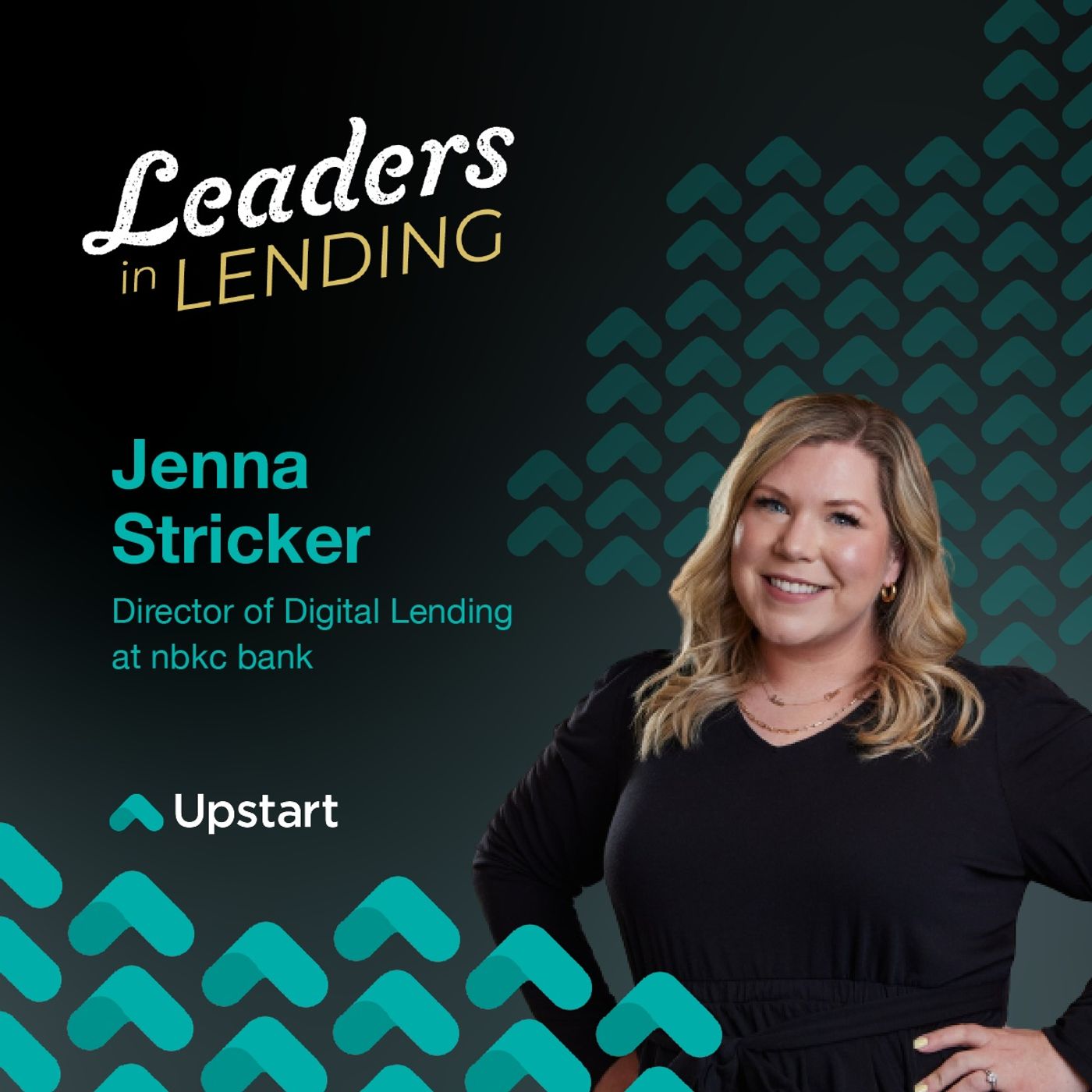
In this episode, Jenna Stricker, Director of Digital Lending at nbkc bank, shares why more and more banks are laying their CX foundation digitally first, only later adding the brick and mortar on top.
Join us as we discuss:
- The advantages of starting off digitally
- How to deliver a delightful customer experience
- How alternative data helps banks improve the underwriting experience
0:02 You're listening to Leaders and Lending from Upstart, a podcast dedicated to helping consumer lenders grow their programs and improve their product offerings. Each week, here, decision makers in the finance industry offer insights into the future of the lending industry, best practices around digital transformation, and more. Let's get into the show. Welcome to Leaders in Lending. I'm your host, Jeff Keltner. This week's episode features my conversation with Jenna Stricker, who's been in her role as the SVP and the head of Digital Lending at NBCC for ten weeks, but in the consumer lending space for more than ten years, and shares her experience from throughout that time. She had a really interesting phase going from clicks to bricks and not just bricks to clicks, which I thought was really interesting perspective.
0:50 Shares how that kind of dictates what you need to do in the bricks and the clicks environments each I promise that'll make sense if you listen to the episode, how you think about online experiences. Her propensity for opening up lots of digital accounts as as I often tend to do as well I when comparison shopping and trying to find new ideas for how how things are done well by others in this space, and also approaches to alternative data how I can increase the ability of lenders and financial institutions in general to serve more customers. So I thought it was a really fascinating conversation and I hope you enjoy it as well. Without further dude, this is my conversation with Jenna Stricker. Jenna, thanks for joining us today on the podcast. I really appreciate your making the time. Thank you for having me. Yeah, I've been I always like to start by asking my guests a little bit about their pathway to their current point in their career, because it's usually not our childhood ambition to end up in the banking space, at least it wasn't mine. But yet here we are. So tell me a little bit about the path that has brought you to this place. Yeah, I guess I maybe I did. Maybe I was the odd odd man out. I wasn't driving, didn't dream about being a banker by any means, but I always did, you know, as a kind of a career marketing professional. Started my career actually very early, working fifteen sixteen years old, in a call center, and so I always was just kind of that connoisseur of the perfect customer experience or the perfect customer engagement with, you know, whether it's somebody that's buying a newspaper subscription or signing up for some sort of service on the phone. So for me,
2:20 I don't know, I was always really passionate about that, about making sure that when I was engaging with someone that we did not have somebody that walked away like, oh, what was that experience that just happened. So that's really kind of I would say that the fastest way to describe how did I get here is I worked, you know, about ten years ago, starting in a consumer lending organization, focusing on portfolio growth and acquisition. How do we make the biggest impact with our customer engagement, how do we retain those customers and continue growing our base of customers of really you know, ecstatically happy individuals with the experience that they've had. And so that's that's really led me here. I've only worked for a handful of organizations over the last ten years, and it's always been focused on just growing that consumer making sure those you know, one on one experiences whether it's what's someone in a call center or on an email campaign or a display at that they see that it's very clear and conspicuous. You know what they're getting into and what their benefit would be. All Right. I love that that story and the focus on consumers and customers and growth, which I think is so so much a part of what every institution now is trying to find a way to do. But I want to dive into one of the things you said to me when we talked earlier, which was moving from bricks to clicks to clicks to bricks, which I thought was this, everybody's got these little one liners that I think, but they kind of capture some truth about what we're trying to do, and that was an interesting one I hadn't heard before. So you tell me a little bit about like, what what do you mean when you say moving from bricks to clicks to clicks to bricks. How do you think about what that's
3:52 what you're trying to do in that context? Yeah, I think so a little bit about NBKC. We're an organization that's been around for some time, but you know, early on had a very heavy focus on the digital world, being a fintech partner in bringing and I think you know me from a community bank standpoint, not every community bank has our entire team of developers behind them that you know, are kind of owned and guided by the direction of where the bank is going. And I think that plays a huge role in you know that catch phrase of of clicks to bricks and bricks to clicks, and well, the majority of banks have you know, I guess typically over the course of history, always focused on having a brick and mortar place in their community or a brick and mortar place in their market. Um, we recognize that that's incredibly important for a very large segment of our borrowers that they have that relationship banking with someone who's on the corner of you know, first in Maine, and that certainly does still play a huge part in our strategic plan. But I would say even bigger than that is that we haven't been focused on trying to drive individuals way from a brick and mortar presence over to an online presence, which I think does happen organically right now. The bricks to clip, Yeah, folks are kind of saying, hey, let's try to get people into our online space. And we've actually really been focused on the reverse of that, saying we're not trying to force you into this digital place, but we're here for that and so many of our online banking relationships
5:24 and partnerships that we have not only with businesses in our community and in our Kansas City footprint, but also with borrowers and with deposit customers. Right, they actually started out as an online banking customer and are very happy to find that they can actually still go into a brick and water place as well. How does that change how you think about the digital experience. I mean, it's a really fascinating kind of shift, but it means in many ways, your digital experience could be the first or the primary where I think a lot of institutions have thought about building a digital experience as the follow on to the in person, the current customer who's got a relationship it wants to check their balance or deposit a check or do something simple. But in this case, you're saying it maybe the first or the primary interaction somebody has which kind of changes the nature of what you need to accomplish or maybe how you think about serving that customer. I'm curious how you see that shift, or if I'm crazy when I say that, but it seems very interesting to go from clicks to bricks. It takes some of you came to you digitally. Now you're talking about onboarding and starting a relationship digitally and then having the in person service, which makes a ton of sense to me. But I imagine it shifts your priorities a little bit on what you're delivering or how you think about the digital experience of the role it plays in the customer journey, because you're kind of inserting it in some ways at a different point in that journey. I think you're absolutely right, Jeff. And the one thing that you said that is could not be more important to remember for any organization that's thinking about how do we adapt in this fintech space or in you know, kind of a Again, I keep saying clicks to bricks, but in this digital revolution that I think most banks are having right now, is that does become incredibly important
6:57 that you get off on the right foot with that barrow, that they understand the support that they have from your institution, as well as the myriad of products and product offering that the bank has. So you know, I would never say we're in a time and place where it's not important to be focusing on that digital interaction, but us starting that and also having that as a primary communication source means that, you know, we always have to get off on the right foot with those borrowers and also communicate to them right be very thorough in our communications as too. Here's again, here's what you can expect from your interaction, and here's what you can benefit from as well. I like that knowing so much. I think of life as setting expectations and so kind of understanding where to go for what, When when do you use A or when do use B As long as people are actually more flexible I think than we often understand. As long as they have the expectations set right, they know where they're supposed to go, what they're supposed to do. As long as you meet those expectations, that's huge. And helping them understand where and when and how to communicate with which tools can work, I think can make a big difference. I want to dive your your point on customer experience, you know you talked about I think opening up lots of one of those people I've got, you know, I got a stack of cards and a drawer over here. That's all the various digital bank accounts and services. I've got one that you could use to spend bitcoin on stuff the credit card, and then I bought a cup of coffee on bitcoin in like twenty fourteen, and that's a turns out that was a very expensive cup of coffee at the car exchange. M But you know, trying out all those services I think
8:28 is really valuable. Talk to a little bit about how you think about the value of that, or opening up lots of accounts and how that informs how you think about building the right customer experience for your own customer. Absolutely, that is um it's a little bit of a passion of mine, and I would say that it takes up a fair amount of my mailbox as well. But yeah, I think, you know, exploring what in this day and age of neo banks, um, you know, banks that sort of this this niche of the market, I think it's fascinating and I think it's fascinating for us to see how consumers are being spoken to right from the company perspective, because what that brand is trying to do, when you know, specific to a new bank is talk to that borrower. But you know, the individuals at the sponsor bank or at the company that you know put that card or bank account out, um, they're likely not in the target audience for that barrower. So I think it's fascinating to go out and look at how brands have crafted their voice, how they've crafted that experience of what it looks like online. How can you engage with the brand? That's a big one for me. I love reaching out. You know, if I opened a package of fruit stacks for one of my kids the other day and there was like this weird, you know, gob of white stuff in there, and I'm sure it was just probably where coloring didn't get mixed into the fruit stacks all the way. But I love to reach out to the brand and engage with them and say, hey, I found this in our box just to see what the customer experience is like, and I think we can bring that back to our brand to say, you know, what is it that not only you know we're talking about like ancillary industry, but our competitors, you
10:01 know, direct community banks in our market or even online banks as well, are actually engaging with their consumer base. Because I want to make sure that what we're doing at the end of the day, is that we're actually giving people what they want and more. It's not about meeting the baseline expectation, it's about exceeding that expectation as well. Yeah, that's so true. I'm curious do you do this with your own product. One of the things that surprised me when I talk to some banking executives is like they actually have never been through the onboarding experience for their own institution. They don't. I mean I used to. I've got like five thousand email accounts and upstart systems because I used to apply for a loan, Like every week they talk and we've changed something, I need to go like see it. And then I'd sign up for all of our competitors and go through the flow and I'd say, hey, they do this and we don't do that, like why don't why don't we do that? Or should we? You know? Just so, of course they would require a unique email, so I have like a bajillion versions of emails that I use for that. But I'm curious if you've got if you go through your flow, if your team goes through your flow, and if you like what you learn from that because to me it's been such a valuable experience, really, but put yourself in the customer's shoes and understand the process from the customer's point of view, which can often get lost in the kind of internal politics and architecture diagram and checkbox of things that need to get done before. And I got my BSA checklist and my am L checklist and we do these twelve things. Well, what does it actually feel like?
11:24 Right? And how does that And I think that's what you're talking about when you talk about finding these brands and going through those experiences, And I'm curious if you do the same thing with your own because it's so interesting to see it. Absolutely, yeah, absolutely it is. It's so important to me. I think that's kind of one of the one of the first things I do. It's I call it a it's a it's a base level. It's level zero point zero tasks. You know, when when you're actually getting either ready to launch a new product or you know, add a new feature. Right. I think everyone's in this time and place where we're thinking about fraud and what you know KYC does for our business, obviously knowing that that's a regulatory requirement but it's definitely something that helps bend off if you're doing it correctly, a fair amount of loss right mitigating in some instances millions of dollars depending upon what your product offering is. But I do run through that.
12:16 I make it a best practice of mine to do it on a desktop and a mobile device. Send it to several people on our team, send it to people outside of our our organizations, like, hey, can you step through this right at the appropriate place? Hey, mom, you know or cousin, I need you to come in here with your device and walk through this. But just like you, I'm surprised that there's a lot we get caught up in the day to day QA and you know, business acceptance testing on some of these digital products. And it never ceases to amaze me some things that are very basic that sometimes get overlooked. So absolute firm requirement for me to do that and then taking it one step further. As well as session recordings seems to be a real hot trend and tech right now that the number of things I've seen on a session recording go wrong that you would never get in a testing environment is also really important just to set and watch right, what are customers doing. What are they looking for? Um? You know, are we answering their questions? Are they scrolling up and down on the page and reading every single word and maybe not finding what they're looking for before they abandon? So, Um, those are all things that are absolutely critical requirements. I love that kind of other people in the session record It's so true. Like you watch these session recordings and you're like trying to make a payment. You go, oh, click that button. Why would you click that button? Why no, no, no, don't don't? Why no? Why why? And then you got to like learn from that because it's especially when you've seen the products so much, you like you have this intuitive understanding of what to do or how, and you're a savvy consumer of such products being in the industry, and then the average consumer isn't and they haven't seen a product, and so it could be shocking what they do.
13:46 And then you go, but that's like great data on we better make this more obvious what to do or where to go or how to achieve this objective that they have, because it could be stunning what you find in those recordings. Um, when you watch people actually doing doing using your product, and you go it's not what I thought you would do well. Absolutely, so I wanted to dive into something you said earlier because you talked about having your own dedicated development team, which is fascinating because a lot of It's one of the funny things to me that this kind of idea of bank fintech partnership is considered new and I look at like just the core systems providers, and like, very few financial institutions really build the majority of their own software, right, they're really And so I look at fintech partnerships think a software developer providing tools to financial institution is kind of not that new a thing. And in many ways you're right that having your own dedicated development team that's building core user experiences is somewhat different than others. But obviously, you guys are not of a scale to be like building everything from scratch on your own. How do you think about where you place your bets on what's the priority for you to build versus by where you use the resources of a development team to add the most value, Because it feels like like an almost infinite menu of things you could do, and yet a resource that clear is an infinite in scale and I'm curious how you think about where do we deploy that for the most value.
15:03 How do we think about making that decision. I think every fintech organization on the face of the planet right now faces that pench of our resources are not unlimited when it comes to you know, software developers and engineers on the back end to build things. And I would even challenge the biggest of you know, the box fintech companies out there to say, oh, we build everything on our own. And I just don't think it's a it's a reasonable expectation to think that any company has the centect matter expertise to go out and build one hundred percent of their tools. And so it really boils down at the end of the day to a really great build buy analysis as well as some great cross functional teamwork within your company to say, here's what we're really good at and the things that maybe we're not so good at, what makes sense for us to bring in house and actually we're in the process of doing this for a larger project right now on my team as well of you know, we need something to solve a particular problem that is as a result of growth and a desire to grow with the amount of time that it's going to take and you know, taking up I would say, monopolizing two or three team members for the majority of the next six months. You know, we're in this process of saying, here's here's how we quantify what this tool costs us to build in house, not even to mention the learning curves that this system, which is primarily more AI, will have, versus going out and saying, Okay, we found the person who's a subject matter expert in the
16:34 marketplace. They're already working with vendors. You know, they can kind of model out some statistics of what this would in theory look like in our environment. You know, which path do we want to go? And I think everyone at the table agrees that we have to leverage again our areas of subject matter expertise when and if it applies, and if it doesn't apply, then there's no shame in going outside of that team, because that's that team actually will be integral in an implementation as well. Do you I'm curious one of the areas that I often think is underinvested in is the unification of the customer experience across maybe different systems or protocols or partners you've got, because you know, when you talk about the kind of clicks to bricks, one of the things that it curs me's kind of like the customer experience almost. I won't say it replaces the relationship, but it's playing the same role that we used to think of the relationship, like a thing that brings me back, that feels like I'm dealing with an institution that understands me. Really comes together in the clicks world and that customer experience, and yet so often it can be disjointed. I mean I went through a I've told the story a couple of times that I went through a mortgage. I got a mortgage from my bank shall remain nameless, you know, witness protection kind of thing, and then I said, well, can I get a heloc at the same time, I said absolutely? And then I got like a different experience that ask me all the same and I was like, that should have been just a little like would you like fries with that kind of question to originate a heal at the same time as a mortgage with a good LTV, And instead it was an entirely new process. And I feel like those seams between the systems and
18:06 processes are often places where things break down and delivering that experience, and so I'm curious how you think about that kind of the integration and the you know, kind of surfacing of these things. Is a place to put development resources versus deeper into an individual product, because it don't. I always think it's an area that somewhat underinvested in by many institutions because it just, you know, all the best individual experience. When when I went to the next helock thing, I stopped the process. I'm not filling out my address. I just got a mortgage by me my address in And that's a simple thing to fix, but it makes such a difference. So I'm curious how you think about that kind of like that the glue element, so to speak, or the consistency and unification of experiences for the customer. Yeah, I think that's a great question because if you if you can imagine this, if you step back from the fifty thousandth of view, is that many times when we're developing I say this, we like universally, you know, when we're developing a product, it is you know it's going to be the best product out there.
19:03 We're going to launch it it's going to have all these features, the customers are going to love it, and then we think about implementing it, but not to your point of how do these things cross functionally work together. And so I think that's really where leadership is a key play. You know, at NBCC, we're very lucky in the fact that all of our chiefs and our leadership team have been around for a long time. They've worked together for ten, fifteen, twenty and up years, and they they communicate, and so I think, really, you know, boiling down that challenge with one solution is it's it's communication, right because those departments a lot of times when you're talking about mortgage in a hulock, they seem to be so you know, kind of similar, if you will, But at the end of the day, they probably have different internal ownerships or or stake owners or you know, it's stablers if you will, at the bank, and you know, those two people may not be talking, they may not be using the same databases and making the same queries. And so ultimately, I think in order to achieve this harmony at a brand or at a bank specifically, is it comes down to the communication of us saying hey, we're rolling out this great product, should we be offering it in conjunction with a mortgage? And we're doing something very similar right now actually with the helock product at NBCC where we're talking about you know, customers coming in and getting a helock. Doesn't it make sense for them to have an online banking account so they can instantaneously transfer money versus waiting on that you know, check to clear or wire ah, you know, to go to an external institution. We're really you know,
20:34 not necessarily thinking about it from you know, a financial perspective, but this is a this is what's best for the consumer. This is what makes the most sense to get customers access to those funds right away. Yeah. I think that one of the hard parts of this. There's a whole saying in Silicon Valley that you organizations often shift their org chart, which is, would you know, you get the two stakeholders h do their thing, and then the customer sees two separate things as opposed to unified experience. And I find that sometimes it's that who plays the role of the consumer. How do you put you know, you know, if you go back to the you trying it out, like if you went through that process, you would you would see the gap pretty clearly. But how do you I'm curious how you think about aligning those groups or getting everybody in the same page. Because it is communication, but it's also setting up the right incentives within the organization or the right culture that prioritizes that customers experience over that individual business business units, maybe not performance but kind of self contained, you know, objectives and vision.
21:33 Do you have advice for how you kind of foster that kind of culture of communication, leadership, shared objectives, because I feel like that's so often it's incentives or culture where that breaks down. Everybody everybody believes it should be true, and yet we fail to deliver on that vision so often. How do you actually, you know, achieve that kind of result. I think you hit the nail on the head as it comes to culture, right, this isn't this isn't about me, This isn't about my division. This is about the bank and the banks greater success. And um that's I'll say this. I've worked at many organizations that you know, I've been working actively on getting there with that culture and it doesn't happen overnight, but it has to be something that from the top down that individuals care about the overall success and they have to be very passionate about their customers and about that customer experience.
22:21 And so I say, you know, get every single person on board with understanding. And this goes all the way down to your UM you know, tellers at your bank and your brick and mortar locations, your CX and customer experience specialists that that do you know, instant messaging that do email response, phone calls, things like that, of understanding that this is a product that's coming out. This is a benefit to the customer. This is you know, the reason that they bank with us, right, they do it for a very specific reason, not because you know, they drove buy our branch and just happen to walk in one day. It doesn't happen by accident. But it needs to be very intentional top down from your CEO or your banks president to make sure that everyone knows. Again I've mentioned communication earlier, this is the benefit. This is absolutely something that we all have to be passionate about. Yeah, I love your story with the helock and the digital the digital bank account, because so often you've got like I get the marks, Well, we'll give you twenty basis points off. If you open a checking account and you go, okay, you gotta put one hundred bucks and you go okay, and then you like, why are one hundred bucks? How long do I have to leave the hundred bucks to keep the twenty five basis points? And then you like, you know, but that was that That decision came from the point of view, if we want more deposits, right, so what can we do to like take this person and put them into a deposit product and what you're talking about as a version, We went, hey, if you've got a helock, you can use it more quickly if you have a digital bank account. So I'm starting not from the what the bank wants to get out of it, but what's the value to the consumer of the customer. That's just such a different starting point to ask the question,
23:51 how do we make the consumers experience better? Hey, you can access your helock funds instantaneously, not a three day ACG transfer window or whatever, but like instantaneously. That's a very different mindset than like, you know, the thing that results in fraud at larger institution. We go, oh, we need more deposits. Let's just see how many accounts we can get people to open up when they're taking out a mortgage, to just drive up our number of customers to hit some sales objective. That gets me a bonus. Absolutely, and that's actually one of the reasons why our NBCC Everything account we offer a singular type of checking account is it is straight to the point. There are zero fees, no fees whatsoever. We're trying to offer this as a convenience to those customers. I've been into many financial institutions going back to that comment about opening accounts and seeing what that's like, and they present a menu of account types. Right, if you're going to have four or more transactions every month that you know you saved this fee, or if you have three direct deposits, or if you have blonde hair and blue eyes, you can have this type of an account. And so really, you know, at the end of the day, we boil it down, we make it simple. We're not going to overcomplicate this. We want you to have a simple and easy transaction that you know what you're getting into when you get that account. Yeah, that's so true. I feel like we live in an age not just in your final stories, where like we offer people too many choices, and I'm so often send they're going, I want to pair of shoes. Why are there? Like you go to the running shoes store and there's like five thousand pairs from the same brand. You go, I don't know which one do I need? And often those choices are not really you
25:25 know, not really important for most people like you really just would prefer to have the right thing given to you and not a thousand options presented that you don't really know how to choose them. One absolutely. Hey, Sarah buch Here, the VP of Consumer Lending at First Federal Bank of Kansas City. A few years back, our executive team knew we needed to grow or unsecured personal loan portfolio, so we turned to Upstart. Three years later, I am proud to share that we've scaled our loan volume target from five hundred thousand a month to twelve million a month and acquired over a thousand new customers. If you want to keep are more about our partnership, check out the full case study on Upstart dot com forward slash Lenders. Once again, that's Upstart dot Com forward slash Lenders. All right, let's get back to the show.
26:15 So I wanted to talk about one more topic that came up in our earlier conversation, which was the kind of emerging use of alternative data to improve underwriting. Maybe I should ask more specific question, but I think you had you had some thoughts on that and whether that's like a real direction and what the value of that is. And then we talk about some other stuff that I'm curious because it's an important topic to us. But I think it's a very much an emerging trend in the space overall. What are the kind of new ways we can improve our ability to understand and predict risk? Absolutely, I don't know that it's it's maybe it's an emerging trend. I feel like it's been around forever. I've been using alternative data for more than a decade now. I think that it has I would say, an incredibly important place in any financial institution. Regardless of what audience you're serving, you can certainly see some of the things that aren't on the radar. If you're a traditional bank customer and you're evaluating DTI from someone and they appear to be you know, I would say maybe a midprime or near prime customer, don't you want the full picture of what it is that they're doing with their finances. Don't you want to know if they went down to a rent to own store to know by now pay later loans? I mean, those are things that are really important to look at the whole financial picture in its entirety, versus just saying here's what's traditionally reported on bureau, so bureau important. Bureau data is always going to be incredibly important. The bureaus also offer this alternative data that really does bring us full picture. When we're talking about, especially online lending, making quick decisions evaluating a person's kind of financial wellness online, we need
27:47 to pull those things in because we don't get to have the luxury of a one on one conversation with a borrow. We're setting face to face in our brick and mortar branch, right We're taking data in microseconds and evaluating does this customer the credit box that I'm trying to fill? And so whether it's a business or a consumer, there's very relevant data that comes out of that alternative data that helps us understand, you know, again, bring more of that picture forward. Maybe they look like they had a thin credit file, but you know they've performed really well on some of these alternative products, or maybe they're a business and they've only been in business for twelve months, so I have very little kind of cash flow projections on hand. I can actually go and see what are they doing? Are they paying their utility bills? You know, do they own their building, do they rent their building? What's happening on that side of the business that you're not typically going to get out of traditional data. So that is, whether it's new or not new to you. I'm always minding new ways to pull that data in and really get this kind of robust picture of what this barrow's doing and you know what the trends are. How do you think about leveraging the data? I mean there's this kind of like more data is better kind of an intuitive sense, right, But then there's like what do I do with all this? And in the traditional world, like a human being read these things and kind of made a judgment call if like the rent, the rent and utilities payments, was you know, sufficient enough evidence of financial um you know, savviness and responsibility to outweigh maybe a low credit score or a low cash flow in a business
29:18 or something like this. How do I weigh those up. How do you think about in the in the context of microseconds and online and maybe automated decisioning, how do you think about how do we take advantage of this? In some ways, broader set of data is like more debilitating in terms of how do I make a set of rules that actually you can leverage all these things and know how to weigh things off. So I'm curious how you think about taking those things and actually making the best use of them in terms of making good credit decisions. I think it's layering. So you know, your your core data is always going to be key, right you always you know, for certain types of lending, you're always going to want to know what that FICO is and does this kind of pit my mimax threshold for a specific product. But it's really taking individual data attributes and laying on top, right, So what am I looking for? What's the objective with this data? You know, we can specifically talk about the customer that's in the kind of fine outpay later space as well, that's maybe made really great progress on improving their credit stance and coming up into a place where maybe I was subcrime, but I'm no longer subcrime of bringing that in and saying what are those current outstanding debts that they have so we have a better picture of their DTI. If it's a business and we're looking at a business again that maybe has been in business for a short period of time, and we're pulling in alternative data points on what's the financial health of this business long term, there really needs to be some I'm not making a definitive decision only on that data. I'm actually saying what I take this barrower at their current FICO and with their file.
30:48 If yes, then I'm going to start layering on additional parts of that data. You know, if I wouldn't take them with their existing data, there's not going to be a ton of alternative data that's going to help me support that except for we're you know where we're talking about a finophile so um, I think you have to think of it as you know, instead of it being in an ice cream Sunday, the scoop of ice cream, it's the sprinkles and the cherry and all the other things that come on top that make that ice cream taste better. But you could easily have it, you know, with or without sprinkles all right. That's uh, now I'm hungry. I had to go to have an ice cream Sunday. It's not an analogy I've heard before, but I like it. Jim, was there anything else you wanted to cover it? I feel like we've we've covered things. Um, I've covered a lot of ground. But you know, I've got a couple questions. I always ask at the end, but I like to ask my guests if there's anything else I wanted to talk about or felt like we missed from our earlier conversations. I don't think so. I mean, I think this really covers the you know, the majority of the things that I'm really passionate about. I think, um, you know, the one thing that we did talk about, and you have to decide if this serves the audience well, is the importance of a fintech relationship at the community bank level.
31:57 Is that there's a lot of fintech out there that are just creating kind of bills and whistles. They're not really supporting an institution. I think, you know, one of your questions on the PDF that Alison had shared was is you know, what are some of the bold predictions or what are some of the trends that are happening, and I strongly feel passionate that in order for fintech to be wildly successful and vice versa, community banks to be wildly successful as well, as we have to find this intersection where fintech is supporting a bank in a local community, where those you know, individuals in the community have a strong relationship with the bank. This is definitely a generational conversation because I think that there are some generations, future generations that won't know a relationship with a community bank. But those individuals who have that strong family tie to a community into a bank will only benefit from our actual banks having fintech legs underneath them to support them to have this online, robust presence. It's challenging, right, It's challenging for community banks who have, you know, maybe they have a smaller community around them to say, yeah, we've got an app, we've got online banking, or competing with the you know, the larger big boxes in the marketplace. But with the fintech partnership and having those you know, those relationships behind them, it really helps them get to that kind of um, I've got my technology behind me place. If you
33:28 think of that fintech and community bank partnership being so critical. How do you know you talk about the FinTechs that support the community bank and those that are building bells and whistles are not, as you know, focused on delivering value. How do you find the right partner? I feel like there's this kind of multi stage thing to an effective community bank fintech partnership, which is like finding the right partner that's a good fit, which can go wrong, um, you know, doing diligence, getting implementation and then actually like getting technically integrated and then actually delivering value to customers. And I think these things can fall down any any step along there. You can you know, not you find a partner that doesn't add value. You can have a partner that doesn't make it through diligence, it isn't really going to support you. You have a partner that's got software that doesn't really deliver value in the end or can't get implement. How do you think about finding the right partners and managing those relationships for success? Because I feel like it's true. I think there's a ton of opportunity for FinTechs to add value to community banks and really strengthen the position of those kind of pillars of the community quite literally, UM, but how do you find the partners that are going to be value add that way and those that are going to be more of a bells and whistles distraction and not a real value add Because it doesn't doesn't seem obvious to me how you do that. I think that's what probably one of the biggest challenges, so that you know, smaller or community regional banks are going to try and come up against UM. I never want to downplay the due diligence. I think that's one of the biggest areas where some of those flaws come out is in that due diligence. And so I would definitely encourage anyone who says I want to bring on this cool piece of tech and they rush past that due diligence
34:59 of like I've got to have an now now. The due diligence is incredibly important. The other piece of it, and I've always had really great success with this UM is really leaning into your network and leaning into your relationships with the other institutions in your area or in your region, to say, how are you solving for this? You know, this is kind of maybe an objective of our banks or you know, kind of a real pain point for our customers. What is it that you're doing to solve for that, and using your network and using your peers to help, you know, kind of identify what they're doing, because it certainly isn't going to be a pain point just for you, It's largely going to be a pain point for many of your peers as well. So I think between a combination of doing the right due diligence taking your time to find it, even though it may be something that seems, you know, so cool that you have to get it out to market asap, is make sure that you walk yourself through that due diligence.
35:52 All right, I like it. Yeah, I will say, having worked with a lot of financial incisions point, I've never found any that skimped on the dug doesn't feel like took place admitting skimp um, at least not from the technical side, although I think maybe the customer experience part of that is an area where you know, there's so much focus on just like building your product internally, the BSA, the AML, the you know, the enterprise viability for a startup like God, these guys have enough money, are they going to be around? Or we can be compliance bars, and then there's a question like how do we actually turn this thing into value for our customers that sometimes is not is not as fully vetted at the time as maybe the like technical diligence pieces can be, because those all parts always have felt i want say, overly burdensome, but never have felt like they were being skimped upon. In my experience, I think that's a good thing. I know it's it's kind of frustrated from a partner, but you know, there's the things that come out in the wash when you're going through those process um, you know internally as I think they're incredibly important. I actually and I will say for any of the fintech's listening as someone who's been through the process a lot um, I felt like it made us stronger as an institution is an organization like they were. It's kind of like going through SoCs compliance or even to be honest, some of the preparations for an IPO, it's like they're they're painful, but they're they're good controls, are good oversight, and you go, oh, we do need to be better on this or that or the other, and typically you're stronger for it on the other side, and it gets easier over time because you've you know, the diligenous processes are
37:22 not that different. Everybody has their own unique question. But once you've get to the place where you're ready for it and you go, hey, we're confident that we have the information you need and we have the controls and the processes and it would be good answers um, then it becomes a little more straightforward to do. But it's if you can't do it, then you don't belong in the in the financial services space in my opinion. Definitely know the things that also come out on sides of you know, when your vendors asking questions of how you know, what do you do in these scenarios or how would you handle X, y Z, And you're like, oh yeah, like went straight through my heart because we do need to be thinking about that. And so I think that challenge, both from a good vendor and a good partner, makes everybody longer. All right, I got three closing questions I ask everybody at the end of the podcast, So here we go.
38:07 I actually love the answers to these Sometimes are my favorites. Um, what is the best piece of career advice you've ever got? If you don't like the view, keep driving. If you don't like the view, I've never had a driving analogy for career advice. Something it'll, it'll. I've got of all kinds of analogies for you, Jack ice cream, I've got the driving. If you don't like the view, if you don't like where you're at, you don't like, Um, you know the outcome of the you know the project that you just ran, Um, there will be another project. Um if you you know, got maybe some CSAT results back on your team and it wasn't great. Um, you know, go through some improvements, go through some training, because nothing is ever permanent. So just keep going. I like it. Keep going. You don't like the view, keep driving? All right. Second question, what's the best piece of advice you've ever gotten about the consumer banking space. It's been it's been a number of years in consumer lending. I imagine you've gotten some good advice. I have gotten some good advice. And I think about this one probably at least once a week. It is don't ever assume that you are your target audience.
39:06 Oh, I love that we love to think about. This is what I would want, This is you know, this is the way that I would talk to a customer. But it's because it comes from you, know, your perspective and the privilege that you have. So don't assume that you're a part of your audience. Oh I love that, and I think it's especially true in in financial services because even the savvy audience usually doesn't understand our products as well as I mean, you know, like before I got into this space and say like helock helan credit card, debit card charge, I didn't understand you different products. And there's so much as just underlying knowledge that you forget that you even have when you're in the business that you bring to bear in those things, and not not just like are you the insame financial stratis? You know category, do you have the same kind of income band, you have the same kind of credit score that somebody that your customer might have, but just a like knowledge of the products. It's maybe an industry more than any others where there's this real gap and knowledge between the insiders and the average consumer. And it is a huge mistake. You're right to to assume that everybody is you or has your knowledge or background or desires or wants.
40:14 And that is a lot of a lot of startup companies do like to like they build for themselves. And there's maybe no industry where it's a bigger mistake than this one. That's a that's a fabulous piece of advice. All right, last question, what's one bold prediction for the future. I think that we're going to be more and more disjointed when it comes to tech with our consumer bases. I think that businesses have gotten really comfortable with having a large amount of wallet share, especially in the financial services place, you know, where they just expect that because someone has an auto loan or a mortgage, that's where they're going to keep your checking account. So I think that banks will need to be more proactive about keeping that wallet share. Right, What do I need to do to not only earn that but keep it?
41:00 Because we're in this instant gratification I can open an account anywhere, I can get a loan online anywhere. So I think that we're going to see a continued spread of wallet share. And I guess I think that we're going to have to I say we universally as banks really have to fight for that and make sure that you know, we're honoring our consumers and servicing them to the levels that they expect. I think it's such a fascinating piece of advice. I've seen this, you know, with the number of neo banks and the savings accounts. I mean there's lots of whereas the places that this happens. But you know, I used to talk to banks about there what they called the alpha and their beta, like how much their deposit base was actually sensitive to changes in interest rates, and like the big banks was like a zero man, it doesn't matter what happened interest rates. I don't pay any interests, and nobody leaves. And now when there's like fifteen neo banks offering me four point four percent and interest rates ever so much in the last you know, eighteen months, that you go, huh, yeah, four points is like it's not like somebody's offering me point seven five and you're offering me zero, Like somebody's offering me four and a half. And I think there, you know, you're actually seen in the latest results that deposits are leaving some of the big banks for the first time substantially in many, many years.
42:08 In that kind of sense that you have to keep earning it and there are competitors and what are you going to do? I think is maybe more real even to the big guys now that it has been in a long time. But let me ask the fall up question to that, which is how do you do that? Like? What is do you have advice on when you see that and go, hey, well, I've got to not only earn it once but continually earned the right to maintain wallet share and the next product and to keep your business. What's your advice on how you actually go about achieving that? Because it's a I think you're right, But then the question actually is like, Okay, I need to do that, but what do I do to achieve such an outcome? Yeah? I think if you're not doing a competitive analysis on a routine basis, I challenge my team to look at this on a weekly basis. What are your direct competitors doing today?
42:50 What rates are they offering, what products are they offering? What term are they offering? Right, let's let's get really down into the nitty gritty, because I want to make sure that we're the best at what we're offering. But it goes back to what we talked about earlier, is that we have these emphatic, you know, customer interactions and engagements where we're meeting their needs. So I like to think about, you know, competition in two different ways, right, active and reactive. Are we being reactive when a customer says I'm going to pull my deposit business out of your account, and then we say, okay, okay, okay, well you know we're going to meet the terms that you want. Are we even proactive and actively increasing our interest rate on a high yield savings or on a CD or on an auto product? Right? I think that we have to look at all of those things and say meet and exceed the bar, but also know what everyone else is doing. It seems pretty basic at a high level, but you'd be surprised at the number of people who don't know what their competitors in that market are doing. Well, it's not it's not a lot of transparency, like to understand like what rates are really being offered some of them there are.
43:52 You can go like high yield savings, like what interest rates being offered on an auto loan to a particular consumer, Like people aren't publishing the rate cards. You really have an easy way to know that. We certainly have seen the same thing struggling with finding information and it's crucial, right because there it is a consumers are. If anything is driving the you know, the kind of diversification of services and relationships that customers have, it's probably the simple ability to comparison shop and say, hey, I've got a product. I'm going to go look and see if I can get a better rate somewhere else and if I can, Like that used to be hard to do and it's now easy to do and people do it and so they know pretty quickly, and so you got to find a way to have the knowledge about what that market looks like. Otherwise you can't compete with something if you don't know what it is. And that's just kind of the quality. I think that also helps too when we talk about secret shopping and going out and you know, applying for things. And I wouldn't encourage you or anyone else to go and apply for an auto loan every week, but I think you can kind of get downstream in that online application journey or call the bank and say hey, I'm interested in this product. You know, what are you guys offering and have some educated conversations absolutely well to This was a fascinating conversation. I think we covered a pre wide writed topics. Thank you again for making the time and joining us today. Thank you so much for having me. Upstart partners with banks and credit unions to help grow their consumer loan portfolios and deliver a modern all digital lending experience. As the average consumer becomes more digitally savvy, it only makes sense that their bank does too. Upstarts AI lending platform uses sophisticated machine learning models to more accurately identify risk and approve more applicants than traditional credit
45:28 models. With fraud rates near zero, upstarts all digital experience reduces manual processing for banks and offers a simple and convenient experience for consumers. Whether you're looking to grow and enhance your existing personal and auto lending programs or you're just getting started, Upstart can help. Upstart offers an end to end solution that can help you find more credit worthy borrowers within your risk profile. With all digital underwriting, onboarding, loan closing, and servicing, It's all possible with Upstart in your quarter. Learn more about finding new borrowers enhancing your credit decisioning process and growing your business by visiting upstart dot com slash foward dash Banks. That's upstart dot com slash foward dash Banks. You've been listening to Leaders and lending from Upstart. Make sure you never missed an episode. Subscribe to Leaders in Lending in your favorite podcast player using Apple Podcasts. Leave us a quick rating by tapping the number of stars you think the show deserves. Thanks for listening, until next time,

