Combating Financial Fraud: Fintech’s Game-Changing Role



For so long, new tech has been utilized by fraud artists, costing many unsuspecting victims countless dollars. Now, AI tools and strong fintech partnerships could be used to stop fraud in its tracks.
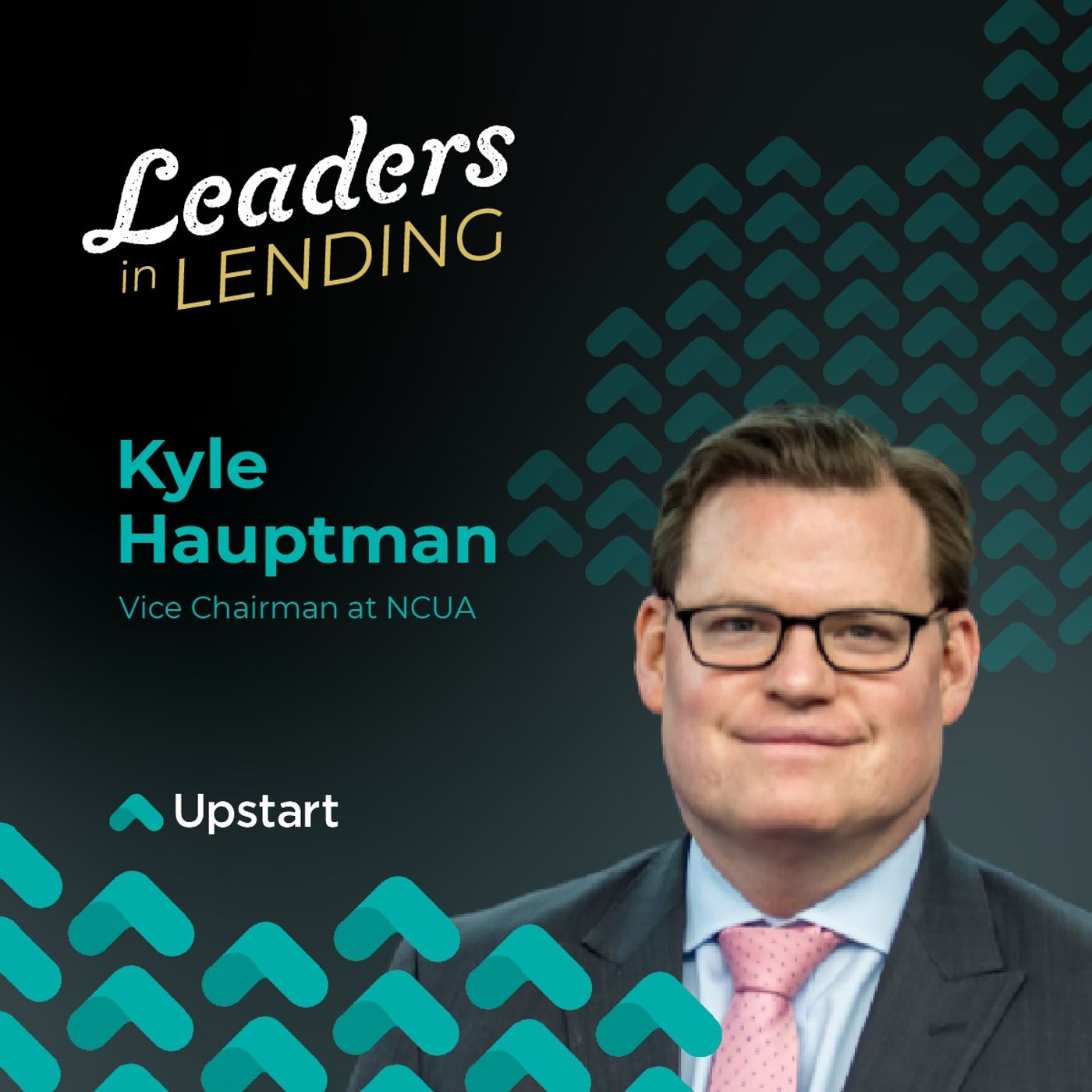
With quickly evolving innovations, financial institutions must be at the forefront of tech. Kyle Hauptman, Vice Chairman at NCUA shares his views on the changes facing the industry and how they can be beneficial for everyone.
Join us as we discuss:
- Adapt or close: staying relevant in today’s tech-powered world
- The relationship between regulations and fintech partnerships
- Preventing scams and fraud using revolutionary AI
0:02 You're listening to Leaders and Lending from Upstart, a podcast dedicated to helping consumer lenders grow their programs and improve their product offerings. Each week, here, decision makers in the finance industry offer insights into the future of the lending industry, best practices around digital transformation, and more. Let's get into the show. All right, thanks for making time to join us on the podcast today. I really appreciate it, appreciate the invite. So I'm looking forward to this conversation. I always like talking about regulation and innovation, and those two of my favorite topics, and when you smash them together, it gets me really excited. But I like to start off every conversation asking people like, how did you get into the industry, because you know, I guess I you typically make the jolly. Nobody really grows up dreaming of being a banker or a regulator or you know, So, what was your path that led you to where you're at today? Yeah, it was a winding path, Jeff. I'm a kind of a career switcher, and you know, anybody out there, it can happen, but it target to do one hundred and eighty degree. I wouldn't say that I'd say it was like a ninety degree pivot. So I'm working. I'm a financial regulator right now, right, and I worked in the financial industry before, so it's a switch. Politics was always my first love, you know, even as a weird child's you know, I got in trouble for sneaking into the den after bedtime to watch member as a Democratic convention back then. I know, that's weird. I was like, you know, eleven years old or something. And then you know, my interview was agree was politics went into Wall Street. Twenty eleven, I was in Tokyo, I was working. I was first out there
1:34 with Leamon Ruggs. I was with them when they collapsed, and then got another job in Tokyo. And then in twenty eleven, I did my career switch, you could say, to policy and politics. I moved to Boston to work for Mitt Romney's presidential campaign and spent over a year there. Really enjoyed it. Obviously, he won the primary, which he had lost in two thousand and eight, right, so I didn't know how long I was leaving gonna be. He ran, he lost in McCain and a wait, so this could have been a three month experiment who knows anyway, got the nomination obviously, you know, Barack Obama was reelected president. But I had enjoyed my year and change in policy and politics. It was one of those things where following your passion actually worked, you know, sometimes doesn't. And then I decided to move to DC, where i'd never lived, you know, down from Boston. You know, I'd met a lot of people over the campaign, and instead of coming down to DC as a triumphant member of the incoming Remney administration, I was just an unemployed guy looking for work, you know, got this little basement apartment and looking for work. Wound up working for Senor Tom Cotton from Arkansas, worked for a great think tank, AI, a free market think tank, and was fortunate enough in twenty twenty to be nominated by President Trump, and luckily enough Senators voted for meeting in the Senate confirmation process. And I'm here, and I've got a couple of years left on my third It was a little bit of a whining road.
2:44 It's my sixth big city I've lived here. But which this big city? Which do you have a favorite among them? I know, you gotta stay in DC because otherwise we will get angry at you. But like, outside of DC, what's been your favorite spot? Well, by the way, step back a second. For those of us who moved here for work, it's common knowledge, like you're kind of supposed to just DC like the swamp, you know, you know, especially if you're an elective member, because who elected you to people of DC? No, it was the people of Arkansas or California. But so I lived in Boston, New York City for six years, Los Angeles for nine, DC for ten. Now, it was in Tokyo, Japan for five years, and Sydney, Australia from one. I would say Tokyo of those, First of all, it's just a great city, but also because you know, as an American, as a Westerner, to me, that was the most interesting, that was most different.
3:30 You know, It's absolutely terrific time in my life. Love, and I'm planning a trip with my family to Tokyo in Japan more broadly in the next year. So we're starting to work through our tindery. It's a it is a it's a beautiful place, and those cultures that are so different do give you the chance to step back and think of things for a different perspective kind of get a different view of the world, which I think is really good for you to see things from a different end. Neat, but such a polite worlds in Tokyo is this giant city, right, I mean, it makes DC look like a small town. But what's neat is it's just so safe and polite. You have everything in a big city. You know, a million restaurants and nightclubs, got you know, anything you want to do in the city is multiple baseball I recommend a baseball games for the during a season, but you can walk home at night at three o'clock in the morning, dropped the walling on the street, and go get it the next day. I mean, it is uh, it's kind of neat to have that. Uh, as you probably already know it. Tokyo and DC have identical climates, hot, sticky summer a winner, that's you know kind of yeah, and uh, there's the same latitude east facing of a continent.
4:41 And the cherry trees, you know, are a big thing in DC, a cherry blossoms. Those were obviously a gift from Japan. One of the reasons they were a gift from Japan is our two capitals Tokyo and DC have the same climate, so the cherry trees can grow, can blossom. Yes, they would not have given the cherry trees as a game to the King of Sweden. They would not have given it to you know, the Prime Minister of Jamaica, right because right and now they're famous in DC. That's well, I want to dive into the topic of kind of innovation today and then a little bit on like you know, how you use a regular support there. But I first want to kind of start with, you know, what's your perspective on the need for credit unions to innovate? Is that you know, where do you said on the kind of like don't don't break, don't fix what ain't broken, and like we really have to think about the future is coming fast and how do we adapt to it. What's your perspective on where credit unions need to be in that? On that spectrum, I'm over the view that innovation is necessary, always was, is now and always will be. That it's you know, innovator die that said, the core of it, what these institutions do has not changed literally for centuries. You know, they help people with their financial management. Money goes in, money goes out, you lend it, make payments, so that core of it hasn't changed in that sense. Yeah, but you know they've always innovated.
6:06 You know, they were there early with ATMs, you know, way back in the day, and network with each other, credit unions you know, for that matter, and banks, and it's all very different and it always has been. We could not have even had this. We're doing this on video right now, teams. We couldn't have done this twenty years ago, you know. So they have to innovate. And I tell you this as a regulator, it is hard because of the way bureaucracies are to develop a tolerance for some failure because experimenting, right, the word experiment means you don't know what gal come is. Yeah, And it's not really the fault of the agency so much. It's just the nature of it where examiners and they're supervisors and stuff, they get heat when something bad happens, you know, they say, oh, you know what happened at Silkon Valley Bank. Wait, who's their examiner or that Jeff Keltner guy, you know. And but meanwhile, when they innovate and it goes well, you don't really get you don't get a bonus or anything really, you know, so it's kind of downside focused. So we have to say listen, you know, just give me your technologies. I know you and I might want to talk about digital assets. You know, people ask me. I've had a journalists kind of well known in the financial world. I said, you know, you were gonna let credit uns use you know, blockchain, digital assets. You worried w problems and like my worrid grade problems. I know this is gonna be problems. Every new technology does, right, you know. And you know I always say you guys know this, Jeff that there was zero plane crashes before we had planes. I think I could have pieced that one together.
7:38 No, thousands of years, it was zero. You know. Uh, you never had a computer virus before you had a computer, you know, so there's always no problems. It's always two steps forward, once step back. But yes, they definitely have to innovate, and as a regulator, we have to have some tolerance for failure because that's the only way for long term success and not try to prescribe it. You know, we don't want to say this vendor, this partner, this fintech firm, they come to me all the time and show me their fintech and I said, right, that's cool, but we we don't have a white list, you know, of vendors, and I think that would be dangerous to do, so, you know, so anyway, that was a long answer your question, but there you go. I'n't ask two follow ups to that because I think there's two kinds of like fear of failure that happened in the institutions. One is to just like many financial institutions are conservative by nature and tend to have a you know, the same thing you're talking about the regulators. They have a kind of lots of people who can say no, a few people who can say yes, like kind of institutional inertia to them in terms of making decisions about trying something new. So I'm curious about putting the regulator aside. And that'll be my second question. But first, like, do you have advice on how you as an institution go, hey, we're gonna start fostering supporting more of this, because you know that, I feel like it's unnatural for many financial credit us, maybe a little less so than that of the larger banks I've seen that are really have a lot of eurocracy that's kind of tends to be stasis. You know, it's that is quote oriented. But what's your advice on how you as an institution develop the muscle for trying new things, experimenting and being tolerant and failure. First of all, I like that
9:09 how you put that. I'm gonna try to remember to use that. Meaning what you said about these institutions that are set up that there's a lot of people who are allowed to say no and not many people who are allowed to say yes. I like how you put that. I hadn't thought of it that way. One thing I always say is, and it's not always a pointball, but is fail small if you can You know, it always depends on what you're trying to do. Have a five dollar failure, don't have a five million dollar failure. You know, have you know, just your career is not going to go south because you tried something that didn't work.
9:50 Maybe you wasted some time, maybe you wasted some money. Your career is going to go south when you tank the entire thing. Yeah, when you have a faire So again, it's not a likable all the time, but test something, try a little transaction right for it, you know, yeah, yeah, just test test, test test, try to minimize your failures. I mean, it's an obvious point. But you know, before you're you know, as my own boss would say, is from the army. You know, before you're playing with live rounds. You know, I fail small if you're going to fail. I like that because it also it's something I think a lot of institutions a lot of people forget, which is they want risk management to be like a black white yes, no, hey, this is good, this is bad. And sometimes you say, well, we're going to manage the risk by saying it's a little bit of great, We're not sure what will happen, but we're gonna we're gonna put it in a small scale. So our risk management isn't that we've prevented any possible issues.
10:43 It's that we've limited the scope of where the issues can impact, and we can learn from that and then it goes well, and we can expand the idea of managing risk not by eliminating the possibility of us but managing the scope of impact in the case that something goes wrong. I think is a really interesting approach. That is that is often people just want to like we've totally this thing down. Well, innovation, you can't. You can't always do that, but you can't limit the scope of what what you're taking on is kind of the unknown. Yeah, it comes up a lot in government and regulation. Some countries, some states within the US has done a good job with you know, they call him sandboxes, regulatory sands. You know, as long as you stay within these parameters, which basically are all about that, do not blow up the world. Okay, but you can try something now, you can try something that isn't explicitly authorized, right, as long as whatever the problem is doesn't bring down the institution. And NCUA just a backup set. You know. We are the ensure for America's almost five thousand credit unions and the regulator for about two thirds of them. The rest are state charters. But anyway, what we care about, we're like every other insure in the world. We care about having to write a check, having right acclaim. Like every insure, you like taking in premiums and you don't like writing big checks out that's wherever you is. So the main thing is, don't make us have to write a big check. Do whatever you want, but don't you know, at the end of the day, that's what matters. But cost benefit. Yeah, and I say this all the time at my agency. You know, you have to realize not innovating as a risk. Once you realize that staying, you know that you will hit an iceberg evention. So once you know that not changing is the riskies,
12:18 it can change your cost benefit. I think in a positive way. It's kind of a freeing lindset too, to get out of the zero risk, zero issue mindset into the like how do I manage it? I think it can be a relief when you can actually convince yourself to go that way. Yeah, you try ten things, one goes wrong? Wait, nine one right, Yeah, all right, that's pretty good. Let me ask you that fall up to that, which is the how do you think about how a financial institition should should approach their regulator in the context of innovation, because I've seen in the number of institutions I've worked with, credit unison bakes very different approaches from kind of like we get everything totally finalized and don't tell the regulator until it's out the door, too, going to call them and tell them what I'm thinking and see what their perspective is what's your model for effective engagement with the regulator by a financial institution on the topic of new, different innovative programs but using some of these new technologies we'll get into in a minute.
13:11 Are you a engage early and often? Are you a kind of button it up? Like how do you like to engage with your financial institutions on this kind of stuff? All right, So you know I always tell people you can go to me. Listen, Vaud in the credit union world is listening. Ka Holtman at ncway dot com. You can email me, okay, but that's only worthwhile for the next couple of years. But you know, I have to find a new job somewhere. But listen, the world is never going to be the way I want it to be. What you can have free flowing back and forth as long as there's someone who's your regulator, who can shut you down, who's giving you grades. You know, in the credit union banking world, we give her aport card one through five. One is good, five is bad. It as long as there's somebody with government power, it's never going to be free flowing. And I know some regultors think, oh, we have regalnership. I assure you they're not speaking to you the same way, right, you know, it's like speaking to a police officer at the end of the day. They have a badge and a gun and you don't. You know, so I and you know, I want to promote my I'm proud of a couple achievements. You know.
14:11 We now have Uber style feedback, you know, like a quick five questions, you know, after the survey, and I'll give credit to the Biden wine House for the regular agencies that are not independent, He's also required all of them to have like one through five stars for regular government service. Does not apply to financially as because we're independent, we don't fall under the executive branch precisely. But like if you're a veteran, you go to be a hospital house your care, you know, and it's especially important for Monopolis. But in terms of communication, we have like five questions. I make sure the last one will you know the sixth question is open and says what other questions beyond the survey? That helps with communication because the questions you're asking signal, Right. I always show people that the photos of your Uber and left and right at the top you know when you do your stars. Both of them asks right away they have cleanliness up at top. One of them calls it l nest you can click on that and then clean card. The other one says, what does that mean? Both the driver and a passador.
15:05 Every single time we're being asked by cleanliness, that is uber and left communicating signaling that that's important, that little piece of real estate. So we've done that, and I think that also shows we want your feedback. A lot of agencies only had an on busman line with somebody, a complaint line. That's all they had. And I was like, you guys, if you're you're signaling you don't care that much, because it's really easy these days to do you know, uh in uber and left or to ask hell, you can't even order another pizza before you rate the last guy, you know. Yeah, So anyway, I'm going off topic. My point about communication. It's been important to me some transparency, normal private sector transparency. We've brought that to the agencies, so I think that matters. It is signals that that you should be a little more comfortable calling me because you know we care. We're signaling it. After every example, also recording at least for the two thirds of the credit units that are federal charters, were encouraging recording of the exit interview. You have an exams a couple weeks, examiner is going to leave. They give your grade to the board of directors to record that, just because it's useful information, you know. So anyway, so on the topic communication, you can tell them passion about it drove me crazy when I dealt with regulators in my prior life anyway. But because no matter what we do, there's that differential. You know, it's talking to a cop, you know, even if it's just on the street. You don't speak to them like you're friend at the bar. You know. This is why trade groups are useful, because we don't regulate them. They can put their head above the tree line. The trade group a vendor, I'm using
16:36 a term vendor. But fintech partners, we're not their regulator. We're not there insurer. So the credit union usually don't come to us and say, uh, you know this really cool fintech talk to us. We're wondering if we can do it? Are we gonna get in trouble? Is that all right? They are afraid to say that right, because what's the one thing they know. They know that if you might deem a risky, so have other people who we won't regulate and ensure if possible. Credit unions usually have a state league or a combination of states. You know, there's like a New England one. You know, there's a DC Virginia DC Maryland one. Have them, that's what they're for. Have them put their head above the tree line, you know, or the national groups, or have the fintech vendor or hell they're venture capital firm then investment, having them talk to us.
17:19 If you credit union person, don't want to put your head above the tree line, because it happens all the time. You know. You have somebody call you a salesperson, Hey, we want to work with you credit and we want to partner with you. We want we want you to buy our product. And people say, you know, I'd love to, but you know, the government man, the regulator, you know those guys. Sometimes that's just an excuse to get the salesperson off the phone. That happens, but sometimes it's legit, you know. So that's what I would say. Number one, I want to be communicative. We're trying to be more responsive. We made legitimate strides on that recording and those ubstyle feedback emails. But also if you're concerned about it, or you say, hey, one hundred credits want to try his fintech partnership, why should I? You don't one who puts my hands up and brings it up, right, Have someone else do make a call, have the conversation, have the meaning your fintech firm. They have a financial interest in doing this, you know, having your league organization, have your trade group. That's what they're for, all right. I want to dive into a couple of the actual technologies here, and there were two that came up when you and I spoke earlier. The first is one that I feel like has gone out of fashion, so I'm I'm curious to get your perspective it, which is digital assets, because I feel like, you know, the the interest in digital assets and blockchain technology seems to swing with the price of bitcoin, and the price of bitcoins has been up and down and all over, and not that that's a good metric, but how do you think about you know, is that going to be a valuable technology? Was it a flash in the pan? What do you think the future is on the on the front of digital assets and blockchain.
18:52 Yeah, it's funny, you know behind me here in my I CNC on you know, without the sound, and something's changed that I think probably will be with us, which is, you know, down the bottom of the corner they have the stock index is dal Jones SMP, you know, part of their things. They have the bitcoin place right and they'll leave the switch. They have ether. You know, I don't know if that's going away anytime soon, but I hear you on that on that the interested bubble. Listen, it's the gold rush stage. We've seen all this before, Jeff. There's a gold rush stage where some of the things is a pile of money and people rush in dreamers, thinkers, and you get overvalued assets sometimes and you get bubbles, and you get bad business models that we only find out when there's a crash, and you get some flat out scammers and con artists. Anytime there's a bunch of money, people think. We saw this twenty five years ago with the Internet bubble. Right, a lot of people first heard the term dot com not from using any product, but from the investment world. Oh this IPO triple people are making money. You know ads for a merrit trade. You know, hey, make a bunch of money, and remember those ads that you know, some kid has a yacht, you know, and and then remember it all crashed and then tons of people lost money and tons of empty office space. It's all gone vaut. But that was the investment bubble side of it, and you hit right on it the price of bitcoin. Okay, put that aside. When the Internet crack and all those things, loss of money, some lumber, bad companies.
20:14 There were also scams and some of those models are just were before their time. But put all that aside. When the Nastat crashed in two thousand, was that a fat will hold on the investment bubble that happens this new thing called the Worldwide Web. That was not a fad that has changed all of our lives. We couldn't even be doing this interview right now. So once you shift away all the debris and you have a helpful bear market, because that's what cleans out a lot of problems. It also cleans out scams and con artists. Member made off was only found out because of the financial crisis, right, he could have kept on going. Bear markets are useful. They cleared the brush out, you know. So yes, I think when it's all of a sudden done, they'll be concrete, actual uses. Right, We're already saying it with instant payments around the world, different currencies, stable coins very useful. We're seeing disasters happen and people can send money instantly for people to use. You don't have to run it through bureaucratic charities.
21:11 I've seen people do interesting stuff on the identification. It reduces fraud trying to figure out who somebody is. You can also help people who are kind of marginalized, like prisoners get out. They don't have a valued ID. They can't get going with their life, to get a job until they have ID. I find out a little weird, Jeff, and I think you too, because if there's anyone who's identity, the government should absolutely be if it's the guy they locked up for the last twenty years, right, Meanwhile, they walk out with no ID. So so it's fraud reduction, it's access or services, and it's quicker onboarding. That sort of thing. That's a concrete use of blockchain technology. Obviously, blockchain being the underlying technology behind bitcoin, and we've seen a few of these things and just tokenized assets. Right again, like you said, a lot of things on people buying this coin or that coin and make them money. What about regular since we already have various loans, et cetera that are just tokenized, they're just easier to distribute on a piece of right, things that were very hard to break it to pieces before, so tokenized assets. And I bet it's just like the Internet in nineteen ninety nine, where it's a whole world of things that I can't think of right now. Remember how the Internet started. All it was was literally the web, meaning it was a web page and you typed it an address and you went to it and you saw a page and went to another one. Well, that later became apps that were only possible because of like GPS. Half the apps I use wouldn't be possible without if I didn't have a mapping app. You know, it's not necessarily going to a web page.
22:37 We're using the Internet all the time and lots of things. So anyway, my point is I'm just trying to be humbled and trying to say, well is this use case and that use case? Yeah, I can think of something, I have seen something, but my guess is it will be something very different, you know, than the ones I can think of right now. Put it that way, But Jayline uses put aside the bubble. We've seen this before, and it's kind of good. We had cryptome theory cleans out a lot of bad actors. Yeah, we've seen We're gonna give you a watch. A few of the bad actors get cleaned out here over the next couple of a couple of months, I think in dramatic let's talk about one other technology area that I think is pretty interesting, obviously near and dear to my heart, which is AI. Where do you I feel like that's one that's maybe a little farther along the hype cycle at least we're seeing more more concrete use cases in many ways like live today and production, often behind the scenes. But what's what's your take on where we're at in the evolution of AI and the adoption of that in different areas within the Credit Union.
23:33 Well, if if I use the Internet as the analogy for digital assets in the sense that there was a hype and a bubble, but at the end of the day, there were very good uses the AI. One is conference with the Internet in the sense that normal regular people can see cool uses in front of them. A lot of cool things you don't necessarily see. So like, for example, let's go back and box to en for a second title. If you ever real estate in this country, you know how creaky are a sort of title insurance, you know, making sure that the house I walk from Jeff was actually just to sew man well. People may benefit when that title is transferred digitally as an NFT. You the mortgage buying a new home. You don't even know that it happened. The title went from the seller to your lender. You benefited, perhaps in lower title insurance in the process. You don't even realize you did. Right, There's a lot of things we benefit from. We don't see AI anybody on their phone or a computer or even just viewing it. Hell, I keep seeing Instagram posts from cool AI generated art. I didn't even have to use it myself.
24:37 I can already see it without touching AI. So in that sense, people can see it and learn it the way that you know, the first time you got on the internet, you're like, man, this is cool. I can read the newspaper from another city. You know AI. You can do it, and it's neat and I think concrete uses, you know, call centers. You know, we got people calling in in many, many languages just in the United States. Yeah, and it's hard to hire customer service people who are fluent in English and Ethiopian language, like if you have it in DC or Ukrainian. So there's neat neat neat uses. The politically, the one you hear about here in DC is lending. You know, is it going to be fair? Is it going to discriminate? You know, and people think that humans can't be discriminatory lending it. And then when you make a machine that's just supposed to analyze it rationally, maybe that goes two. I don't know, but that's the one you hear about.
25:36 I think it's going to change a lot of things. Lending decisions for sure. Yeah, you know we have you know, the FICHO world, you know, may decrease in value in terms of its importance. You know, it may be a variable because you can analyze so many other things. And fraud detection, Yeah, fraud's a big one, because that's a there. It's really interesting to me that a lot of people think of AI in term of the large language models that chat and GEPT kind of conversing with a model in some way, but in many ways, the lending and fraud detection problems are like the perfect problems for the algorithmic side of AI, because it's like, what do you need a lot of data? You need a lot of examples you're trying to find up make a prediction about something that doesn't happen.
26:18 Then often you well, hey, yeah, like loans are we got tons of data, We have lots of history and who's paid back and not, and we can make really smart decisions, and it turns out there's quite a bit of inefficiency in the space. And the same thing is true of fraud. You know, lots of data points, very difficult to analyze as a human, thousands of pieces of information about how this individual acted, but but yet at the same time, very clear signals when you can piece them together. So I think, yeah, frosters ones who are you know, good at fraud? They know how the current system works and they know how to gain it and work around me. The whole point of AI is not is that which the human mind does not necessarily see the problem up front? You know, yeah, really, the majority of righting there was the last two years have gone down in America. We've had to take over well because of fraud. Now that's partially because we've had a pretty good economic times with load delinquent seas and everything, so we're not having a lot of credits claps because of standard economic reasons. But yeah, I think four to seven last year were a fraud. So that's that's one neat thing. And you know there's uh, you know Joe and Barefoot. Okay, I was on her podcast.
27:25 Like all three NCA board members, myself, Todd Harper, and Running Hood have been on it. She did one a couple of months ago. Do you know who her podcast guest was. I'm gonna guess yeah, that would that makes sense given the conversation, that's fascinating. I need to go listen to because I'm very curious how chat you could see now, it wasn't even like a Smart Ai. The voice sounded like Siri like you could kind of tell it was a computer. Now, so what she said this is I think she called it dumb agi. I mean, it wasn't trying to rep it sounds like talking to Syria on your phone. But you know, they had an in depth conversation on American Financial regultary policy. And you know, I just yesterday at a conference I just got home from New Orleans sean scream interview Joe Rogan and Steve Jobs. Steve Jobs died several years before Joe Rogan ever had a podcast. Yeah and check it out. It wasn't Joe Rogan talking to a AI Steve Jobs. Neither Joe Rogan or Steve Jobs had anything to do with this. Both were AI. Both in their own voices.
28:23 You and I could sit in the car drive for twenty minutes, listen to podcasts and think it was those two. Or if you knew Steve Jobs died a while back, you'd say, oh, I guess Joe Rogan got an AI Steve Jobs. But it's not. They're both entirely AI, with their sensibilities, with their accents, with their voice, saying the stuff they would say, absolutely fascinating. So we talked about fraud detection. You know, if somebody can call up and sound like me and look like me on a video or whatever, all technology will be used by a scammer. All technologies helped to fight scams, right, so that'll happen both ways. Anyway, I'm babbling a little bit, man, But I just think ay I is super cool, it's super fight. It's a wrong way to go.
29:06 Yeah, yeah, I mean I think it is interesting that we see this real push against a eye because of the potential downsides or mali uses. Right. Politics is a huge area where you can start to make it look like somebody said something that they didn't say, and it can be very very convincing. We received a fundraising call and it wasn't them, you know, it wasn't made the media. Listen, you should be scared of the problems. Oh you bet. Remember what I said about no plane crashes where it plays. But they're going to be here anyway, so I assure you. So. Yeah, that's right. Like from fire on, there has been the possibility for good and ill uses of every every technology that's ever been developed by human Yeah, and all just like digital asses. I think America twice, you're gonna get the downsides in the long run, anyway, do you want to at least get all the upsides? And America won the Internet so well.
29:57 And I'm a Republican, but I was praise Clinton. Gore administration put out early guidance nineteen ninety seven for the internet, and we got all the negative everybody else. You know, all the video jobs, video rental jobs were gone, the travel agens, we got all the downside, you know, print media, we lost all those jobs like everybody else. But we also got the most upside. You know, the block Westing Video is gone, but we got the headquarters for Hulu and Netflix and the investors that got in and make money and the people had life changing. Well, you know, we got all the upside AI. We're gonna get the downside, right we can try to stop in this country. Even if we succeeded in slowing down AI. Well, the rest of the world is not going too so. Our history in this country has always been embracing the upside, knowing full well we're gonna get the downside anyway. But man, it is it is neat stuff. Yeah, I feel like it's a very difficult topic to talk about and too much depth on the podcast because whatever you say is can I feel like right now you're going to be out of datas in a week or two anyway, because they maybe I'm not really Kyle having maybe you're not really defth you know, Oh, don't tell my wife. All right, I got three questions. I like to end the podcast with that. I kind of ask all my guests, so I'd love to ask them of you now.
31:11 And the first one is what's the best piece of career advice you've ever gotten? I'd say one practical one. It's great. The laster you reply to, the faster you reply to an email, typically, the less you have to say, oh, interesting, tell me more about that. The longer you let it sit, the more of like a longer answer, you know, or if it's on a whole bunch of people and you chime them in first you can say the most basic, simple thing, get out of the way. The sixth person to reply has got to be a little more. You know, you had it. The quicker you reply, less you have to say. And I'll just do one more, which is broader, which is just one word. People. You know a fabulously successful guy when I was working at Lehman in Australia. You know, it's actually Vietnamese immigrant to Australia, the incredibly wealth and he said, it's people. There's a lot of things, but it's people. People people people. You learn skills, you get you have that, you get degrees. Someday you might not get a job because and you don't even realize it, someone didn't like you, right, beetle lights. And in this town, in particular, in DC, an astonishing number of decisions are made by people in their twenties.
32:15 You go to Capitol Hill, you know, there's a lot of white haired centers being walked around by twenty six year olds, you know. And so even though I'm sort of you know, call it mid career now a man, I always made a point when I would get these, you know, real polite linkeding messages here, mister Altman. You know, I see you work in the Senate Righting Committee. Can I speak with you three years later? That person to be high and try to Presidential Personnel office, you know, like so people people people. I don't want to sound too machiavelliant about it, but it's it's just a better life when you want to be respectful, honest. When I worked on the Hill, I was routinely asked to leak information, and I put the short term gain out of pleasing whoever that was a journal a lobbyist, whoever, for my long term reputation. But people, people pee people, Yeah, blow you people above you. People next you being well liked and respected. Stop right there. You're ahead of a lot of people, and it's just very important, and it's going to come around in waves that will blow you away. You know. Yeah, there's a concept I've heard from a few people now called the infinite game, this kind of idea that if you're you know, you can think of things as transactional, a one time game, but really the game is infinite because those same parties that you interact with. Your leading example is a perfect example.
33:34 Like, yeah, maybe it's a short term win for you in a certain way, but like in the infinite game, in the long term game where you're playing, where you're interacting with all of these people on both sides multiple times, you've got to think of it in those contexts. And in that context, understanding people, being respected by people, doing right by people pays dividends well into the future is a very valuable asset, even if it's not always the most immediately expedient. That's easier man not being worreless walking in well I want you know, I wonder if that guy is going to be there. You know, we don't like each other, you know, it's just and again I tend to view things through a political lens because that's my life now, but being able to work across the aisle, and you know, we're in a system, a two party system where it's designed for opposition, right, You're not supposed to agree because that's how you were sorted in the first place. So getting along well, and you know, I'm proud of the fact that what I went through as one of the last Trump nominees, even after the election was over, Pausin Biben's coming in. One of the reasons I got some votes from the Democratic centers was because of their staffers in particular, said no, Kyle, I were that guy. Listen.
34:38 I know he's Republican, He's different, always honest, always answered the phone, could always talk to him. He did what he said he was going to do, and I'm very proud of them. And it's just flat out more a more effective way to be. But again, I'm aware that I tend to now think part is it politics, that's the world I'm in, but it's all encompassing. My second question for you is what's the best advice you have about the financial services industry? You know, for someone in the space, like what's one thing they should think keep in mind about succeeding in the industry. B Let's say you're a young person starting out right now, no free You know, if you knew the first three pages of a book about AI and knew how to use a couple of these tools from a man, there's so many. Now there's the artwork ones. You're gonna look impressive because older people who've got success in a different world hear all this stuff.
35:29 You can't not hear about bitcoin. You can't not hear about AI. Yeah, have you ever traveled with somebody you're been in a restaurant where someone speaks a little bit of the language you don't you know? And you know, I remember I first got in Japan. One guy I knew how to like order some food. And you know, to me, this is a magic trick. Whoa You know why? Because you knew twenty wars more than I did. You know, if you're that person who seems to know what's up when it comes to cryptocurrency or blockchain, you don't need to know a ton you're you're the person who knows how to say ten phrases is in French, and when you're in France, with your friend. It doesn't speak anything. You're the guy, you're the one you know, you're the person. So and it doesn't take a whole lot of knowledge to be known as someone who knows knows. I've already seen it on the hill. People have now carved out careers for themselves by learning about digital assets. Like there's a whole lot of people that know it like matters, and they hear about it and they know it. It shoudn't matter to them. And there's a small number of people you know that if at least sort of done the one on one understanding.
36:30 So that's what I would say to a young person for right now, play around with AI know some stuff, no, some terms, and that for that matter, digital assets. The older people know it's important, but don't necessarily like really know how to use it. They're not confident you can go far being somebody with a little knowledge about something new. All right, that's great advice. And my last question for you, what's one bold prediction for the future. I mean, I can get a cheesy one change. I really want to say that by New England Patriots go back to the super Bowl, but I don't, I don't know. I don't know about that, but I think that, again, I tend to think of things politically, some of our problems will be solved in ways that are not dealt with in the current arguments about the problem. Okay, it sounds weird now, but two thousand and four, two thousand and five that you know, the US government trying to block a merger between Netflix and I'm sorry, Blockbuster Video on Hollywood Video because they were gonna have too much market power and there was already concerns about how much they were charging. There was also a massive class actual lawsuit in like twenty six attorneys general were in it about how Blockbuster did their late fees, how they computed them. There people off and everything, and you can have regulators get in and how you do lead fees. And they had a settlement. You know what solved that problem Netflix, That's what solved the problem. Right. So the framing of well, but you need more competition in the video rental space and we shouldn't allow this murder and arguing about they're gonna use market power and pricing and the arguments about the late fees,
38:02 and this is just one example of the many. It wasn't solved in that paradigm, it was solved by a whole new thing blowing it away, and it was irrelevant. Try to speak to a ten year old today, explain it, you know, returning a movie late? How do you return a movie? Athletes? Like, how does that even make sense? How do you rewind it? You know, like the terms don't even make sense. So I think a lot of our yeah, you know, they're going to be solved in ways that are not necessarily part of the certain argument. And we might look back at ourselves and say, man, that was a lot of energy expended when if we had just let human ingenuity run free. Not that we'll solve problems, but we're going to solve them in ways that are not necessarily debated right now, you know. So that was that was a very unspecific broad one, but that's what we broad But I love it the idea that the answer to a lot of our problems isn't a totally different framing, and you don't you don't always see it coming, you don't always see it coming. I think that's a great way to end it. Kyle, thanks again for making the time today. This was a great conversation.
38:59 I appreciate you're joining me. Hope do back sometime again. I'm sure. Upstart partners with banks and credit unions to help grow their consumer loan portfolios and deliver a modern, all digital lending experience. As the average consumer becomes more digitally savvy, it only makes sense that their bank does too. Upstarts AI lending platform uses sophisticated machine learning models to more accurately identify risk and approve more applicants than traditional credit models. With fraud rates near zero, upstarts all digital experience reduces manual processing for banks and offers a simple and convenient experience for consumers. Whether you're looking to grow and enhance your existing personal and auto lending programs or you're just getting started, Upstart can help. Upstart offers an end to end solution that can help you find more credit worthy borrowers within your risk profile with all digital underwriting, onboarding, loan closing, and servicing. It's all possible with Upstart in your quarter. Learn more about finding new borrowers, enhancing your credit decisioning process, and growing your business by visiting upstart dot com slash foward dash Banks. That's upstart dot com slash forward dash Banks you've been listening to Leaders and Lending from Upstart. Make sure you never missed an episode.
40:16 Subscribe to Leaders in Lending in your favorite podcast player using Apple Podcasts. Leave us a quick rating by tapping the number of stars you think the show deserves. Thanks for listening, until next time,

