Credit Unions in Transition: Evolving Mortgage Origination, Auto Lending, and AI Futures

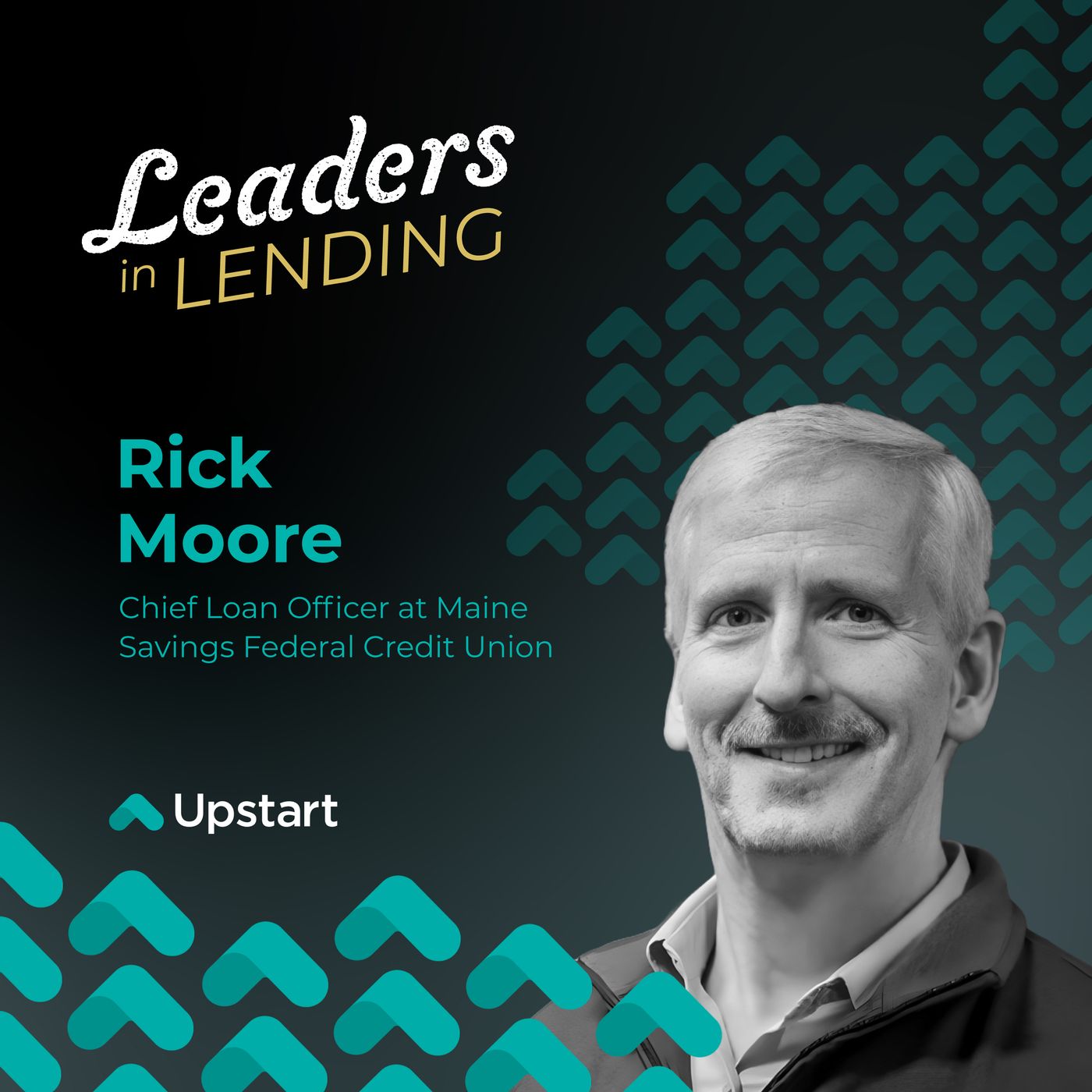


In today’s episode, we dive into the dynamic world of financial services, specifically auto and mortgage lending. Join host Drew Megrey as he speaks with Rick Moore, the Chief Lending Officer at Maine Savings Credit Union. With nearly 39 years of experience under his belt, Rick provides invaluable insights into the evolving mortgage landscape, tackling challenges like rising interest rates and soaring home prices. He’ll also share how financial institutions are pivoting with innovative strategies in auto lending and unsecured loans to navigate these turbulent times. Plus, we’ll explore Rick’s personal tech preferences and his take on the future of AI advancements in finance.
Join us as we discuss:
- The potential of AI to transform the industry and pave the way for a four-day workweek
- Why rising home prices and high interest rates have shifted mortgage production.
- How Maine Savings Credit Union enhances auto and unsecured loan programs while exploring cutting-edge solutions.
0:02 You're listening to Leaders in Lending from Upstart, a podcast dedicated to helping consumer lenders grow their programs and improve their product offerings. Each week, here, decision makers in the finance industry offer insights into the future of the lending industry, best practices around digital transformation, and more. Let's get into the show. Hello, and welcome to another episode of Leaders in Lending. I'm your host Drew Megree, joined today by Rick Moore, the chief lending officer at Main Savings Credit Union. Rick, Welcome to the podcast and thank you for making the time to join me today. Hey Drew, and thank you very much for inviting me to your podcast. It's great to have a partner like Upstart that takes the relationship to this next level. The work that you do is very important to many of us in the industry, so thank you for what you do and keep up.
0:52 With good work. Thanks Rick. I always find this opening topic very interesting with each guest, because there, of course is many different paths. Right With that said, as I typically do, Rick, I'd like to start off our conversation by giving the listeners, you know, your path to what got you into the financial services space and what did that journey to becoming the chief lending officer at Main Savings look like well. I have to say, Drew that my career journey that spans almost thirty nine years now at Main Savings is something I've privileged to share in staff meetings across our branch network. While and doublegent on this opportunity, I recognize that some of this may not be as exciting to you and your listeners, but many of our staff at Main Savings has commented on how they enjoy some of the history of the crediting that I've been privileged to experience.
1:42 I'll spare your audience a lot of the specific events that make my story relevant to our staff, but really it all starts four years before I was born. In nineteen sixty one, my father in law was in the railroad yard of the local railroad company and the founder of the credit union come up to him asking and if you if you'd like to join a credit union starting new ving so cooperative. My father in law didn't understand all of those that that meant to him, but he put his twenty five cents in and became one of the charter members of the credit union. I'd have to say that. At the beginning of my career with Main Savings, it was a thrill to be part of a legacy from my father in law, who then shortly thereafter started talking about how he would go to the founder's table kitchen table and talk about borrowing funds for a loan. It may have been like a three or five hundred dollars, and the CEO ways say at that point, I'm sorry, I don't we don't have the money right now to lend you three hundred dollars. We're not big enough.
2:47 People have to make a few more payments. So he'll come back in another week or so and I'm sure we'll have that money available for you. So he remembers those days of old when the credit union is just starting out in the atink around the kitchen table of the original CEO. So that kind of history is fascinating to me, and watched it grow to where it's been. Where's his nay? Yeah. So in nineteen eighty six is when I really started with Main Savings. I started as the loan and collection officer at one branch, eight employees and about twenty million dollars in assets. One of the things I really specifically remember in nineteen eighty six was that we actually started our credit card program back then, And I just recently found out the last couple of years that nineteen eighty six is really when credit cards came to credit unions. So it was an interesting learning curve to figure out what credit cards means to us.
3:42 So as the lender and the collector, I found out really quickly that I not only married them, I buried them. So I did the collection part of the process on a daily basis as well as due the lending, So I was involved with repossessions, forclosures, the hard stuff. But over the years, I've really kept the mantra that bad things happen to good people, and I know that that's really what the aspect we all need to keep in mind. But with my experience in the collection area, it almost makes me want to think that the first year of every lender probably should have training in collections. If they knew how to collect these loans, they'd probably be a much better interviewer, much better lender, and understand the reasons why collateral is really collateral only when you get it perfected.
4:35 So it's one of those areas I think is really important. But from that point it became the branch manager of that original branch, but convinced the CEO to start a new branch in my hometown. I was about twenty five miles away, and he says, that sounds like a great idea. Rick. What we need to do is you need to develop segs. So it gave me that experience of going out and gathering I think it was a to forty new segs. They were churches, Snowville clubs, small businesses. And we opened that branch successfully and there I became the branch manager for twelve years. It was such a rewarding experience to be the active manager in the town where I lived.
5:19 Although a trip to the store could often take way more time than I expected, and my wife was pretty much knew that if I didn't come back soon, I was probably caught up of the mouth talking to somebody about business, which she fully understood. It was really during that time that I fell in love with mortgage lending. That thrill of helping that first time home buyer get their first home. The opposite of the American dream is to own your own home. We were fully engaged in do a mortgage lending Back then, our new CEO was very much a mortgage lender, and we took off very quickly with mortgage lending. It was very rewarding, but it took its time that the CEO saw something in me, and in two thousand he asked me to become part of the admin team in the main office and turn it changed to the hand office, and he wanted me to become the leader director of the lending area at the credit union. This is where it was really exposed more to the business lending. We'd done some business lending, but we're really taking off at that point, and my expertise became more broadened and the slow growth of business lending was really fascinating over the next several years. At this time, I remained very connected with Collections. I was always the one that they would call upon, even though I wasn't part of that team. They always wanted to call on me from my experience with the mortgage area or repossession. So it was always a good thing to
6:51 keep that connection there, and obviously now as the VP of lending, that was part of what I oversaw on a daily basis. Over the next five year years, I earned a spot on the senior leadership team, which led me to the senior vice president of lending position. Last year, my title was officially updated from with part of the senior team as part of the C suite as the chief Lending Officer. It's been an amazing journey as we find ourselves at almost eight hundred million dollars in assets and eleven branches. I'm thankful for the opportunity and the people that gave me those opportunities throughout the year to be a leader that i've become today. I always try to tell my staff, I try to empower them so that they could make me look better, and that's always a good thing, right. So I appreciate the opportunity to tell my story, the abbreviated story, and a little bit about the credit union history, because I believe that's probably one of the things that the credit unions don't tell very well, is their story. So with this type of a podcast, it's great to be able to have that option to tell the story of main savings. I hope that the fish what you're looking for through it does.
8:02 That's awesome. That's a in reflecting back on that, it sounds like you were destined to be in the financial services space then, of course, you know, sitting at the at the dinner table with your your dad talking about lending at such a young age, of course you were you were destined, of course to be in the credit union space. One thing I do want to touch base though on is you know, you had a very elongated period there of working your way up and a lot of growth within Main Savings over the years. But let's rewind back to you know something that you brought up of your love of mortgage. So to frame up our first topic about thirty one short years ago, and Rick, I would assume you were a part of this Main Savings and six other credit unions founded a mortgage QSO And for the listeners that don't know, QSO is an acronym for credit union service Organization in that QSO today is now the largest credit union owned mortgage lender in the state of Maine, in one of the top five largest multi owned QSOs within the US. SO, mortgage lending in Maine is big, but let's dig into it from the opposite direction, rick So. A lot of our past guests have discussed, you know, their excitement about the transformation of lending and what they're doing in the space, which of course we'll get to later on, but I wanted to start by diving into a point you made when we first met Rick, which is a part of lending, particularly mortgage lending. To be exact, that's not exciting you right now. Can you talk a bit about why your
9:34 premonition that the mortgage origination space in the short term isn't exciting you like it once did. Yeah, that's a really good point, you know. Like you said, we have our one of the leaders in the state or mortgage lending, have been for many, many years. It seems very different. Over the last eighteen months or so, we've seen our production go from very strong both in the refinance and the purchase markets, but tampered off significantly as we continue to experience the prices of homes have climbed dramatically, but with a lower rate environment, we saw home purchases remain affordable but strained. In the last eighteen months, the increases and interest rates have all but pus stop to the refinanced business, which was great great business. In addition, home prices continued to increase with very low inventory, so times for homes in the market dwindled with many homes selling the thousands over asking price, and we've actually saw a lot of bidding wars taking place during COVID. It was amazing how many people came to the state of Maine because they wanted to get out of the big cities.
10:47 They were buying houses unseen. They were just taking them off the market paying ridiculous prices, which through the market a significant upspin for purchase prices. But it was an interesting time. So it certainly does divest our relationships in the state, but we're interested to see what the next process is going to look like. But what this whole process has done, as I've taken our affordability from over sixty percent of our first time home buyers to approximately thirty percent of our first time home buyers, most of our kids, including my son, are forced to stay at home and live with mom and dad. You know, it was a welcome trend. We started seeing mortgage rates heading towards eight percent, as now is relaxed and significantly lowered closer to the six percent range. It is also interesting that over the last sixty days, we've been hearing from our realtors that there's actually the no offers for thirty days has become a statistic. Again, Prior to that, there was offers happening the same day. Certainly in the same week, we're not seeing more homes on the market. While we're as good for origination and mortgages, it will certainly have a negative impact on prices. The supply and demand will eventually bring home prices down a little. However, with many people sitting on their three percent or less mortgage rates,
12:19 we'll see continued reluctance to sell and to easily double their interest rate costs if they were to buy a different home. This will certainly keep the volumes of purchases a little lower than the boon times of housing turnover that we saw in the previous five to six years. Yeah, I am fortunate enough to sit in that cohort that is going to stay at home given the sub three percent mortgage refi during the during the COVID times. But let's touch on some statistics here that kind of point to your point. There is as of last month, of course, home prices nationwide, not just particular particularly to Maine, are up three percent year over year. The number of homes sold have decreased by roughly four percent, and shockingly, the number of homes for sale have risen I don't know, roughly sixteen percent or so. So let's talk about mortgage lending getting exciting. We both know that we're probably within our careers, Rick not going to see mortgage rates where they were in twenty twenty and twenty twenty one, given the rates that were in the environment during COVID, but with more rate cuts on the horizon, the increasing supply of homes, what does a path to excitement in this space look like for you?
13:41 I think really looking to those statistics to gather gain more momentum. I do see that, like you said, there are more houses for sale, which is great. Hopefully we'll see those things, say the continue on in our area. Mortgage rates coming down just posted a six percent. It's starting to get a little more excitement in our mortgage lenders. We're actually starting to see our pipeline grow significantly. Oh that's growing a bout the millions of dollars at this point, So we're seeing that excitement start. It's at the time of the year, we're at the end of the season that's not typical, so it's obviously having some impact on the buyers in the market today, which is exciting to see us as we carry through the winter months when it's usually slower. Anyways, with this new trend, it's starting to get a little bit more of that excitement back in the heels of our mortgage lenders.
14:35 I'll Start partners with banks and credit unions to grow households and expand consumer lending through its leading AI lending platform. Upstart powered banks and credit unions leverage AI to offer higher approval rates and experience lower loss rates while simultaneously delivering the exceptional digital first lending experience that consumers demand. Whether you're looking to grow and enhance your existing personal and auto lending programs or you're just getting started, Upstart can help. Upstart offers an end to end solution that can help you find more credit worthy borrowers within your risk profile with all digital underwriting, verification, loan closing, and servicing. It's all possible with Upstart in your corner. Learn more about finding new borrowers, enhancing your credit decisioning process, and growing your business by visiting upstart dot com slash lenders.
15:24 That's Upstart dot com slash lenders. Something we've of course talked about here is supplies up right, Demand however, is down year over year six percent. I'm interested to get your take on why is supply up but demand continues to be down. Do you think it's a rent versus own or is it a thing of kids coming out of college into the workplace just can't afford the homes and all that it entails, such as insurance and the cost to maintain a home. Or what's your take on why is supply up but demand continues to fall? Well, I think you touched on a lot of the real reasons why people aren't buying. First of all, the prices are still up. Prices are still you know, national statistics say that prices are still climbing. I think that's a lot of not looking as close to the real action that's taking place. While those numbers are still wagging a little bit, we're seeing prices have started to level off and even seen a little bit of tick downward in some areas. So that is helpful. But certainly, you know there's people graduating from college there, They've got a lot of student debt. It's it's almost a second mortgage in itself that's really keeping some of those on the sidelines.
16:45 Interest rates still while at six percent better than eight percent, is maybe a lot of people are waiting for Oh, Raychi're gonna come down. Rachire going to come down. We're there. They're hoping for that. The economics are still pretty strong, The unemployment rate is still low. It's ticked down a little bit further over the last couple of days. So those things are really helping to boost, you know, consumer confidence, and I see that that is something that's going to continue to help hopefully gather some more momentum. See the rates maybe decline a little bit further, maybe see a little bit of reduction in prices. As people are keeping their houses on the market a little bit longer, they maybe want to reduce their prices. So I think we're hopefully poised to see some uptick in purchases over the next six to twelve months.
17:35 Yeah, I agree with you, it's probably not going to be at a large capacity. So to touch further on that, let's let's reflect on the borrowers that, to your point, are sitting at a sub three percent mortgage rate. What do you think the mortgage industry is going to do from a helock perspective, as we could potentially see another two hundred basis point decline by the FED over the next you know, let's call it twelve month answer. So, do you think that helock space is going to continue to catapult as it has been over the last twelve eighteen months, or do you think there's going to be more individuals using the equity in their home for a cash out an extending term and increasing their rate potentially.
18:17 Well, we see the needs and the demands for home equity lending just to be outpacing any other year. There's a lot of people sitting on a lot of equity. With the again values going up, people are using their equities for many things. They are again stuck at that three or sub three percent mortgage race, so they're not going to refinance to be able to put on that new addition. They're going to do a home equity and that's what we're seeing a lot of. We're actually seeing a lot of people taking advantage of their home equities and buying other properties. So we're seeing a second home or a seasonal camp or cottage on the lake. We're seeing that continue to be striving factor. And what we see on a daily basis. I don't see that's going to lower any demand anytime soon, as a lot of people are sitting on trillions of dollars in equity and we're seeing a lot of activity on a daily basis.
19:12 Yeah, I would agree with that. That is the same type of conversation that I hear across the industry. So it'll be interesting to see the change of pace of how the mortgage industry moves forward here in the next few months. So let's fast forward. We've talked a lot about mortgage ricks. As you and I both know, mortgages, of course, are one of the largest portions of most financial institutions balance sheet, and for credit unions it's right around that forty or fifty percent range or so. But with your notion of a decline in mortgage originations in the short term, what is main savings plans to leverage or augment the balance sheet going forward with that decline?
19:54 Yeah, I know, Drew. We are seeing that that hit our balance sheet with the mortgages and not having the origination so that people are still paying off, still moving, so we're seeing that balance is going down, So we're looking at other options, and that is one of the bigger areas that where we found a great benefit from when we started a referral program from local car dealerships. It wasn't intentional. We obviously didn't have the old golden rule apply for us that we saw what was happening that far ahead, but we started getting a lot of local dealers who wanted to work with us. We've never been and now don't have the intentions to become an indirect lending shop. But these small dealerships have given us plenty of referrals and we don't pay them any dealer reserves or referral fees, so it works well for us.
20:45 Their thrilled to be able to have the fast and consistent decisions for their buyers. It has been so beneficial that the original referral dealers that we had spread the word throughout our local branch areas. This has continued to grow that part of our business. Over the last two or three years. We have seen our auto balances grow fifteen to eighteen percent each year just from the small organic growth from these small dealers with their small relationships with that they've developed with us. It's been very beneficial for us. That's awesome and one quick question off of that too, is you mentioned you don't do indirect lending, but this is somewhat in a sense, some type of indirecting. Of course, you don't have the cost associated with with what comes from from indirect lending. Do you have any insights for our credit union and bank listeners that are also not in indirect lending today on the best go to market strategy to leverage this asset without managing those dealer partnerships.
21:46 Well, certainly they have to have the ability to pivot quickly and be able to make sure that that the borrowers and the lenders are always on the same page. You know, the dealership relationship is something that has been very beneficial for us, but also for our members. They are looking for those little bit lower priced vehicles that they can't get the big dealers, those big deals that have the higher overhead. So these small dealers have really been a huge benefit for our members as well as for us. So keep your eyes open for those type of relationships that can benefit not only you as a credit union or a small community bank, but they can help your constituents, your members, your customers be able to get a better deal. Obviously, be careful there are a lot of small dealers out there who maybe not selling the best quality of vehicles. So we've had to take our stance with a few of those that think that they're going to make a couple extra thousand bucks on a not such good quality vehicles. So just one of those things to be watchful for, watch those times for the title applications not being processed properly and quickly by those dealers. But it's been really a great eye opening relationship we've been developing, and it's been very beneficial for again the credit Union and our members.
23:10 That's great. Thanks, Thanks Rick. So we've talked a lot about secured assets, mortgages, automobiles, a lot of the types of loans that most financial institutions of course want to put on their balance sheet. But with the decline in originations of course to mortgages and then of course the smaller dealer network that you're leveraging today, how do you think about the secured versus unsecured diversification in the current environment and in the future environment as the macro begins to stabilize, to leverage your balance sheet from a return perspective. Well, you hit a good spot in our balance sheet. We definitely need that diversification. We need those higher yielding loans.
23:53 This means the focus on unsecured loans and credit cards has increased. We've seen a significant growth in our secured balances with the help of Upstart. Certainly, our partnership has been very beneficial to us. It allowed us to grow that business with good yields, as well as the confidence and the expertise of the Upstart decision matrix. While we limit the production to only a million dollars a month, we've certainly seen a steady growth of our unsecured balances that has sped that portion of our very hungry balance sheet. At the same time, we continue to work on our credit card vendor to increase limits or offer those special transfer balance promos. As strange as it sounds, every time we offer one of those balanced transfers, we see eighty to ninety percent of those balances stay after the promotion.
24:44 I think we can probably, I'm pretty sure we can attribute that the fact that we are a local service credit union. We service all of our credit cards ourselves, and that really stands out to our borrowers linking at local professional heal help when they need it and they know they talking to their credit union. So I think that that has helped retain again that eighties and ninety percent that we've always gathered from each of those promotions. We run awesome. So mortgage lending is decreasing in the short term, we're going to juice things up from an auto perspective, and of course we're going to need to maintain some type of diversification, so the balance sheet is maximizing your your return.
25:26 I think I summed up our conversation here pretty well. Rick. As you know, I always like to close the podcast out with three questions, so I'll just go rapid fire here. What is the latest and greatest app or technology gadget that you absolutely cannot live without. That's a great question. I really like technology and gadgets, but the thoughts I had was not towards the highest tech, but for something that makes my life easier. That's what I concentrated on. With the business of our life. I'm really falling in love with that fresh food delivery on a weekly basis. So take us away from our talk on finance, and I happen to use a company called Hungary Root, which referred to me by my CEO with two food allergies. It's the only fresh food delivery service that would accommodate for both of those issues. I don't do many food have any food issues, so just to fund the convenience of getting a variety of foods with average prep time starting for around fifteen minutes to be amazing.
26:35 On top of that, the amount of food waste is almost eliminated that I don't have to stop at the store three or four times a week. I don't know about you, but simplifying this part of my life has been very liberating. I'm right there with you. I am guilty. I am not an expertee or an expert in the kitchen. I'll plug Hello Fresh. It helps with busy lifestyle and being able to have food prepared for my children pretty quickly. All right, Question number two, If you could switch jobs with anyone for a day, who would it be and why? You know? My first thoughts went to people like Warren Buffett or a strong political leader like our main congresswoman Susan Collins. However, I really thought it would be amazing to be someone like Scottie Scheffler, one of the top professional golfers in the world today. It'd be amazing to be a top of the world's greatest athletes and your profession.
27:36 I love his consistency, his control over his emotional and mental faculties. What really focused my attention on him was the ordeal he went through earlier this year when he was as a disturbing and unjustified detainment by the police on the morning of the final day of a professional tournament. He was released with no account of wrongdoing, but ended up arriving late to the turn. He couldn't do his normal warm up or his practice, but ended up coming in second place. To have that kind of mental and emotional stability puts him at the top of my list for amazing people. For me, being a wanna be golfer, this is incredibly motivating. If during that one day I could pick up on the mental strength he possesses while learning a few things to make my golf a little better, certainly wouldn't hurt my feelings any.
28:28 Or Two for two, Rick, I would also agree with wanting to be Scotti Scheffler, given what he went through at Valhalla a few months ago. But I also enjoy the game of golf and wish I could produce scores as such as Scotty Scheffler. So last one does not need to be pertained to lending in any facet. But what is one bold prediction for the future. That's a challenging question. I'm sure this one will disagree with. But maybe not. I think there's no doubt the lot of bold predictions about the economy and interst rates, but that's not where my mind first went. My thoughts went to AI or artificial intelligence. My prediction is that AI will morph to a stage in the next five years that we will not recognize our industry or even interactions with service and technology companies around the world. Well, this all sounds and feels scary. You know, we've all watched those sci fi movies with a computers take over the world, and I'm confident that this technology will simply enhance our lives.
29:33 It is. It will get us to the point I keep preaching on to my staff that we want to work smarter and not work harder. Who knows, maybe this could get us to the four day work week we all want. Well, I think we're three for three. Of course, I have many bold predictions, but I would agree with you on the movement of AI is going to definitely elevate in the very very near future. Well that wraps this episode of leaders and Lending. As always, thank you to our listeners and Rick again, thank you for taking the time to join me today. Well great, Thank you very much Drew for having me do a great job, and I hope you continue while this is great service. Upstart partners with banks and credit unions to grow households and expand consumer lending through its leading AI lending platform.
30:19 Upstart powered banks and credit unions leverage AI to offer higher approval rates and experience lower loss rates while simultaneously delivering the exceptional digital first lending experience that consumers demand. Whether you're looking to grow and enhance your existing personal and auto lending programs or you're just getting started, Upstart can help. Upstart offers an end to end solution that can help you find more credit worthy borrowers within your risk profile with all digital underwriting, verification, loan closing, and servicing. It's all possible with Upstart in your corner. Learn more about finding new borrowers, enhancing your credit decisioning process, and growing your business by visiting upstart dot com, slash lenders.
31:01 That's upstart dot com slash lenders.

