Data Ownership and Industry Collaboration in FinTech



How will responsible data practices and blockchain technology shape the financial technology landscape this year?
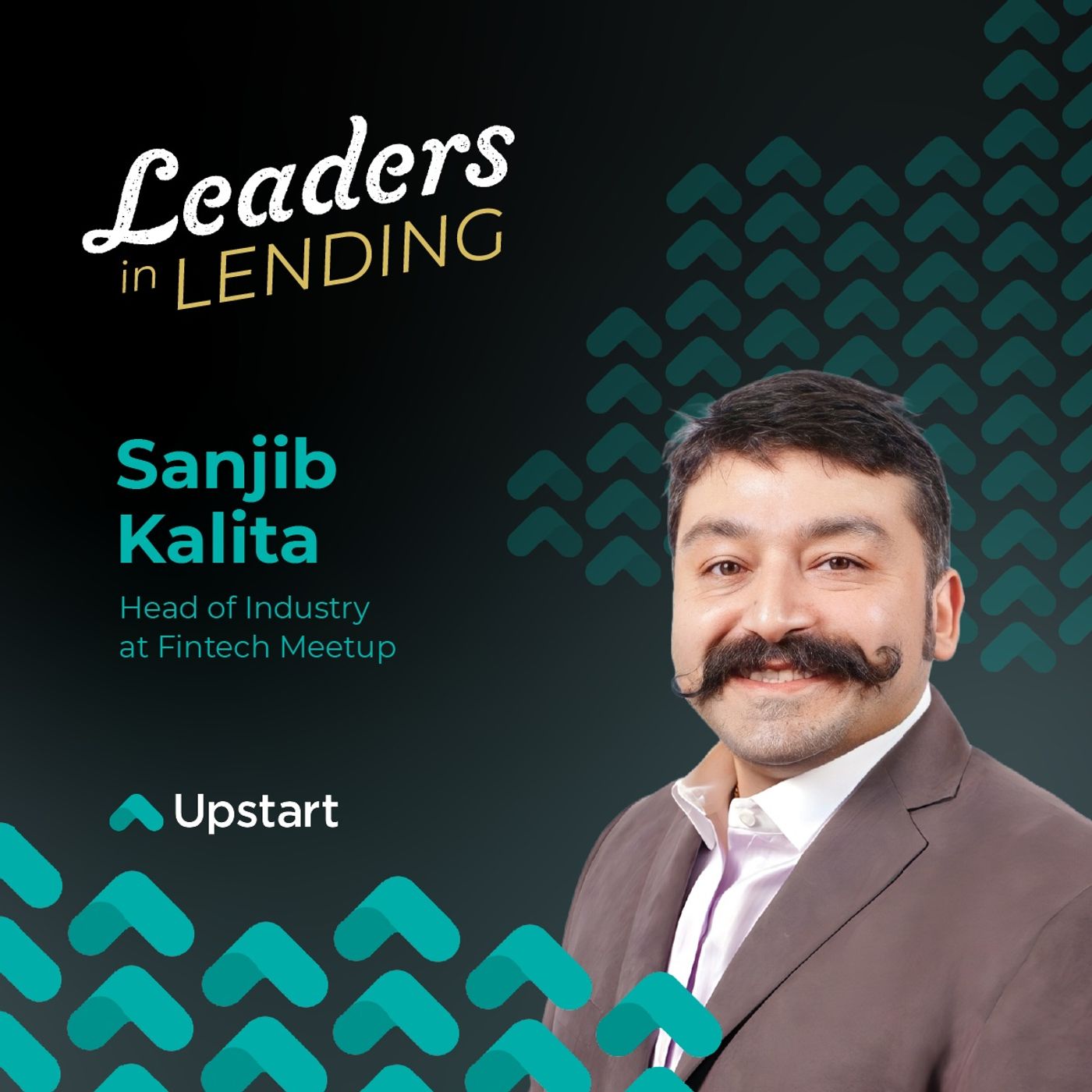
Join our host, Matt Snow and guest Sanjib Kalita, Head of Industry at Fintech Meetup, as they explore key themes such as data technology, blockchain, and the importance of networking in the industry's evolution. From personal experiences with bad data to the potential of blockchain for data ownership, listeners gain valuable insights into the challenges and opportunities shaping the future of financial technology.
Discussed in this episode:
- Responsible data practices and the need for consumer engagement in the credit industry
- The potential of blockchain technology for decentralizing data and building trust in credit decisions
- The significance of networking and collaboration in the FinTech industry for startups, partnerships, and staying informed
0:02 You're listening to Leaders in lending from Upstart, a podcast dedicated to helping consumer lenders grow their programs and improve their product offerings. Each week, here decision makers in the finance industry offer insights into the future of the lending industry, best practices around digital transformation, and more. Let's get into the show. All right, welcome to the podcast. This week, I want to welcome san Jib Khalita, head of Industry at Fintech Meetup. Sanjib, thanks for joining. Thank you very much, Matt, really wonderful to be here. Yeah, I'm looking forward to the conversation. Why don't you start by maybe describing what the head of industry at Fintech Meetup does. What does that job entail? Sure? Absolutely so. Fintech Meetup is one of the newest and I actually the second largest fintech event, and we try to get folks from across the fintech ecosystem, so startups, banks, investors, technology providers and Michael is to try to help engage the event with the industry and get them to the event. So like our goal is to help move the industry forward in a positive manner. Gotcha, Yeah, that's great. I want to dig into that maybe a little bit later, but tell me how did you end up in that position? Maybe describe a bit of your journey to get there. Sure. Yeah, so I've done all clients of random things, like for example, started my career as a chip deensidnern Intel and designed a programming language that Intel still using thirty years later. Then went to a business school and worked at City Bank in the credit card business for nine years.
1:34 And then the last fourteen years or so I've been doing startups. So worked on the startup payment platform building technology company called Txvia that we sold to Google. I left Google to help build another conference business called Money twenty twenty, which we also sold, and I was there for about ten and a half years, and I recently left to join fintech meet Up. And also the last five six years so I've been in parallel building my own fintext to culd Guppy, which is a credit burea built on blockchain technology. Gotcha a lot to unpack there, but I definitely see some through lines in terms of, you know, the technology enabling decisions using data. So maybe talk a little bit about that, Like what do you see as the need in industry right now in terms of using data technology as it relates to credit or credit bureaus as you mentioned. Yeah, no, I think that there's a huge opportunity and you know, in terms of availability of new types of data. But also it's sort of like, you know that with anything positive, there's also like if you overreach or if you do something in a wrong manner, ultimately harm consumers are the people you're trying to sell products to, so you know, and I think that that's a bit of like my own personal you know, what gets the fire in the belly going is like just the opportunity, but like also just making sure that we as an industry don't donything stupid, yeah, you know, and try to do right by the consumer. Yeah.
2:57 And I know you've got a bit of a like personal angle here, like you've been maybe harmed individually in the credit industry and you want to share that story. Yeah, yeah, absolutely. You know. I used to be at City Bank. I used to help manage one of the largest credit card portfolios in the world, tens of millions of customers, and I used to experience the pain points of bad data and like how I used to make wrong decisions or bad decisions or lead to bad customer experiences. So it felt a b to B pain points of bad data on the system. But then if we go to April of twenty twelve, April first of twenty twelve, I got engaged, and you know, just for your listeners, if you're going to get engaged, don't get engaged on April Fool's Day because no one believes you. But it was true. And on April second, Google acquired the startup I was working on TXVA, which was great. And then April thirteenth, I was actually closing on buying my first home, an apartment in Manhattan, was a co op, and so they had to pull my current report. In April twenty ninth was our wedding date because my mom was so we just wanted to get married as quickly as possible. And so when they pulled my credit report, according to the current report, I was married to man in California. I had five foreclosures, four bad auto loans, you know, obviously all bad data. And you know, so just when I say that doing harm to the customer, like that's something I really felt like I had to in the midst of that month, I you know, I had this surreal process of getting police reports that I am who I am,
4:29 and it was it was really made me think that, Okay, this system needs to be more consumer friendly. So that's a bit of why we started to build Uppy. Yeah that sounds like a continuous April full stroke all month LONGO. Yeah, it sounds like painful to live through. It sounds like you got through it. I got it cleared up. My wife believed me that I wasn't married to man in California, so that was the main thing. You know, I have happily been married for about twelve years now, and you was able to buy the apartment, got married, and it alterned out great, but definitely more headaches than needed. Yeah, very eventful. I'm so glad it all worked out. But how have you then taken that in terms of turning that into a company idea like you mentioned with Guppy, the idea of maybe decentralizing data out of the hands of a large institution like a credit bureau, and turning that into something that the consumer has more ownership of. So, first of all, you're creating a system that really, I think philosophically tries to put the consumer in control, and so with blockchain, what we've been able to do is sort of basically push control to the edges without sacrificing security. Without blockchain, you have these black box systems that are supposedly highly secure, and because they're tightly controlled, the idea is that you know, that security is more easier to manage. But for example, with the Echofax hack from twenty seventeen that started in February and was not widely known until August September, so once again that that was a bit of a
5:59 limitation in a black box system. Additionally, with smart contracts, you know, a lot more control over data, a lot more view and you know, trying to modernize a system that has been essentially quite similar infrastructure for like several decades. Yeah, I bet that transparency would be much welcome to consumers in this space. Are you seeing regulators take a viewpoint on this at all in terms of use of blockchain or decentralized databases in terms of credit decisioning or the use in that kind of capacity. Yeah, another great question. And you know, I think I have on one hand spoken to some senior regulators or actually former regulators who have said that actually when I was at the you know, X y Z regulator. I thought that I would leave for a company like yours, So that was actually like very nice to hear in terms of the ecosystem's need. Also depending on the country, like so for example, certain regulators may be a little bit more aggressive, whereas other regulators regulatory regimes might be more you know, let's just look at the use case.
7:04 I care less about the technology itself. Definitely there's a span of responses, but it's also you know, for me, it's a new technology, and so with any new technology sometimes there can be a market hesitation. Yeah, yeah, I totally agree with the ownership back to the consumer. I guess that probably helps with some of the data cleanliness or accuracy as well, Right, or do you ever think we'll get to a point where data is like perfectly clean and this isn't an issue, or by using this advanced technology maybe we're able to clean up airs faster. Yeah, I do think it's that ladder. By engaging the consumer, I'm hoping for a bit of a cleansing of the data, also building more stronger belief in what the data says.
7:49 And I think there's always going to be some elements of bad data. That's just the reality of entropy and being part of the universe thing. So yeah, not definitely not the silver bullet, but I think it can make a hopefully a positive Uh yeah, I think you're right. And then we talked before a bit about you know, the kind of bad data leads to bad decisions or the garbage and garbage out kind of philosophy. Do you think that also then translates through into AI or mL type models, you know that tend to be viewed as black boxy as well, Like are we able to translate that data into the decision or if someone wants to dispute a decision, they're able to find the data elements and maybe have more interaction with that process through this. I think that having that interaction, the customer interaction with that process, I think is important. Like just an example as reading an article about like healthcare data, yeah being used and so a lot of times, like you know, if we're in a doctor's office, we're we're feeling physically ill, we're not feeling great, or maybe we just want to get this problem solved as quickly as possible, so we have a series of that we fill out and we're like, oh, you want to share this, Sure, share this? Yeah, why not? You know, like if it gets me in and out quicker, I'll do it. And then later on, you know, like this article talked about, like how you know, there have been cases of you know, some type of marketing or some type of customer messaging that was tied to some of that data that was shared. So
9:22 like, I think even if you get the customer's permission in order to pull in the data, you don't necessarily even want to have the outflow to be like a less a fair like let everyone add it. I think if you're able to control it on the outflow as well the consumer having the awareness of that, I do think that that's important. It can be overhead, but like depending on the type of data, I really don't want people to know what kind of you know, health issues I might have had in the past. Yeah, I think the healthcare is a good analogy. I think about that too. You know, every time I go to a different doctor or have an appointment, you fill out all of this paperwork. You feel like you've got to relive your family history for generations to try to give them the information they need. Where if I was in more control of that data can facilitate who add access to that data for what purposes. I might be willing to share that speed things up, have a more complete record versus I'm sure I'm not entering that form the same way every time, and would be willing to share that to healthcare providers for treating me versus for marketing purposes. Like you mentioned, So the alignment of data to purpose probably is a key there.
10:26 It is, it is, and I think that the similarities with both financial services and with healthcare, it's like it tends to be in a very very important time in life or very critical, and if you drop the ball or you lose trust, I think it really does get to the heart of the core value proposition that you're trying to deliver to that consumer. Yeah, I totally agree. Well, I want to switch gears a little bit and go back to the idea of conferences because we had talked about that before as well as a way to exchange or share ideas or stay relevant. Tell me a little bit about like what you're saying in fintech meet up today or in your past in terms of what do people expect out of conferences in a post COVID world, what's the benefit there to them? Sure? Yeah, So like if I you know, even go back like about eleven years to when I worked on Money twenty twenty, you know, it was near to the industry. I sort of unknowingly believed that like speaking and content was like the main value proposition sort of that education. And then like after a couple of years, even through the very first one, like if there was like a startup that was doing an interesting payment solution and there was a bank looking for an interesting payment solution, I try to match them up. If there were investors looking for interesting startups, and you know, vice versa, I would try to match them up. And so then like after the event, I would get emails from both the banker and the startup, or both the investor and the and the company like, hey, thank you, this is very important and helpful. You know, I got to realize that, you know,
11:58 some of the connections that you can make it and event are the prime value proposition. And then as Money twenty two grew, it was like a little bit of like because there's so many people, you're hoping a bit of serendipity, like you're in the same room you hope to meet and then Fintech Meetup basically was started during the pandemic when there were no live events and you could use digital matching technology to do like basically virtual meetings very quickly and then once we could meet again too. They had their first live event last year and I attended as my startup, and I was like, I had twenty one meetings with a few investors, few potential customers, few potential employees, and I was like, this is really neat, And I just sort of saw it as like, Okay, this is a better use of my time, and basically when the opportunity came, I was like, oh, I'd love to just from it. Like going back to what you said as far as like having a technology mindset, I was like, this is an interesting application of technology to solve problems and to make experience is more better. Yeah.
13:01 I like that, And it sounds like, you know, these events can almost be like accelerated incubators are a way to get through a lot of different ideas, different partners, like you mentioned, all coming together at a single place around a certain idea or topic, especially even with a data available today, like still being in person seems to really facilitate that it does. And I've heard so many startups that have come to me after an event and said, hey, I basically built my company at that At your last event, you know, I met with several investors, I met with several partners, and you know, we got things going. And so you're absolutely right, Like I think the accelerator comment is actually spot on. Yeah, And so are you finding people find more benefit in like the one to one matchups versus sitting in sessions or the kind of keynote speakers or do you think each of those really has its place in kind of a conference. You know, each of them does have its place. But it's also like I think, when you have one to one conversations, you know, you can say things that you wouldn't want to say very broadly to like thousands of people. Also you can if I'm trying to explain mobile payments to a banker versus a retailer versus a even my parents, it's very different conversations even though you're saying the same thing. So it's sort of like if I tried to talk about mobile payments to a retailer like I do to my parents, retailer would be like, I don't need this, I'm well beyond this, whereas vice versa.
14:31 I think if I tried to talk to my parents as I do a retailer, they'd be like, Okay, I don't understand this. This isn't for me, This is for someone who's much much beyond and when in reality it can work for both. So I think that having the right conversation makes a huge difference. Yeah, that's true. You're probably also more willing to share, maybe not getting into trade secrets, but a little more on like the how things work, right into the nitty gritty of kind of the complex problems you're trying to solve. Absolutely, And I think that it's partially you know, like if it's very broad, like you might want to protect something that is truly secretive, but also you also might think that, oh, I'm going to put people to sleep if I talk at this level of depth, when in fact, like a lot of times, that level of depth might be the key to making the decision in your favor. Yeah, that's a good point. Are you saying any themes in terms of the types of startups that are coming out now, you know, participating in fintech maete up, like what kind of problems are they trying to solve or technologies they're using.
15:31 I mean, I think it's the good and the bad is like that there's still a lot of opportunity in improving financial services. And I think that part of it is like because we've sort of been through a bit of a slowdown. I think it forces startups to be more focused with how they communicate themselves. It forces them to be more tight in terms of their value proposition. It also I think in some cases there might have been a bit of arrogance, you know, like a couple of years ago. So and I think it's it's good to have your feet on the ground when you're trying to build something like this. Yeah, that's true. And I think we're starting to see people much more open to partnerships with technology companies. I think, like you said, maybe breaking down the arrogance a bit or understanding that like, not every company can solve every problem for every person. So seeing who's out there finding a really niche solution to something they're struggling with. Are you saying more partnership opportunities across traditional financial services providers and newer entrants or how's that.
16:34 I think you're seeing more partnerships, like even like with some huge companies like for example, like the partnership with like Adian and Kharma for like issuing, Like right, a couple of years ago, each of them would be in their own universes. But now like you're trying to see, like, okay, where is the overlap? And even with like for example, like banks and traditional issuers and you know, let's say a data startup, there's more of a mutual understanding of like, Okay, what is our overlap? What are we both trying to drive towards? And how can we get to that solution faster? Yeah? Yeah, great, Well, I've really enjoyed our conversation. Is there anything you think I've missed that you think people should know about that you've seen or want to let people know about. Yeah? No, I mean, if you can make it to Vegas for Fintech Meetup this year, definitely urge you to join, And if you're there, definitely look me up. I love meeting people and hearing people. And that's probably my closing statement. Awesome. Well, I know, you know, I've definitely been to a lot of conferences. I find a lot of value in like you said, the one to one hearing some of the sessions and what's going on? Are there other things outside of conferences, like maybe someone you follow closely from a thought leadership perspective, and other podcasts that you follow, Like how do you stay in the loop of what's happening as this space changes day by day? Like maybe I give us a couple sources to help us stay informed like you, Yeah, so I always like looking at thought from outside of my industry primary industries like so, for example, when I was a chip designer, used to like looking at business papers or business periodicals, But
18:06 now that I'm in business, I like looking at technology periodicals like so things like MIT Technology Review or Wired or you know, those types of things that maybe get into a little bit more. I'm not necessarily reading like ATRIPLI papers now anymore, but maybe a step may be more accessible than that. That's probably another source is like just understanding what people are listening to music wise, media wise. I think that that also helps me just keep up to date, so I don't feel like an old man's you know, to prematurely. I like that, well, you know, I could definitely talk about music for some time that's probably for another podcast. I don't know if that's totally this audience, So maybe we can catch up on that offline. That would be great. Well, it was great again. Thanks Sanji for the time.
18:55 I hope to catch you in person soon and thanks again, thank you very much, Matt. Upstart partners with banks and credit unions to help grow their consumer loan portfolios and deliver a modern, all digital lending experience. As the average consumer becomes more digitally savvy, it only makes sense that their bank does too. Upstart's AI lending platform uses sophisticated machine learning models to more accurately identify risk and approve more applicants than traditional credit models. With fraud rates near zero, upstarts all digital experience reduces manual processing for banks and offers a simple and convenient experience for consumers. Whether you're looking to grow and enhance your existing personal and auto lending programs or you're just getting started, Upstart can help.
19:41 Upstart offers an end to end solution that can help you find more credit worthy borrowers within your risk profile. With all digital underwriting, onboarding, loan closing, and servicing, it's all possible with Upstart in your corner. Learn more about finding new borrowers, enhancing your credit decision process, and growing your business by visiting upstart dot com Slash four dash Banks. That's upstart dot com slash four dash Banks. You've been listening to Leaders in Lending from Upstart. Make sure you never missed an episode. Subscribe to Leaders in Lending in your favorite podcast player using Apple Podcasts. Leave us a quick rating by capping the number of stars you think the show deserves. Thanks for listening. Until next time.

