From Big Bank to Community Leader

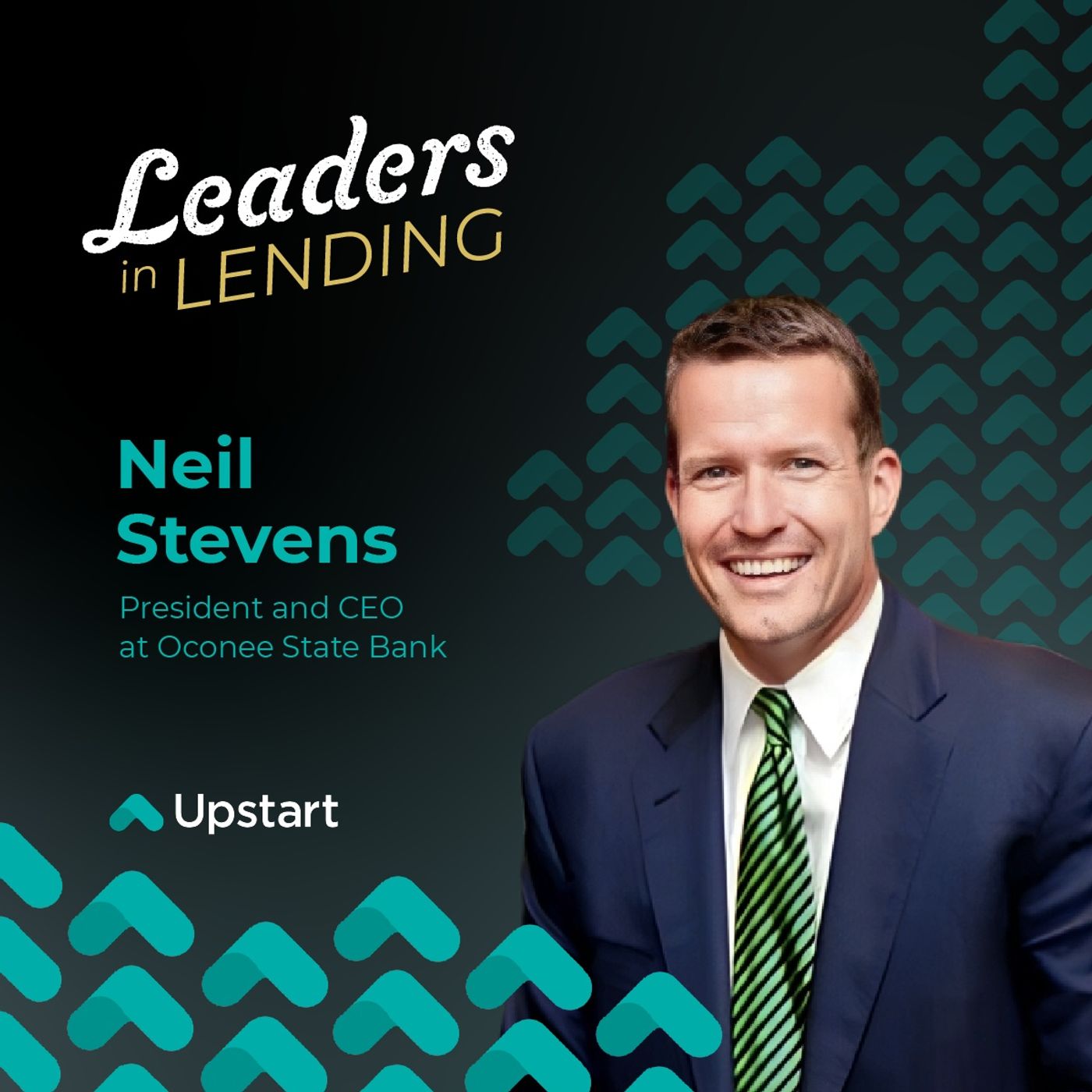
Who would be bold enough to start a bank during a recession? https://www.linkedin.com/in/neil-stevens-a16a68159/, President and CEO at https://www.oconeestatebank.com/, and his team were, and he has lessons to share on how the constraints actually...


Who would be bold enough to start a bank during a recession?
Neil Stevens, President and CEO at Oconee State Bank, and his team were, and he has lessons to share on how the constraints actually helped to build the business. In this episode he reflects on the pivotal moment of launching a new bank during the 2007 recession. The entrepreneurial spirit that fueled this risky move has contributed to the institution's resilience and shaped a strong organizational culture. He also dissects how the unique model of community engagement through a foundation helps to balance high standards with effective leadership.
Jeff and Neil discuss:
- Leveraging opportunities for banking by being more entrepreneurial (how a focus on the construction industry powered them through the pandemic
- Insights into building and maintaining a positive organizational culture
- The unique model of community engagement and effective charitable giving via a foundation supporting over 50 organizations in local communities
0:02 You are listening to leaders in lending from Upstart, a podcast dedicated to helping consumer lenders grow their programs and improve their product offerings. Each week, here decision makers in the finance industry offer insights into the future of the lending industry, best practices around digital transformation, and more. Let's get into the show. Deil, Welcome to the podcast. Thanks for making the time to join me today. Thank you. Jeb. Glad to be here, man, I think this will be exciting conversation too. My wife is saying two people who like to talk is a dangerous combination before I came in here, so I feel like we got said well matched. I think was actually what she said, and I said, you'd like to tell you us it'll be a good parent. I would like to start by asking my guests, how did you wind up in the banking industry. I give me a little bit of your career history and what brought you to where you're at today. Yeah, I'll give you a quick history. So I graduated from Marcia University and Making, Georgia back in nineteen eighty nine at an accounting degree and a communications degree.
1:00 You know, I didn't think about banking honestly, I wanted to get in the hospital administration. I was a paramedic through college and loved that. And I knew I didn't want to do anything in the medical field per se, but I wanted to maybe do something in business within the medical field. And so back then, hospitals are struggling, very very difficult to find a job, and so had an opportunity. My brother, my older brother, by Mark Stevens's in banking, been in banking for years, and he encouraged me. He's much older, He's fifteen years older than me. He encouraged me to give banking a try. He said, you'll learn a lot about our different industries. And he said then you can kind of do what you want to do after a couple of years, and this would be a good starting point. And so thirty four years later, here I am still in the business. I fell in love with it. But I started with CNS National Bank back in the late eighties and early nineties and Citizens in Southern which is now part of the Bank of America. There's probably a lot of banks are but great great bank based in George. So that's where I got to start. Interesting talk to me a little bit about the I've heard a lot of interesting stories, but EMT is a new one. I gotta be honest, But tell me you said you fell in love with the NVY. What was it about the space that you fell in love with? Like? What was it that that drew you did that where you said this is the thing I gotta do. Yeah, well, you know that's a drastic shift from you know, the NT paramedic world to banking. For sure. My father was a firefighter and so I love license sirens. I grew up around the fire station. It was the adrenaline rush that drew me to the paramedic field.
2:34 I had a great friend who owned an ambulance service and I got involved with that. But knew I wanted to do something in business. But what I fell in love with in banking. But once I started doing it was the opportunity to number one to help small businesses. I went on the lending side of the business. It's some retail banking for a little while, but then eventually got into credit school and got into commercial banking. And it was the ability to go in and be a consultant for small to medium sized companies by value there. But also it was just cool because one day you're in a machine shop, you know, with all the noise going on your goggles. On the next day you're in a even a law firm talking to a group of white collar attorneys about their business. So it's just such a wide array of industries that was never boring and just love people, love being around people, love helping people. And I think that's where I just said, Man, I like this as a career. Then management opportunities came along, right, so I got to use my leadership that do and so it's just it's been it's been a great platform to do that as well. That's fascinating.
3:43 I felt the same way. I ended up in my first real job after school and sales at IBM, which may not sound much like banking, and it isn't other than you know, I had a geographical territory that I was responsible for selling to and one of the things I loved is I was walking into freenight shipping company one day, in a retailing company the next, and the bank the next, and you were learning about not only different industries, but like these parts of the economy that sometimes you don't see mean but I don't think about how the goods get from the manufacturer, they have the raw materials get to the manufacturer, the goods get made, the goods get shipped to a place and you buy it. But you know, you end up working with the companies all across that value life cycle. And it was just fascinating kind of peel back beyond you and understand a little bit about what was really going on in a way that can be you can be oblivious when you're one in history. I always thought that was a fascinating aspect of what I got to do in that role. It sounds like part of what you're new to the bank is just deple to like see and understand some of different parts of how the economy really functions. Oh yeah, no doubt, no doubt. Now talk to me, because I understand you guys been a bold decision in the six seven time. And you know they say in Silicon Valley that sometimes the counterintuitive reality is that the worst times to start a company, you are off with the best times, the scariest times, and things that are falling apart, the recessions or tend to be the moment to go and where a lot of really strong long term companies are built, but you guys decided to start a banking an interesting moment. Talk to me a little bit about that. It was also a saying that goes will lie cuts better be lucky than good. So you know, yeah, absolutely, So you know that's something that's been at patching in mind for a number of years before we did it. Is to do it ourselves. I was with a bank called
5:13 First Citizens Bank Shriff, which actually bought to the Civil Valley Great Banking, the Bolding Family, phenomenal institution. But it's like, you know, I really want to be more entrepreneurial. I liked it do this myself. So a group of us left First Citizens back in two thousand and six and started a bank called Keyworth Bank, which is based in Johns Creek, Georgia, which is I lived that in that area at the time. But we had no idea what was coming. I mean, I wish I could say, man, we knew this was going to be a perfect time I started bank, because you know, we got in when all of the banks were going to go down the tubes and we were going to be the long survivor and all that. But no, it really wasn't that way. We raised thirty six million of capital in six weeks. I mean, this thing, it's flew in the poor. We got started, and I mean we start to the bank and early those seven and about Meadows seven ledo seven, we started realizing, oh my goodness, I mean that out looks horrible. And so we were able. We never got concentrated, so we were able to stop lending in the construction arena and things of that nature or early on. And we never planned for that to be a big part of our portfolio anyway, but it would have been a lot bigger. I think we were at the twelve percent concentration in the area, which was virtually nothing so and even those we took very little charge offs. And then we were One of our mantras back then that we toubted was we have money to lend because no one else could. Are very few could. Yeah, they're all pulling back. They
6:44 were all, you know, in trouble, many of them were. And so we were very selective, and honestly, we picked up some really good customers that served us well throughout our tenure at Keyworth because their bank can no longer lend to them, and we help them when really nobody else could. So we were really blessed to start at a time when it wasn't I think if we started a year sooner, the story might not be so good. I like to think it would be, but you know, the truth is you never know. You never know. So yeah, but it was, it was Those were fun times. It was fun getting that that started. We were you know, you order the paper clips, you do everything when you start a bank, So that was a great morning experience. Yeah, that's not an experience mini bankers get to kind of like I remember we bought our an up sort of our first set of we're gonna get coffee MUDs.
7:32 So you run to Ike and you buy some plates and some coffee MUDs, you know, the whole thing to hold the pen when I read a little office supplies and you're like carrying up the stairs and yeah, that's a different feel than most people who work at larger institutions. It was just established institutions of any size I ever get you in, there's just no infrastructure. You're just like, whenever you go, who's you ob was it to ask? Somebody goes to yours? Yeah? I left worse citizens where you know, got faint really well, had a twenty six branches at the time, you know, running all the commercial department, the mortgage department, had all the infrastructure in ruleingh Oath, Carolina, and I wanted marketing, you know everything going from that to it's just three out of us here and uh, you know, you go get the lunch today and I'll go get the you know whatever. And that was really what I enjoyed. It was the entrepreneurial spirit.
8:24 Within a few years we helped build it up to about a four hundred million dollar bank and uh, you know, ended up selling that bank to Renaissance. But thankfully we were healthy the entire time and never got into any kind of lending trouble or anything like that in that time frame. That's pretty good. Most we'll got to some sort of ending trouble. So I understand you have a strong philosophy on how one builds and maintains culture in an organization. And I feel like this is one of these seeing areas where everybody, yeah, says culture is important and critical, and yet how do you actually develop and build It is often more art than science, or more magic hoping happens, but not a lot of real you know, thoughtfulness. Sometimes maybe is the wrong word, but prescribed approach as to how you do that, and it's a little more haphazard in my experience. So like companies just kind of like comes out accidentally from the things you do. Tell me about your approach and how you think about, you know, building culture, managing culture, maintaining culture. That I think it is critical and it's one of those things that I think is as yet not that well understood how it really happens.
9:24 Yes, it is really fascinating. Human behavior in and of itself, to me is very fascinating how people respond to different things and environments and things of that nature. We try not to use the word culture in our organization much because I think it's a byproduct of what people smell and feel and taste. You know, when they're here, they know it's a great culture. They say, man, that's a you built a great culture. Well, you know, we're trying to talk about it internally, like you know, we're really working hard to build this great culture. I think it could be an overused word, but we are very intentional, extremely intentional about the process of the building a great culture. And you know, to me, that really hinges. It starts with the leadership of the organization. If you don't have great leaders top to bottom. I'm not just talking about the CEO.
10:20 I'm talking about, you know, the supervisor over deposit operations or whatever it may be, the backroom function. If you don't have great leadership across the organization, it's really hard to be intentional about a process that will lead to a great culture. Because people work for people. People leave. They don't leave organizations. They leave people, they leave their manager. And there's an intentionality I think, and I see. My job is really to put the pieces in place that foster the environment for a great culture. I mean for plant to grow and a certain it hasn't have a certain temperature, a certain environment, a certain amount of sunlight, whatever it might be for that plant to grow. I say that that's my job, is to ensure that that environment is there. But a culture really is nothing more than the sum of the whole. It's it's the group of the individuals that are in that company.
11:16 They make the culture, whether it's a good culture or bad culture. People say, well, we don't have a culture, Well, yeah you do. If you want one or you don't want one. There is a culture there. But we have intentional about the process and putting an environment in place. See it is my job for that to prosper and grow. And so there's things that we've done to do that we're still learning. We're not perfect. I mean, yes, we make mistakes every single day, and we strive every day to get better. You know. I think that expand on this just a little bit more too. I think there's a mission omber. Sometimes that culture means that it's squishy, it's touchy feely, eminem's in the break room being bag chairs, you know, fitness center adues being paid.
12:03 I mean, all these things and all that is nice and great, and I think that can have to a good working environment. But the way we define culture is a culture that is a very high standard of winning. You know, we want to be the best at what we do. We want a standard of excellence. You know, we don't want to become complacent. We want to continue to grow, to expand, to learn, to build a better bank, and to demand a lot of our people and for our people to demand a lot of themselves. Right, But we want to also with that high challenge, put in a strong support system that's there to help affirm them that equips them, that develops them to become better. That it shows love and appreciation. And I think when you can combine the high standard of excellence along with a high support system, some magical things begin to happen. And that's really what a strong culture is all about. If you have all the squishy stuff and low standards, you know, you got mediocrity, right. If you have all these standards and expectations and no support, you on the brink up potentially a mutiny, so it can become very toxic.
13:22 I think it's important the healthy culture has both of those elements. Well, it talks about how you maintain that because I think it's it's one of the challenges that you can have high standard you know, we see this in hiring what's the old phrase AA players. If you hire a B player, B players hire C players, and see players hire D players and so not just having high standards yourself, but instilling the culture of that, because it can often be in hiring. Why does that happen, It's because like you need somebody and you're desperate for somebody to do some work, and you just like this person can kind of sort of do it'll it'll help my day will get better if they're here and you drop the standard. And so I'm curious how you think about and we'll tackle both of them this way, but actually instilling that and supporting that kind of setting of high standards, holding up people to high standards across the organization, because is one thing to have it for you, and it's a whole other thing to hold other people to it, and then to help other people hold yet other people. That kind of second and third order away from you as a leader becomes I think that the place where it often breaks down. And I'm curious how you think about whether the structures or incentives or how you know, encourage those high standards and get that to be something that's accepted. And because again you right cultures like you can say we have high standards and then you keep promoting the players and like you don't. You can put it on the wall, on a poster or all you want, but ultimately, the culture is what's actually done. And if you don't enforce or expect high standards from people, then then that's going to be the culture, no matter what inspirational poster you put on. Lall.
14:43 So I'm curious how you think about that actually maintaining those standards across the organization systematically. Yeah, well that's a great question. I think. Talk about a Stephen Covey content beginning with the end in mine, you know, it talks a lot about that. But to me, it's like, how do we know if we have a great culture? I mean, in other words, that you can feel and smell it and taste it. But are there ways to measure it? And I think for us we measure it a couple different ways. We measure it. By number one, we look very very closely and intently at our engagement scores within our organization, and you know we have the last week we measured this it was an eighty four percent engagement rate, which has not always been there. It's been I think our one before that was sixty something, the one before that was fifty something. The average company in America, depending on which survey you look at, and this is recent, is anywhere from twenty eight to thirty four percent. And so engagement.
15:43 So you think about a football play that means only about three out of the eleven players of being engaged, and I don't know that that played with go very well. In fact, there are some of those that are actively disengaged, which means they're trying to sabotage the company or sabotage to play or whatever. So so we look at the engagement rate and scores, and then we look at our performance, right, because I think a company that it is not performing up to standards, that has poor performance for whatever reason, it's not meeting their budgets or not meeting their goals that they set, and they're a lower performer in their industry. I don't know that having a great culture, you might want to really rethink that what does that really mean? So I think beginning with the end of mind, we look at sort of both of those and from there we feel like and we've come to the conclusion that really what drives this high engagement and high performances connection, it's the team being connected. It's the entire organization truly being connected to each other, to the organization, to the outcome. And then looking at themselves is not the star of the show, but a player in the show that is adding value to the whole. And they know their part, they know their lane, and you know, well, how do you create this connection where there's a lot of things. I think internally that you can do to do that, and you have to be very intentional, which we're doing. But at the end of the day, I think it's leadership that really is relentless and making
17:19 sure that we hire people who hold high standards for themselves. I think if you have to, if you have to motivate people all the time or talk to them about you got to have higher standards. That's a problem. I think you've got to pluck those organizations pretty quickly. I think it's does individuals who I mean, for instance, we're in a meeting just the other day, and again we don't do everything perfect, so don't get me wrong here, but we're in a meeting and somebody mentioned something about the inability to create sales and things like that, and we have three or four people step up. There were leaders in the organization, but it wasn't me, it wasn't our chief banking officer. It was people below them who stood up and said, well, here's how I did this, and you can do that.
18:03 I mean, so, I think leadership within the organization of people who hold a high standard, it pulls everybody along, and therefore you're going to have those lower performers those folks with mediocrity mindsets or complacency, they're going to do self select or they're going to rise to the occasion or if someone's going to have to, as we say, unleash them to the competition. So that classic. So I think it's not static. It's this is a dynamic thing that you have to work at every single day and sometimes you screw up. But I think if you keep that mindset of But I honestly believe Jeff that creating connection within the organization is really what leads to that engagement. And if you've got the right people and they're connected, it's incredible what can happen.
18:55 It really is interesting. How do you think about then the second element you're talking about high expectations, high standards culture, you know where that's kind of a common expectation, but then a high level of support. But it's also critical, right, you've got to and sometimes in order there's no support for people who have a failed initiative because like, hey, you did a good job but it didn't work out, WHICHOK a risk. Understanding how to separate good risk it doesn't work out from a bad set of decisions and supporting people through that how do you think about developing that and how you kind of make that a part of the culture too, because it does feel like it's kind of like it's a unityang you either one without the other kind of doesn't work very well. Yeah, I think it's for basic little principles, that's what you know, really creates that support system. And we're going through this material right now in our in our bank. But it's a little acronym called lead.
19:44 It's loving others, equipping others, affirming others, and developing others. And I think if a leader, if I am your leader, and I take time to pour into you, and we call this the loving others aspect. And sometimes people get this confused, want to confuse you know, love with a feeling. It's not a feeling. It can be my wife, I have a feeling burb. But in the workplace, I mean it's an action. So it's things like intentional listening and communication. It's things like selfless recognition. It's giving those flexibility people under any flexibility to do their jobs in a flexible manner. It's growing and giving trust. It's paying them well, I mean compensation is part of this thing too, right, So extremes again intrinsic, but it's loving and showing care. And there's not a single one of us who don't want to feel appreciated and love and care for through everyday actions. And so that's one way. Second is to equip people to get their job done. I think that you know, you can't expect someone to just come in and perform at the level that you want them to and hold out how standard if they're ill equipped, and so I think it's important that we continue to give them the tools and resources that they need to win to equip them. Affirming of the I think sometimes we affirm only on people do things well, and we should be affirming them when they do things well, but when they don't do things well. They use an example from the Georgia Bulldogs that just recently South Carolina game, Kirby Spark gave a halftime talking This
21:17 came from their sports psychologists who told Kirby he said, you know, you can't rail on these guys at halftime. You got to affirm them. And so what he did at have time he's talked about the things that they did right and the things that they could do, and the fact that he believed in them and we can get this job done. And if we do that with our people, they're going to respond a whole lot better than getting a stick and beating them over the ad with it, or telling them that you know this to strike too. One more strike you're out, or whatever. I mean. I could go through ten examples of how affirmation creates. They want to to raise your stamp. So love of the others, equipping others, affirming others, and then finally developing others. I just saw a recent by McKenzie and Company, you know, the big consulting firm, and it said the number one reason people choose to leave or join an organization has to do with their personal and professional development. Money is important, A lot of other things are important. People want to be developed, and so you talk about equipping, Well, how is that different than developing? I see, equipping is giving them skills that they need. Developing is really more about the people building. What does my future look like? What do I need to do become a bank CEO one day? How do I become a branch manager?
22:34 And to have a plan for them. So, if you're going to have these expectations of a high standard and you want people to buy into that, and for that to come from within, the support piece has to be there. I think it's through loving, equipment, affirming, and developing. There's certainly other pieces of that, but I think if we do that well, they'll fill the low and support and they'll respond to it. I love a little mnemonics and acronyms because it can be nice little mental checklists or help at least for my brain. It's mine too, no doubt, without something absolutely written, a book and sort of a podcast at the bank, and you guys have a lot of stuff on. So tell me a little bit about the book, what it's about the podcast that I want to jump into the foundation, but I want to say that for a last Yeah, So I'll be starting with the podcast real quick first, and then then I'll talk about the book because that sort of leads into the foundation discussion. But the podcast, there's really nothing more than an opportunity to connect with leaders in the communities that we serve in order to bring value and content to small business owners, small and medium sized business owners. Because we feel like if we can bring value to them through the podcast and then strategically share that podcast with them and bring value to their business. You know, they will take a look at us as a financial institution when they get ready to change, or when an event occurs, or things of that nature. I mean, we're hoping
24:07 they said, gosh, my bank didn't do that. You know, man, they're bringing value and it gives us a chance to do that. So we're in the test. Let me I say test. We've done too. You know, we're in the second season of that right now. But it's been going well. It's you know, the listenership. I can't tell you the exact stats, but it's it's beginning to pick up. I've heard lots of good things in the community about it. We built out a little studio that's very nice. We didn't spend a whole lot of money on the biggest cost of the air conditioning unit, but we took an upstairs attic of one of our branches, and a technical guy who's very good at what he does at the bank really created that. And it's been going well. It's called make Your Remarkable. It's what it's called, Make You Remarkable, and you can look it up and see it on our website and it's a video type of deal and We've had coach Mark Rick on there. We've had a few celebrities that you know their names, but to get it started, it's predominantly small to medium sized business owners who have their subject matter experts that we want to talk about a certain subject that hopefully will help small businesses in our communities.
25:11 I love the idea of starting with value. So often people start these inities like what do I get out of it? I do feel like and that's kind of how we got started with this podcast too, is like, what can we provide that will be of service and value to the people we're trying to connect with? And if we do that, you may not have an exact plan for how that connects to value and business over time, but I have faith that when you when you put value into the world for your community, it comes back to you over time. Well, we always say that we don't want to be the hero of the story here. We want the participant person we're interviewing to be the hero of the story, and our small businesses to be the hero of the story and not us. I mean we're trying to not bring the light. That's essentially that. But yeah, the book is about a two year project, but I've got a copy here called Leading Life on Life. It really developed as a training annual for our team. I have a heart to really have a consistence. I wanted to have a consistent message for all of our leaders to follow, and so it took about twenty four months to get the book written. The essence of the book is is that as a leader, it's not about title, it's not about being the boss. It's about investing in others in a way that you create followership, that you're a leader worth following, and that people follow you because they believe in you and they want to follow you versus Okay, Neil said do this, he's the boss. If I don't do it, I don't have a job. I mean that's the way, you, you know, disenfranchise people if you're if you're not careful. So that's the thought process
26:45 behind it. And then the little acronym I talked about. Now we get into those four principles that loving others, equipping others, affirming others, and developing others. I mean that's the blueprint in this book, and we go through each one of those and how to make that happened. And now we're taking this out to small businesses and actually doing seminars and workshops to help small companies implement these things. And it's not something that we forced that we've been asked to come do that, and so I can't spend my time doing it full time, obviously because of my job, but we've got some folks who can and who have been willing to do it. Now. All the proceeds of this the books on Amazon and you can get it from our website, but it is a donation to our foundation. I'm not here to profit on it. Couldn't profit on it if I wanted to, because this is in the best seller or anything like that. But nonetheless not here to give financial gain to us or the bank. We're not doing these roundtables to make money for the bank or for individual It all goes back to the remarkable foundation that you referenced earlier, which is a foundation we started to help the communities we serve. And we really started the foundation, Jeff, really, I got so many requests. Our banker's got so many requils. I mean, every day, you know we're getting can you support this? Can you support that?
28:03 And we wanted to be strategic and how we allocated our fund. So we started the foundation. We have sixty percent of our team today and that number is growing that contributes to it through payroad deduction. The bank makes a big contribution to it. Every year. We form an employee board of our team that serves as the board that directs where the funds go. And there's now about I don't know, there's fifty some model organizations I think that we support in the communities we served through that foundation. And so, for instance, we're having a big fall festival here in a week. We're going to use our parking lot in downtown Watkinsville as a place for people to park.
28:47 We're going to charge five bucks from the park. That money is going to go to the foundation to go back out into the community. So that's what we're really working to do with that. And it takes the pressure off of our team to have to make a decision on where money goes and we can all now say hey, we'll take this to our foundation board. They can make that decision. It's a very cool idea. And I'm curious how the board you don't have control this, but how they've thought about the process of allocating funds because it's challenged You've got lots of organizations that come and want something, and trying to evaluate what are the causes that are important to us as an institution, whereas the money we can give having the most impact or being leveraged most effectively around the things we care about. It's not an easy question, and I'm curious how the board thinks about that. I mean, it is nice not to leave it on the sales manager whose customer goes, hey, can you support the singing? Go yeah, I want too. But like there's lots of other things that I am not the guide to stock ranks and is really helpful for that. But I'm curious how they approach. It's not easy. It's not easy, and I don't know that we get it right. We have a set of values here that we you know, look at everything through, and so I think one of the first things is is this organization fit within the values of our company? You know, I think that's one of things that we look at now. You know, many times there's a decision made. If someone banks with us and they have a strong relationship with us and we believe in what they do, they may get moved to the top because of the relationship they have with us, and obviously the dollars and all that makes sense, but we want to control that budget and
30:19 so there are times where maybe the first ask we may have to say, you know, we try to soften it and say, look, let's look at this maybe for next year, and you know it's not in the budget for this year and we can't really direct it for this year. But that takes the pressure off of a manager who gets a request like can you give my little league for my son five hundred bucks? I mean it's like, well, you know, we have a foundation board and they'll take a look at it. But there's a ton of companies we held. But you're right, it's not an easy task because I mean, I think banks are one of the top places that nonprofits come and look. Because we're community bank, always get back willingly to back to the communities they serve. But they have a set of criteria that they go through. I can't tell you off the top of my head. We try to keep our executive team that they may come to us with advice, but we try to keep them out of the employee meeting, just because it gives ownership with the team and man, they young people it's amazing. They want to have a purpose. It's really amazing to watch this board. And a lot of them are youngsters. I mean they're twenty four to twenty five, twenty eight years old, you know, and they're spending lots of time thinking through this carefully because one of the big things in their life is they want to have purpose and giving back to the community is big to them, so they take it very seriously. So they all volunteer to be a part of it, which is really cool. That's very cool. Sixty percent of people and the team donating and then a team
31:49 led individual led board to make the call. It's a very cool model. Appreciate your shot. Now, I feel like we've run out of about the time that I expect my audience to pay attention. Yeah hear, I know quite our enjoyment of talking. But I do have three questions I like to ask everybody before I end the podcast. So now it's your turn, and here you go. My first is, what's the best piece of career advice you've ever gotten? Oh man, the best piece of a career of advice? I think the first thing that comes to my mind is to be patients. I think so often young people, and it's even more amplified today. They want to jump ahead so fast. I mean they wanted like immediate the corner office in two years. I'm looking back, even on my career, I wasted a whole lot of my time and energy worrying about things that never transacted or never happened, or trying to get ahead and looking back and I'm like, oh my gosh, you know, And I'm not saying to be passive. I mean, certainly not that at all, but just to be patient and enjoy the moment because that window closes, you know, and it closes rapidly. And I'm blessed enough that I was able to spend time with my family early on and I and sacrifice a career for that. But at the same time, I did spend a lot of time, probably in needless worry, thinking that if I don't do this, I'm not going to get ahead, when in reality it's like that was kind of a shallow thinking on my part. So I think, be diligent, but at the same time, be patient. That's some of the best advice I've I've gotten. Yeah,
33:21 that's first for the advice. So you've broken new ground. Sometimes he's a repetitive, but that's new. I like it be patient. So my second question is typically, what's the best advice you've gotten or given about the banking industry in general? Oh? Man, you know, I think as it relates to banking, I think there's so many different avenues to explore in banking. I mean today, I mean, you know, you've got the trust side, the wealth management side, you've got the retail banking side, you've got corporate banking high level, you've got community banking with smaller community banks and things of that nature. I think it really is it relates to a career in banking, if that's what you're referring to. To me, it's a matter of understanding your distinct personality is your gifts, where you find your energy. For example, if I did what our credit guy did next door, I would jump out the window. I mean I couldn't sit there like that. But if you know he couldn't do the job of our CFO, it would crazy. And I know, you know he couldn't do the job of our chief lanning office or our chief banking officer. Everybodce versa. So I think a lot of people are wired more to the large corporate accounts or maybe treasury services, or maybe they're greading credits. I think it's finding out where your strings are. But there's so many different avenues. I encourage on people they to explore, I mean, understand yourself, but also explore.
34:52 That's what I had a chance to do. I was in corporate banking, I spent time in retail banking, I spent time with the branches. I spent time, you know, working on the commercial side of things, and I ended up loving leadership and loving community banking. And so that's a long answer to that question, but that would be what I'd say. The last question I like to ask everybody's what's one bold prediction for the future. Wherever you want that one? Well, I think headwinds exclamation banking right now is. I think it's the survival of the fittest. I think it's those banks that think futuristically, that think differently. They're the thought leaders and not just followers up the herd. I think being embracing new technologies, the digital solutions.
35:38 Hiring we talked about earlier, not compromising. I just say you're hiring well, but really and truly high well, even if you have to wait three years to get that right person. I mean, don't I think leadership pouring into your leaders I mean, I think it's just going to be a lot of headwinds. I mean, the funding costs, the impending recession, continued consolidation in the industry, continued pressure to get shareholders and returns that they want in order to remain independent. And that's how we're thinking, and we're thinking the next ten years. We have a very bold strategy and a very bold plan and now we've just got to execute upon that every single day and get better. And that's why you can't become complacent. But I'd say it just on't going to face a lot of headwinds. The the question becomes how do we turn those into tailwinds? And I think the most strategic thinkers today that those are the ones that will emerge the winners as time goes on.
36:30 But it seems like, well be a litle bit bit that headwinds the tailwinds though I like the tailwinds. We'll leave it there. Neil, thanks for making the time and joining me today. I really appreciate it. Yeah, absolutely, Jeff, thank you do a great job. Up Start Partners with banks and credit unions to help grow their consumer loan portfolios and deliver a modern, all digital lending experience. As the average consumer becomes more digitally savvy, it only makes sense that their bank does too. Upstarts ail ending platform uses sophisticated machine learning models to more accurately identify risk and approve more applicants than traditional credit models. With fraud rates near zero, upstarts all digital experience reduces manual processing for banks and offers a simple and convenient experience for consumers. Whether you're looking to grow and enhance your existing personal and auto lending programs or you're just getting started, Upstart can help. Upstart offers an end to end solution that can help you find more credit worthy borrowers within your risk profile. With all digital underwriting, onboarding, loan closing, and servicing, It's all possible with Upstart in your corner. Learn more about finding new borrowers, enhancing your credit decisioning process, and growing your business by visiting upstart dot com Slash four dash banks. That's upstart dot com slash four dash banks. You've been listening to leaders in lending from Upstart, make sure you never miss an episode. Subscribe to leaders in lending your favorite podcast player using Apple Podcasts. Leave us a
38:02 quick rating by capping the number of stars you think the show deserves. Thanks for listening, until next time,

