How Innovation in Servicing Drives Loyalty
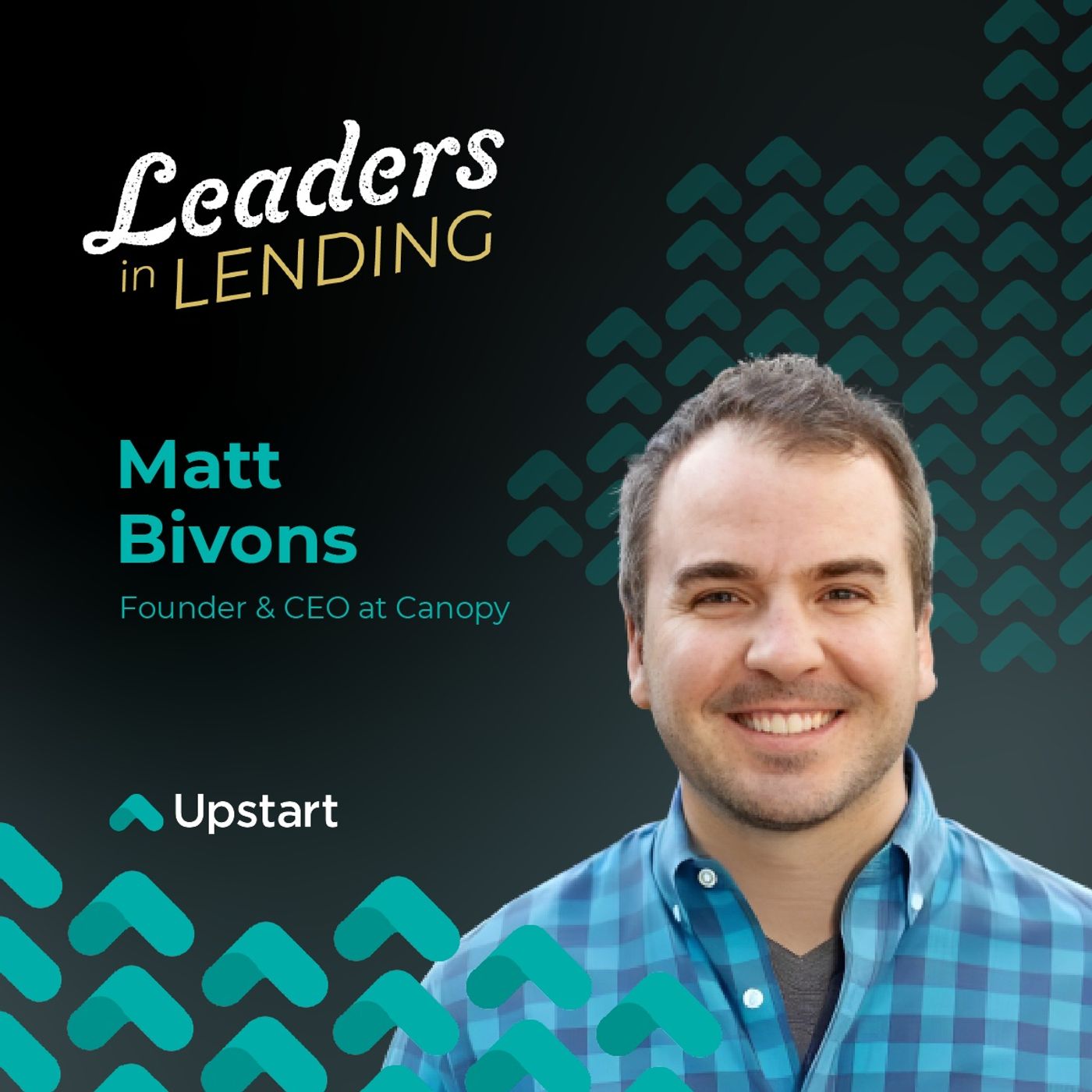


Around 90% of a loan lifecycle and engagement happens in the world of servicing, but no one really talks about it. From getting approved to taking a loan through the final stage of closing an account, servicing matters for customer experience and loyalty, ultimately driving business outcomes.
We’re joined by Matt Bivons, Founder & CEO at Canopy — an organization focused on helping lenders be better operators through their easily integrable loan management platform and cutting-edge suite of tools. Matt shares insights he’s gleaned from a myriad of experiences throughout a decade in FinTech to show exactly why servicing matters.
Join us as we discuss:
- Canopy’s focus on exceptional customer service and deep expertise in student lending
- Call for adaptation and innovation to meet the needs of rapidly changing dynamics in FinTech
- Data migration and scalability: careful planning and gradual expansion
0:02 You're listening to Leaders and Lending from Upstart, a podcast dedicated to helping consumer lenders grow their programs and improve their product offerings. Each week, here, decision makers in the finance industry offer insights into the future of the lending industry, best practices around digital transformation, and more. Let's get into the show. Welcome to Leaders in Lending. I'm your host, Jeff Keltner. This week's episode features my conversation with Matt Vivens, the founder and CEO of Canopy. I've been looking forward to this conversation because Canopy kind of sits on what I think of as the overlooked and underappreciated part of lending, which is the servicing side. It's really interesting servicing platform. But I think importantly we dive into a couple of things that are really interesting. How servicing is really the footprint for cross sell and customer relationship management on an ongoing basis with customers, which a really important part with the financial industry business model. We talk about how often kinds of products you can offer are limited, and I've seen this several times by what you're servicing capabilities can support. So even though you may be able to think of an idea a different kind of loan or a different kind of payment structure, really have to have the servicing platform to be able to support that. And finally, why commercial side servicing could be a little harder the consumer and why we've seen some people kind of mess that up because the variety of products and different ways as are used. So it's thought a really interesting exploration of again an sometimes overlooked part of a learning life cycle, the servicing side and all the value that can be created there. So please enjoy my conversation with Matt Vivens. Matt, welcome to the podcast and thanks
1:36 for making the time to join us today. Thanks Jeff, really happy to be here. I'm excited for this conversation because I feel like a lot of the conversations I have about loans also around the origination side. We're talking a little bit post origination side today, which you'll be fascinating. But just before I get into that, for a little context, can you give people a little context on the company I cannady what you guys do, and my standard opening question is kind of how we all made our way into the banking industry, because I find it that's an interesting story. So maybe you can meld those two together and tell us a little bit about you in the company. Yeah. Sure. So Canopy is an API first modern lending core. We help lenders be better operators through our loan management platform and suite of tools, and so that's a little bit of who we are what we do. To your point on post origination, that's really all that we focus on. So everything from getting approved to taking a loan, all the way through charging, all for closing an account. It's about ninety percent of the loans life cycle and engagement happens in the world of servicing, but we don't talk a lot about it because it's a little bit esoteric. It's not that sexy, I guess for some although we're doing a whole podcast on it, so I hope there's some people out there that are interested in it and it. You know, servicing powers the lending ecosystem, So our platform connects into a lot of other integrations from payments to issuer processors to KYC to help operators be better lenders.
3:08 And so when I think about servicing, I'm thinking about any company that has to account for its customers making payments needs to service them door, dash services, you Uber services you when you have a problem with your ride or when you're dealing with financial products. You also need a system of record that can handle all the rules and policies that govern those products, and so servicing is a very, very big landscape. As for me, I've been in fintech for about ten years. I was out in the Bay Area working at a couple of small payments startups before moving on to a company called Ernest. Ernest competed in the heyday with the SOFI, really one of the first modern neo banks back in twenty fourteen twenty fifteen after Simple's acquisition, and I got to see firsthand everything from originations to servicing to securitization. My job was to help grow originations, so how do you price, underwrite, acquire students.
4:05 Servicing was how do we account for these students making repayments? That was quite a nightmare and have some PTSD which helped me found Canopy. And then securitization is when we sell the loans into the capital markets, and so we try to build everything in house. I would say we were big tech, little fin You know, if you think about the two sides of fintech, and we didn't need to recreate a lot of the wheel. We didn't need to redo it ourselves, and so we try to do everything in house. Obviously, there weren't companies like Canopy at the time, so we didn't really have another choice. I think it's one of the reasons we prematurely sold the company because of the difficulty in getting data accuracy and precision to get the loans into the capital markets. And as that acquisition was coming to fruition with a company called Naviant, which is the largest student loan servicer, I was recruited through some friends at QEED to a company called green Sky in Atlanta, and Nigel Morris said to me, this is the most profitable fintech that you've never heard of. And he was right because I hadn't heard of green Sky. I hadn't been to Atlanta, but it was amazing. They were doing about two hundred two hundred fifty IBADA when I joined. I joined to be their head of consumer So how do we grow out there at their consumer arm For those who don't know, green Sky was really one of the og point of sale lenders before anyone said by now pay later, green Sky was the leader in that and got to ring the bell in the NASDAC saw them pre imposed IPO, and they had the same struggles with servicing as Ernest had, just on
5:35 a much bigger scale, which was that it was very difficult to make small line changes within the database because the database was fifteen years old, extremely rigid, And so I started Canopy to be a more flexible, fungible option for banks and fies to launch more innovative lending products. I love that connection because it's it's easy to forget that often the service capabilities end up dictating the terms of loans or the way we you know, for revolving credit. The wine changes increases or decreases end up being like limited in many ways, like the innovation is like we found like people haven't thought of new kinds of loan products, Like oh, I can't do that because even though I can originate, or having no way to collect money in this or that way, which is just a fascinating reality that this kind of back end seemingly simple process, right like how much do you owe? Do I collect the payment? Every like that doesn't seem like that complicated a part of the business in many ways, and yet it ends up limiting the kinds of loans that are made available and where they're made available, and how because of the difficulty in changing those services.
6:38 Percent agree. I mean, my slightly spicy hot take is that most lending products today are a commodity, right. I mean, as much as we wanted to be doing something different with Earnest, a three year loan is a three year loan. It's the same that Wells Fargo has, saying the Bank of America has now. One of the things we did see at Earnest was a lot of students wanted non traditional loan terms two point five years, three point one years. Those nuances of personalizing those lending products became very complicated on the back end. But if you put yourself in the shoes of you know, a consumer in the middle of the country, maybe they only have one credit union in their town. It's all they have access to, and so if they get denied for three year loan, they're immediately bumped up to the next year, five year, seven year old. There's no option, there's nothing in between. And it's because that credit union or community bank is most likely on Jack Henry and Jack Henry's had a fixed set of rules for fifty years and making any type of change would literally blow people's minds because you don't know what happens downstream. And so there's the commoditization of lending products.
7:46 That's one thing that we're looking to change. But then if you put yourself in the shoes of the operator, imagine you're a call center operator. It's not typically a career in the US high churn, so you're manage a call center and you're constantly having to retrain people on systems that were built forty years ago. Now at green Sky, we had something between ten to fifteen thousand phone calls a day come into our call center, and most were basic questions what's my payoff amount? How much do I owe? And the call center agent would have to jump through screens and PDFs. They looked like a Bloomberg terminal. They had three different screens of jumping in between things, and every minute they're on the phone, at every second they're on the phone, it's increasing their costs to service exactly. So we're open to also, on the other outside of the personalization piece, automating a lot of these workflows so that simple questions the consumer can just know instead of having the dollar phone number.
8:46 Let me ask this because I'm kind of curious. Are there any innovative terms? You talked about financial loan products being kind of commoditized, and I think you can argue about like the amount your proof for in the rate, but are you really competing at that cost level? Because you're right, the product itself the core of like get a thirty six month load or a sixty month load. You make monthly payments, it's simple and whatever. Those things are kind of like industry norm And you mentioned like terms like two and a half years or which is kind of like just the duration of the loan, which shockingly can be very hard for surface handle they need to do. It's say, I'm just counted a month instead of years. It should be easy just change number. But are there other kinds of terms you've seen interesting innovation on? For some of your customers were actually saying, Hey, here's a kind of product or something other than just the duration of let's say an installment loan that can be changed in interesting ways to change the nature of that product in some way. Because it's you're right, there's not a lot of innovation on that actual like what is the core offering that's be provided front. Yeah, so we a canopy. We support pretty much every type of unsecured lending products, so from revolving cards, charge cards, debit cards, installment loan, buy now, pay later, student loans. And then on the B to B side, you have a lot of working capital products, so merchant cash, advance in voice factoring. So I'd like to tackle the question in two sides. So on the B two C side, there are a lot of personalization from our lenders that are looking to extend grace periods or maybe give a revolving line of credit that can retroactively put a purchase onto an installment plan.
10:16 Amex has this today called pay a Planet, but it's in their AMX ecosystem. We've helped democratize that. So there are a lot of i'd say beneficial viewpoints that our lenders are doing to create some differentiation within the B two C space. In addition to simple things like changing up interest rates or choosing a transaction putting it retroactively on a by now, pay later product very complicated from operational process, we help simplify that. They are also trying to answer questions for consumers before they happen. So as an example, if you were to call into any lender today, any credit card lender, and you said, hey, I'm thinking about making this big purchase, what does that due to my interest rate? That lender can't answer that question because their system doesn't provide that level of transparency. And so that's really what we mean by by better operators. We're helping provide more financial literacy to the end consumer, the end barrower on the now Again a kind of pause there, because I think there's a lot of innovation happening on the B two C side, but generally that playbook has been extended. I mean it's it's been You're not really going to out innovate capital one in a credit card consumer credit card space. They have too much, you know, unique proprietary spending data to do that. On the B to B side, I think that it's really a blue ocean.
11:43 I mean, there is so much opportunity. KYB, No, your business is still new. Obviously you're not using Piico scores. Cabbage is one of the most modern B to B lenders and they're only ten years old before they merge with M So we're seeing a lot of unique use cases for working capital products that companies like flex Sport, one of our portfolio companies, companies like Novo is a small business business lender out of Miami, another one of our portfolio companies are really pushing the boundaries in this space. And so I'm excited to see where the B to B side of lending goes in the next couple of years. Interesting. Yeah, the B to B space will be fascinating.
12:24 So I want to switch a little bit to this um to the I think the interesting touch points that you get on the servicing side, because while servicing, I think it's thought of its kind of like rot. It's also the like to your point, like ninety percent of the life cycle of any lending product happens post originations, and so much time and energy is spent thinking about how we originate faster and whatever. And yet you know, most financial industry companies their business model is built around cross sell. And so it's interesting that that that ninety percent of the life cycle of the road is and the thing that we spend less time talking about, and yet that's your surface area if you're thinking about digital or automated or self service to actually cross sell and help people find new and additional part. So I'm curious how you think about that, because it's it is this kind of really interesting thing that in some ways it's naturally you just got to collect the money, it's an easy part, but it is also like that's your touch point every be on a very regular basis with your customer for most of the time they interact with you.
13:20 This is how they interact with you, and that's your place to talk to them about other ways you can work, which is a pretty valuable piece of real estate action. Yeah, I love that you brought that point up. I mean, it's really one of the founding principles of canopy. So my thesis is that every fintech, every FI out there moves from a monoproduct world to a multiproduct world. So banks have been there for a while, which extends the LTV of the bar where, but fintech's are still somewhat a one trick pony. And I think you know, they're needing to get beyond just basic interchange and they have to get into lending to continue to sustain and grow into their valuations. And so if you break that down, when I was at Earnest, we had multiple products. We had a mortgage product, personal loan product, and a student loan product. We wanted to be the universal system that could have better data through looking at the other side of the balance sheet. So we were one of the first companies to work with Plaid to start using that in underwriting and be able to say, oh, this is Jeff, he went to this college, here's his repayment data. He's about to reach this other milestone in his life. We should instantly approve him for a mortgage or instantly approve him for a personal loan. Now, in theory, that sounds amazing, but incredibly difficult to do when each of your products are in different servicing stacks. This is something that's SOFI is going through right now. They have multiple products. They've had that for a long time.
14:45 Each our own different servicing stacks. And so my brothers a SOFI member, and so he's been repaying his student loan for some period of time. They should know him front and back and understand his risk. But when he goes to look at a personal loan, it's a brand new customer. And so having one system that has universal data is a major advantage point, and that's why it was important for us to be able to support multiple product constructs out of the gate. I think that servicing systems and be interested to hear your your take from upstart. Servicing systems are a major point of engagement. So most of the companies we work with, they want to own that relationship.
15:28 They don't want to offshore that to some random call center the other side of the world. They want to be able to answer and engage with their customers so that they're not having to reacquire them and they can actually cross sell an upsell like you said, but all of that data exists in the servicing layer. Yeah, now, I think it's it's a it's a huge point that this is scenereio. It's often underinvested, even I think upstarted, we've historically kind of servicing has not been as front of mind in terms of place pronovation. And yet when you get to the rope cross product and you well, how do we like be smarter. I've told financial institutions for years, like, if you want to earn a repeat business, you got to give people. You should be able to give the best rate and the simplest process to your current customers because you know more about them, You have their servicing history, you have all the data they used to apply the first time, right, And yet so often I mean you your example, I had a mortgage with a bank. I said I had a helock to that, and they said sure, and they sent me like a blank application that started off with like where is your house? Come on, guys, like take advantage of what you have to give me something better, because if you don't, I'll go ask five other guys who are going to give be the same process you can And you've lost your advantage and I why do I Why am I loyal to you? You didn't make it when that helock should have been like a do you want fries with that? Like you get the mortgage? That should just be like, hey, we have a fully under in you. Would you like, you know, one hundred thousand dollars heelock to sit on the side of that when you're going and it should just be a checkbox. And my people were right and it said it's like a five page application, and you go, that's that's a totally missed opportunity, probably because the data was just like didn't didn't speak right? It couldn't they that pretty knows that they
17:02 should do that, but it didn't. Technically, it couldn't do it. All system of records are very rigid, very difficult to extract data to manipulate it. They're almost always in a batch process. So everything of Canopy is real time. So we're giving our operators up to date, in real time access to repayment data, transaction data. It helps banks and lenders of records and capital markets log into Canopy and see exactly the risk scores that are coming on and make better underwriting decisions. So having access to real time data is a major starting point to this, and I think that that's fintech promise, right, fintech promises let's create a better customer experience. I think that for a while, the first wave of FinTechs were only like a front end marketing site, and it's because the technology underneath of it couldn't actually help create better experiences. And so I'm excited for the next ten years for exactly that, which is, let's be able to utilize data to make instant product offerings, reduce friction, and actually create I mean that that's fintech at its best right, facilitating better life experiences. The home that you live in the car that you drive, in the school that you go to. Let's actually see that all the way through by not making people painfully go back through a manual process.
18:22 One just basic table stakes information that the bank or the fintech already knows about you. Yeah, and you take it a step further and actually like recommend the right product because you know what's going on in my life, give me a better rate because you can see my repayment history in a way that's not directly at the credit file. Those things are, they're available, they're possible. It's it's not really a technical challenge to do them, but it is a technical challenge to get a legacy system and get the data in the right in the right captability to do that. I'll say, my sofy story was even even worse than the one you told, because I mean they I got a mortgage to so high. It's not the same way. You couldn't get the helot but and you know they'd versus servicing and so all I'd say, we know you got a mortgage from us, and this is how much it was, but we have no idea what the balance is or where it's at, or when your next payment is or what your payments are because click here to log into the third party servicing site and I went, and then you're making repayments to a company that you don't even know. And so you're like, uh, is this is this fraud? Is this a scam?
19:18 I thought? I thought, I'm a Sofi customer. It's like, no, no, you're You're like this other bank that you've never heard of, Rissing Rights and the whatever, and has a website that looks like Craigslists from the nineties. And you know, you go, huh, that's not you know, it's fine because I got a good rate, but apparently all I got was the rate and I didn't get a better experience. And that's that's I was early so Fi customers. I don't want to like put sofa and a bucket today and what that experience is, but I do think it speaks to what the experiences that are often offered today are and what the opportunity is. Because I was, you're ready to have an integrated experience, the opportunity to see all my products make a combined payment. You know, can I take understand what my total monthly obligations are to the financialst tisue guy, I can ye payment dates or split them up, understand how those things interact.
20:03 It's it's a really fascinating area and it is a you know, I think it's ripe for really delivering on the promise of you know, better technology and financials. Whether it's a ford looking financial institution or a you know, a new startup fintech company. Um, there's still a lot of promise left to deliver on. Well. I think that the this is where embedded lending gets me really excited, because if you have companies that aren't necessarily traditional lenders. Obviously, a company like Walmart who bought one finance, or company like John Deer does lending nothing runs like a Deer. They lend and rent off of their tractors and mowers. Even Peloton's effectively a lender, they just use a firm to do it. And so companies can bring this service in house.
20:51 They're already best in class operators and put their customer first, and if they layer in financial services as well, that just adds to such a more holistic experience with the brand. And so I think that companies that are already doing lending that have a bunch of fragmentation. Certainly it's hard to piece all of that together. But you have this new green field opportunity of new fintech's new fis or great brands I want to bring in financial services in house, and they can have a fresh clean plate to start off with a company like Canopy that can help them launch multiple products simultaneously that are complementary to what their core service already is. I'm curious how you think about that, because it's a really fascinating this kind of embedded finance. And let's just take the Peloton example, because in many ways, I think people feel like they got a Peloton loan. That's what it's for right as my field, but it's really through a firm. And how do you see that playing out? Like I don't know the Peloton really wants to be the lender, like from a balance sheet point of view, in a risk management point of view, and I don't know if a firm cares about owning that customer. How do you see that playing out between the brands and do they really become lenders in some real way?
22:03 Do they really partner with forward thinking banks and flies? And how do those fis think about the kind of customer value they get out of a Peloton customer, who's they think of themselves as in a firm customer too, as a firm getting a great chance to cross sellers at all. Kind of all that brand equity accruing to Peloton, it's to be a fascinating time to see how that plays out between these large brands that consumers are going to and the partners they're working with on the financing side. It's all I think, it's just fascinating curious how you see that kind of playing out where what's your advice is to fight fintech or a bank is looking at basically how do I where do I fitted as ecosystem and how do I think about what that opportunity looks like for me? Well, I think that there's certainly a rebundling services at brands and in a raising interest rate environment like today, giving up seven to ten percent take rate for your partner, who's actually the BMPL is lost economic value you for you as as the brand, and so um there's the financial side of this, so like what makes sense for us to bring in house?
23:07 And then I think there's also looking at your core competencies of what do you do really well. I mean, are you already servicing your customers? I mean are you the one picking up the phone? Are you the one um sending out mail? Are you the one that is recommending in Peloton's class the case different classes to take, and so you can there's so much there's so many great infrastructure companies today. I mean Canopy plays a part of this, but companies like alloy On on the KYC side, um, you know, companies like Dwala or checkout dot Com on the payment processing side. UM. So I think you can really pick and choose a la carte best in class infrastructure services fundle these items together and this helps accelerate your ability to launch lending products in house. Now again, when you look at your core competencies, and this is often conversation that I have not just with brands, but banks and FinTechs as well, creating a servicing layer and managing all the rules and calculations yourself is a very high bar with not a lot of differentiation for you. And so we can Kindopy can come in and accelerate a lot of this because you should focus on what you do best. And so I think that's like the first principle's question is what does the brand do best, how can they extend that related to financial services, and then can they pick and choose a few vendors that allow them to bring it in house, which again is a win win win. The customer doesn't feel like they're getting passed around to two different providers, and the brand captures more economic value than losing.
24:41 I mean, Peloton basically gives up ten percent of every sale to a firm at least, and so to me, that's where it's like, it's a no brainer to bring it in house. Yeah, it feels unsustainable over time, like there's no I don't take a bite back at ten percent. I'll like bringing my business at a ten percent discount, Yes, exactly, my exacting work. Well, that kind of interesting. It's fascinating. Face. Do you see anything. I mean, I wonder if there's anything we learned from the auto space where the I mean the manufacturers went into actually game banks many instances just to be able to offer that. And I you know, when I look at those those companies now, they are trying to bring the user experiences together right to say, hey, we want a holistic picture of the customer who bought a car from us and an ongoing relationship with that customer that something other than the unfortunate thing for a car is like typically your ongoing relationships. Only when things break, it's like I bring it back to the dealer for servicing, which is like in this case not making payments. It's like what it is making payments, but because something on my car isn't working the way I wanted it to, or I need some help something you know needs fixing, um and so. But they love having the ongoing relationship from a financial point of view and kind of the ability to combine the economics of the lending. And I wonder if that's a model will see maybe other big brands March swords where the actually have their own kind of the original libetted finance, if you will it a very very serious way, like they really own banks. I mean, I think that that is a really interesting take.
26:14 Um and I think there is some comparisons there. For sure. I don't know that a fintech or a brand needs to be the license lender of record per se. I mean I think that that's still where you know, we've seen the chartered fintech story kind of play out. It's a very very high bar creates a massive amount of risk and compliance for the fintech. So I don't know that that necessarily will happen, but I do to your point of kind of combining the experience, I think matters a lot. I also think the product type matters. So in auto for me, like I set up autopay and I never think about who on paying. But there are other you know, like card based products for an example, have a much higher contact ratio, much higher touch point. You know, if your card is declined when you're waiting in line at home depot, you're you're getting on the phone, and so I mean, if you are calling in with an issue, do you really want to pass that down the chain three different times and then you finally get someone who is reading from a script and doesn't really care about you at all. I mean, it's a horrible experience. So I think being a first party servicer, if that is court, if operational excellence and execution is part of your brand, DNA and how you run your business, then this is just a slight extension from offer financial services. I think it
27:47 makes a ton of sense. Yeah, and it really is that. I think You're right that the two things I take away from the conversation of the ability to really innovate on what you can offer in the ability to really optimize the customer experience, whether that you know, for any kind of touch point. But it's it's amazingly true how difficult it is to have even most banks. If you dial to go what four loans do I have outstanding? And what are my next payments? Like, you may end up in four very different UXes because those are four different systems. My credit card balances over here, my auto loan balance is over here, my mortgage balance is over there, and bringing those together is so powerful in the world where you know customers are looking for that integrated, simple experience and it's you have the right data layer. I feel like you just gave me a layup. So I gotta I gotta talk through this example because that is exactly what we believe in.
28:40 And in the B to B space, it is so painful because you're running a small business and you call up a bank and you're typically getting multiple lines of credit, so you have one to pay your inventory, maybe one to pay your payroll, and one to pay your rent. So now you have three different loans, three different account numbers, three different en pays, and you're trying to run your dry cleaners or your clothing store, and so you call into the bank and say, hey, I'm trying to find what's my minimum due and the bank says for which account number? Sir, well, I don't know about you, but I don't don't just have my account numbers just off the top of my head. So now I'm fumbling through to find the account number. We're going back and forth, and before you know it, I missed a payment because I thought it was the other you know, the working capital product, but it was actually for the rent. And so Canopy helps consolidate a lot of that into a single men pay, single payment, single due date, single statement, so that both the bar were in the operator don't have to handle all of that complexity on the B two C side, So not so much as having multiple accounts or loans. But for me personally, I have a Capital one credit card and I called it to Capital one about a year ago and said I'd like to know my payoff amount.
29:52 They gave me a number, and two months go by and Credit Carma dings my credit score and I call up hapit of one furious I thought I paid off my account and they said, well, sir, actually it was mid cycle and you had some residual interest rate and then you got a late fee in a late fee and I was pulling out my hair. Jeff, I said, please just tell me how much do I owe today right now on May twenty second, you know, whenever it is, and they couldn't tell me that information. And so being able to just give transparent, real time information that seems like table stakes is challenging for some of the largest issuers in the world. So there's a how do we make it a simpler, better user experience to consolidate all these loans and accounts under one statement one midday.
30:41 And then there's also the how can I just give people access to information when it happens to be mid cycle? Yeah, let me ask you one more question before we brought this thing up, because I'm really interested it. I don't know how much you guys work with work traditional fis with established products and history and migration of data in how you know startups who are kind of building from scratch, going hey, this is great. I get a like, what is your advice to a financial institution and maybe has some history, goes we need to move to an API oriented, real time better system of record. But like we got a lot of data, we got a lot of people in flight, lots of loans outstanding. That that kind of movement from A to B, it's easy to go. Yes, this would be a better world. We're hard to be living in it. But I've got to, like I gotta move my house with all my stuff, um and get from A to B. Are there any best practices or things you've seen for companies? You know, institution isn't a little older that say I've got I've got some history here. How do I how do I make that transition to a better world without without breaking the bank and breaking the institution. That feels like a really hard challenge. It's very different than Hey, I'm starting a fintech company. I want to have like a better servicing experience and you know, um primary record system like I can start for scratch. So what's your what's your advice or history with that and what would you teal in stitutions are coming? How do I how do I start the process of getting a better place. So Cannoby works with several top twenty five issuers on this exact problem. And so it's a combination of technology and people. So it takes some of our solution architecture team to actually help. So it's not just automated,
32:15 because every bank might have multiple databases that have different naming conventions and so we need to normalize all of that and so it is a process of figuring that out and we help White Glove handhold these banks through this. It is also based on the technology, So our technology from retroactive events can pick and choose a time in the past, but you know it could be created three years ago, the account could be created three years ago, but make it effective today. And so we have a migration mode in our API that rolls time forwards and backwards. Time is the thing that is really a sticking point with this to make the data migration piece easier after the naming conventions are agreed upon through our solution development team. So that's just a little bit of like insider baseball, how the process goes down. I would say, if I was giving advice to a bank, don't go through a digital transformation effort.
33:15 That's I hear that word often and that typically is a five ten year journey, and so you have to start somewhere, you start small, and so sometimes Canopy can be a shadow ledger and system of record against one of the existing cores and make sure that all the test cases and rules and policies are set up, and we pick and choose typically a division within the bank and say, by working with Canopy, we're going to show you how we can help you acquire more merchants. We're going to show you how we can help increase your repayment rate. We're going to show you how we can decrease your costs of service through different automations. And we typically run a pilot program side by side so it doesn't feel as overwhelming as migrating fifty million cardholders over to our system. So it's a little bit of land and expand along with a combination of technology and people from Canopy that really make it less painful. I mean, that's my view of the world in general, is that if you're selling into B to B like we are, like we have to take on that pain so that our customers don't have to feel anxious about it, and so that that's how we approach it. Yeah, I love the land and expand maybe as a sales side version of that, but they kind of like start with the test case, prove the technology, work it out, maybe run it the shadow background us. I think sometimes it can look it can be almost impossible to imagine the whole thing. But I've always found these kind of transitions work best when you can launch something, show value, show success.
34:42 They go, you know, versus training, get everybody on board and go hey, let's all do the thing. Go ah, let's get one guy who loves it. Let's get one groups that's using it and says sees the value. And then you go, hey, we've already on forty percent of the work for you because it's just set up or through vendor in diligence all I selest one, and now we start expanding the value over time. It's always easier, I think, to do that when you're when you're seeing value eternally as an organization, to say hey, let's let's invest more in this technology, this partnership. Whatever. They to start would like, oh my god, we've got this huge thing we have to do. And the stakeholder. We have a lot of stakeholders, right, so when we sell into a bank or a large established lender, there might be five or six different individuals that all have different value propositions in their head. The head of operations, the GM of lending, the CTO, the CFO, they all have different objectives that they're trying to solve for in their orgs, and so we need to be flexible of understanding their pain points and really talk through how a modern lending core like kind of can can really help accelerate them. But this is not for the faint of heart. It's not you know, bottoms up self serve. These are complex sales, complex deals. I mean, these are systems that touch a lot of other systems, and so we spend also a significant amount of time working through inner grations. So making it really easy to add on your CRM of choice. We integrate with zendesk, HubSpot and Salesforce, or you can use Canopy integrate your payment processor of choice.
36:10 We work with Stripe, Dwala, Repay, dot Com, authorized dot net. So really pick and choose and make those integrations easier. Because every lender has a different suite of services and tools that they use internally, and so we're not going to force you into just one platform. We're going to be the core for you, and then we're going to help you navigate all of the other products and third parties you need to continue to run your lending program. Yeah, one maybe piece of advice I would give to the fis listening to this with the fintex is like the fact that it's hard to me makes it a competitive advantage if you can do it well, because many people look at the hard thing and go, it's too hard, we can't get it dot and if you can not trivial, but it puts you in a position to actually deliver those customer experiences that differentiates you in the market. And so I remember when we were starting up start, my CEO used to look at me and say, how hard your sales or whatever? How hard isn't this?
37:09 That's good because that just means it's gonna be that much harder for somebody to come on. That's a that's a competitive advantage that you're building through doing that hard work. That will take anybody else who wants to copy it like just as much time and hard work, and they're starting out behind you, chasing you. I think that's a tremendous advantage for the institutions you can figure out how to get it done and how to get it moving, so well worth the effort in the end, I agree. I mean I think it's also why as a starting point so many FinTechs went to debit. I mean part of it was marketa galleolithic made it easier, so it became a little bit of a self self fulfilling prophecy. We definitely hope to make offering lending products simpler as as well and getting to market faster. But um, you know, as you look to move beyond just debit and you look to move into something that is not just an interchange base, I think it's really important to think about the compliance and safety piece to it. So obviously our system out of the box is compliant. We help navigate the different geos and laws that are part of it. It's thinking about the n barrow or experience.
38:13 How do you replicate Jeff's account in month six? Because it's the edge cases that make this really hard. So we have a lot of tooling. We have a product called loan Lab that enables our customers to simulate things that have not happened yet, so we can show you that they are always true and show you what this would do to your portfolio if your delinquency rate went up to x as an example, So simulation of time being compliant and really helping to navigate all of the different pieces you need to offer a lending program is you know what we love But to your point, it's not like something you can just turn a switch overnight. Lending is hard. Doing it well at scale is very challenging, which is why I mean a lot of the band and initsuers continue to maintain the majority of the engagement and assets because of the integrations and being entrenched in a lot of these processes. Now, on the counterpoint to that, I think a lot of the issuers are thinking about getting disintermediated by up and coming FinTechs, you know, companies like after pay, Klarna a firm and so how do you merge the knowledge and operational excellence of of being a great lender with the technology that can allow you to offer more unique and innovative products is really the intersection that Canopy sits in excellent Well, mas A been a great conversation. I really I love that we got to dive into the ninety percent part of sendation, not just the ten that we
39:45 must talk focusing on I got three questions I ask everybody at the end of the podcast. So if you're ready, here we go. Let's do it rapid fire. Number one, what's the best piece of career advice you've ever gotten? Best piece of career advice? Um, your care is not linear. There's ups and downs to it, and so there's peaks and valleys, but it's how the trend line goes. And so that means that for me as an example, all the rejections like don't take it personally, understand where you're going, take it with a grain assault the work to get better and persevere, and so I think grit, grit in your career and knowing that it's not easy, it's not given to you is some of the best advice that I've gotten, something that I try to abide by and tell my kids as well. I'm in my son's room because of the audio qualities the best here. So um, so yeah, it's a it's a career, it's a career advice and a little parental advice as well. Anything that can double his career in parental advice is good advice in my book. That's that's a double win. Um. Second question, what's the best advice who were gotten about the general consumer financial space or consumer lending space in general, that as much as people try to out innovate fico, Fico's pretty innovative, but boiling things down to a single number is innovative. It's not great, um, but you know it's thirty days lagging, but fair Isaac did it did it right when he boiled it down to to a single number. And so UM, I think there's a lot of people that try to create you know, alternative data structures and um, you know, not use fico at all and
41:21 collecting more information we you sa always joke is uh is reverse innovation? So uh that that would be my my hot take on the consumer side. That is a hot take, especially talking to a guy who works a company that used to alternative data. Under right, everybody, we bring you on to hear the guests opinion, so we'll find a different time to have a debate. Bought. Um Okay. My third question is what's one bull prediction for the future. I think that AI is going to continue to advance in financial services. Um. You know, obviously how that takes shape and form is going to be interesting as if AI is ninety nine point nine percent correct but off on that point one percent of the time, it's not good enough financial services, you have to be one hundred percent correct all the time. The precision and accuracy makes it really really challenging. But can it be. We've been using machine learning and automation to make better workflows and predictions to our borrowers already, so I think that that trend's going to continue to accelerate. And then, as I mentioned, I'm really excited for the future of of B to B lending. Oh let me let me ask this. Have you guys seen anything on the gen AI because the general AI is interesting because you can use it. I mean, my kids use CHATP two. The actually ask the questions and won't want the answer to be good, which is maybe not the thing it was built to do. Right is more of a writer, but if you think of it as a natural language interface, it can understand what you're asking and then query and underlying system so the answer is accurate.
42:52 It becomes really interesting right as a way to replace an agent and let's say a chat where it has access to a canopy to say, hey, what's my balaty goes I know what you want, and I know how to I know how to get it, and I can now have like a more natural conversation with a Yeah, are you guys looking at things in that space, because I think there's a there's a AI as the back office, your point machine learning that's actually I think here much more than people appreciate already being done. And then there's the jed AI has been more of the front end the user experience shifting to this kind of more human like interaction that's not actually a human. I'm curious if that's It seems like something that may be coming sooner rather than later, to a servicing experiences where you could have a conversation that's not powered by at least initially a human BEPI, an AI that's connected to internal systems, and I'm curious that that's something you guys are playing with or looking at or have any thoughts on that. Yeah, this is a similar question too, I received at fintech Nexus a couple weeks ago, and the polling suggested half of people said they want it to be a chat bot and not talk to humans, and then the reverse was true to the other half of people said they want to talk to to a human. So I think I think it's UM, it's complicated, it's nuanced. I think for really basic things, you know, sending a text message to know what my balance is, to be able to make a payment, anything that reduces friction there I think is really really helpful, and obviously AI can can play a major role in that. I also think in terms of the relationship, sometimes you want to be able to talk to somebody and actually ask UM the person a
44:25 question that doesn't feel so distant and cold, and so I think the use case matters a lot. But I think all of us could could say that we're not in love with any IVR systems and any phone systems, and so if this helps to make that just a little bit better than m that's a win win for for for everyone. So we are looking at at some of it UM, but the the use cases are are nuance based on the product type and what people are doing. So I think it's still going to be a combo of data automation, AI plus human agent interaction for some time now. Excellent, Matt, I appreciate the time based is a great conversation.
45:05 Thanks for joining us. Thanks Jeff Talks to chairs. Upstart partners with banks and credit unions to help grow their consumer loan portfolios and deliver a modern all digital lending experiments. As the average consumer becomes more digitally savvy, it only makes sense that their bank does too. Upstarts AI lending platform uses sophisticated machine learning models to more accurately identify risk and approve more applicants than traditional credit models. With fraud rates near zero, Upstarts All digital experience reduces manual processing for banks and offers a simple and convenient experience for consumers. Whether you're looking to grow and enhance your existing personal and auto lenning programs or you're just getting started, Upstart can help. Upstart offers an end to end solution that can help you find more credit worthy borrowers within your risk profile. With all digital underwriting, onboarding, loan closing, and servicing, It's all possible with Upstart in your corner. Learn more about finding new borrowers, enhancing your credit decisioning process, and growing your business by visiting upstart dot com slash foward dash Banks.
46:13 That's upstart dot com slash foward dash Banks. You've been listening to leaders and lending from upstart. Make sure you never missed an episode. Subscribe to Leaders in Lending in your favorite podcast player using Apple Podcasts. Leave us a quick rating by tapping the number of stars you think the show deserves. Thanks for listening, until next time.

