Keeping Pace with Risk Mitigation and Regulatory Changes



Consumer credit is a hot topic. With new credit products like Buy Now Pay Later (BNPL) hitting the market and the always-evolving impacts of credit reporting, banks need to expertly hone their underwriting to strike the optimal balance between business and risk.
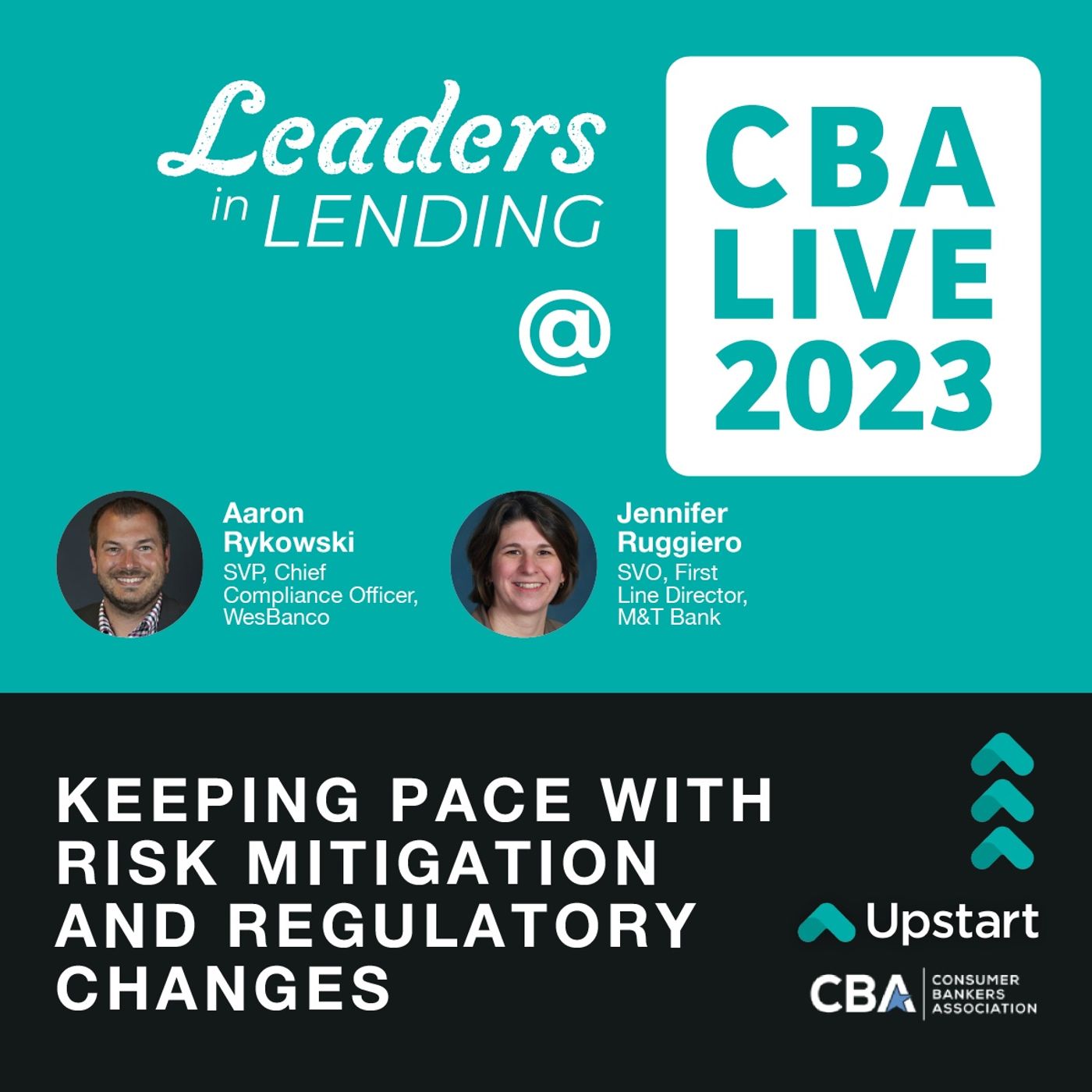
In this episode, Aaron Rykowski, SVP, Chief Compliance Officer at WesBanco, and Jennifer Ruggiero, SVO - First Line Director at M&T Bank, examine the latest trends in consumer credit and what they mean for your financial institution.
Join us as we discuss:
- Risk and compliance management in today’s economy
- Trends in consumer credit, including new products and reporting
- Why you can’t afford to not invest in new technologies to facilitate compliance, risk-mitigation and underwriting — and how to properly use your data to support these efforts
0:02 You're listening to Leaders and Lending from Upstart, a podcast dedicated to helping consumer lenders grow their programs and improve their product offerings. Each week, here, decision makers in the finance industry offer insights into the future of the lending industry, best practices around digital transformation, and more. Let's get into the show well from the leaders in lending today. I am joined live and in person. Wonderful to do that with by Aaron Rikowski from West BANKO and Jen Rugierre. I got that right, M ANDT Bank from the CFPB Committee of the CBA. So there we go. So I guess we're gonna talk about, Yeah, should we do it? You guys? You guys have had your meeting with the committee, so I'm curious what are the topics for most top of mind for the committee these days? Like what's so like going on in the world of banking. Some of it is I think distracted from conversations around the CFPB, at least temporarily, but I know it's still top of mind for you guys. What are the topics of conversation when you guys get together?
0:58 Pace of change, you know, and it seems like quickly monthly we're getting some new type of guide dale speed and unforced match in the supervisory life. I think of that nature about where the bureau is signaling to us, where they are looking, where they have priorities, and you know, it's coming fast and furious. How do we react to that and what are the actions right and where are they coming from? How are they letting us know? You know, we'll see something on the blog post that we'll see a supervisory highlights dock from, and then we'll see something that comes out at an advisory or a circular all of games non formal rules. Yep, it's something that we have to look at, evaluate and respond to. And just the pace posts come in, they don't have a fine timeline. You have to comment by this period. You have to have commines by this state. It's mandatory by this state. It's just almost the wild West from our regulatory perspective.
1:49 It's coming fast, furious, and we're kinderous onto And does that feel demonstrablely different? Years have been in the industry for a while, does it feel demonstrably different than is that the common thing over the history of this If people here that a shift in how do you feel like information is flowing out in a more recent time period. I think the pace is more rapid than we've seen in the past. And forgetting they'd always need different tools available to that and be at enough couch. I do always sort of been able to read a t looks reached all its various and means in which they communicate, which is helpful. A lot of instances, you said, I lead, the piece is different, bamit to Biden, No, I agree. I think the paces are lot It is a lot faster. There's a lot more change that's being signaled through these different through these different pronouncements. And let's face it, the world writing process it takes time so well, a lot of times intentionally right exactly. I mean that there's a lot of comment. There's time to evaluate all the comments, it's looking at the proposals, it's looking at the final rules, implementation timelines. They're they've been very aggressive over the last several years, and I think they have a lot they would accomplish.
2:53 And what best way for them to try to move that needle without going through that long du process is through advisories, through supervisory highlights, through since in orders or other other tools of band interested. Do you think there's an element of the political timeline. I mean there's elections coming up before long. The director is not permanent as permanent position, they can be fired it will. I mean like I think a little bit of like what can we sneak what can we get done at the time we have left before Maybe there's a changing of the guard. I don't know if that's driving some of the pace. I think each director has things they want to apoplish, right for sure, and you know defense about the same mission, right, what's right by our huston verse? Yeah, I'm so, you know up to that point though these front over roll make things and things tape alout for event one may have the positions, do you want to use the different tools available to drive their policy and what they was the right to do from a consumer protections get point.
3:53 So I think it's to be expected, you know where that changes when you weren't the leadership changes. It does so though then potentially when they're not formal rules, right, we have to and okay, now what is this next? Leaders priorities and in some kind of sec and especially if there's a change in administration from one party the next it's more customary with this agency, the director steps down because they know that the new administration is going to help point their own director. So and Gen's absolutely right. I mean, everything that they're doing now can be easily undone by someone from the other side of the political spectrum. So as bankers, we have to look at that and evaluate how that's going to be, how that's going to change. Yeah in twenty twenty four. Yeah, there's some things they're doing the formal rulemaking process.
4:42 The many that are they're a little less, the little less, so it's a little little. The other one of the other copics of conversation I know you guys have was around the clarity of expectations being conveyed. Talk to me about it. How that kind of clarity or lack of clarity on exactly what are the expectations are impacts the way you think about responding you're dealing with those things as a bank I think depending on the topic, we do get a lot of mixed signals, and I think you know, with the Bureau may sit in one of the other layers of complexity. The Bureau may signal one position on a particular topic, while our predential regulators who still have some compliance oversight of our resurtans even though we're larger. They we have another take on it. So we're evaluating what's the best strategy, Which master do we serve, you know, which which interpretation trumps And there isn't a lot of clarity. Sometimes we see we'll see pivoting back and forth or different messaging even from the bureau related to the same topics. You know, overdraft has always been one where they'll say one thing and then they'll see something a little bit different there next pronouncement. Then they'll go back to the friar when the next on this release information on that topic. But it's really hard for us to nail down exactly what they want us to do. At some points, you know that they want us to take this new interpretation and roll it forward.
5:56 There's been times where they tell us, okay, we have a new interpretation, now you need to look back and retroactively apply that. That's very difficult for us, and if they do that for five years, they don't there's no clear standard on this, and we're as compliance officers. We've always been to the historically very good that you tell us a rule whether if we like it or not. You tell us a rule, would you tell us the standard, You tell us the timeline, we'll put it, replace them, We'll do it. But this mixed messaging and in consistent messaging is harder for us as bankers to deal with as compliance officers to explain relations things pre ban Sorry, it really is, um. You know if his errand said, we want to do the right thing by our customers first and foregops, for sure, we want to follows right, we want to do what is expected of us, and so U sometiops lack a clarity rate prevents us with no, it weren't debt is in other people's mind self? Um, you know, it makes it hard for us to always desirable solution that will last respond to what's being How do you think about building out a compliance organization or internal policies processes that deal with that kind of environment? I mean it feels like interesting question for you, not just from the CFP committee point of view, but from like your internal roles and compliance you know, in risk or compliancy, how do we actually think about operationalizing or building a team and building an approach that allows us to adapt to what seems to be somewhat changing environments, like how do you deal with that personally? Within the organizations? It just
7:27 feels like an interesting challenge, a little bit different than the way traditionally compliance roles have operated with a little bit more set rules and expectations. Let you take this one course, very different scale organizations, So this might be a questing. You know, all is keeping in my between always keeping aligne. Let's do the right thing. Let's do the right thing by the customer. What's the first way to leverage data? We obviously have a lot more an ability to leverage data and identified risks so on. I would say one if it things though, you know now the directions or the luship. But one of the things that I find challenging, and I think a lot of the folks in many kind challenging is the impact on the tios and the human capital element of it leaving uh. You know, our heavy folks constantly pivot to the next thing, and they're always be potentially the last fire drow to deal with, you know, katol up at latins until keeping focused on all them good we're doing for the consumer, for the bank, you know, the value we're adding and keeping that pop front of mind. And you know, we can't solve every problem at what's so let's tackle all thet we go out, let's make it impact, Let's do the right thing. And so keeping that message and keeping that teen positive and focused is also really important, you know, regulatory divider mat that is I am yea and I think from my same bord too, is ingesting it as a compliance organizage and keeping our team, you know, engage and keeping them from getting all this burnt out, with all the with the pace of change. And for me, it's not
9:00 only that, it's how do we disseminate this information to the right leaders as the organization. Yeah, how do we take this information? We can do and if we want with it our clients organization, we can afford it. We can tell our board management, Hey, this is this is what's common. This is how they're interbreting things. But unless we get it down into the leadership of our business lines that are dealing with our consumers and making product decisions of work lef, it's on implementing these changes, you know, it really doesn't matter. So having a strategy to get that information across the organization into the right people's hands in a way that is going to be meaningful for them, that they can understand it and to the best of our ability clarify what base new or change regulatory expect emitions are. It's absolutely critical to navigating this pace of change, in this style of change. Really, I would also add understooding the business, really understanding how they out how they serve our customers, and having risk people to really a deep understanding of that to help them solve. But you really parked there with those business folks and helping we beat the regulatory expectations but help our customers and also stay within the business live intel of that level of integration, that level of product knowledge is become more and more import from a risk perspective. But maybe ten years ago when you know, knowing the rules and yeah, not beating as good. Granted it was there out way business house. Yeah. The other thing that occursed me
10:30 And it's interesting, it was a learning for me coming from the technology space into the banking you know space, Like I kind of expected there to be easy, just rules like is this a lot? Yes, No, you realize it's more like if I do ask how much of a risk am I taking? There's someone that's like no risk, and there's someone like, well, you're likely to go to jail if you do that. But the vast majority falls somewhere in the middle where it's like, well, it's not like a black and white there's a lot of areas that are a little bit gray. And I think that figuring out how to work with business owners across the organization and help them understand where in the shades of gray they can be and how that lines up with business priorities or other expectations, and where are we comfortable taking a little more risk and where we comfortable taking a little less risk.
11:13 That's interesting because I think so often the lines of business just want like can I do this? They want to, They want to yes, no, And the answer is like maybe, well that's risk probably okay if you do these other things as well. And I think I'm curious how you think about managing that grayness across the organization, that kind of if not a clear yes or no, there's like, this is a risk, here's some mitigation strategies you could take. How big a risk? Well, I gotta find some way to quantify or help you understand it. It's like it's very different than it just yes, good, no bad, simple answer, And I think it has to go down the line of business to be well executed. Right, how do I think about making trade offs between business, between risks and the compliance side, between mitigation strategies I could take, how do you think about integrating it and like kind of pushing that all through the through organizations.
11:54 I feel like that's just such a critical thing these days and very different to your point than maybe Weston or fifteen years ago. I would say, you know, and the wents starting there, our business leaders from the top twelve um are really sending the right messages around risk and risk management. And I would say more than ever, the business books are as educated on risk as anyone else. Right, So it's out there's most management, and here here's product folks. Right, those product folks are really as educated as risks. So the discussions I find to be pretty easy. As a business. Here's what the rule is, let's collectively make these decisions. You know are usually and you know, a group of belides, the defense at the table, the business partners, and really when we talk to things, it's rare and I reaching experience that there's disagreement on what the red tap is so um it's been i'd say, such a level of education and you know the message from the top of the house or managements, you know is important and it's one of our strategic comparatives. So I think that is at the key.
13:00 Yeah, and I think looking at where the where the change is coming in the regulatory landscape, but where it has been coming, there is a lot that is black and white. You look at most traditional regulations, you look at look at trip right when that came out, Thou shalt calculate this way and thou shalt disclose this way, either doing it right or not. Ye. I mean there's there's not much gray area in the rules like that, or when you're collecting home to data or when ten seventy one drops later. This we collect, this is how we have to This is what we have to collect, and this is what we need to do. The gray area comes into the responsible bank in a fair landing, in TVWDAPP and where a lot of the Bureau's current current focus is. That's where I think our risks.
13:41 Our business high leaders to gents BLAF, I really think they are starting to understand more than ever what those risks are and how things that we're doing could be perceived. And you know, in twenty plus years, I've never sat in a room where people are trying to figure out what's the most we can get out of a consumer. It's always what is the best us for our consumer? How can they understand this, what's the right trade off for this? How can we make this product better for them to make them want to come back with us, and having them understand the perception of what we're doing. It's in an all time high from what I'm experiencing as well. They really do grasp and are starting to grasp what potential could be unfair or what an agency could say is deceptive. And when they're building and designing the products, they're being very thoughtful of you making sure consumers are getting a good value for any fees or for the services we're provided. Yeah, I'll on that point because it's one of the things that's come up. One of the themes there that's called with a lot of my conversations is having the compliance and risk conversation early in the product. But it's like, don't don't finish the project and then center it over for the stamp of approval with the like yes, no, do we do it right? Like how that be an ongoing dialogue either with aligned business owner that's that's savvy about the risk involved, but also with the compliance seems risk as you're developing a product rejected strategy of marketing, missus, that's not like finish the whole thing and then toss over the fence and hope it comes back stamped. Yeah, let's let's iterate on this and build it together, because then we can get to a probably a better place. So just like the kind of like separate houses. Uh, it
15:13 not non iterative like just waterfall thing. I know, you guys. It also mentioned the topic of fair banking and credit reporting is a topic that came talking about what's uh, what is the copic of discussion there? What's going on in that space? A lot what Aaron mentioned right, there's a lot of focus there. So those are the places we're seeing a lot of guidance um paths. It's a commistry. Credit reporting is very of course and uh you know it is extremely complex. So that's streetway data driven and so just a focus said and that you know from a consumer stampoint and making sure you know, I think euros a regulator stamp point that you know, there's matt negative impacts to consumers and following and it's chime otis. Yeah. I always feel like just that there's the consumer protection side of rulemaking, and then there's a like when an institution actually internalizes that, what happens to the availability of pricing of credit because of that? Because the first thing you do is why I get I got to restrict access to credit because I mean, my risk has increased or my revenues decreased. And so I do think understanding those impacts is really important because it changes the nature of what the real impact of regulations, what rulemaking can be, and cutter reportings. Ever since the bureau has been around, has always been a hot topic and it's always a hot hot topic with consumers. That's one of the leading if not looked at it in a while, but if not, the leading source of complaints in the CFPB conplaint well is credit reporting. And it's something that as banks were furnishers, so we have in its simplest term, one responsibility and obligation or FCR report
16:47 accurately. That's it. We don't ever have to report, but if we do, it's going to be accurate, But once that data leaves us, it has absolutely bureaus. It goes into their black box, and consumers don't understand the impact that something that is going on with one of the major credit bureaus has on their scores, whether it's untilization rate, whether it's an inquiry, whether it's something that happens completely unrelated to us, or something that we've dealt with with some of our customers. Why did one of my scores go down but the other two didn't And we don't have an answer to that. We report the same thing to all bureros, but that's still a pain point for a customer. Well, even their scores are different among the bureaus, go why, Well, it's just not a great answer, and you don't have any insight into that. No, we don't know. We can't tell them why their score was eight hundred for a car loan and seven fifty six for a mortgage. You're depending on what products they get, their score could be different with the same beer, say yeah, for sure. Is there any discussion of the some of the newer products I think BNPL here in particular, that are not currently furnishing, and yet I would argue in many cases represent a substantial enough payment obligation on behalf the consumer that when you're thinking about pulling credit as a credit underwriting group, you're going, I would like to know that these obligations are on this like that were alone, I would know that there was a two hundred alarm unt payment that was due, that it would impact my my assessment of credit worthy despability to repay. And yet those things are being reported often to the bureaus. It was that sept in a topic of conversation, not so much, I get I'll have to call the
18:18 credit people and see if they're they're talking about that. That could help us make more informed decisions when we're looking at it, for sure, and they could also help consumers. You're talking about there's a lot of people that are, you know, blind your credit line. They're not. They're credit invisible because they're financing thrilled by now pay later, And if they don't pay their by now pay later place, I bet that they won't hesitate to file a judgment and that will negatively impact their credit. Ye. So if they have the ability to negatively impact credit, as you should have to be able, they should positive report possibly. Yeah, there's certainly a movement I see underfoot for more of the large payment obligations to be listen. I mean, like your cell phone bill, let's off not credit your rent utilities which you can aren't credit, but they're like consistently paying those is a good indication. And something that like is on is it superly valuable information from people making credit because rent is I own a house, my mortgage payments get reported. If I don't own a house, my rent payments, which are basically the same thing, don't get reported. And that just seems and there's ways obviously there are bureaus of reports US, but it's not commonly available right that. It's a topic I know on the underwriting side, because well, it's would help me get access to consumers that don't have thick files. And young consumers now are like very likely to stick with debit cards instead of credit cards. And I talked to some of them. They go, why I don't want to give myself the trouble to the credit card, Draff. I know, but you realize if you don't put anything on credit when you want to buy a car, you're gonna have no credit history. Here I can have a credit score that qualifies you for a loan, and they're like, I didn't know better.
19:48 Good get that credit card. It is paid off. Let's pay it off everyone. Are there changes? Or when you look at this landscape, what are the things you advice you would give to banks about how I prepare what's coming ahead? How do I lay the foundation for being adopted? Like, what's the advice you would give to bankers in the space we're trying to be ready for, you know, the world that's coming ahead of us the next couple of years. I would say, just simply breathe. There is change coming. But we can't breathe. We can't seod advice. Okay, well, we can't control the pace yep, control what we can control and understanding. We can't boil the ocean. We can't get all of it done at once. So the pace is going to come. Change is going to come. We don't necessarily know land. I mean up with the exception of things like the small business room, chance having you're tired if you took the things free get hardy out there. But those are following the formal, formal rulemaking process. For those other things, we know they're going to come when they come. Breathe read it, and we heard something earlier today and it was actually the one of our forum sessions. Look through the tone, looks through the rhetoric that the press release has in it, and get to the underlying substantive issue and how that impacts your institution, not just the tone that's coming from DC, whether it's the CFPB, fd C, OCC, whomever's putting out the release. Really focus in on what they're trying to get at.
21:18 Evaluate your product and service based on that, not on the they're just piling onto the industry part of it. We get that, look the underlying issue. It's funny you said breede. When I my original version of my notes, it doesn't say it here. Breathed was what I wrote out too. So that's and the other thing I would say is had staff now stay staffed up. Um, you know the paces that of a change for a while and you know so and be mindful of your genes and you know, make sure that they're breathing and that they're now thriving in this environment and invest in their well being. Um and um. You know the other thing weak or to Babe that I would say, it's continuing to focus on complete data.
22:03 We've treed that from almost every average speaker and every four I wait by then, you know that is such a key to unlocking risks, and you know, you know the bureaus, we know agencies use it. So you know, continue to really mind that. And as more data becomes available, is more technologies, tools become available, leverage them to mind data because that is what you know. I think we'll be the key to getting in from out, Um, patricious, I get two things to fall up on both of your as We'll start with yours, which is Um, you talked about the underlying issues versus the tone. I noticed this recently and I'm curious that you have other examples of it. But like in there were losses brought by that the New York State, the appass and Attorney General against various auto automobile lenders, right, I remember reading the tone of the press release was like angry expensive loans and then I like, what what are they getting sued for?
22:59 Oh, they didn't disclose fees. What's that's different than unafforded? There was like this kind of like message of we're unhappy, and certainly I told my team, like I know we're not doing the things that are wrong. But you should be looking at the tone too, because they are worried about putting people on affordable loans. But it was interesting to notice the difference and focus on what the press release might have said, what the statements were that we were unhappy about, and then you go, what were the actual findings of things that was done wrong? Yo, it was really lack of disclosures, lack of clarity on that's a very different thing than unaffordable loans or ability to repay. Even if that's some of the rhetoric that's that's coming out of the top of that, it's interesting to see that those are not always aligned. And how do you think about the value of what they're saying, which tells you a little bit about where they're coming from, and the value of what they're actually making an enforcement action about or giving advice about, which is like it was a different thing sometimes than what's being said at the top of them. Yeah, really absolutely, the words the tone go down to about the third or fourth paragraph. Yeah, and you get two underlying issues.
23:56 Yes, right, so you can almost look at the release, Okay, this is a company, this is how word salad word salad, word salad. Here's what the real issue meets potatoes, the rights really no one, Let's let's skip the appetizers, right and let's focus. Let's focus on the main course. What is the what is the crux of the issue, and how do we need to evaluate our processes, not the rhetoric. It's the key issue, the key issues in the processes. I think the other thing the Pamela Is said today was when you get to that meeting Potano's issue, don't think of it a silo. Whenever you know, in your example it was related to Ottoman, think about that across your portfolio and what they're really saying there and look at your practice is against Yeah, it could be precursor to what's some other access coming in maybe same day. They didn't disclose fees correctly for a student loan or we don't have student loans. That doesn't apply to us, No, we have loans. Stead of thing I wanted to build on that you had mentioned, Jem was this um technology because the idea that like I look at ten seventy one, I look at ten thirty three, and there's a lot of this. It's like, it's not just process change or rule change is like, Hey, we're going to need a technology infrastructure that enables us to actually support new use cases, new requirements moving forward.
25:10 How do you think about the investments that you can be making today from a data layering capabilities and technology abilities, say, this is what we're going to need, whether it's evaluating complaints as you talked about today, or whether it's getting ready for consumer access to financial records in the future, or collecting ten seventy one small business data, Like, how do you think about making sure the institution is prioritizing investing in the technology that enables you to do these things that you're going to need to do, maybe not today, but before too long, and you don't want to wait till the last minute. Start that investment right and get off in front of that absolutely putinit Bree Moore and one of the other things, you know, focusing ere ape, buyans and risk you know, as you're going from those projects and partnering with folks not only on the technicals rules and what doy do we have to submit, but help we leverage that data to help identify other risks. So where can that data be lanveraged throughout the organization to bring together monitoring opportunities and other things that bad nature and you know, thinking about how powerful data can be and the more of what we have I can bring into a riskless compliance or graps, the better off will be. And staying you know, in the same lane and admit the same speed as other folks. Is that a skill set you're hiring for more in the risk in compliance areas like data analytics. I feel like it's there's this h there's so much data now and it's so powerful, but you have to have people who know how to interrogate it, understand it, ask the right questions of it. It's usually not so simple as just like there's a data it tells us something. It's like you gotta actually understand
26:41 how to like kind of ask the right questions of the data to find out the insight you're looking for. And I'm curious, that's something you're putting in house the on the compliance teams, so you have like a risk teams, you have the ability to look at that directly, not relying on some data analysts from a product or wherever. Yeah, we are, we are definitely looking for folks as some folks on our team now who can sort of design those queries and think about the data that's available and we or might that help plus find risk for you know, even the good back to the basics was another one on the concepts today. We're make sure you're doing the basics well, so how can we leverage our data? Make sure we're doing that. And we spend a lot of time with our data anthemetics teams as well, and really have built great partnerships there too. They helpless chelge, you know, we can sort of think of how to get at the data and then they will help us build that and it's been a really fruitful partnership that we've started to leverage in the compliance base. And we're not hiring directly for that in our compliance organization, but we're hiring more for that in our organization as a whole. And partnering with that group with our data analytics seems like this is what we're looking for, This is what we're trying to get at.
27:48 These are the risks we're trying to vitigate. What do we have available? How can we design that? And then we're focusing on taking those numbers and trying to draw some conclusions and using our risk at risk experts for that. And you know that getting back to base the mentor that use the phrase blocking and tackling, you know, you can't do anything unless you block and back when you get those base elements of your program, base elements of your data sets and understanding what you have, and we'll really have a big focus on that organizationally and getting those analytics teams up. Yeah. I love what you said too about like getting in front of like here's what we're looking for and why, because one of the things I've experienced is I've often sat like at the interface of like the technical or data people in the business, but it's like that's gonna want my career there, And so often I get a red question from the business team to goes, I need X, and I go, well, help me understand why. And then once I get to why, I go, actually, you don't need X at all. That won't answer the question you've got. You need why, and why is going to get to the thing that you really need. But if you have an organization or approach where you like to say, I neither set of data. Can you give me a CSB with the stuff or graph this form and you go sure, and they get post it back and it's like that may not actually like the skill of saying hey can I and you'd understand what I'm trying to understand what I'm trying to get at, so you can help me understand where to look in my data and find that is so critical versus saying, hey, can you give me a chart of this? I go sure, and then you get the chart that actually didn't give you the insights you were looking for. But you didn't use the people with the deep knowledge of the data to help you find the best answer to the underlying question. You ask,
29:18 what's the right data set? What's the right source for the information? You could have somebody working for weeks on a query out of your yeah, loan servicing system, when an Excel sort of your humbler might give you exactly what you needed. Right, Yeah, it's stop in five minutes. You understand of what you're trying to get at is just as critical as that itself. Yeah. Absolutely, any last thoughts before we before we break here on things for the committee or key things on top of your mind for the next year. I just think, buckle up, it's going to be a ride. I mean man, everybody, everybody that's coming through this podcast is saying that right now, it's a crazy year, you think, and I think we've both been around for quite some time, and I can remember the biggest thing you've unprephanded and sometime was ladd Frank rules and tread the servicing rules. Those were massive, massive undertakings that were creating processes and practices that previously did not exist, especially in services space. Yeah, there were no rules prior to that, no formal regulatory, guidance, regulations, anything else. And that's where we're heading in the ten seventy one right There is no rule right now that is anything close to similar to this. I looked at in the PAP that's folks on commercial ending. So it's not just okay, we can take some dat amount and collected and report it. You have to build the infrastructure first to get it, train people to ask for it. And it's going to be at eighteen to thirty six month thing rodeo of getting our hands around the data, getting our hands aut processes, the people, training systems,
30:48 the whole deal. And I think this is going to be one of the most complicated things that we've had to implement maybe in our careers, and coupled that with Mutters modernizing the commedia user rule that this will likely play into, and we could have three separate data reporting rules going on at once if they don't time this corrected between Honda, CIRA, and small business bumbas. So it's going to be very complex just in those areas. Buckle up, all right, I'll love with that. Then, I can't think of anything better to say. Absolutely, buckle up. You have. You know what I will add, Stay in touch with your colleagues are committee. I can now talking through a lot of these more complex issues with your peers and even just yaring there freezing the same challenges I think is helpful until really you know, filter us networks and stay in touch with every model you know. It's piece of advice i'd have. There is no competition and compliance. I like that as a game. We enjed. That's a grade one liner to end one nice shot man, there's no competition and compliance. Use your network. We're all trying to get the same good things out there. Well, Jen Aaron, thank you guys both for joining me. I really appreciated this was great.
32:00 That's great. Thank you Thanks for having us. Upstart partners with banks and credit unions to help grow their consumer loan portfolios and deliver a modern, all digital lending experience. As the average consumer becomes more digitally savvy, it only makes sense that their bank does too. Upstarts AI lending platform uses sophisticated machine learning models to more accurately identify risk and approve more applicants than traditional credit models. With fraud rates near zero, Upstarts all digital experience reduces manual processing for banks and offers a simple and convenient experience for consumers. Whether you're looking to grow and enhance your existing personal and auto lending programs or you're just getting started, Upstart can help. Upstart offers an end to end solution that can help you find more credit worthy borrowers within your risk profile. With all digital underwriting, onboarding, loan closing, and servicing, It's all possible with Upstart in your corner. Learn more about finding new borrowers, enhancing your credit decisioning process, and growing your business by visiting upstart dot com slash foward dash Banks.
33:07 That's upstart dot com slash foward dash Banks. You've been listening to leaders and lending from upstart. Make sure you never missed an episode. Subscribe to Leaders in Lending in your favorite podcast player using Apple Podcasts. Leave us a quick rating by tapping the number of stars you think the show deserves. Thanks for listening, until next time.

