Leveraging Predictive Analytics to Expand Relationships

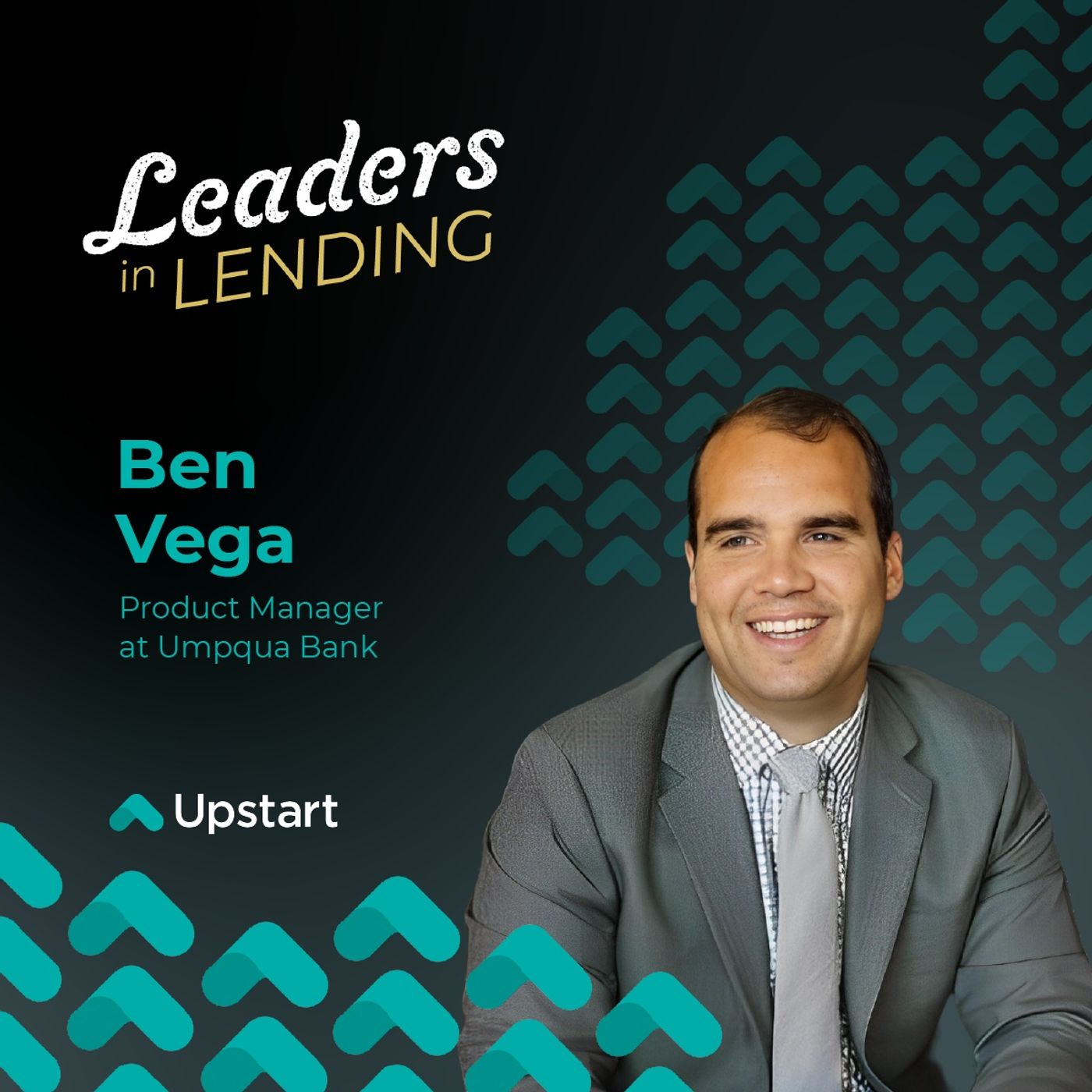
From his position as Product Manager at https://www.umpquabank.com/, Ben joins us to shed some light on the challenges and benefits of cross-pollinating data and technology, tailoring services to meet unique needs, exploring alternative credit scoring...


From his position as Product Manager at Umpqua Bank, Ben joins us to shed some light on the challenges and benefits of cross-pollinating data and technology, tailoring services to meet unique needs, exploring alternative credit scoring methods and automation, and more.
In today's rapidly evolving digital landscapes, finding a sustainable balance between human interaction and digital automation in lending is paramount.
Join us as we discuss:
- Navigating interest rate sensitivity and the benefits of data cross-pollination
- How Wealth Management Groups help keep operations customer-centric
- Why automation needs a balanced level of human interaction
0:02 You're listening to Leaders and Lending from Upstart, a podcast dedicated to helping consumer lenders grow their programs and improve their product offerings. Each week, here, decision makers in the finance industry offer insights into the future of the lending industry, best practices around digital transformation, and more. Let's get into the show. Welcome to Leaders in Lending. I'm your host, Jeff Keltner. This week's episode features my conversation with Ben Vega from Umquo Bank. I've been and I dive into a lot of topics, starting with an interesting project he had recruiting commercial bank clients into the wealth management organization. I thought interesting, how you break down the barriers and build a program across silos in the organization.
0:44 We talked about specifically a lot of the human digital how those two things play together, what U was doing in that space, which that was really interesting their big bank attack program during PPP. Also, I think of fasting my conversation experiend what's what they mean by scored lending and what the future of score aring and maybe alternative data looks like where that can be valuable. I think it's a great conversation and anyone can learn a lot from it, So please enjoy this conversation with Ben Piggott. Then, thanks for making the time and joining the podcast today. I really appreciate it. Absolutely happy to be here. Before we get into the content, there's a bunch of interesting stuff to talk about, but I always love to start with this question from my guests. How did you wind up in the banking space. It's not usually the childhood dream of most of the people I talked to, so I'm curious what path led you to where you're at today. Absolutely, I think this is a popular question amongst most banking professionals as well. I started off probably a more traditional route. I was going to college George Mason University in Northern Virginia, and the bank down the street offers college tuition reimbursement program, so that was Chevy Chase Bank. I was a teller there and they were helped to pay my way through college. After I had graduated at a four year degree and also had four years experience. But I also got a little bit more exposure to just what all, you know, the different avenues that you could go through in a banking career, and I decided to stick with it.
2:13 Moved over to Unqua Bank in the Pacific Northwest. Started off in our branches, so we call them stores at the time. Was there for a year that I moved into our private bank for wealth management, and that was pretty interesting journey. Get a lot of exposure in the wealth management piece because a lot of your customers are orderlining on the consumer side, business side, commercial side. So having that for five years, I mean, I really did get a lot of exposure to the different products and services that we offer through some different types of synergies that we did. I went into our frontline strategy group, but prior to that, actually we'll probably circle back on this at the topic of the conversation. When I was in our wealth management group, we started a program where we were partnering with our commercial bank because we're trying to identify customers that were within our commercial and the business owners that would be a good fit for wealth management. So they had commercial loans with us, but they didn't have any type of personal relationship. So I started down this initiative where we were going to get the commercial bankers to introduce clients to our wealth management and get that wealth management offering to them. Utilizing some of the information that we had collected through the underwriting of their commercial loan, and this was ended up being very successful and eventually, as we had some other groups look in to how the organization was operating, I was then moved under what
3:44 we called our Frontline Strategy group. So Frontline Strategy was helping build the strategy with our core baking lines of business. This is retail bank, home lending, commercial SPA, etc. Basically the profit centers that we have, the different avenues that we have with than the bank itself. As we went through another merger, I took a kind of an adjunct kind of dog leg in my career and I went over to our ALM side or asset Liability Management, working in our treasury group for our interest rate sensitivity analysis. Did this for about two and a half years, three years, and this is where we're putting out the regulatory reports on how a banks that it was income gets impacted through different rate scenarios. Basically a pretty important topic. Right. Just I'm alexy to sexy last right, And it was funny you say that because I was said, you know, recruited into that group, and I thought this was good, good, a good way to start rounding out my banking career.
4:43 I had always been focused more on the production side, hadn't yet looked at the balance You haven't yet looked at banking from the balance sheet finance side. So this was really good experience. When I was first moved over there, you know, interest rates were flat for quite a while, and then I started going over there. This is when the rate high really started and things got a lot more interesting, especially because of the reporting that we were putting out. And really what happens is we run sixteen different scenarios. So we'll start with our base scenario, which is just the current economic environment. What's your net interest income going to look like in one year without any movement to rates, and then we'll look at it what happens if rates go upwards one hundred basis points two hundred, three hundred, four hundred in a ramped scenario, so slowly increasing, then also again in a shock scenario. Then on the inverse of that, what happens when they go downwards? You know, yeah, the one to four percent and then diving into the analysis of that was actually really fascinating as well too. So you're looking at most of our loan portfolios you know what has changed month over month? How is the sensitivity? You know, how has our net interest income increased, our dink decrease from the prior month? Based on some of these scenarios, and you would see what are we doing on our lending side, our cash side, you know, how is our cash looking? So four dollar question, but were you guys looking at the asset valuation for a long long duration assets on the book? So we always we had them marked to market already, so that was one thing that was helpful for us, you know, so we we had run the book that way and what we did see though were mortgages,
6:18 right, so we were having in higher rate environments. Generally, what happens is pre payments start too slow, so people aren't going to be paying off their loan as quickly, which in the inverse of that, we're getting less cash back to then reinvest at the higher rate. So that was kind of one of the impacts that we were looking at when you look at mortgage portfolios or the different portfolios that we were invested in, so mortgage backed securities, so you would see kind of slower durations on these types of security portfolios that we were invested in and that you know, for me, this was I had never really looked at that part of the balance in our investment side. I was always more focused when we you know, for core baking lines of business, to look at your deposits, your loans and you know, getting these different types of investment folios that we put cash into. That was that was really interesting. But we were very uh, we're very sound on how we do that. So luckily, you know, we had already been marked to market. Our book was pretty fair in that aspect of it.
7:12 Um. You know, I'm assuming you're getting into what happened last four weeks, but best we know, yeah, interest rate risk right, what's right? I know, I know. And so from there, um, one of the executives that we had in the frontline strategy group, they're saying, hey, we we want a product manager for our scored lending channel. Um, and I thought it would be a great fit. So I moved into that. So that's what brought me into our Scored Lending product manager position in the role that I'm currently into now and so quite an interesting career. Actually, it all started with helping you know, an extra five thousand dollars a year to pay to my tuition and now I found something that I really loved and been fortunate enough to be able to build on my experiences throughout my banking career to get to the role. But I'm at now and that's uh.
8:03 You know, some people maybe aren't as fortunate to be able to do that. But luckily, within the organization I have, they really kind of promote that and they have done a good job retaining employees and training them up. So everything I want to get to scored lending. Yeah, we let first go back to this really interesting project you talked about where arguing with the commercial bank. Yeah, management class, and I want to ask a question and too fragile. This feels like the kind of thing that is obvious. I mean, like, no, we have a bunch of people who own small businesses that are doing well. We'd like to have their personal banking as well thanking. And yet I find that often either the organizational silos end up creating friction, where like this is the commercial bank, this is these we don't we don't we don't communicate, or you have data silos ended up making it very hard to actually like access the information. Right. So I'm curious what challenges you faced in trying to do that and how you overcame them, because it to me feels like one of the things where you go, well, every bank should of course be doing this, and I think off and they're not in there are hurdles in the way. So I'm curious about your experience in those fronts getting the organization on board with like cross pollinating across right to right referent parts of the organization. Yeah, any kind of data or technology issues you had trying to like, you know, often you can't get data about the absolutely true customers into your your you know, personal your wealth management systems because they're just totally different, speak, different languages kind of thing.
9:22 So I all kind of go back to the genus of this product, right, your project that we have, and exactly that light bulb moment right where like this seems like a no brainer. You know, here we have commercial loans. Uh, the borrowers or guaranteurs of these loans are more than likely qualified for some type of wealth management. Yeah, it's just in the nature of that. So let's you know, we're we're collecting you know, this information to underwrite the commercial loan oft in time, those guarantees. So there's some type of personal financial statement that's coming over with these guaranteurs that we can review and you know, take a look at and say, hey, this this person has, you know, this amount of assets, and we think that, you know, we would be a great benefit over here in our wealth management division. And it wasn't necessarily so much, or maybe it was just as much as a fact that, yes, we want to have a full relationships. As much of a fact is that we're kind of branded as a business bank of choice, but at the same time we want to know, hey, we offer these services too, and oftentimes customers they really enjoy the service that they're getting from their commercial partners, and so we try to build off of that and say, hey, that service still matches on our consumer side, whether it be the wealth or side over here, and oftentimes they just don't know about it. So that was the idea and not executing that idea. You're right, it wasn't as easy as I thought it was going to be. And there's a couple of couple of different reasons why.
10:43 One so even with our culture, we have a very strong service culture. So that's also another reason why I thought, hey, this is going to work great, you know, I mean, who's not going to want to refer their customer over to an internal department. And it turns out that it is a little trickier than that, and it has to do one there is a human element to it where we had to be very proactive, or I say we myself, I had to be very proactive in identifying these customers first. And so going into what you're saying with a data issue, there isn't some gigantic database where I can just kind of run a query or filter on you know, hey, you know, give me the individual borrowers. I have asset sizes of this, but preferably you know, in an investments or cash or you know, let's exclude their primary residence, etc. So one it ended up being, okay, let's start identifying the types of commercial loans, you know, the size, industry, maybe location, like do we have a wealth management office in proximity to where this borrow lives from. They're very manual to review the personal financial statement and any other types of liquidity statements that we got from these borrowers. And then from there, let's call on the relationship manager kind of give them a prospect sheet say, you know, very socializing. This is one of the things was actually deposit gathering, saying hey, you know, we offer and this is what we actually found.
12:07 This This was really the ticket that helped them get the leg in the door with both management was that these barrowers usually did have some type of relationship with us on the consumer side, but they weren't in the best product for them, meaning that they were also in a product that is probably the easiest to open, quickest to open, to do the transaction. Maybe they were just using it as a checking account, but we did have other products due to the assets that they had, would offer them, you know, some type of like wire services, you know, so like hey, you know, you would give free wire services, free cashers, checked higher interest rates paid on deposits of this amount. Let's make sure you're in the right product. So that was a very low hanging fruit. Let's service the customer and make sure they're in the correct product, because if they're not going to be in the correct product with us, a competitor is going to come down the way and say, hey, your bank's not doing that for you. Will we do this for those types of balances, So that was kind of the very first versation that we would have with these borrowers. Other ones would say, we would like to introduce them, but there's I don't want to go like too deep into the tea year, but there's incentives, you know, I mean there we we we hadn't thought necessarily about incentive plans um, so it would say, well, who's going to own this relationship? But you know who, who's going to actually own this customer once I start to introduce them over there? How do we build the team around this customer? And that was not so much a point of I'm not going to refer but there was there was definitely some logistics at the point of the point of service that you know, are you going to you know, is this customer going to think that I'm their bank? Are they going to think that you're their banker?
13:35 How are we going to manage this relationship together? How are we going to build this team around a customer together? And who's going to be the point of contact? And so those are certain things that we wanted to hash out first um in order for that to happen. So what ended up being it did end up being successful, but there were certain things where it wasn't just as easy as hey, this is um you know, here's a customer that we have and let's we're just going to reach out to them, not include the relationship ship managers start sending them uh information regardless, And we wanted to be very thoughtful about how we approached it, very considerate of the relationship and at the end of the day, we wanted to make sure we're building the team around them with the with the game plan and so at this and I think the topic that we're on human digital, right, there's kind of these pros and cons and when I when I think of human digital, because this was a very human approach that we were doing, you know, very manual, I would guess, I would say, you wanted to compare human and digital to manual to automation. There's a very manual approach. You know.
14:33 There was a lot of eyes on what is going to happen. We were kind of thinking through different scenarios where opposed to how do we how would we scale something like this? Right, like this works good, We're doing it one at a time. It's it's it's working out. But hey, I'm one person. I'm going through personal financial statements one at a time. I'm literally pulling images of applications, loan documents, and this isn't going to be something that we can scale to. And like many organizations, it was also at need because or banking organizations, I should say, up until this point, you know, we had primarily grown through merger and acquisition, merging with other smaller community banks, and so here you have this portfolio of customers that maybe do have one foot in the door, or they had come from a different organization that didn't offer the types of services that we currently offer, and so it was really a good time to take a look at these types of relationships and identify customers that we could potentially grow. We expand upon those relationship we've grown through merger and acquisition. Now we really want to start focused growing organically. And as I was going through this, yes, right, idea, but one it's not scalable. And what we ended up doing, which was actually really one of the first things are first of its kind for our organizations. We partnered with the local company and they we started doing something called next Best Offer or what we dub umph was Smartly and what this had done
16:04 was identify model customers and we're doing this for our Treasury management suite of products. It's kind of expanding a little bit more as well. But we were saying, you know, here's a model customer, model customer being. You know, here's a customer that is satisfied with the relationship. Maybe I shouldn't use word satisfied. That's a little too and us. But you know, here's a customer that is using our products and is profitable, right, and we have their primary checking account. We can see through their checking different types of transactions that they're going on, maybe payments, right and oftentimes we're looking at payments. Here, here's a customer that's paying vendors x amount at this type of frequency over this time period, and this would be a good opportunity for commercial card ach services, positive pay certain things like that. And so what this what smart lead does is it does is automatically right in a digital way. So every single night, it's going to go through our data that's process and it's going to start submitting leads to bankers to follow up with customers saying, hey, did you know your customer has X y z over here or is processing x amount of transactions during this time frame? And we have a product for that, right that's actually going to benefit them most oftentimes save them money because the different way accounts are set up. You know, the types of volumes that you have cost x amount if you're not using this service, you know. So that's one thing that we're doing is called UNCA Smart leads from from a digital standpoint opposed to the human approach that I had so kind of a juxtaposition there when it comes to what we were doing years ago with the Commercial Bank and MUTH Management to what we're doing now. And there's
17:37 also been a lot larger of a cultural shift in regards to partnering. So in addition to this this digital element that we're using with Uncle Smart Leads, I think the pandemic, you know, this was an event that really helped rallied our associates around seeing the value of partnering together, right. I think, you know, there's a lot of talk that we have that hey, we're we're you know, individually, we're not as great as we are together. Right, So as as a team building a team around a customer, we can serve us a lot better than we could, you know, versus if they were just only being serviced by a loan in our commercial banking center.
18:19 So what's happened with the pandemic was there was a paycheck protection program and what we ended up seeing at the you know, at the end of by this head concluded right the FED there was a set amount of dollars that they were going to lend out. And you know, as a lender, you have their customers trying to keep their business open, try to keep their employees paid, all fighting for the same pool of money in a short amount of time. And so we were getting applications not only for our customers, but for customers from other banks saying, hey, you know, my bank can't help me. Can you guys help me get this applications so we can get funded. And you know, of course the answer was yes, you know, let's let's do the right thing for our community, because these are local often that small businesses in our community that they can't get ahold of someone, you know, at maybe a larger institution down down the street, but they could get ahold of us. And even though they didn't have any relationship with us prior to that, we were going to get this loan application through as fast as we could and as best as we could for this customer. And this was a time period where I mean, I you know, everyone was submitting these applications to the SBA website twenty four hours around the clock. We ended up doing three billion approximately in these loans, which for h I think, I think that was definitely the largest in organ for community lender our size.
19:44 But we were we were, you know, it was quite the effort that we had. But to take this to the next level, what we also looked at doing was then following up with those customers that didn't have a relationship with us, right, So, and we kind of in term we we dubbed this I think, you know, something along the big bank attack or something of the sort there. Yeah, well I love the big bank attack, right And and the idea was like, hey, let's let's grow and expand these relationships, you know, I mean, we we had gone to bat for these customers and we got a foot in the door with the PPP loan, and we know that if we start putting some of the people that we have in front of them there there, they are really going to love us and they're going to move that over. So the same idea came from now we start with one relationship maybe be on the loan side, how do we expand this into a greater relationship. And we had our store associates, commercial bankers, other that you know, follow up with these businesses and start moving over the entire banking relationship. And this ended up being a very successful program for us as well too, which also really highlighted what we can do together with all the services that we offer. And so that also helped, you know, a lot of people's minds set shifted that Hey, this you know, servicing the customer, doing what's best for the customer is also best for myself as an individual producer. You know, like customers happy they have people that they can talk to that I know are going to provide the same level of service that I do. Anywhere they go, no matter who
21:15 they call, they're going to get that level of service. So that really helped change that mindset when it came to, you know, going back to your original question, you know, how do you oaks are overcoming these internal referral systems? Right? I think there's one aspect of yes, it does need to come top down, you know, it does. There is a top down communication that needs to be Have, there's you know, an incentive plan you need to make sure that bankers are incentivized too, But at the same time, you know, touching, and there's also a digital piece of they where this is a very human, you know, decision, whereas what we did with umpus smart leads, we helped hate that human decision out of it, and we just started using the data to help generating some of these leads as well too. So we're kind of approaching it from from two aspects of it, where you know, that is something that can get improved with a digital solution, you know, helping with these types. It's not necessarily AI, but it is predictive analytics where we're taking a model customer and seeing, hey, what other customers do we have within our portfolio that BEHAVE, Like this customer meaning do they have a loan? What types of transactions are they doing? Hey, well, that actually is similar to the transactions this customer is doing, and this customer is enjoying using ACG positive pay, so let's offer that to them as well. So there's there's definitely some digital tools that can help with BANG. Think about that n that line, I mean not in the line, but this kind of melding. I feel like there's a there was a world, there was a period of time, and there's still something to feel like. The personal is replaced by the digital, and it's going to be all at the point of interaction, all a digital style interaction, no humans in the loop. And then we've got the very relationship
22:47 heavy stuff. And I feel like there's consumers are doing both things right. They still want to talk to people, they also want to self serve in the digital interaction model in different times. How do you think about how and where you balance those two things, how they work together? Like, what is the strategy for combining the human and the digital? Where do you at one being more valuable than the other? They work together in certain strategies. Curious how you think about the way these two technologies are two interaction modes play together in you in the future. Hey there, Sarah Butch here, VP of Consumer Lending at First Federal Bank of Kansas City. Three years ago, we had plans to improve our lending to load to modern income communities. Fast forward three years, we've grown our lending distribution to LAMI communities by over ten percent thanks to upstart. If you'd like to learn more about fb case's journey with Upstart, check out the free case study at upstart dot Com Forward slash Lenders. That's Upstart dot Com Forward slash Lenders. All right, back to the show, right. I think probably the best answer to that question I have is actually our our go to mobile application, and so go To is what we've really dubbed for our human digital strategy. It is a mobile application where you were putting the banker in your pocket quite literally. And what's happening is that within this application, we have store associates who are chatting with you.
24:19 So if you need something you can launch just go to application and you have your banker there. And it's kind of the blend where you see other types of chat bots AI chatbots banks investing in that. Well, we're saying, no, we want to keep it human. You know, we want to give you the access that you're used to with the phone getting serviced, but at the same time, we want to make sure that you're having a human interaction. And that was really what we had invested in. It's been going on five six years, maybe maybe a little bit longer than that, but within the last four years go To we dubbed it go to and that's where we're starting to see a lot more users interact this channel, and they do really enjoy it because one, they can get their questions answered, they can take care of their day to day business, but they're also talking to a real life person, and that I think is kind of where we wanted to make sure that was still having these human interactions. We're still occurring through a digital channel, so we're in the space right, We're on your phone, we're in your pocket, but we're also utilizing our associates to have everyday conversations with our customers, so they're still getting that same experience that we would have in person. I'll ask two questions following up to that, which is one, how do you think about the mode of interaction? I mean, you have like text based digital interaction with the real human, you are, right indeo based digital teraction with the real human phone call, and you have video. Are you focused on one of the other? Are you seeing interest
25:49 in different modes? I'm curious what mode people are enjoying or what you're using for that kind of human digitally mediated humans right right, So we're seeing a lot more of the interaction come through our chat based platform. And what we're also seeing is less volume come through call centers, right, so instead of having to staff up call centers over the phone, we're seeing more people engaging through the chat interactions through Uncle go to M and then from there, you know, we have this whole what we call our digital call center, right, and so from their associates are still able to identify opportunities that they come in. So a customers asking for a loan, you know, we can get them over to the channel to get that application process. And this is a good in a mediory because not having the ability to apply now or apply through a website at this point in time, but still having the ability to talk to someone about a loan and get that process started is a very you know, like a huge advantage for us as an institution opposed to here, fill out a form and someone will get back to you, you know in a day or two. Ah yeah, right, Whereas like I might as well have just walked into a branch or I might have been by that time.
27:00 Especially with all the fintech businesses are going in, It's like, hey, I can get my loan applied for and funded in forty eight hours, you know, online versus you know what's going to take me to actually have to walk down the street, Oh you're not open, or I had to make an appointment or you know what other you know, you know that that period of time, um, you know could really be a game changer for some of the uh, you know, regional banks that we have. So being able to have that conversation with our customers right there in their pocket and get that process started one day sooner, right, is just you know, an advantage that we we're definitely trying to capitalize on and get into that space. Yeah, the the ability to execute and deliver quickly is certainly something customers are demanding. I mean not just you're wanting, but you know kind of demanding at this point toil for Uber and Amazon Prime. I guess absolutely that's our big it's it's you know ore when we think of technology investments that we have, right, you can't do everything, but you can do some thing's right. You know, you can do you can do what's right. And you know, one of the ways that we decide that, you know, what we're going to invest in is kind of the is the mantra for one day sooner. You know, is this going to help our customers board their loan one day sooner? Is the application process going to go one day sooner?
28:17 How is this technology going to help get something done one day sooner? So that's that's really what we have. It makes me think of the fun one day more when you say that over and over from La Miss you need you need a theme song for one days, but that would probably fly. I's just probably just like, Yeah, I'm a musicals guy, so I got like one day anyway. I can't say I liked it. I liked it. Yeah, we got to find a way to get the one day sooner is a that's a great month. I love it. It is. Yeah, it is amazingly powerful when you can accelerate the timeline to value for your customer. How much day that can improve your conversions, You're you're pulled through your your overall business and satisfaction with the customers that you have. Absolutely um. One of the questions is he, I mean, the chat based interaction is interesting in the I mean, even more recent than the banking issues and interest rate risk kedging and in management is this concept of generative AI andarts that can kind of behave in a human like way? Is that something you've looked at it all are still like I'm also you know, I went into like change right and to like, I've got an extra thousand dollars, how should I invest from my retirement? It'll do a pretty good job breaking down roth iras and iras in four oh one ks and in different investment options and where you should start and whatnot and sending these accounts and the CDs and um.
29:33 But have you thought about any ways to like take their first round of questions that can be automated or is it still all that's still like a we're we're committed to any human human interaction with the Night Channel. M One thing that and this is what I've actually loved about is that we're not I guess what we would say, Hey, we're not a sales culture. That the purpose of this channel isn't to sell it our customer or something, right, it's it's to provide CERTA said. We really believe that service first leads to more business, so we have a very service based culture. It's actually really interesting. Back when Ray Davis started started the bank, Well had taken over as the CEO. He dubbed all of our branches then you know stores, right, and this store experience was really based off Nordstrom, and we would hire not bankers, but we would hire people who worked at Nordstrom, people who worked at Starbucks, people who delivered you know, service. And this was in our in our front of the house with within our branches or what we had then called stores. And so how did we you know, what we want to do is translate that experience into a digital experience. And some of the stories that come out of this, you know, for the Unqua Go too, is being able to do follow ups with your customers when they say, hey, I'm trying to finance a wedding, Okay, great, Not only will we do that, but you know, we send you the handwritten car. There's certain touches that we follow up with, you know, help them, put them in touch with a floorist that we might also bank as well, you know, really expand on that network. And we think
31:04 that giving one empowering our associates to have that human interaction with our customers goes a lot further than to be able to kind of constantly offer you know, basically mining a conversation for sales opportunities that you know, we're kind of going the different direction. We're minding these conversations for service opportunities, which you know hopefully then leads to good graces in getting more business and preferring friends and kind of having this net promoter score in one way or another. But we want to just really be satisfied with the service that we're giving, so very very kind of hardlined with you know, the AI isn't meant to do sales right where you might have something like a different chatbots. I will name industry names, but you know, it's certain things that don't necessarily work. They're just trying to get you through a queue. They're trying to take you know, volume out of the call centers. You know, we're actually just trying to translate our in store, our in branch experience to a digital channel. Iceland and I want to kind of strange that we're getting to the end of our time and I'm going to ask this question, but you said you're probably manager for scored lending. How do you guys define scored lending? What does that?
32:14 I mean? I feel like all lending should be scored right, Well, I think so we're yeah, so well, we I think through our loan channels, right, we do do a lot of larger commercial deals that need to go through custom underwriting. So scored lending, what we define a scored lending is within a parameter set loan amount, collateral risk that can go through a scoring model that can basically kick out a approval based on amount of factors and then from there help expedite that funding. So typically right now we're doing three million and under for business, and all of our consumer lending is scored for the most part, unless there needs to be some type of custom underwriting. So it's really based on own amount and risk for the most part of the different products that we have. And so you know this is this is pretty I wouldn't say newer for organizations, but a lot of organizations that are still out there at a regional bank level, you know, they will do the custom underwriting. They'll they'll go through you know, you'll apply for a loan and it will go through underwriters, you know, some type of credit underwriting center. They'll take a paper application, they'll go through your financials and they'll do an approval that way opposed to one day sooner, right or something of a scored lending channel to be able to get that approval, get the documents process and move forward. And when it comes to human digital even even with our scored lending channel, right, we still have human interaction where if we could kind of get down some of these manual reviews, whether they
33:45 be for fraud or incomplete applications or certain things I don't quite date a credit box, and we could identify and eliminate those human touches, we could start really getting one day sooner to funding for our customers too. So even within us score channel, there is human interaction and um, you know, the onus with as a product manager is to you know, really help drive you know a one day sooner or approach on what are we doing and you know, how can we get this done in a more streamlined fashion? And fraud fraud check is a big big piece of that too, right, Yeah, for sure, One thing I I would do want to dig in on is the idea of when you say scoring, I love it. But there's also this current debate about alternative scoring approaches all right, data used in scoring.
34:30 What's your take on the opportunities and risks associated with you know, going beyond the traditional you know. Yeah, I mean when I look at even most scoring mechanisms by banks, there's you know, for consumer loans, there's a handful of variables that's related maybe to equity in the in the house or an auto loan, and that it's like credit score ten or fifteen things coming off the credit file, and it's it's a pretty straightforward set of pretty traditional metrics that are used to relations. There's a whole you know, sets of data that are non traditional that are right being used by I'm curious how you think about you know, you know, moving forward. When you're in that automated scoring mechanism, all of a sudden, the question becomes what other kinds of data or absolutely it could we use to make better determinations? Right as that in that journey, what do you what do you think the future looks like?
35:15 Yeah? Absolutely, so there's you know, is this telling the whole story of the customer's ability to repay? Right? You know? Is this the best method? Or are there are some of the scoring models, some of the larger you know, phycou you know, uh advantage of some of these models that are out of the box, you know, are they really doing the best to mitigate risk, right, and it all comes down to the risk of the portfolio from a bank side. And so right now, I mean these traditional models, their advantage is that they have results recorded, right, I mean they there is revault of yeah, exactly, default rates, certain things like that that that have worked in the past, um, but that is starting to turn, right, These alternative credit models are starting to say, hey, not only are we seeing lower de fault rates, but we're being able to approve more barrowards within you know that these models would have declined. Yeah. One huge thing that I think that's kind of a really big focus for us too as an organization are these special purpose credit programs.
36:13 So you know, we want to be making sure we're lending to communities that these traditional scoring models wouldn't necessarily approve, right, So how can we do that? How can we do more lending investing in minorities, you know, women owned businesses, black owned businesses, certain things like that where you know, hey, they weren't getting qualified through these traditional scoring models. But you know what, we're going to be using alternateive scoring models that will help them with our special purpose credit programs opposed to you know, just lowering the score for some of these loan applicants versus you know, keeping them versus like if they you know, if they didn't meet these types of the boxes that we've met. So for me, top of mind for alternative scoring models, I think there's a great advantage to be helping with the special purpose credit programs that are out there. And also I think just the more that we're able to prove these models and there you know their efficiencies, you know, to mitigating default rates, the stronger it's going to be in the corner too.
37:15 Excellent. Well, I think that's most of the questions I have for you, but I appreciate it has been a great conversation. I do have three questions I like to ask everybody at the end of the podcast, so absolutely I and we can we can jump to those ready. First, what's the best piece of career advice you've ever gotten? Well, I'll just go through what my journey has brought me to is that, you know it always try to be building on your past experiences, so you know, be mindful of your career approach. I think that some people or some associates easy to kind of just accept the faith that they're at within the organization. But if you're intentional about your career path and working with the manager to get you there, I think that's um. You know. One of the steps that I would take is always trying to build upon your past experiences for your new role, and also look outside of your organization for not new opportunities, but to see what your organization is doing, because I think oftentimes too when you're an organization, I've been with a bank for eleven years, but if I wasn't curious, you know, staying curious and looking at what other organizations are doing, you know, what roles are they implementing and bringing that back to our organization as well. I think that helps kind of diversify the ideas that you can bring to your organization as well. Love it. Second question I got is what's the best advice about the you know, retail consumer banking industry in general that you've gotten or give. I would say, if you're a consumer right
38:46 now, you know, looking around, I think you're in a really good place. I think with the fintech industry that's happening. I mean, you're getting options and just like anything that they would say, like if hey, if you're going to shop for a mortgage, you know, make sure you're shopping for more debate. Same thing as as a consumer, you know, if you're you have a lot more options to you than you did previously, and there are companies who are fighting to provide that service. So you know, although it might be hard to switch your checking account from the institution you have now, it might be worth doing so if you haven't looked around in a while, because there are companies that are willing to kind of go above and beyond to kind of break down some of those barriers that they have from uh, you know, the banking industry. You know that could really provide exceptional service. And you know, make sure that you're you know, you are valuable as a consumer in this space. I will I will tell you that much right now. All right, that's great and fast. One is what's one bold prediction for the future. I would say that, you know one bold prediction for the future that would really be for me. I think that we're starting to see one thing that's a popular belief within this current industry right now is who your competitors are as a bank between your asset size and I see this all the time where it's Hey, you're a fifty billion dollar bank. Well here's you know, let's compare you to other fifty billion dollar banks are less because these are your competitors. And I think that there's a digital landscape that's happening right now where you know, we are competing with bigger
40:16 banks, we are competing with FinTechs, and we're not just within a asset class of who our competitors are. And so I think the competition within the organizations of the products that you're offering, you know, really needs to broaden that scope because it's not anymore of just who's in your footprint and who's in your asset size. I mean, it really is the ability through this digital channel to be able to shop around as a consumer. And if you're not capturing that and you're you know, if you're thinking that, you know, you're kind of safe with who your competitors are, and you're going to price similar to your competitors based off asset size, I think that that's going to be a detriment to your organization. Definitely interesting, very true that we you could think of your competitors an equity investor point of view, maybe here competitors or banks your size. That might be who wants to fund the company, where you'll be compared when you do your earnings call when trying to find which which depositive product I want or where I will write where I want to invest my money? That they couldn't tell you. I bet most conseritors couldn't tell you that the asset size of the bank they were, But there's just not irrelevant constit They're they're comparing you guests across a lot of different competitors, right and you know, we're we're relying on third parties to help kind of provide some of that data, and they always try to bucket you in these these competitors based on your assets size, and it's it's you know, for them.
41:36 I think what you know, the institutions need to do, and even those who help provide you know, pricing analytics or other other opportunities, they need to really kind of start rethinking what that competitor pool starts looking like for organizations because that landscape is changing drastically. Excellent. I think it's a fabulous point and a great place to leave it. Then again, thanks for making time and joining us. This was a very fun conversation. I appreciate it. Thanks stuff. Upstart partners with banks and credit unions to help grow their consumer loan portfolios and deliver a modern, all digital lending experience. As the average consumer becomes more digitally savvy, it only makes sense that their bank does too. Upstarts AI lending platform uses sophisticated machine learning models to more accurately identify risk and approve more applicants than traditional credit models. With fraud rates near zero, upstarts all digital experience reduces manual processing for banks and offers a simple and convenient experience for consumers. Whether you're looking to grow and enhance your existing personal and auto lending programs or you're just getting started, Upstart can help. Upstart offers an end to end solution that can help you find more credit worthy borrowers within your risk profile. With all digital underwriting, onboarding, loan closing, and servicing, It's all possible with Upstart in your quarter. Learn more about finding new borrowers in hand, seeing your credit decisioning process, and growing your business by visiting upstart dot com slash foward dash banks. That's upstart dot com
43:07 slash board dash banks. You've been listening to leaders and lending from Upstart. Make sure you never miss an episode. Subscribe to Leaders in Lending in your favorite podcast player using Apple Podcasts. Leave us a quick rating by capping the number of stars you think the show deserves. Thanks for listening, until next time,

