Navigating the Data Race in Financial Services

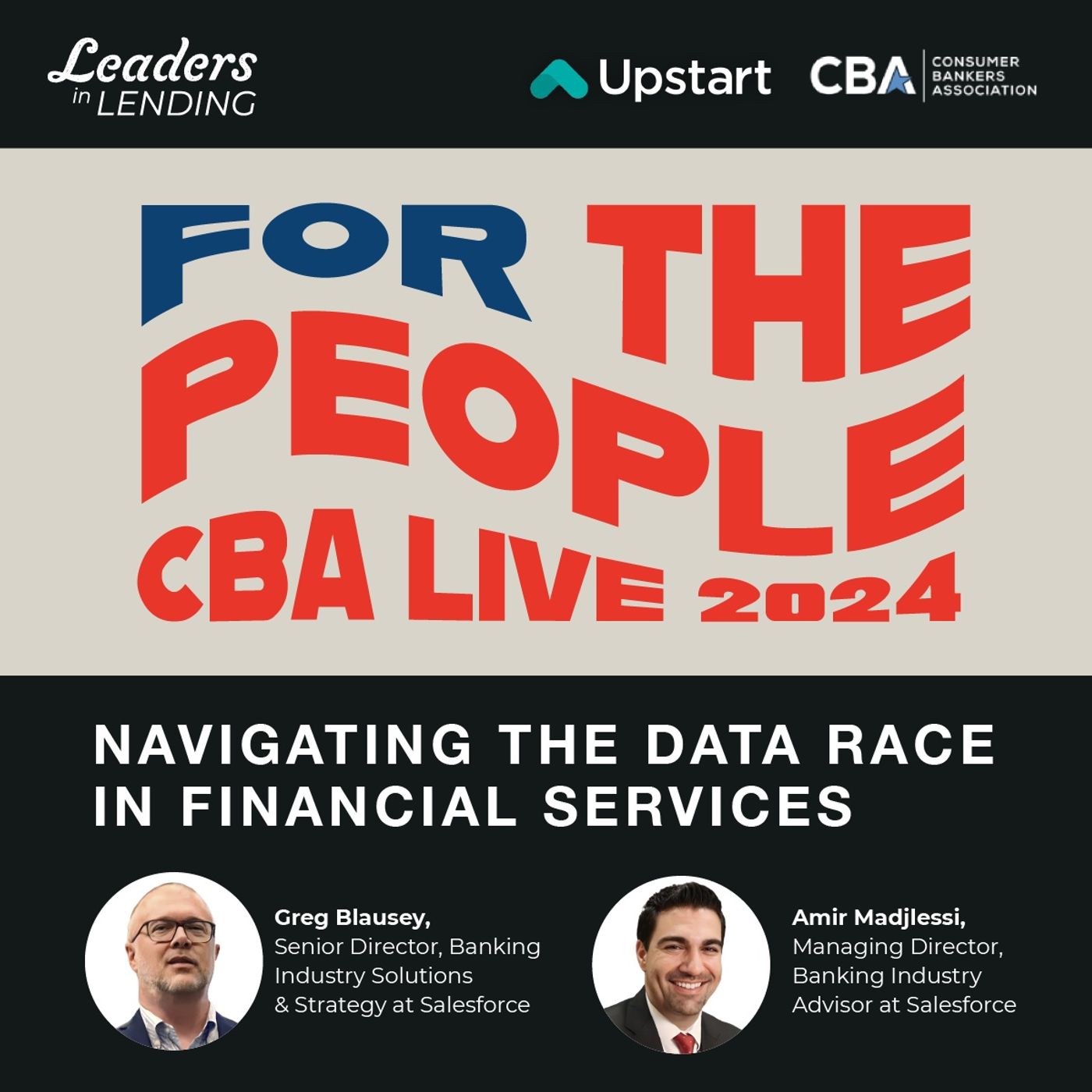


For financial service professionals, it’s important to meet the needs of their customers and clients. But it’s equally important that they ensure they’re leaving no stone unturned when it comes to harnessing the latest technological solutions that can make their job — and the consumer’s experience — as frictionless as possible.
This week, host Matt Snow is joined by Greg Blausey, Senior Director of Banking Industry Solutions & Strategy at Salesforce, and Amir Madjlessi, Managing Director and Banking Industry Advisor at Salesforce. Greg and Amir bring a commitment to (and insights on) streamlining processes within financial institutions to better serve the customer, and allow financial professionals to focus on what they do best.
Discussed in this episode:
- The importance of fresh and representative data
- How finance can learn from the world of retail when it comes to the onboarding experience
- What it looks like to take an outcome-based approach in adopting new technologies
- Balancing using data usage for personalized service and addressing privacy concerns and regulations
0:02 You are listening to Leaders in Lending from Upstart, a podcast dedicated to helping consumer lenders grow their programs and improve their product offerings. Each week, here decision makers in the finance industry offer insights into the future of the lending industry, best practices around digital transformation, and more. Let's get into the show. Welcome to another episode of Leaders and Lending. I'm at snow here with Greg and Amyor from Salesforce live at CBA. Greg Amyer, Welcome. Why don't you take a minute to introduce yourselves talk about what you do as Salesforce. Thanks Matt, happy to be here. My name is Greg Blasei. I'm a senior director in our financial services cloud product organization. In that capacity, I work directly with customers and with industry leaders to help make sure that our industry verticalized products and point of view and solutions are headed in the right direction and generally trying to stay to where the puck is going in the industry.
1:00 Awesome a mere magell Essie, industry advisor at Salesforce. Been here for about three years, but it's spent almost twenty years in financial services and have seen the movie before on how you know, clients are contending with big business problems. In my role, I cover the US in Canada and we really try to unearth what the biggest and brightest problems are for our clients, bring practical solutions to them, and figure out a way that we can leverage on the platform in an extensible way. So looking forward to that conversation great, and it's a pleasure being joined with two reformed bankers. You know, we talked with some of the guests about like accidental careers in banking, but I'd love to hear from each to view like how you got in and out of banking to now more on the service side. Yeah. So I spent the first twenty years of my career working directly in the industry and may have crossed paths with a couple of folks sitting at this table at various points in that career. And you know, I was very fortunate to have a few different roles in banking. I started out my career in retail banking as a teller, like a lot of us have, actually just kind of worked my way around the bank. I worked on corporate banking team and in the commercial space, specifically spending a lot of time in treasury management and had the opportunity to do a lot of roles. In my last five years I was at the bank, I actually was the business owner of our salesforce deployment across the enterprise, which is where I got my experience with the technology and really really liked it and thought I'm gonna make a leap over there. So about seven years ago I did just that. Nice. Yeah, not surprised. So Greg and I did work together at Huntington Bank and Columbus and on the retail side, and I just remember your passion around like the use of technology to enable
2:35 the consumer and banker relationships, So I'm not surprised to see you on this side, like helping many other financial institutions on that journey. Yeah for sure, Yeah, no doubt. So I started in banking in the retail franchise, managing branches, regions, larger territories, zig zagging around the organization quite a bit, went to strategy, went to business banking, managed relationship managers, and then having the opportunity to actually go on and run the consumer strategy in another large regional and had the you know, staffing model, incentive plans, data analytics the operating budget for the firm, and had the pleasure of implementing the platform as well at both institutions, in addition to other platforms as well. So it's now I saw the inflection point of you know, technology and the need for technology well before the pandemic arrived. The pandemic obviously accelerated some of the need and the passion for that, and so I thought which organization would take a clunky banker like me and leverage them in their ecosystem.
3:37 But Salesforce was such a great fit culturally and for us to find ways to really walk in the shoes of our customers, and so that transition was really related to how do we actually more deeply understand our customer needs and how do we apply technology to solve those problems. So it was a great match. Awesome, great, Well, I know technology and AI and we'll get to those things. Get a lot of the press. But one of the things that is spoken me at this conference that you guys have hit on, it's just the data and the foundational layer of data and getting that right, getting an organized or how do you make best use of it? Maybe it Leo's start with that, like what are you seeing in terms of the customers you're helping, like what's their state of their data? What are the biggest needs or what advice would you have for banks like struggling with what do I do?
4:18 Like how do I get my data AI? Ready? Yeah, And maybe I'll start where I'm going to end my response, and that is that, you know, AI is the hot topic of the moment, and it should come as no surprise that good data is good AI and bad data is quite the opposite. And so it has, you know, certainly accelerated some conversations and strategies at some financial institutions. Although I would say that folks have been on a data journey for a while. I would sometimes say that almost the strive for perfection was almost to a fault in some cases where it was like, oh, I think we have to have this perfect and good wasn't good enough. And that's unfortunate because I think that those same folks are the ones that are finding themselves trying to play catch up to those that you know, we're more forward forward looking. So I'd say just in general, the industry has been on this data cleanse, refresh reorganization and truly understanding the value of the data that they hold. Now in this world that we're in, it's not only the data, but what data? What data has a shelf life of usefulness? And how do I consume it? And how do I consume it in massive amounts? How do I harmonize and unify that data so that I've got one understanding of who Matt is as my customer. And so that's really kind of I think where folks are landing right now or what they're trying to figure out because they know that in order to deliver the promise of AI, or deliver on that promise that we are all hoping it brings to the industry that is really critical and foundational. Yeah. I guess that's a
5:48 good nuance. So you're saying that you don't have to have your data like cleanse and strategy strategy set first before you leap into AI. You can do some of these in parallel. Yeah, I mean, I think, and that's exactly what we're seeing as some folks are kind of flying the plane in the air right as they're built. Or maybe I got that backwards, but you know what I'm trying to say, right, build the plane while they're flying and that's it. But but it is, I mean, it is something that goes and it's also you know, you get your data to a certain state, and I guarantee you that's not going to be the final state. So it's something that you're always kind of working with and massaging. We talked in the panel discussion yesterday, you know about even just idea of test data and making sure that it is whole and representative of the you know, base that you want to serve and that you've got the right amount of data.
6:32 And then it's fresh data, right because these models are learning off of that data, and so it's just really important to even give consideration and out that kind of element. I'd love to build on what Greg is talking about though, mat because I think I feel like it's a race without a finish line because the amount of data that's accumulating on a daily basis and listen and financial services, it's a knowledge based industry, and so it's like, how do I now interpret that information as a business line lead and a meatail owner. Formerly, you know, I got a lot of information a lot of times, but I'm not sure I got a lot of insight around that data, So it's not only taking what Greg said, but putting it into an actionable format. So you've got data, you've got a UI that you've got to worry about so you can deliver it to people that are interacting with customers.
7:17 But you have models behind that that. Now, whether those are lms that are externally purchased and integrated with or you're building it on your own. So there's an opportunity for us to now build those things together in a cohesive way so that you can actually serve customers in an intelligent and intelligent man Yeah, so what do you think is the fastest path to those insights our customers coming to you with, like the insights they're striving for, looking to connect that to the data or vice versa. I think it's challenging because it's broad and it's vast kind of set of options architecturally or the UI that I was referring to, or even the models that you're going to engage in, and then how do I account for the regulatory landscape that Quite frankly, I'm not sure that the cement is quite dry on how you know, our regulating bodies feel about the usage of certain data. So I do think it's a matter of taking that a mass amount of information and thinking about the use cases that actually impact people's business imperatives, and then cobbling together the data set, the UI and the model that makes the most sense for the use case, because otherwise it's such a large endeavor for organizations, they can be crushed by the magnitude of the effort and that can be paralyzing for a lot of organizations.
8:31 So we really try to figure out what's the broad vision, but then let's get down to the use case levels, so that solving real business problem. Yeah, that's a good point. We found that the status quo is often the biggest competitor to doing some of these innovative changes. Yeah. Do you find then challenges around compliance privacy as the data it self is ever changing, like customers expectations, the regulators view like, how do you think about those? Well, I think it's again down to the use case level. So if there's something that you know, a regulatory clot starts, well, then the amount of information that you need and the speed in which and the access and who has that I think becomes paramount. Right. So yeah, I think we're seeing that in some of the early use cases that are emerging, it's typically going to be a little bit lower risk use case one where we definitely would still want to keep a human in the loops so that there is that at least guidance of you know, critical thinking human being engaged in the process. Gotcha, what other aspects of AI are you saying introduced into you know, the questions your customers are coming to you with, are maybe some of the innovations even within salesforce. Yeah, so a term if you're not familiar with this term, and watch they'll play this podcast six months or now and everybody will know it. But it's retrieval augmented generation and you will hear people talk about it in its acronym form RAG. And so heavily regulated industries like financial services are running to RAG. And what that really means is rather than going out and searching these vast ll ms that you know, may have
10:03 training data that might be you know, months old, to rely on, what this is really doing is saying, number one, it's kind of reducing compute power that would be needed to generate some responses, because what it's doing is saying, Okay, here's my scenario here's my situation, here's my customer and what I know about them. Now only go search this universe. And it is really a way that I think regulated industries, you know, like financial services, are really going to be able to adopt generative AI more quickly. And you know, it's also in addition to that, there's like this whole auditibility component on it. So an example might be, you know, you call in, You've got a question about say a wire transfer or something, right, and and okay, great, I'm an agent. I just need to really quickly, I'll do a query on that and return it and say I'm giving math this response. And I'm giving math this response because my bank says that this is our policy as it relates to that question. And this is our policy because of this regulation. And so there's this auditibility factor that is really critical. And then that human in the loot component, right, so it's even bigger than that. It's like, okay, great, well I've got this response back. Well, what did the human do?
11:13 Did they execute as I said or as the tool responded, or did we have to kind of nudget in a different direction because it wasn't quite right. Yeah, I'll admit that was a new term for me, So I did search that immediately after you said that in the session. Do you view that as like a completely separate class of like GPT's or is it a different flavor. I'd say it's kind of a subset of it, right, So, like, as we've been kind of thinking about generatively I just in general, not we as in sales sorce, but is generally as a as a population, you know, everybody is very focused on these lens and it's still it's still a part of it that you're saying, like, only search this part of it, right, because I know my answer is in there somewhere. Yeah, right, Yeah, Okay, that's helpful. What else in terms of you know, AI driven it seems like personalization was also a key topic for sure. Yeah, you know, And here's the thing, Matt, I've been thinking about And you know, I've been gone from the bank for seven years, and I remember seven years ago still talking about personalization, and so personalization is certainly interesting, and a part of personalization is gonna be a segmentation strategy and kind of getting down to this small group. But what I'm really excited about with generative AI is you know, A more current term around personalization is kind of category of one, and so I've been using that terminology because I think that really resonates with marketers because at the end of the day, we are all different, and we all have very different needs and finance, and although we may have a common set of tools in the financial services space, you know, to solve some of these challenges, the way I might consume something versus a mere versus you could be totally different based on on
12:43 our scenario. And that's why I think this category one idea is really really important, and it kind of in my mind is like next level personalization stuff. I want to build on that just for a second, because I think historically I see personalization and conversations going on to generate demand and convert the top of the funnel. If you will have activity an opportunity. I also think there's a tremendous opportunity to think about the service excellence that you're trying to deliver for your clients. And so when I think of lending, if I'm a business banker or a commercial officer, I've got renewals, what's the level of intelligence that I have at my disposal and does the client have the same amount of information. If I'm sitting there in a mortgage situation, how am I actually able to personalize the experience in such a way that it's reflective of their financial position, the experience that they are looking for and expect, and of course what the capabilities we can deliver in that time. So I always feel like there's an opportunity to go much broader than just the top of the funnel.
13:41 Yeah, totally agree, And to borrow your phrase, I think personalization is another race without a finished line or an end, right. It's a negotiation or a dance continually with the consumer, with the company in terms of what's okay for the company to know and use and leverage in terms of the data or information they may have, consumer expectation and what they're coming with all to help facilitate or think about a recent regulatory change that's happening DoD Frank Section ten seventy one. You're going to collect a lot more information, but you can't share that information with every single person in the ecosystem if you're going to do a lending opportunity right now, because underwriters cannot see the incremental information that's being collected on that data expectation. So I do think that personalizing it for even the personas that are inside the organization is actually a real interesting opportunity for us to move faster for funds. Hey there, former host Jeff Kelviner here to let you know about an exciting opportunity to strengthen your understanding of artificial intelligence and financial services. If you want to better understand the fundamentals of how AI models work and how they will impact the financial services industry, your in luck.
14:48 Upstart is launched an online course and certification designed to do just that. This course will give you the knowledge you need to lead the conversation about how your organization can best leverage and manage this revolutiontionary technology. But that sounds interesting. Check out the course as it's currently free for a limited time. You can learn more at upstart dot com slash AI Certification. Again, that's upstart dot Com slash AI Certification. Thanks, and now back to the show. Interesting. Are there other pieces of automation you see happening either on like the direct to consumer or with bank staff? Anything that helps well, you know, I think personally, you know, my personal experience has been the middle and back office that has this heavy intensive human infrastructure need is where there's ripe opportunity. I think there's plenty of studies that demonstrate there's trillions of dollars an annual economic value associated to actually improving the efficiency. Because it takes a lot of human intervention a lot of times to help deliver a product or service or a request from a client, why don't we augment with digital client excuse me, digital colleagues, if you will. That was sure to help either delegate to AI or maybe in the new wave as we kind of talked about an R deep dive, how about the client being able to delegate to AI and then actually having the human in the loop ensure that is appropriate for that customer.
16:11 So there's a there's this kind of interesting way that's going on right now. Yeah, interesting, and I still have islands in the stream, like in the back of my head. So thank you for that. You're earlier. But if for those of you at the session, we'll get that joke. But the other thing I think about talking about data again is how do you know you know what data is relevant for what decisions? And you had some really interesting ideas around either like reaching data where it was or thinking about and using data, not maybe at a stored or artificial way, but you know going to those sources when you need it. Like, can you describe more of that? Yeah, I mean in my mind, it's kind of like there's you know, data that's trapped in you know, in enterprise application, like a core banking application, right, and we might want to access say transaction information or even transition details in a service context or something like that.
17:02 Right. So that's kind of one element of data. Then there's you know, data that might be in or provided and integrated via a third party data aggregate. Right, who's you know we're able to consume data in that regard, And then there's kind of like all these other places that data might live. And one of the stats on that very slide that we had the Islands in the same joke about was you know that seventy one percent of companies say that I'm sorry, of the applications at an organization, on average, seventy one percent of them are disconnected. That was a proprietary research that our team at Mealsoft did with our customer base, which I think is just really astounding and speaks to kind of like the missed opportunities that we're talking about.
17:45 We don't have a good data strategy. Now. One thing on that slide those we were talking about and if you can visualize our river with data islands sitting in it, there was a there were some examples of big islands in there and they had you know, logos of part nor is it ours on there, right, Amazon, Google Snowflakes as examples, And certainly that is part of a data strategy, right, Like I got to get my data in order, and they play a very important part in that. But the challenge is then you may have your data in order, and you may have at some place that's useful for data scientists and marketers potentially to go in in mind, but if you're really just thinking about serving it up in an actual way in the context of work or a banker's day, that's a miss, right because it's not like your bankers are going and logging into snowfake directly.
18:30 Then if they did, they wouldn't know what to do when they were in there, right, They're bankers, not data scientists. And so I'm just this idea of freeing that data up and then in terms of like the right data at the right time. You know, that's I think a matter of well, what's the situation, right, is it a service situation, it is a is a sales opportunity? You know? Is it more just kind of routine financial wellness type of activity that we're doing and what might that do? And just kind of having the ability to put the controls in place or levers in place and die. Yeah, to be able to surface that right information to the banker or the client at the right time is incredible. I'll just add too that, you know, it feels like it's all types of forms of data too, right, So there's streaming data, whether that's mobile or onine engagement, or there's batch data because maybe sometimes the integration effort is a herculean if you will, in nature, and it doesn't feel like that's that's achievable by some clues. So again, finding a way to say, what do I need for what reason for which persona, and where is this going to come from and where can I use it intelligently? So it's not just the kind of traditional sources of data, but what about digital signals, the hand raises that are happening with your client all throughout their experience and ecosystem.
19:44 Are you able to pick that up, interpret that and actually use it in an experience or interaction that's I think when magic and really gotcha. Do you envision a future where either the platforms are more natively integrated, or there's middleware layers that facilitate that discovery fact store or will it that always be a challenge of well, listen, I think I always describe it as simple but not easy, right, So we talk about it in such simple ways, but when you have been part of an organization that has thousand applications and potential various platform aggregating and wrangling that data can be extraordinarily challenging. But I'll be honest and forgive me for the shameless plug. But I think that's what Salesforce is focused on is our data cloud product that allows for the variety of different types of data sources, different data types, and even in file or assuming fileing, batch or streaming types of data to be able to aggregate that.
20:38 The key though, is being able to unify so that we know when we talk to Matt, it is the same math that's using the mobile app, It's the same math that has an unsecured loan potentially and the same math that has a small business and as an entrepreneur, and how do we really understand the full relationship is that helps us with relationship pricing, disc management, and quite frankly, people are just used to that in their personal lives and every way it's connected, it's social and quite frankly, when they have their experience with many financial institutions, it's the end tothis of that. Yeah. True. And one of the things you mentioned, Greg, I think was around like metadata like that is important and making sure all that connects well and that that's like that's kind of the secret sauce right at the end of the day to where we're we're spending our time and really working. As you know, we're fortunate in that we're CRM right at our our at our roots, and that is where customer data is sitting. In this understanding and this it creates this opportunity to engage with customers. So not only do we have that customer data, but we have the metadata about it in our product set. It's those for all of those apps that we have build on that common metadata layer, so it's you know, kind of the data about the data, right and understanding what the data elements actually each represent, and then the ability to We've got a couple of different avenues to bring data in or to engage the data where it sits, so in a totally zero copy kind of way, because you know, some data security folks aren't going to be too excited about moving data from one place to another. So great, how can I look
22:11 at it where it is, but visualize it in the context of my customer engagement and with that metadata layer on top of it. Right, So I've got this understanding, then make use of it in generative AI, and that's really where the magic comes to life, and that can unlock the scale. Probably like you're talking about getting down to an audience one, Like you could do that at an institution, but the cost continues to escalate as you break down the audience. So yeah, like, are there metrics because you did talk a lot about driving down costs of acquisition or servicing? Are there other metrics you help your customers like understand their programs or how they're making improvements. How do they know they're Yeah, it's still on this journey. Yeah, it's gonna it's sort of you know, depends on where they're starting. Right, If I'm a marketer, I'm really going to be concerned about the effectiveness of my campaigns, right, my offers that I'm putting out there, and my personalization efforts, Like am I really getting the return on that that I wanted to do? The pull through? You know, managing something like this on platform that gives you visibility not only to your marketing efforts, but your sales efforts and then even farther down the road loyalty, right, Like, you can have a much better and straight line view on your effectiveness actually of your of your your marketing. So like that's one example, you know.
23:27 The other would be, you know, something as simple as well as simple, but something but your your c SAT scores, right, I mean, because I really do think this stuff and what I'm terribly excited about, Matt, and I think it'll be a minute before we get there. But a mirror was kind of alluding to it is when we when we are able to combine AI and automation all in one where things can kind of just happen. I mean, don't you sometimes have the expectations like, well, they know that about me, why didn't they just do it? Right? Like Why did we have to make a you know, conversation back and forth and fourteen emails just to do something really really simple? Why didn't they just do it? And I think we're getting We're really close. The technology exists today.
24:10 You know. The fact of the matter is we could go out there and put something like that in place today. It's just there's a little trepidation. Yet We've got to get past that as an industry and begin to really trust the tool in order to I think, allow those experiences to get there. But that's a great example of c set where it's just like, yeah, my bang me, they really do take care of me. I do want to build on that because I think one of the other things that I quite frankly talk a lot about is because a lot of people coming in and go, how do we drive privacy, It's like, well, that's a lagging indicator of sorts. So like, how do you know that you're implementing technology and facilitating conversation digitally orienting human or hybrid scenario, and what are the leading indicators that your actual technology investments are transiting into real economic value. So it might be a level of adoption readership, there might be the time to actually serve up a solution. I think it marked. I would have very expensive data scientists work on our behalf to interpret marketing campaign ROI and the responsiveness of even certain control groups or otherwise. Deposit growth is a little bit of a hot topic these days. Sure, what about the opportunity to expedite what is normally a seven eight nine week turnaround on insights of a previous campaign. By the way, I've already set the budget and the marketing campaign for the following quarter, but I yet I have not had the insights already. So think about the speed and agility and velocity that you can move around sub segmentation.
25:33 When you think about sales productivity, when you're in retail banking, it's about leeds, It's about referrals. How can we reduce the time that it takes to getting from you to a partner? How do we improve the KPIs around the conversion of those referrals. These are still core competencies of a retail bank today, and quite frankly, people still struggle with actioning because every day an hour that goes by that's not actioned on that referral, a less likelihood of them buying whatever cent product or service that's being teed up. So like that's where I see a lot of the interaction of and that's why I think I emphasize use case by use case. Yeah, because if we think about like the organizational objectives, if we're being honest, every organization has very similar financial ratios that they need to improve when that's efficiency or net income or cost of deposits or funding. But like one of the real levers and drivers that we can pull on to really go forward in an outperformance way, if you will.
26:29 Yeah, So you definitely hit a hot topic on deposits. Are you guys seeing anything outside of price wars, customers who are succeeding in winning deposits, bringing in new customers, deepening relationships. Where are the success is happening there? Yeah? I think while smart intelligent elasticity pricing and MODELNK can help you understand the right segment that's going to buy at the right ray and give you the balance performance that you're looking for, because that's kind of it's not deposit growth at all costs, right, right, I think it's like deposit growth at a prudent ray and what the funding needs of the organization might look like. And so I think it's yes, being smart about the intelligence and the analytics around how we can interact with those customers. That's a big winning recipe. But it's also simple things like what's the on boarding experience when somebody actually raises their hand and says yes, Because there's a massive amount of an abandonment rate when you're digitally engaging or even in a branch environment, if you can't fully bring the account to fruition fund the account and getting used quickly, that leads to privacy, by the way, at some point, right, So I think there's some pretty big opportunities and we're seeing some clients succeed in that way. Okay, yeah, probably one of the benefits of a company like salesforces you have many other verticals to learn from. So are you seeing with your peers and maybe less regulated spaces, things that you're learning from or ideas that could potentially catch on in banking sometime or I this was a really it's almost like you knew this because onboarding is a really it is a passion
28:03 of mine because I just think that experience has for far too long been rocky, and you know, I don't know about you, Matt Billy, Like, if we went out, you know, to a lot of banks and we said, we want to open a checking account and we want to take out a loan, and we want to do so simultaneously. I don't know what the stat is, but I can guarantee it's more than not. We're probably going to have to go down one path first with a series of questions that's very product driven, and another path going down the loan that's very product driven, and probably sixty percent of the questions are going to be the same. Right. And so I say that because I look to retail, you know, and think about just how easy some online retail experiences have gotten in And so we're learning from our friends over in that particular industry and what those experiences might look like. And I said, this notion of like shopping cart is really starting to take hold in some conversations at banks. So how can I make my experience more Amazon like? Frankly, right, and extreamly, you already know a lot of the stuff about me in theory. If I'm an existing customer, why is it in just as simple as adding these to my cart and getting checked. Yeah, it makes sense. I would offer a couple of very public logos that we've talked about one Disney, Formula one, Gucci. They are all there's a commonality between all these stories around the ingestion of behavioral activity and digital signals that their comments are exhibiting be able to harness that and serve it up in such a personalized way that it blows people's
29:37 socks off that they know exactly what ride that I want to ride, or what movies that I've seen. If I'm a Disney fan, if I met Formula one, the ecosystem that's built around Formula one, and the amount of fanfare that's being built right to it, I think what they have, what they don't have are some of the handcuffs. Quite frankly, because they're not highly regulated industries. Interesting they get to use that data and probably a more expansive and a little bit more free way with tests and learn. Yeah, Whereas I think, you know, it's a bit of a cautionary approach and financial services, and rightfully so. I mean, we're systemically important to people's lives and well being in financial services versus if I don't make it to some of those other brands, no one's going to get hurt, right, yeah, yeah, great, Well I appreciate both of you taking some time out of your busy day to do this. Any other closing thoughts you want to leave with, don't be scared and get in there now, because guess what, the world is not waiting for you, and everybody else is talking about it and doing this. So when it comes to AI, let's get in their test, let's learn, let's you know, talk and have great conversations because not only is everybody else doing it that competes against you, but your customers are going to become accustomed to it in the space, and so there's no better time than right now. Right, I would just offer that, you know, think about an outcomes based approach. So again I kind of parked labeling this point, probably too much at this point, but the use case by use case opportunities, what are the expected outcomes and let's build a
31:07 business case that's really relevant to what you're trying to achieve. And we can pressure us that with your internal data and outside of view, but let's build a business case for change that is palatable and on whatever time horizon the institutions looking for find of thing. It's like jumped into your point brain. Let's understand what it is that it takes to be successful. Let's build a financial model, because you know in financial services, I opened that the business spase dost strategies and innovation, so looking forward to that. Awesome, Well, Eric, great, thanks so much for that. Yeah, thank you. I'll start partners with banks and credit unions to grow households and expand consumer lending through its leading AI lending platform. I'll start powered banks and credit unions leverage AI to offer higher approval rates and experience lower loss rates while simultaneously delivering the exceptional digital first lending experience that consumers demand. Whether you're looking to grow and enhance your existing personal and auto lending programs or you're just getting started, upstart can help. Upstart offers an end to end solution that can help you find more credit worthy borrowers within your risk profile with all digital underwriting, verification, loan closing, and servicing. It's all possible with upstarting your corner. Learn more about finding new borrowers, enhancing your credit decisioning process, and growing your business by visiting upstart dot com slash lenders. That's upstart dot com slash lenders

