Open Banking and the Road Ahead: Post-Election Insights


As technology evolves, open banking is reshaping how we manage and share financial data, creating exciting opportunities for innovation and better services.
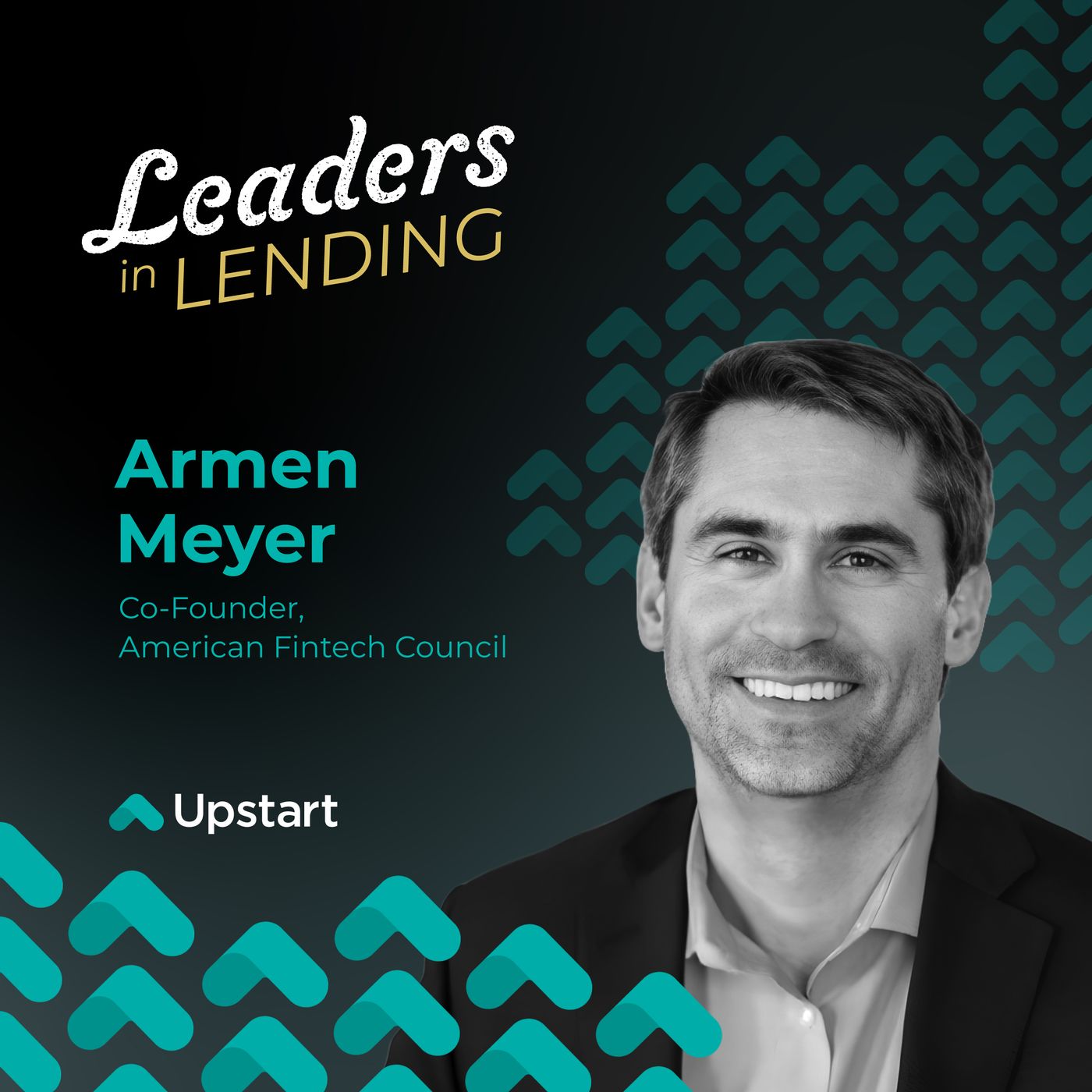
In today’s episode, host Matt Snow welcomes Armen Meyer, Co-founder of the American Fintech Council, to explore the world of open banking. Together, they discuss the opportunities and challenges this transformation brings, from balancing innovation with preventing monopolies to what’s next for consumer protection and data privacy.
Armen also shares some key post-election insights, exploring how recent political shifts may impact financial regulations, CFPB oversight, and potential rule changes that could shape the future of the industry.
Join us as we discuss:
- The role of balanced regulation in fostering innovation in financial services.
- How open banking promotes transparency, and the challenges smaller banks face.
- Key political and legal developments that could influence fintech regulations and the CFPB moving forward.
0:02 You're listening to Leaders in Lending from Upstart, a podcast dedicated to helping consumer lenders grow their programs and improve their product offerings. Each week, here, decision makers in the finance industry offer insights into the future of the lending industry, best practices around digital transformation, and more. Let's get into the show. Hello, welcome to another episode of Leaders in Lending. I'm your hopes this week met Snow Join again by Arman Meyer. Arman, good to see you again, Welcome back. Thanks having back. I'm honored to be back three days after an election that was wide open, so I hope there are many curve balls in this conversation. I'm looking forward to it.
0:44 I know it's funny it is Friday, so you know, the election just a few days ago. The last time we spoke was around the CFPB and challenge to their existence and funding, and a lot's changed even since then. You know, we've been keeping in touch thinking about open banking, which we'll get into. But you know, with the election, as it tends to do, it changes the perspective on a lot of things. So I think we got a lot of ground to cover. But maybe why don't you start we didn't really do a proper introduction to the audience last time. Why didn't you give a little bit of your background. I think it will help people understand the depth that you bring to a technical and robust conversation like the one we're about to have. Oh that's nice to you. Well, I guess I'm known for my role Lending Club for about six seven years and started the American FINTAD Council to our current audience.
1:31 But before that, I had a role at PwC where I was kind of guy who was to analyze these election outcomes for our large bank clients and kind of put in perspective like what could happen. In fact, I actually just read the one we did back in twenty sixteen when Trump went the first time. Good news. Not much relevant today except for a couple of points, So not much revegetation. But I think some of that might be helpless conversations, some of the views of what we saw regulators and new advisors do back then. Before that, I was chief of staff a New York's bank regulator, helped his transition to become the Department of Fancial Services. Left soon thereafter and got a front seat to the financial crisis. During that period, I was kind of doing work for the Governor of New York when the crisis hit, and started doing a lot more work in fancial services to see what we could do as a state to make regulation work right in the future. And before that did have several roles advising congressmen and governors and candidates for office on broader political strategy and policy for a few years. After law school, I was a lawyer for one year in my life and clear that was not my calling. But every now and then it's fun to grab that and use it in conversations like this one year.
2:45 Okay, I've got an eighteen year old looking at colleges now with an eye towards law school. We'll see, you know, he's in an internship right now, and we'll see if he makes it longer than a year where he ends up filming. Happy to talk to him, warn him or depending on everyone has a wrong motivation. I think in the beginning, you don't really know what you're getting into it until they get into it. I should mention that lately, for a year now, I've been I left lending call about a year ago, and I've just been advising a lot of companies in gen AI in fintech, and I meet some folks a couple of enture capitalists started to find a few months ago investing in AI foundation models and impact in financial services and fintech space. It's been pretty fun year. And have my own consulting for now focusing on financial health outcomes. Have a few clients who are really interested in kind of bulletproofing products and that's been a reallyjoying thing to be able to do as well, and very relevant to changing regulations. I think height you approach those clients and conversations.
3:42 Yeah, absolutely, and AI certainly, you know in the news a lot lately and a fun topic to dig into. But I've been surprised, you know, open banking maybe not quite as much, but it seems to be trending and getting a lot more airtime lately as much as AI, especially in financial services, which made me go back and do a little bit of like history researching and reminiscing because I was also actually at a bank during the Great Financial Crisis, and a little bit of like PTSD going back through and reliving some of those as I was thinking about open banking, and you know, the dot Frank acted really the genesis of a lot of these you know, ten fifteen years ago and thinking about that, you know, hundreds of pages of regulation, Like why do you think it took so long to even today, you know, November of twenty twenty four, fifteen years later, to get to any kind of a conclusion or i hate to say resolution now that we've had an election and things are likely to change again, but you know what took so long for that piece of the bill to actually come to some kind of anion.
4:50 And if you believe it, there were a couple others this year that got finalized. So this this this past couple of years that also took a long time. Well, first of all, DoD Frank was huge or bazillion regulations, and from my time at PwC to my time at Lending Club, we were wondering why is it taking so long? And like one reason, of course is the obvious. You change administrations, things change, things get dropped. That really did delay a lot of dot rank implementation. You also had quite a anti regulatory bend. In fact, you had under for example, the CFPB, which we'll probably get into as we talked about ten thirty three and open banking take backs and regulations as opposed to promulgating regulations. So you definitely had not just changing, you had an anti regulatory environment.
5:36 But first and foremost is open banking was not the issue of the day coming out of the crisis. Commut of crisis something we talked about last time the mortgage market had blown up. How do we fix that? What's the new way to create an infrastructure so we don't have that again? Other types of regulation. What's a way of creating less asymmetry information between bank and customer said, the customer knows they're doing. And then other tide of regulation, how do we as simply ban conduct? We don't like those regulations got a front seat open banking. I would put in the infrastructure, but it wasn't about the mortgage, right, this is like the latest infrastructure regulation. Great to have, was not a priority. But glad we finally got there.
6:22 Yeah, I'm glad you said that because I again, like I was doing a lot of research and I was having a hard time finding like how that even made it into a part of Dodd Frank or you think about in the transparency or separation of banking activities, Capital requirements, all those things that were tied much more to the issue at the day credit quality, and you know, being much more focused on those disciplines. What do you think led it to being a part of that? Like what were they trying to solve? It doesn't seem like there was a lack of competition that led to these issues in the banking industry or like consumers didn't have that much of a lack of choice. Is that is that something that's become more of an issue today, that is finally becoming a priority or was that an issue then and.
7:06 Just maybe wasn't as high of a need to think about. You're straining my memory, but I do think a lot of actually directing Troper's reddick is reminding me that I think some of the initial ideas in ten thirty three, and I believe it's ten thirty four. I know it's ten thirty four. Section B perhaps is really about the consumer. So it's a consumer protection regulation in my three buckets, as well as an infrastructure regulation. But the consumer aspect probably drove it in that the consumer shouldn't have to pay to know about him or herself. And ten thirty four B has been implanted by a CFPB, not as a formal rule, and ten thirty three kind of follows that.
7:49 But I think in time, as tech emerged, ten thirty three became a more important thing as we saw fintech evolving and used the APIs. So it did, and I'm almost feeding into the lawsuit against it, which we get too, Laida. I think the priority did change a little bit over time, but I do think both are in scope and both are very important. Yeah, have you seen any companies like try to fill this space ahead of the regulation, Like aren't some of the bigger banks doing this already? Or you talk about API enablement, like aren't companies coming in to fill this gap and give the consumer some of that transparency? Like do we need this kind of a regulation? I love the do we need a question? Because it is really interesting because other markets did have the privacy had to lead away, but we found in the US is first you had. Of course the screen scraping made is that the safest way or smartest way of doing this, And of course screen scraping does have not just data issues, which is for this comedy is probably most important thing where it's not always accurate. You can't always get it right.
8:55 But two, you have, of course the idea of now given your crunch to the third party, it's going to sit there, and more issues of fraud and an intrusion in some data. But second, even on the API front, even when you're not doing screen scraping, APIs are not always reliable. You have to invest in an API. And part of the reason we're here today is this API technology and the ability to protect your API is way better than I probably was way back then. And then two, even with APIs that are robust, and a lot of times APIs are weird rules like is the data conversation the same on both sides? Is the API always available?
9:40 Is it always functioning because it's well run? These are all the techniclogies that have gotten a way of even a non screen scraping world where Plaid and others went from screen scraping to actually going API based, and it still wasn't solving the problem if we actually want real good data on demand with the accuracy, so we The final one is everyone in the pool. Like you have the APIs, you have the screen scraping, but then who's playing? And then a lot of banks are now being encouraged to jump into this pool of sharing data, not as many as originally intended. Some have been carved out the smaller ones. But I think those are some of the three issues that this rule trying to address.
10:24 Gotcha, you said a word that's jumped out to me and maybe to some of our other listeners who are on the industry side, you know, working at banks and credit unions invest like do you think this wouldn't they have already done this today, like if it was cheap or easy or accessible, Like is this going to require a lot of smaller mid sized banks to spend money that you know, maybe they don't have prioritized or how do they even think about like an investment in this space to be able to accommodate this. Well, we started off talking about generally I for one second and we talked about the last time, the data is more important than you got to have data before we can analyze something. See every foundational model. And I don't want to dismiss concerns on getting your API at the snuff or making its work or liability if things don't work. But the future is data and the data can't just sit in six big banks, because if it does we're all kind of screwed and that's the end of innovation. So there is a price to pay for innovation and a competitive marketplace. This is the price. But I will say give a CFPE credit. The implementation timeline is long. It goes all the way at twenty thirty.
11:43 The smallest banks eight fifty million in assets in under are not included. I don't think a bank below ten billion has to do anything for at least a couple of years. And to our where we started, the tech is better and it's not like there's a random API provider. It's like this, this is a core provided thing. Now I'm not saying is the easier perfect I'm just saying that, like tech has moved us forward in a way and the need and we've seen the benefit sharing data on full display, and to squelch that is the wrong move, and to empower it is the right move. And there is a cost. But I'm glad to see that some banks have the options to day out of it. I think some people would be returnalists and say, oh, everyone should be in it because it's good for the consumer. Well, the consumers can move that, and that consumer moving is not easy, but we don't have to treat all banks the same.
12:36 Yeah, that's a good point. And I've been trying to think of other like similar instances of this in the past, like maybe seacoil requirements. Can you think about other things where like there have been time to move through and kind of catch up or I. Think a lot of the implantation regimes have been focused on bank size, or I mean even the other regulation that I mentioned, there's other regulations that just came out see section ten seventy one. What's ten seventy one. It's small business lending transparency rulemaking. That also took a long, long, long long time, probably because small business lending is really not a core CFPD competency and it also was not irrelevant to the crisis, but a few were saying it was foundational or highly exacerbating of the crisis, so that also got de prioritized. And you do see major timelages and implementation there. And I think that's the right approach.
13:32 All banks are not created equal, and if the goal the irony is the goal of open banking, and ten seventy one is to share data so that people get a better sense of who was provided the best product or can easily go to the best product. It would be funny, indeed, to have those same rules impost enormous costs and smaller players and wipe them out when we're trying to promote competition here. So we should have implementation timelines to help them out a little bit. Yeah, well, I was thinking about that too, Like what what do you think do you have any predictions on what may happen as a result of this, Like do you think there will be more M and A activity, Like will there'll be some that just can't or don't want to compete in the space and you know, the bigger players will will gobble them up, or you know, in the middle of the market, more consolidation, you know, other tech companies fill this need, or like what do you see as a maybe a reactive I.
14:24 Think the open banking driver on M and A is not significant in your term compared to other factors. And the number one factor, which I'm sure we'll get to, is the change that's going to occur the fd I C and E OCCU and then more broadly at the FTC for M and A activity and others are declining interest rates and more of a sense of the recession is not coming. If that's true, that's the way it looks. So I think these factors will be much more drive. The other thing on open banking to have it that's come up is we'll open banking drive a M and A or will in fact make the financial system less stable because open banking course does two things. One is, hey, I'm a customer. I'm at pick your biggest bank, my old employer, lending Club or your employer upstart wants to make a loan to the customer, but needs that data at JPM or whatever to help make that loan because of the help reduce the cost of credit. That's like the class example, and the customer should be allowed to give that data to do that. But the other one that has come up in terms of could it create bank runs is lending Club bank I think has a great apy compared to a JPM, And so why don't people now take their data which we don't want to
15:55 trap at JPM and bring it to another bank to get a better ape, maybe a better experience overall. Is it a positor or maybe better products? Something have said similarly like will that really changed the world? And I'm kind of like not really, not really. There's so many ways in which there are tendrils in bank deposits that's too hard to move. You got to reset up your VENMO payments. Open banking solves some of those, but not enough, and we're not going to see massive runs because of your ability to move data. I think apys drive it more and marketing than does your ability to move data. Yeah, I think that's right, and maybe not to zoom out too far. But then, you know, what do you think consumers are looking for from a bank today? Is it a one stop shop? Is it someone maybe like I can trust with a core relationship, and then open banking allows me to pick and choose more point solutions.
16:47 Like you said, for lending, I'm going to go to Upstart or Lending Club for uh, you know, an auto loan, or for a brokerage account, I'll go somewhere else. You know, what, what does it mean like in the financial services, who's going to win the space or a consumer? Well, I think you're now getting at my biggest criticism of the rule, because the winner is the one that can actually hold on to the data the longest and provide those services, and the rule in some respects moves us backward. It's in terms of competition, So the rule does the right thing. The rule does is we discussed you can now use the API and you can go to lending Club for your point solution or your Upstart for your point solution if you don't like your bank solution.
17:36 I think the idea that one bank that integrated everything is as far off. We haven't seen the big banks really innovate enough that that future is near term. What we have seen is Upstart, Lighting Club and others come in lower the cost of credit, and seeing the big banks follow by creating their own personal loans and not even doing as well Seagull and Sacks failing to be a personal loan player. We've also seen APIs go up because of fintech. We've also seen overdraft fees go down because of fintech. So I don't see a world where you can empower just a few banks. What I worry though, is that this rule, although in some ways makes it better to not rely on a few banks, it also makes it worse. How does it make it worse? Two ways. One, when a customer gives their data to an Upstart or a lending club to provide a better loan. Upstart or lending Club want to hold on to that initial data because their model depends on knowing where the customers started and what data had in order to continue to improve that model over time so that that same great product can be offered someone else in the future. Initially, the rule said, sorry, Upstart, Sorry lending Club, you can't. You can't hold on to it. You can use it once, but it's a secondary use that's banned to hold on to it for product improvement. Luckily, the CFP came to its census, so that part was obviated in its final rulemaking.
19:08 What was not obviated, which I think will be a competitors advantage for the FinTechs that have done so much, is one what about holding that data to create new products? And by the way, clearly as a privacy concern, I get it, you get it. But there is this thing called de identification, which is with the CFPP itself advocated for and it's ten seventy one rule making and said, thanks, don't worry, no one's going to know unless we tell them who it is because it's the identified. But for some unknown reason, in ten thirty three that's not good enough. We're too worried about lending Club or Upstart and having that data, even if it's the identified for the purpose of new products, new research. Now road Chopper did say researchers for nonprofit in the future can do that, but I don't think that's not going nearly far enough, and I worry about a world we're only JPM can use its data for that purpose, so I hope, I hope we can think of some ways of fixing that down the road. The second warkness that's a look concerning is cross sell. I know cross sell is a bad world word, but let's be honest, the fintech environment selling into consumers has made fan your service a lot better. Sure, there's some bad actors. We have a trade associated on AFC we talked about before to help separate good from bad.
20:35 We'll keep doing that work. But if we're so worried that Upstart lending Club are going to use that data to see, Hey, actually, you JPM customer, you are getting screwed on your annual percent yield or you're getting screwed on your auto loan. I know you came to us for our personal loan, but we can do more for you, and we're so worried about that, then we're just in the world where we're just going to shoot spam inboxes to try to get customers, and the idea of tailoring products to a customer is out, and we're still in the world of tailing a product to what we want to sell, which should be out and unfortunate. I feel like this rule is going to make it harder to do adequate customer analysis to get them the best products that they need.
21:19 Upstart partners with banks and credit unions to grow households and expand consumer lending. Through its leading AI lending platform. Upstart powered banks and credit unions leverage AI to offer higher approval rates and experience lower loss rates while simultaneously delivering the exceptional digital first lending experience that consumers demand. Whether you're looking to grow and enhance your existing personal and auto lending programs or you're just getting started, Upstart can help. Upstart offers an end to end solution that can help you find more credit worthy borrowers within your risk profile. With all digital underwriting, verification, loan closing, and servicing. It's all possible with Upstart in your corner. Learn more about finding new borrowers, enhancing your critic decisioning process, and growing your business by visiting upstart dot com slash lenders.
22:07 That's upstart dot com slash lenders. There could be a couple of things that help that though, right that we talked about maybe offline, and one of them a little faster than the other, one being like the idea of a standard setter, so Plaid being the first I think in the gate to do that. So we talked about like the American Fintech Council, or the idea of a group or a company coming in to set a standard. Like let's come together as an industry and try to solve this problem versus you know, regulators and policymakers who they're good at getting elected and raising funds and sometimes legislative but not always you know, as in the weeds and the details of our industry as we are. So you know, let's like try to come up with the answers as a team.
22:49 And an answer there, Matt, Honestly, I think I think AFC is well positioned and others would be helpful as well, is to ask CFP. There there are goods and bads about change administration and take depending on perspective. A good from my perspective on this rule is this rule may not be a closed deal. We can go in there and say, hey, if we're so worried about secondary use of data, because you're worried about the spamming using that data, you're worrying about learning about by the client, the customer, you can actually raise prices. We have TILA that defines pricing. We have apy defined. Why don't you just say, unless it's a lower price product, you can't offer it. If it is lower price, you can. And there are compromises here to make the secondary use of data so powerful if we need to compromise. So I do hope we'll get a second day in court on that issue, because I just I don't want JPM and Wells and a few banks being the only ones who can do that, because either they won't or if they do do it, they won't do it. As well as having competive market.
24:01 So to come back to your question, God, I hope we don't end up at one stop shops. And just don't believe. I don't believe in government controlling everything. I don't believe it. Two corporates patrolling everything. Yeah, I agree with you on that, and you hit on the other thing I was going to mention is like, we'll probably see this grind through the court system for some time too, right, because I think there was a note in there, an exception to kind of protect IP or things otherwise protected under law. So, you know, I imagine we'll see some companies trying to protect you know, data that, like you said, they're using for underwriting other products that they feel is pretty proproprietary or critical to their business, that maybe slows down some of the use of this as well. That's right, we've were remiss if we don't mention the case that was filed the day of where net the big banks have decided this is not good for them, even though I've made arguments that entrenched their monopolies. I understand I pitsioned that it's ultimately better for FinTechs. This rule is better for competition, no rule for sure, And they aren't making arguments that we've heard before in other contexts about everything you just said AD fraud, AD, cybersecurity, AD.
25:08 We don't trust those FinTechs, and so we'll see how it plays out. There's no way to know in my opinion, absent being some great litigation analysts, because we've seen what the courts can do and they know how to pick their forums. They're not dumb. So we'll see what happens. But what I do think, you know Trump is president, will be president. The CFP director will change, maybe not day one, but close to it. The world is different. Why do I say close to day one because there's a Supreme Court case in twenty twenty that ends the idea that the director is a five year term and it's now serves the will and president. As we discussed in the last podcast, that's a bad thing for the world.
25:53 In my opinion, I do like the idea of agencies having to be a little more measured and keeping old yards in for longer. I think that serves our stability better. But it is what it is, so we'll see a shift there quite quickly, and there will be an opportunity to change the rule as needed. I don't know if we take in if this litigation does not succeed CFP, we make a choice do we defendse litigation or not. That will be a choice. They can choose not to. But I don't think this rule is like one of these rules that when we go through the future CFPV in a few minutes. This is not the rule that a CFPB is like gonna blow up under Trump. This is not probably number one in my opinion.
26:37 Yeah, yeah, And maybe that's a good segue. Like of the other agencies, where do you want to go next? Now, Like you said, we're starting to get news of Trump and his transition team and cabinet and then see who he's going to start selecting in some of these roles like what what are some of the things you're looking for or you know, thinking about the changes that could come. Yeah, let's do the other broadly, and then it might be to come out to the CFPP on like CFP what they're going to be thinking the next few months and what they reprobably gonna think of then they come in, but more broadly on regulation and impacts all of us. I think I am we're going to see quick transition out of CFPB an EOCC the OCC again normally a five year term in this case not because controller suit was never confirmed he was an actor. So those are been the two easiest switches for Trump. On the other end is the FED, where nothing's changing for years, a couple of years, because the FED is very structured, board by board member long terms. One nuance that could be interesting there is what happens to Mike bar the Democratic vice share for supervision. Now, Trump had in his vice share of supervision Ranny Corals and he resigned in his due time for policy or with our personal reasons. He was not forced out. He was around for about a year.
28:01 I'm sure there was some behind the scenes stuff, but there wasn't a big kerfuffle in terms of rules and those other agencies. I think, I think that we'll get back to see if being second, but I think the bank partner model is the one we all care about the most. So obviously, when you change these regimes, you're looking at three things, broadly, rulemaking, enforcement and supervision at the FDIC and the OCC. If you talk to the bank partners you may know this. I'm sure all the vast banks know this. The supervisors have been quite challenging. Some of the rulemakings have that are pending have been quite challenging. So slowly, slowly things will calm down. But it's not an overnight thing. Because we've heard about the supervisors.
28:45 These don't happen overnight. So I think FDIC occ relief. MARTI go to go. When you get to supervisor level, change is much more slow. When you get to enforcement and rule making, change is much more quick, right because these are things that are or top of the house, less about implementation. So I have the son coming around here, so we're going to see a lot of action and the rule making side. So at the FD I see there's this rulemaking on how we deal with BASS banks and reconciling of data, especially as a BASS. I guess we're calling them API convent rather intermediaries these days. With those that's that's that's an issue that could go away.
29:26 Broken deposits impacts the bank BASS model. I won't go into details that could go away. Probably will go away, I would bet. But CFPB we had a lot of interesting rules honestly that are in play that I think if you look one by one at the rules a CFP B that are pending, you'll notice, Wow, except for open banking, no major rule that the industry really had a strong opinion on was finalized in the past five to six months. Why is that? Because this is this thing called the Congressional Review Act and Congress now that it's flipped, most likely in the House as well, we don't know for sure, can do what it did in twenty seventeen and before that in twenty twenty really twenty seventeen, twenty twenty one and just strike down these rules at a pretty easy vote no sen in filibuster. And when you strike it down, it's gone forever. You can't under the rules, if it's reasonably related, do another issuance on that topic. So there's a reason why there haven't been a lot of rule finalizations lately. And happy to go on like what the three big ones are, but I've been talking for a long time.
30:41 It'd be interesting because I would I would like to know where you think those are. I mean, if the you know, the markets are any indication people are expecting that to happen pretty quickly. You know, we saw the morning after the election big banks, technology, fintech companies seem to get a bit of a boost from that per step that a Republican controlled administration from top to bottom is going to lead to a lot of more flexibility or openness for those companies in those sectors to operate. I think a little more freely. Yeah, I mean, I think starting with the rules and the one that most ropes in a market change. We'll get to the penning ones in a second, but a finalized one was the credit card late fuel, basically saying you used to be a charge three to two bus under KILA for a late for lateness on repaying a credit card. Now you can only charge eight. You saw those stocks go up pretty big of those companies because that rule has been mired in the courts, and now the CFPB can choose not to defend it or to later repeal it. Repelling is hard, and that rule was final before the CRA window, so that's not something Congress is going to be able to Congressional Review Act. So my gut is that the way of the courts, the courts strike that down CFP doesn't defend. In the next bucket are the ones where the cfpv had to have had some intentionality of not finalizing. The big three there
32:15 which have been proposed over the past year is number one. I mean, the CFP has made no bones about it. They're interesting in big tech, so what did they do? They had that rule that allows them to supervise big tech companies in the payment space, they use their payment hook this thing called a large infestment rule, and then they can supervise the big tech companies. And that was not finalized. That's going to be the most intriguing one to see what they choose to do. If they choose to finalize it, then it can get CRA and they lose that. As the statue is written for a long time, not forever, there are ways around it. We don't know. That's unchartered territory for the most part. So what are they going to do. They're probably thinking, are there eno frs who won't CRA this is big tech still not popping on both sides that we can get away without and finalize this thing. The other one, I think you're easier calls for the CFPD. The other two are over draft fees proposed this year but never finalized. I don't think they're going to finalize it. I don't see ours defending that in CRA. A rule like that is like the credit card rule and draws the ire of the industry, so that one's going to get I think not finalized about betting. And the other one is the EWA rule, which only came out a couple months ago. That was done as a proposed rule, although they could have done it as a final interpretive rule. I'll get to that in the second. And they chose to do it as
33:46 a proposed one, probably to not make it cra able because they only got it out in July. I don't know for sure. Maybe we're thinking it, but these are very smart people, so maybe they have a smarter reason why I'm coming up with frankly, but that's my thing. So the e w A one. They got to make a call, are we finalizing it or not? Because in their view, California's rule isn't good enough to write the market. They made that clear in public statements. They even wrote a comment to California Italian them make it stronger, and the California did it. So now they did their own and they got to make a tough call here. So those are three calls. I think there are those. Those are the three main calls. I'm so sorry. Earned wage, access to the course, that industry, and fintech. That's some love and some hate. If you love it, you view it as a way of getting your your wage the second you earned it. And I think there's a lot of compelling reasons of you that way, like why do we have an arbitrary two week, one month cycle before getting paid now? Not ew Not every e w A is alike, just like not every personal lender is alike.
34:51 So the rules may be needed for some EWA players. So this is the this is the that that it looks more like payday, and that's that's the debate on both sides. But yeah, so that's a big one. Now BNPL buy now, pay later. I'll stop after this fifth one. That one was finalized probably before the CRA window. On CR you can only go back a certain amount in time and grab it. You have sixty days legislative. Takes a long time to calculate that because what's the legislative day. You don't know it until you got it. Ditto going forward, then you have a certain amount of time for Congress to go and repeal the thing. So I think the MPL is out of the window, and frankly we'll be NPL get repealed or destroyed in court maybe, But I don't view as the top priority.
35:37 Well, I know you mentioned like you know which ones you might bet on. I have to go and check some of these new like betting markets and see if they're out there, what the odds are like. If you agree with the the odds and makers on some of these, if you can actually place. Bets on on that that happening. It'd be fun if there was a rule by a rule. I mean, it's a terrible it's a terrible wing to joke about and to gamble on, because it's really important. Right, going back to our earlier conversation. Last we spoke, I was saying we shouldn't blow up the CFPP and all its rules because serious companies invest in the rules of the road and they want to be around a long time, and they want what's best of our customers. And the major problem in life is for these companies, if rules can just go away, you can't invest and we can't grow our economy the right way. Moreover, fly by nighters come in and there are ways to make profits in a short run taking advantage of these gaps. And what is the incentive of being a good actor. But it good doesn't mean like I'm a great guy. Good means I want to last and be a good business for a long time and really grow this economy and provide a real service. So it's selfish too, but we want to empower that kind of that's the selfishness. Capitalism wants to empower, not the short term, not the taking advance, abdicatory gaps, whether it's a bad protection or an asymmetry of information with the customers and know what's going on.
37:07 So I don't want a lot of these rules going down. And I do worry that we're going to have a replay a bit of the CFP b blow up conversation we had, where we know the CFP is now constitution on appropriations grounds, but now given all the litigation and all the paths to litigate in the fifth circuit and in other circuits, you can see all these rules getting attacked by the most by the actors have the most to benefit from not having rules. And I don't want to stay at race to the bottom, and I can just hope that the CFPP will defend its own rules because a lot of these rules are good for capitalism, and we don't need the short term sugar high for a few starts ecommonly we need we need like good growth, which we can get without getting rid of these rules.
37:54 I worry about that, similar with invevement. Enforcement too clear. Rules to be enforced the US are not rules and supervision. You got to supervise these things. Now the enforcement will see a lot less of some of which will be good. Actually is where you just you're surprised, right, you're surprised by the standard business thing called U dad And we don't like surprises. And I know this. See if we try to do a better job using supervisor highlights publishing things to their credit, there were still surprises. And I think it's not will be good for industry. Some of that is good for the world, if some of it is not. Yeah, agree, And I think to your point, like there will always be bad actors, it's good to have that minimum set so that we can all play by the same transparent, open, agreed upon set of rules. There's all these things you know, with or without rules, like it adds costs to the end consumer, right, Like if you let bad actors play, like you said, people will exploit them.
38:56 They will take advantage, they will get their profits, and they will run away and they'll be on the next thing they can exploit. Regulation. Setting the rules and enforcing the rules is expensive, so we have to choose the least of the evils and try to figure out a way to create a system that allows think you said it well both you know, the short term growth and innovation, but also the sustainable businesses that are going to stick around as well. How do we satisfy all of those It's difficult. And elections are a decision on how you bias that line, because there is no perfect answer, like I'm sitting here to plant open banking, but someone else with an equally valid point of view isn't. And it's going to be decided in a way by the election because obviously we will now have more of a bend on these rules for more consumer take on the burden a front themselves.
39:47 But also there will be some benefits the industry and growth for sure. But how you calibrate that is what the electoral process resolves, and so we're going to see a shift in that debate for quite a while. I hope and I wish we had more five year structures. Having the FDIC is right. I hope Marty's days, you know what I mean. I hope that. I didn't like when mc williams had to leave. I'm glad the FED is going to be resolute. I hope Mike bar just like I hoped Randy Corals would fill out his term. Those are good things because we need that actual stability in the system to avoid some whiplash. And I hope the CFPB and other agencies defend their long established rules and don't let someone save reactors get their way on some of this stuff.
40:35 Totally agree well, Arman, I always feel like smarter coming into conversations with you, because I always want to prepare and like think about things a little deeper, and then I'd end them like realizing I've got a lot more to learn. So you always I always enjoy our conversations in a way that you know it gives me even more to go now research and think about and figure out the next thing that we can talk about. But is there anything else that you want to cover as you kind of wrap here and think about, you know, the election and what's what's changing with all the rulemaking going on. I just think next time, because what you said was so nice and way too generous, that I should ask you the questions, because I'm sure the level I'd be humbled would be more than more than you claim to be.
41:17 So I look forward to. That's the best part about being the host. I get to ask most of the questions, so that's the easier part. I'm glad back. I enjoys conversations and going back to open banking. I do hope there's an opportunity to make the world better. I'm really glad and commend to see it. FPB for getting it done. It was a long time to come in, but I strongly believe it can be better for fintech, better for innovation, and we gotta we have to be anti monopoly and we have to be anti big big government. We have to be moderate on both these things. And I want to see some more moderation. And let's hope this election, and it might be a false hope, is not yet another stone in the extremism that we've seen in our society. Is not good for any of us. And I'm still hoping for a day where the moderates can be cool again, and we can only.
42:08 Hope absolutely well. I appreciate you being able to join me on short notice and take advantage of all the activity going on and kind of capture this moment in time, and yeah, maybe we can come back and see our progression towards moderation and see if that's cool again sometime and then your future. Great talking Matt, Thanks Armer, take care. Up Start partners with banks and credit unions to grow households and expand consumer lending through its leading AI lending platform. Upstart powered banks and credit unions leverage AI to offer higher approval rates and experience lower loss rates while simultaneously delivering the exceptional digital first lending experience that consumers demand. Whether you're looking to grow and enhance your existing personal and auto lending programs or you're just getting started, Upstart can help. Upstart offers an end to end solution that can help you find more credit worthy borrowers within risk profile with all digital underwriting, verification, loan closing, and servicing.
43:06 It's all possible with Upstart in your corner. Learn more about finding new borrowers, enhancing your credit decisioning process, and growing your business by visiting upstart dot com slash lenders. That's upstart dot com slash lenders

