Power of Collaboration: Maximizing Efficiency with Fintech Partnerships



Banking has been hit with a whirlwind of technologies in recent years. With growing tech stacks that only continue to increase in complexity, it’s important to pick and choose which tech offers the best solutions.
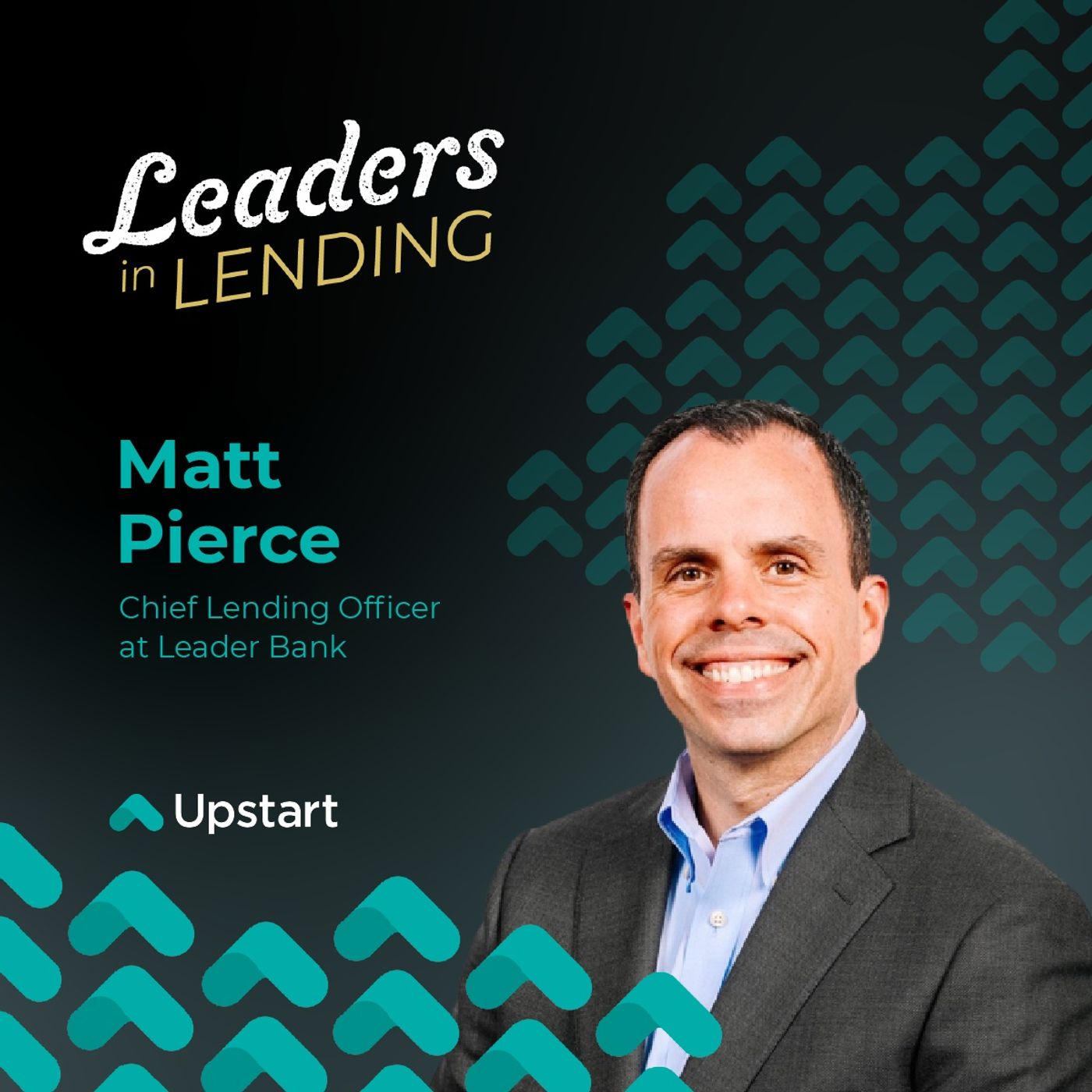
Fostering a strong organizational culture that focuses on understanding your customers to provide them with the right technology is key. Matt Pierce, Chief Lending Officer at Leader Bank, joins the podcast to discuss how to create this culture, the importance of close fintech partnerships, launching and adapting during the pandemic, and much more.
Join us as we discuss:
- Fintech partnerships: the road to efficiency
- Leader Bank’s PPP response and role as a minority depository institution (MDI)
- Culture and communication in banking
0:02 You're listening to Leaders and Lending from Upstart, a podcast dedicated to helping consumer lenders grow their programs and improve their product offerings. Each week, here decision makers in the finance industry offer insights into the future of the lending industry, best practices around digital transformation, and more. Let's get into the show. Welcome to Leaders in Lending. I'm your host, Jeff Kellner. This week's episode features my conversation with Matt Pierce, the chief lending officer at Leader Bank. This is a fascinating conversation to me as Leader Bank has actually built some software and house ultimately with spun out and is being used outside of the bank. That was a fascinating twist on the build by partner discussion. Talked about about how to think about where to build, where to partner. They've also got some deep fintech partnerships with folks like Cansino, where they were very early adopter, so kind of both where do we build when it's helpful, when should we partner or buy when it's not. They've gone really interesting in the cross selling and different kinds of products, including insurance, so I thought that was another interesting area of Avenue kind of how they think strategically about that, and then also talked about their experience during PPP where they actually dove into some of these topics of building workflow to be really quick to adapt, easy to get at, easy to keep up to date with the changing status of that program, which was pretty real time. So I think a really interesting set of experience is quite a bit different than many other institutions. I thought it gives man a really interesting perspective. So please enjoy this conversation with Matt Pierce.
1:30 Welcome to the podcast. Thanks for making the time to join us today. Thank you for having me. Yeah, yeah, I'm excited to talk about this. You guys have some experience in fintech partnerships and also software, which was an interesting part of the conversation when we first caught up. So I kind of wanted you to go through a little bit of that story of things you've built in the bank. It's fine out because it's such a it's such a different story. We hear a lot about build versus by and you know, you know a lot of people on the on the buy or partner side. Any idea of building stuff that not only was useful for you, useflexternally was just such a departure from so I really would love to hear the kind of the more full version of that story. Sure sure so. Uh so we had a bank, being a twenty year old bank, we've always been very technology driven, um, always looking to kind of creating prially solutions for our clients that we see opportunities in the market and probably you might be closer to seven years now, five, five, six, three years ago.
2:23 Um, we saw our need in the in the marketplace for really for the larger landlords that we were helping finance. We started to hear a lot about um questions about compliance through the cand to m scared deposits, whether they would him in it correctly. We do a lot of the mouth by family finance thing. So um, we just started to kay that trend a little bit. UM. Also, as we're located in the Boston market, we decided to see trend where close to a lot of the colleges, a lot of the times we'll get you know, three or four people living in one apartment. There's parents that will go close high lease and they each one to pay their character and decided to become a little bit of an administrative burden of their office or pocket manager. So UH our team UM with the support of our CEO, Gay Tuli and I'm sorry of UH CEO j jail Sulian President Kaytuli, we developed a software called z rent and the Deposit and UH they essentially our act as UH fintech solutions for UH collecting rents from multiple different fuses and also UH the escrow which is a solution UH that helps with all the compliance and reporting for security deposits. And there's two separate platforms UM and they they really have added a lot of benefits and value to UM to those those markets. Really what it is is we developed the software for side with z
3:58 escrow, UH is where the sturre deposits for the large property to come into. And it really gives a nice sub account platform where all the all security positives can be under one household but all has different suff account. It gives the tenant the ability to view where they're security depositives, health, and it gives all the electronic beneits of getting the W nine flow which is sometimes a challenge to be fined out the clients. It has all that technology right embedded in the software. Very very fluid, and it also takes the compliance headache off out of the property manager of the landlord, knowing that Leader Bank will facilitate all the compliance, non contation, all the annual letters that to go out and interest checks that the tendant. All that's taken off the landlord put onto our platform and we handle all of it at no cost as long as they're using Leader Bank as a deposit customer the positive account. So it's a great upsell cross sell for us. Use the rent a similar type of platform where its electronic where um landmload has the four better apartment they can set up through their z rent platform and email all the four tenants or fourth all their parents. However, you know, if it's closed signers involved, they could each put in up individually their information, their banking information. It's secure and
5:30 every month, whether it be through their portal or automatically rent, it paid captured and reported and the positively to the landload account and the landload has a full record of who paid what reconciliation every month, all automated and uh spinach is a great feature that became very common in Boston to have these multiple rent checks um and planiolive one was it's chasing down the checks they only got three out of the four where the fourth one this takes all that off the gable. So depending great glution. And the nice thing about it is that it got to be so popular that we we spun it out of Leader Bank into its own company, and I think a nationwide and a lot of banks across the country, a lot of Boston as well have have now become clients of that bockware and are using it as a cross selling to do their client base to get the positive and obviously clans all the wrong customers. So was that was that something you guys had in mind when you started building? So I think as a company, as a guy, spent a lot of time and companies doing software development like architecting for the things you might build for just me, like I would hack some things together, tie some things with bailing wire, you know, internally, and when you're building something for use by third parties, there is usually like quite a bit more different architecture. You might take, different decisions you might make. So I'm curious that was something that was um, you know, in scope or contemplated when you started building that, or that was just like, hey, this thing's really useful and other people could use it. I just I think initially it was sort of a
7:02 solution that we were going to try to offer our own client base. Um. And as we started to promote it more and more, I think decided to get a little bit more noticeability in the in the marketplaces from other banks or other um, competing institutions that and decided to take it throng own life, if you will. I think that's when the bank isn't spin it out and have it be its own separate company and really try to cross sell and uh and and make it own. So it sort of took its own life. And uh well, I think initially it was just going to be a vehicle that we could offer our client base to make um, you know, add more value to it, uh flop a problem and caxture deposits and obviously um you know, just not a cross all of the service. But um, but yeah, it was a huge demand nation wide. I mean that's what it really was. Um, the Escrow really took I think it took it up to the next level because there's so much escrow services. Yeah, that's just not a typical escrow conference tree deposit. There's ten thirty one xcrow escrow. There's municipalities that have escrow account for various funding. There's attorneys that have various you know for states, and various other function so many different verticals under the escrow umbrella that we could cater to UM and new the escrow with the great platform to deliverage. So ever we use a friendly UM and so I coverage anyone to reach out to the bank to uh learn more about it
8:33 for their their own benefit or you can. Yeah. So second question similar lines, but how do you think about the build by partner discussion. Here's a case where you built which is you know, unique and you know, but you've also have done partnerships with FinTechs, I know even and it's you know, customer for many years. And obviously I've always kind of laughed that the fintech bank partnership is a new thing. I was like, well, the core systems have been around for quite a while and most most of them are essentially fintech companies that that have been you know, purchase software. How do you think about that when do we do something like build a escrow or a z rat that's like unique in the market. When do we partner with someone like it Encino or another player in the fintech space it has capabilities we need. When do we just go buy something off the shelf? How do you how do you kind of think through that question? I mean I guess when UM, you know, when when we decided to evaluate the commercial side of the bank UM and the workflow and seeing we did discuss this developing an internal stopware or internal workflow that could be automated to help with the commercial loan process. UM. At the same time, you start kind of weighing out and it started seeing within the market, like to see if they're the solution out there that the cost benefit, the time that we've got to invest and we have to do it. And in sort of doing that restart just to kind of get idea, we came across the Encino UM and we were one of the early UM blocking you know early uses that they all doing sino ut for ten years and I think we've joined them six plus years ago, so
10:05 they were only you know, three or four years old when we signed onto them. And the love theories I think Encino had was that it was developed and built with commercial lenders helping design it that really understood how a commercial transaction with multiple layers, complexities, guaranteurs, sponsorships, multiple pieces of collateral work and they understood that workflow and we guess we're very impressed with how it operated. And that was the fastest solution. We were growing very fast and the commercial side of the bank at that giving time, and it was it was like a perfect solution that we got on board and sort of solved the pain we were going through growing that bank quickly and and signed on and h and again after about a year of work really getting the system onboarded and again it's it's it's a can be a painful process, just like any change in habit.
11:05 But once the investment everybody a year was made, we really started to see the fruits of our labor and the efficiency of the workflow. And this was all pre pandemic and um I think it was the best solution to solve the need we had at the time. And it's been a long term investment, but we're very happy with the fintech partnership, the enhancements. As the evolution of commercial lending constantly changes and the landscape of banking changers and different parameters such as analytical reporting, pricing, model data. That's all the stuff that commercial lenders. We do it every day, and the SEON make using their program you serve the need. So it's been a great, great parmenter.
11:52 Let me ask you made the comment like it took a while, but then you saw the fruits of your labor. I think was the phrase with you know, efficiency of the workflow. One of the things I've seen from a number of partnerships is a kind of like I want, I want to say poor excuse because that's kind of a mean way to say it, but that sometimes the results don't actually live up to the expectations. And there's a kind of like there's a defining the right partner and there's actually getting this thing deployed in your workflow, people trained and get it taking advantage of it effectively, right, And I feel like many projects fall down on the second part. They may find a great partner, but they don't actually get the most out of it in the end. And I'm curious if you have advice, I'm like, what what you think is useful in making a project successful and actually reaping the rewards of what you see versus finding a partnership and then it kind of like sits on the side or doesn't get used or doesn't actually result in the kind of benefits you're looking for. That's a good question, you know, and we're all all with them in the mindset if if if junk goes in un kind of come out of it. So if you're not fully utilizing it correctly, efficiently, accurately, you're not kind of get the benefit out of it. So, for example, one of our goal old were to have all of our financial due diligence documents, all of our annual financial documents that we collecting customers, all of our legal documents that we collect, any covenant test thing. We wanted all that to be housed on the system.
13:16 So my goal was that when we get audited, like every bank does, that someone can just go on there and all that data will be in there, index correctly labeled, correctly in the correct spots, and believe it or not, that is the has to battle with getting things in the system tiled correctly consistently. That it was a nice organized library if you will, that someone could easily go into and that is just a labor investment in making sure, we had team. We had a team of folks and we still have that team ongoing because it's just an opposing ongoing platform we use. That is their function is to download, upload, title, index these documents that we get documents in every day on deals and that's their primary function. That's one of the primary function is to make sure that's being done to systemly. So when we get audited everything, the worst thing is that can ecking hear from an auditor, we can't find it in the system. Job was driving crazy and it took a couple you know, a couple of years for everything that'll like cycle through as you get data. Right. But now that we're pat that pointing over the hump um, we've had seller remote reviews from independent auditors, internal auditors and really have liked the system, very used, the friendly everything is now organized, consistent. We had a quality control check to make sure that everything that should be there is there. So those are some of
14:46 the um the UM I guess the functionality of the responsibility that we need to have someone a volted fun but because without that, you know, lenders or certain credit analysts may put things in different spots, They may title something a little bit differently, So that's that was a little bit of the profit we want to putting place. It's such a key point because I think so often when we deploy a technology, there's like not a enough for thought or ongoing iteration on how do we use it? How do we what's a name? I mean something that's simple, it's like a naming convention or a foldering mature. Where do we How are we going to use this tool for our workflow?
15:28 So we're all doing it the same way, because what you end up as often is like every small team does it a little bit differently, and then you're trying to well, that's that's what we're dimo avoiding. I can remember sitting in our conference rooms where we all used to come in with our folders of deal right tact resurns or any deals, fiece and all that stuff, and we were trying to get away from that, and we wanted everything to be put into you know, And I remember the first few meetings with the CEO and right, and it's really easy to say, let me just pull up the tax returning Yeah, we can look at it right here. But we remember saying we stopped it one day and we said, we're gonna force ourselves to use it within Encino and find it within And it was painful. Don't get me wrong. I was a lender, so I would I said, lend me to show. I just want to show. But we actually took the time and went through some rederation, then some some pain point.
16:18 Now it's very fluid. Everyone knows internally how it worked where it is, and it's just made it a better program, a better experience. And now we we have a lot of folks in different departments too on boarded onto Encino, so we've integrated it with a lot of different departments or efficiencies, communication notification, right down to accounting to deposit offs. So it's um we rely on it very heavily. Now very cool. But I had two more areas I wanted to dive into. Then the next one I kind of wanted to hit was how you guys responded during the pandemic to the PPP apportunities. I remember talking to a lot of lenders that either availability of CAP through the program, or more importantly than like rapid changing nature of the way it was going to work. What became a challenge of just being able to actually execute you might have demand or desire, but the ability to actually put a system in place and take advantage of that and and serve the community was challenging.
17:15 And I know you guys were pretty big player in PPP, so talk about how you we aandage acts. I think it's a it's a pretty interesting story how you guys actually we're able to console those those needs of the consumers. It was no if it's a good good topic. UM and UM, you know, hats off to our our senior management with the support of the board, you know, really gave us, you know, full, you know, full support to do what we use to do from a technology standpoint to UM to take advantage of the program as best we could for our clients and then open up the door to non bank clients take advantage of and and help them. You know. So really what we did is UM it was we knew we were going to have a high volume A lot of banks did.
17:59 We were on the early ones that we were. We were lucky enough with our key supporting, our software engineers that are on FAT that we were able to develop a workflow for PPP customers, ended all the website in house within if anyone knows that about PPT. The information was being rolled out late hours days before was going live, so we have the ability and to really pivot and have to make a decision quickly, and we were able to develop a whole workflow for pp eldibility a question answered application. Everything was done online of course, and then eventually as we got that off the ground and launched, we took us to the next level and we created technology to help us with the guarantee securing process, which really was the name of the game back then.
18:48 As you were on with the time POC it was only so much money and we needed to have an efficient way to make sure that we were getting guarantee secured and we helped with the help of our IKE department developed a technology along you know and UH and the SBA was great giving us to support them. We needed to help us do that UM and develop the software that we were able to get through a lot more guarantees than we have a wad of Without that technology, UM and without those guarantees, there was no no mull so UM and that was it. That was it the face reality of it, and so we were very We were one of the first lenders we to give a pepe P checkout in Boston. UM. If we google us, there's a picture of myself and the CEO giving out the first check UM and UM. So it was you know really UM. We were signed the nick An Impact right away and we knew that we could turn things around quickly.
19:41 We had pulled in resources from all over the all over the bank, and all over the country actually because we have we have folks working in different areas, training on underwriting, branding, on security and guarantees, customer service. So it was really was a whole bank effort. UM. The technology was key for workflow efficiencies and UH. And then also when it came down to the pigiment process, which was the other side of it, was we had to develop a whole workflow for PPP pigodness, which we had done UM. And again this was all during a pandemic kind so again everything had to be automated. Docky signed he's signing documents UH, and we did. We did it all very quickly and as the program change, because we had everything in house, we get tivot very quickly on strategy. We were one of the few banks in Boston UM that hopened up our doors to non Leader Bank client, and we were doing deals across the country for you know, I did the small I did a seven hundred kifty dollars fifty long I mean up up to the lige of dollar amounts. So we we didn't say no to anyone, even if they didn't have a client. We thought it was our our time and our mission to help anyone and everyone that we could and hopefully in and buying out of it. But at the same time, it was the what we we did. The nice thing about Leader Bank was we became very popular to at the end of the program, folks maybe not don't know what
21:12 MDI. We're considered a minority to pustitution and STA At the end of the program had carved out X amount of millions dollars for MDI related banks that could continue lending PPP dollars when everyone else could. So as the program sided to expire for other banks, were Bank was one out of two players in Boston that had access. And we're still keeping the program open um and so we've got popular very very quickly at the very end because everyone knew that Leader Bank had access to scour and UM and we could have should we could have shut down the program. We could have said, look, you know what we're we've done thousands and thousands and thousands. We didn't. We say it opened right to the very end um. You know, you get keen that's exhausted, working twenty four hours a day, different lemonades a week. Everyone had the picky, but no, we filed through and and end up being really a program and we pick a lot of knights relationship out of it, which is you know, which is of added bonus and loyal following from it.
22:21 I wanted to ask, it's interesting to me that you know, you get two examples here where you kind of built something internally. I think a great example of like focusing those resources on places where the solution and market isn't some people focusing on we got to build our own X rays. Not really you have limited resource focused on where you have can really differentiation with the services done there aren't aren't what you need. But you also seem to have developed a speed to execute or I mean PPP is maybe a hyper example of that, but even around I think in the zert And that's that's interesting because I think many institutions struggle to like committees and oversight, and you know it's like they may have the idea of, hey, we can do this better if we built some software to optimize the PPP, but it would be you know, I worked, I worked a large software companies. Soon they go, oh, we'll have that out in nineteen, in eighteen months and then we'll really be twenty four, and go, I don't have twenty four. I can't.
23:12 Like we explained, we have a lot of different examples for a lot of different uh could be products that we developed or other partnerships that we maybe had partnered with other companies gone how quickly we can execute our part So how do you do it? What's the secret? You know? I think local the digiton making has been key to it UM and that's on across the spectrum on you know, from approving a deal to you know, approving a contract, uh for for a vendor or a fintech that we're trying to humble it but having access the keynest digiton majors um you know, technology has helped with that respect to you know, it's a Friday afternoon and I need to help on a quick zoom call with our CEO and president to approve something it's they're willing and able to and I think that's that's half the battle, is making sure that someone's willing to be accessible even if like if it's odd times.
24:12 UM we do have UM uh we have a great support team that had you know, I always say there's a work life balance, but we have folks that are just very uh goal oriented driven. UM. We have we have a keeam actually that work uh in India for us as well that the you know, related to the bank that helps us a little bit of additional ammunition for app offs of support for threatened past that we're doing so UM and again I'll stay at EREM. During the PTFE program, uh, we had so much volume that we had folks and India operation helping support and underwrite EPT long from the back end as well. As we were sleeping, I would wake up and check my phone and I would see how many loans got processed overnight.
25:04 UM. So it really made us a twenty four hour shop and it still does. UM. So we we've leveraged UM that operation where we can, but at the end of the day, it's multi The thirdre making has really in key access to the key decision makers. UM had made us very effective UM. And I think that separates us and not only in UM, you know, in partnering with FinTechs or other than they're but like even on just on deal making with like loans, and I deleted the answer big loan. I need this Friday afternoon. I need an answer, a very fluid and I think that's where the larger institutions maybe just the different layers or different complexity and their structures, they just they can't move it just not. We want to ask one more question on this, which I think the idea of local decision making to me is makes a lot of sense. You push the decision making down to the like you know, often that person has the most information to make the decision. But I feel like culturally in institutions, it can be hard to get people to accept that because often there's like more risks for having taken you know, it's riskier for you to make the decision than it is to defer up the chain. And I feel like, if you really want to change thestititional behavior, you've got to make it less risky.
26:18 And I'm curious how you do that. How do you get people at lower levels in the area or in distributed places, to actually say it feels safe here, to make a decision, to push forward a little bit, to call the CEO if that's what it takes, or to say yes on this application, if that's what it takes. When you know, I think in many, particularly financial institiutions, there's a hesitancy to embrace even if there's are both who want local decision making, Often the structures in the institution end up saying, well, but yeah, but if you screw up the decisions, you're gonna get a lot of trouble. So it's safe for you not to do that. And I'm curious how you how you get the culture to actually be accepting local decision making and embracing up that as opposed to just I think all the last couple of years we've we've focused on that more because we bank even during the pandemic, we hire the number was we doing during the pandemic in the middle of we were hiring. We had about one hundred and forty people that we hired during the pandemic. So it became, you know, Leader Bank was really grown from our employee base um and what we cluckily we did as senior management was. It was communication with Keith and UH pushing during the pandemic when we were in the office and we started meeting very frequently, if not once twice a week, all senior managers, so we all knew what each other we're doing UM and from our executive management, they were able to clearly share with us what the expectation or the goals were, or the intent was and give some some direction. And I think that allowed all of us to know how to execute and know what had to be escalated or what
27:48 was what we could execute as at our department. That's that's something that we still continue to do. We do now a weekly to senior manage from meeting where CEO, President, all departments share on what's happening in their own interview with proofs, and it gives opportunity for UM UH executive management to share any of their UH updated goals where VID the goals and UM. I think I think that's really helped because without that knowledge of where senior management and executive management want to go, and it's really hot for us on a day to data manage our own victims. UM. Yeah, So knowing some of that data and knowing it so UM consistently every week. It allows us to run much more efficiently. So if we were if we were meeting quarterly like in some to you do a quarterly you know, managers meeting, or you'd have to be checking all the time because things change and you know, especially over the last week in painting, a lot of a lot of things changed and um, you know, a lot of questions wouldn't be getting at. But with us, we were meeting so frequently that um, we were all right on the fingers, are right on the pult with what the bank expectation, the goals were, and where we needed to be un certain deals or certain contracts or or whatnot. So I chalk it up to your communication. And that's something that we've really invested in, not only amongst the senior management level, but christ employee base is trying to make sure that the whole company knows where
29:22 the bank are telling and what the goals are, because that's something way to really move the ship. And as um we've gotten a sword by verge from so many people now outside the state, that's even more important to make sure that the culture is there, make sure folks know what lead a bank is doing, what's happening from the financial helping net to the bank to what the goals of the bank are. And I think that's really been something that we're trying to just to drill home more and more and we're signed to see the benefits of that that we're signed to see all the articles going in the same direction and again and it's been working, so so we've got to continue doing down doubling down on that. Excellent. Well man, man, There's three questions I ask everybody the end of this podcast, and I think we're about the time for that, so you're ready for him. Yeah, here we go. Number one, what's the best piece of career advice you've ever gotten?
30:15 I would say the best career advice that I've I've gotten was to whatever I was doing, master it, master it, be excellent at it. So if that was, for example, my job was to file document, be the best file document price than there was me, clean, organized, deficient. UM. That was one thing and that was early on, even before I got on the bank, and that was he's the best you can at whatever role with it. UM. I will say the second keys you know, advice that someone can give me one time was just focus on the now. You know a lot of times I see in different careers that people are so quickly worry to get to the next step, and it's so focus on the next step the knock. Focus been on the current step of the ring. And believe it or not, the current stupp of the ring is so important to the fundamentals and the foundation of their career. But sometimes they don't even know it. Like the stuff they're gonna learn in that first job, whether it be like a credit analyst one or two or whatever, whatever role you're in, that information you can carry throughout your whole career. But if you if you don't have that lockdown, you're gonna have cracks and your foundation the rector of your career because you didn't really truly have that foundation security.
31:32 And um that's in finance. But that's ah, that's something that's uh and I share that was our team down is the master what you're doing, learn it. Don't worry about the whe The next step is right away. You'll if you'll guess, there will come. But um, just try to and that's h and that could do that's the newer generation sometimes um, but um uh that's a big give avites to all new new credit analysts and new boat summoning echoing Abraham Lincoln. Whatever you're gonna be, be a good one. But the kind of focus on the now and be good at whatever it is you're you're being asked to. It is a simple. But sometimes the best advice is simple. But yeah, not easy. Yeah. Uh.
32:13 Second question, I've got what's the best piece of advice you've gotten or given about the banking the consumer banking space in general. Diversify the verse? Yeah, diverse by and and you know the timing of diversification is key over the last you know, a couple of weeks, what's happening in the in the consum of banking world and and what non fungural bank. Um. But diversification I think is key. And um, you know all the clients that we have, we always talk about their versification. It doesn't mean diversification, Um, I mean you can't still be in the same steca like for example, if you're a real sambassor doesn't mean you can't have more than one building. It's it's sometimes it's um spreading the risk out amongst every type of building or different types of industry streets. So don't have all office, maybe have some multifamily as, some office as some mixed use. Um. That that level of differ replication. And then obviously on liquidity, UM, you always want to have a good good replication. So the versification is key. It's talent um and um and it's really been the name of the game especially and come to serve up in the last couple of weeks. Um. But the reverstivation is always prudent. And even in our side of the world and lending banking, it's still the versification. You know, we don't want to have you know, when it comes to borrowing a borrowing client, we want to have a lot of borrowing clients, not just one big one. You know, we don't. We want to have a lot of the public customer. It's not one big one. So um, the versification all right, And the
33:46 last question, what's one bold prediction for the future. You know, well, I'll answer in two ways. One is on the on the pication. On on the real estate side, I think you know, um, I we like a stickure what we know, so we're sticking to the money that we know well and with that it gives us be able to predict that our assets they're going to be taked mean that we're lending in markets that were we've lent in for years, We know them, we have feet on the ground in those faces. And I get this comfort that where we know our portfolio when our lending practice leaders will be satan thumb um, you know. And I think on the on the flip side of lending is like on on the UM employee side, is that the hybrid workflow or the hybrid UH employee day is the future. UM. I like to think that the old days of corporate America where everyone's in the offers, then it's like five days a week in full days. Um, I've got to come back. I don't think they have a will, and I feel I actually feel bad for a lot of the people that are now entering the corporate world that now we're going to truly experience that. But I think that it's the the way of the world, and I think that we have to embrace that, and we've done a good job of breaking it, but I think if we have to continue to embrace it but also keep in mind trying to make sure that the connectivity of employees and the culture of the bank, they impact. So that's kind of
35:16 I think going to be the new challenge in the future of it's hobbit make sure that the culture across the country they connected and whatnot. There. I appreciate your making the time. This is a lot of fun and I always learn something from the cell. Appreciate it. Help Start partners with banks and credit unions to help grow their consumer loan portfolios and deliver a modern all digital lending experiments. As the average consumer becomes more digitally savvy, it only makes sense that their bank does too. Upstarts AI lending platform uses sophisticated machine learning models to more accurately identify risk and approve more applicants than traditional credit models, which od rates near zero. Upstarts all digital experience reduces manual processing for banks and offers a simple and convenient experience for consumers. Whether you're looking to grow and enhance your existing personal and auto lending programs or you're just getting started, Upstart can help. Upstart offers an end to end solution that can help you find more credit worthy borrowers within your risk profile. With all digital underwriting, onboarding, loan closing, and servicing, it's all possible with Upstart in your corner. Learn more about finding new borrowers, enhancing your credit decisioning process, and growing your business by visiting upstart dot com slash four dash banks. That's upstart dot com slash four dash banks. You've been listening to leaders and lending from Upstart. Make sure you never miss an episode. Subscribe to Leaders in
36:50 Lending in your favorite podcast player using Apple Podcasts. Leave us a quick rating by tapping the number of stars you think the show deserves. Thanks for listening, until next time.

