Reading the Auto & Housing Markets: Inflation & Deflation Trends

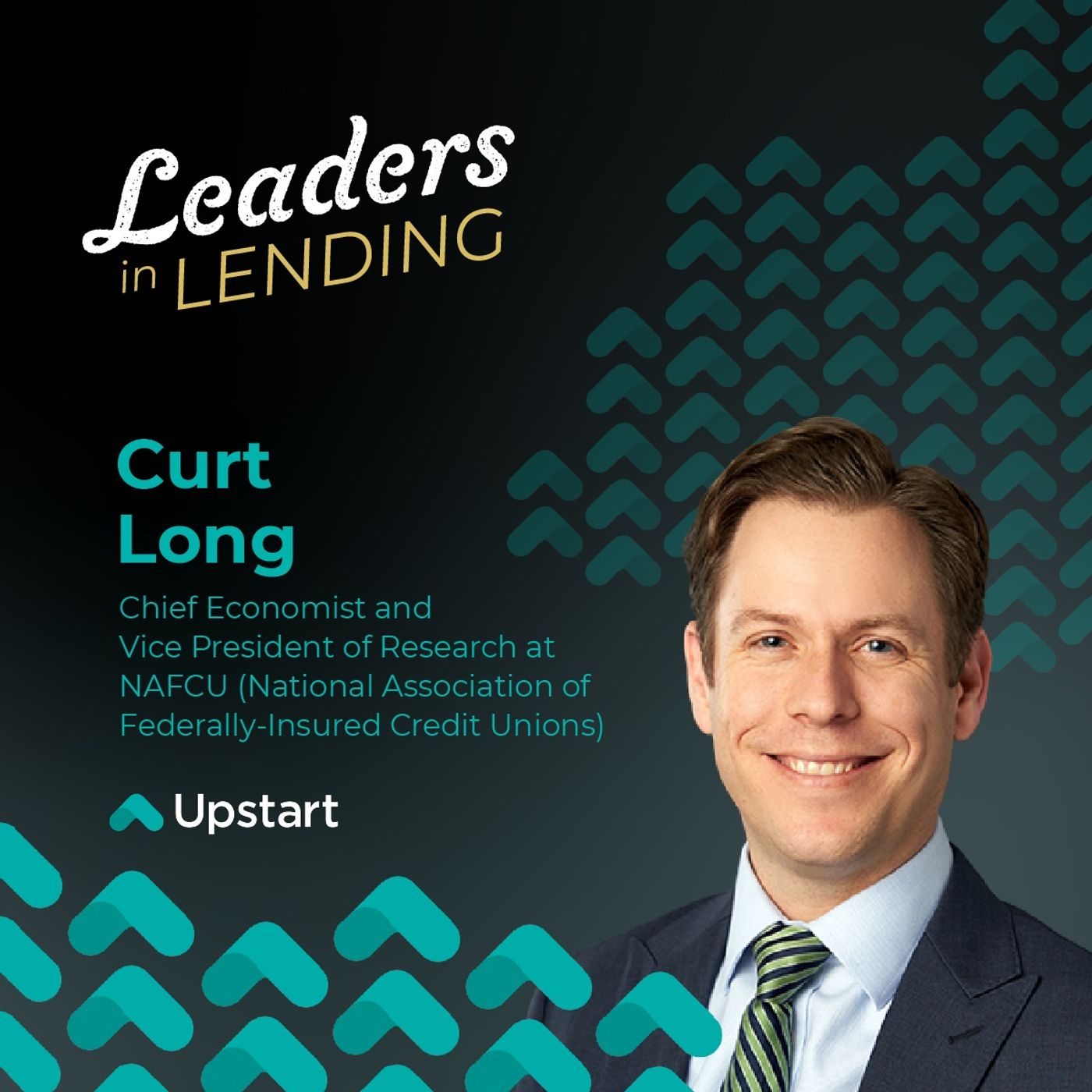


The rising interest rate environment of the first half of 2023 have many fearful recession is on the horizon, but, simultaneously, there are some indicators that inflation is beginning to subside. Curt Long, Chief Economist and Vice President of Research at NAFCU, shares his expectations for the auto and housing markets as well as key economic signals to watch for,
Join us as we discuss:
- Possible deflation ahead for auto and housing
- The Federal Reserve’s approach and the FIA-FIT
- Predictions and how to prepare for what is yet to come
0:02 You're listening to Leaders and Lending from Upstart, a podcast dedicated to helping consumer lenders grow their programs and improve their product offerings. Each week, here decision makers in the finance industry offer insights into the future of the lending industry, best practices around digital transformation, and more. Let's get into the show. Welcome to Leaders in Lending. I'm your host, Jeff Keltner. This week's episode features my conversation with Kurt Long, the chief economist for NAPHEW, the National Association of Federal Credit Unions. This is a great conversation for reference. We recorded it on July eighteenth, because this is a little bit more timely content than many of our many of our podcasts. We really talked about the state of the economy. A recent CPI print actually a little surprising to the positive generally, as we talked through the implications of that for interest rates, for auto markets, for housing markets, where we think the economy is going, and how financial institutions can adapt to the world as we're finding it.
1:02 So it's really interesting conversation. I always love diving into data on the economy and details. It's not an area I follow sometimes as closely as I feel like I should, and so getting to talk to an expert always fun and I think really insightful for anybody thinking about how the state of the economy and the response of the FED maybe impacts the decisions they're making as a financial institution. I think it's a great set of information for that. So please enjoy this conversation with Kurt Long. Kurt, thanks for joining us today on the podcast. I appreciate your making the time. Yeah, excited to join you, Jeff. Now we should give the date we're recording this on July teenth, because I feel like some of the podcasts are kind of evergreen and ones where we talk about economics are maybe a little less so. So maybe i'll start with that caveat and then ask you a version of my standard opening question, which is, like, I think most people didn't grow up dreaming of being in the banking industry when they were kids, and probably not economists at you know, Credit Union Association. So tell me a little bit about your path to where you're at today. Yeah, sure, it's uh, you know, definitely wasn't a straight line to get here. I actually grew up in Texas and uh, first first got my first degree in accounting, So I gave that a shot for a few years and eventually learned what most people learn much earlier than I did, which is that accounting is a fine profession, but not really for me. And so for some reason, I got it in my head that KON was a more might be a more interesting path, and so I went back to school, got a degree in that,
2:34 and then moved out to the Washington, DC area after school, and that's where I hooked up with the credit union credit union movement. Love it. And how long have you been in the credit union movement? Then, yeah, it's been about ten years, so join NAFQ. Yeah, right after the financial crisis. So it's been a you know, interesting, uh kind of an interest interesting business cycle to follow over that over that span. Yeah. So this is I find like in somebody's the most fun kind of interview, and Someone's the hardest for me to prepare for because you never really know what you want to talk about until the day off, because the ground keeps shifting underneath your feet. And I think the thing on most people's minds right now. The latest bit of data was the latest CPI print, which came out recently and was you know, I think pretty positive over all. What can you give me your take on what we learned from that and how people are reacting to the kind of the latest set of inflation data. Yeah, I think it was a really positive report. Positive in the sense that it seemed like the inflation number was nice and nice and low, right where we want it. And in particular, when you got under the hood, we saw some real deflationary trends kind of developing in areas where we've been expecting them.
3:52 So two in particular, one being automobiles, and so you know, autos were obviously a big source of inflation the rite up, and then now we've sort of been waiting, knowing that at some point that would probably reverse course. We've gotten I think just today actually we got new data on auto production. And now we've had three months in a row of much better numbers on the production side than what we've been getting. I think actually June, the June number was down a little bit, but still roughly in line with where we were pre COVID. So you know, there's still a pretty big deficit in terms of the number of autos that are still missing from you know, what didn't get produced in the last couple of years, but I think production is improving. As that happens, you're going to start to see some of the air taken out of, you know, some of these car prices, both on the new and the used side. The use side actually is where we've seen a ton of inflation just because there haven't been any new vehicles to new vehicles to buy. So so that's that's one area where we saw you know, much better numbers last month, and hopefully that's a sign of things to come. The other is housing, and housing UM is sort of a similar story we've been waiting and it's sort of by construction. The way that the government statisticians UM develop their estimates of housing inflation, it sort of
5:25 operates at a lag. So what you see happening in the market, you know, when you see rents starting, you know, rents starting to cool down. We've seen that for several months now, but it takes time for that to work its way into the official official stats, and so UM it seemed like we we started to get some of that last month. And the good news is that because it happens on a lag, there's a lot of certainty about what the path forward is on on the housing inflation piece at least, and so I think things are things are looking looking good from that standpoint as well. Interesting. Yeah, certainly, it's always interesting to dive. I always get these takes from our CFO on the very detailed sets of numbers inside of the gross inflation number, and I think there's a lot of a lot of important information and insight in there. I want to dive into each of these areas. You talk about autos and housing and a little bit more depth. What do you think to how sorry the autios will start? There?
6:18 Says to lenders, because one of the things I've heard some concern about it is as prices come down, what does that mean for loan to value in terms of what I underwrote to where I'm going to stand and do I need to be? I mean a lot of people are nervous about lending on autos when prices were high going I mean, the value of that collateral it's probably not going to stay where it's at compared to the prices things we're selling out a year ago. How do you see that playing out and impacting lenders moving forward? Yeah, I think that's a valid concern. I think you here, you've heard a lot about you know, worries about residual values for a while now, and I think especially on the on the lender side, we started to see that maybe middle of last year, starting to sort of pull pull back a little bit. We saw some of that evidence come through from the you know, the FED does this core release survey of senior loan officers, and I think that we saw some evidence of that there. Credit unions too, I think are starting to us starting to get a little bit more conservative in terms of, you know, the amount of lending they're willing to do on the auto side. And I think to the you know, the the inflation numbers kind of feed into this in a sort of a different way as well, which is, you know, in terms of what this means for the rate outlook, a lot of you know, I think a lot of concern when inflation was running really hot. I mean, it's still
7:48 running pretty hot, but maybe when recessionary concerns were higher that rates could come down because of because we were entering a recession, right, so the FED might have to cut rates because growth is negative and so um, maybe there was a rush to the door to get those loans in while while rates were higher. But now as I think some of the uh, some of those inflationary worries have subsided a bit. I think with that, some of the recessionary concerns have subsided to And so I expect, you know, I think the rate outlook, I expect the rates to remain sort of elevated for for for maybe a longer period than maybe some some we're concerned about because I don't think we're gonna I don't think recession is right on our doorstep. Interesting, and the market seems to agree with you, at least judging by the color and the stocks app when I opened my phone. It feels like people are more optimistic about the possibility of a soft landing or avoiding a recession, and they've been historically. Is that? Is that the sense you get from the from the markets generally, that people are optimistic about not only the rate environment, but what, you know, what the economy holds for us for the next period of time. Oh yeah, I think so. I think You've seen this among a lot of economists too, not just the markets. A lot of economists are revising their slushing probabilities too. And yeah, I think you see that play out in both senses. So you know, it'll be
9:20 interesting from where I sit to see how the Federal Reserve deals with that. Um, you know that they have they have a meeting upcoming at the end of July where they're probably going to raise rates again. But now I think the narrative has shifted a bit to where we expected that to be maybe the first amongst several more rate heights, maybe not in succession, but we would still have to get several more on Yeah, But now I think with clear signs that that inflation has started to cool just a bit, maybe the Fed can take it, can be a little bit more patient. They're probably going to raise rates in July, but I suspect, um, the Doves are going to push for you know, they're gonna say, Okay, we'll give you the rate hike for July, but you get a you know, we're gonna hold rate steady in September and then we'll circle back in October and uh and if we don't get a massive you know change from where things seem to be headed right now, I think I think July could be the last rate hike. Wow, I'll put that as your bold prediction for the episode because that's um, that would be interesting certainly not where we thought we would be just a couple of months or even a couple of weeks ago in terms of what the expectations were for the for the rate environment moving forward. Um, how do you see that impacting the housing sector? Because it's interesting there's you know, when when rates go up, all of a sudden, the refi business that a lot of people had been living on from a from a banking
10:50 point of view, from a lending point of view, with like, wow, we can't really refly when as rates go up, there's not a lot of refive business to be had. Um, But it seems like often buyers are waiting for rates to go down to go out and make larger purchases. Do we expect to see that? What do you How do you think the kind of rate environment and the shifts in that impact that the housing sector, both in terms of sales and in terms of the loans that maybe credit unions banks are looking to make and are able to find in the market. Yeah, I think in terms of housing, you know, on the buyer side, I'm not sure mortgage rates have much room to come down here. In the near term, just because you know, one of the things at least weighing modestly on the longer rain at the curve was the idea that a recession might be in the works. And so as those recession probabilities have been sort of reined in, some of those downside concerns are abating. So, you know, here just in the last few weeks, you know, even though I think expectations for the short end of the curve have changed a little bit, we haven't seen that really play out on the long long end as much.
11:58 So um, you know, unfortunately for you know, a lot of credit unions rely heavily on refi activity, but I'm not sure I see a lot of refi originations here, and at least in the near term. Yeah, it didn't feel like we're going to be down to a world where lower rates are driving refined and it's always important to remind people about the longer sweep of history. I talked to. We have some many young people that I talked to, and they they find these rates of you know, they're going, oh my god, rates are so high, and I go, well, I mean two percent and at two and a half percent mortgages. It's not exactly the standard across the sweep of history, and even where we're at now is not really compared to the eighties or not exactly super high interest rates.
12:39 I mean, certainly we've we've experienced much higher rate environments than we're in today, even as the Fed's been raising for a while. Yeah. Talk to your parents, right, they they'll have some good stories about the first mortgage alone they got. Yeah, mortgages that sound more like credit card rates to us these days than than mortgage rights. Um. All right, So that's second. So one other thing I wanted to ask about was how has the environment I think the you know, as we've seen inflationary pressures, the fear of recession, the question was like, how is this going to play out in the performance of credit, particularly consumer credit? Are we going to see deteriorations and credit performance. We've seen bits and pieces of that, but not I don't think a broad sweep of like massive deterioration broadly. How do you think what we're seeing now changes the outlook for what people are expecting from credit performance for existing portfolios over the next period of time. Yeah, I think, you know, at least on the credit union side, we have seen some some you know a bit of an increase in delinquencies, and I think that's consistent with what other lenders are seeing as well. It isn't clear to me, though, that things are going to continue that way. I mean, what we've seen so far is, you know, delinquency and charge off rates sort of come back to where we were entering entering the pandemic more or less. Obviously there was the big drop, uh, you know in the first couple of years after after the onset of the pandemic and things of
14:11 sort of reverse course. But you know, is that just sort of coming back to to equilibrium or is it going to just continue continue to rise. I think, um, you know, my my leaning this is more my gut is I think we're okay. Um. Part of that is just because I've I think I've had a more optimistic view that we can get the soft landing and the economy that maybe others have had um and that that does seem to be the more and more the prevailing view. And so if we can avoid a recession, I mean, you know, unemployment rate is still below four percent, and it's just hard to it's hard to squeeze a lot of you know, credit problems out of economy where so many people are are working and still getting reasonably good, good wage growth. Yeah, I think that makes sense, and I think people also underestimate when they see the kind of rapid deterioration I mean, not massive, but it came pretty quick, and just how big the government stimulus was and how quickly it stopped, and the kind of that was a that was not a sloping curve, that was a big discontinuity in terms of what people had available, and it did kind of push us back to what the world looked like when there wasn't government stimulus or a depressed economy due to a pandemic that was keeping people in their houses and stopping production and stopping services from being delivered and all that. So it feels like something more pre pandemic normal is what we should be looking for. But you know, figures crossed because it's always people always like to connect the dots
15:41 and draw a line, and it certainly points in one direction right now. I'm Margie clip president and CEO of Agricultural Federal Credit Union in Washington, DC. When we wanted to a quiet are more members of personal loans. We knew we needed a partner that allow us to scale quickly and easily. With Upstart, we were able to go live in fifty four days without adding hoodcom and we were able to learn previously under serve our hours with Upstart's model. If you'd like to learn more about our partnership with Upstart, you can read more at upstart dot com, Forward slash Lenders. Thank you, and back to the show. So what's your advice when you're talking to your credit UNI members these days? Like? What are you telling them now? I'm curious how that's changed over the last couple of weeks, because, as I said, we kinda have had some good news at a different time. What's your advice to them on how they're you know, preparing for both? Sometimes it's like am I preparing battening down the hatches for tough times? Or am I ready to start, you know, lining up my opportunities to take advantage of, you know, good times. If I think things are going to be more stable, I want to go out fire. How do I grow?
16:56 How do how do I drive growth? As opposed to how do I limit my exposure to loss? Where are you at and what are you hearing from that in terms of what they're doing to prepare and how you're advising them. Yeah, it's it's interesting. I think as as conditions have changed, I've sort of had to tailor my message, even though you know, we get a lot of stuff wrong. I think I think in general, we've we've sort of been right about how at least the first half of the year would would develop. I think, um, you know, our position was, you know, despite all of the problems and all of the risks, the labor market is so strong right now, and that's going to boothe the economy for long enough to get to the point where we start to see some disinflation.
17:41 And I think that's sort of what played out. Um, so my you know, my message to our our members has been, uh, don't be so pessimistic. You know, I think a lot of times they're they're instinct, and what they're hearing from from a lot of other folks is that, you know, recession is inevitable, A reasonable position to take, by the way, given what the Fed has done, you know, going from zero to five percent almost overnight. I certainly sympathize with anyone who who had that view. You know, now that we're at the position that we are where people are I think a bit more optimistic about getting at this soft landing.
18:22 Now I find myself starting to worry a bit more. You know, maybe it's just a human human nature. We all need something to worry about, right, So you know, I think the risks that maybe the number one risk that's out there that I don't see people paying maybe enough attention to is okay. So, you know, the labor market is still really good, Inflation is starting to subside. That means real incomes are going up now, right. I think actually the Wall Street Journal just ran a big article on you know, real wages are now positive again after being negative for quite a while. So with that comes a little bit more spending power on the part of workers and consumers. And so you know, it's certainly not out of the question that we could get a re emergence of inflationary pressures. So I think that's actually is the bigger risk than an immediate recession, is that we get inflation coming back to life like sort of like the bad guy in a horror movie. Right, And the FED actually does have to have to raise rates further to address that. Interesting now you bring me to something that it's always been curious to me, and we talked about this in the beginning, which is it seems like we have this long term inflation target that the policy holders are trying to hit around two. We often run below it, and then when we go above it, the sense is like, no,
19:52 no, no, we're not allowed to be above it. We must be below. And you know, I'm sort of a numbers guy, and for something to average out, you have to have equal time at least time weighted delta between when you're below it and when you're above it. Yeah, we don't seem to be comfortable being above it as long as we are comfortable being below it from a target point of view, from inflation, what's your sense of that? Is that just like a political reality that can't change, is there, you know, any movement to really, from a policy point of view, be be honest about the desire for what the average should be and live till to a long term average, which might mean periods of higher inflation following periods of really low inflation over time. Like, how do you think about that? Because it's always been interesting to me that it feels like as soon as you clear the average, you're in like the reds, and people are nervous and trying to fight it back down, which which feels counterintuitive to the nature of an average, a target for an average. Yeah, so that's that's a super interesting question. And I'll try not to let myself go to too crazy here being a being a nerdy economist on this question. But you know, the Federal Reserve has also noticed this asymmetry that you've described, where you know, for the better part of a decade prior to the pandemic, we were below the Fed's two percent target, and yet no one seemed to be too bothered by that. There wasn't too much effort made to try to get back up to the two percent target. And yeah, things seem much different when you're when you're above the target right then below it. The way that the Fed they did make some measures to try to address this asymmetry, it was kind of interesting. I think the if they had it to
21:26 do over again, they might might not have done. So. It was actually right before the onset of COVID when they announced it a change in their framework, so they called it. They called it fate FAI Flexible Average Inflation target, I think if I if I still remember that acronym. But the idea was that they were going to do just what you suggested an average the inflation over a period of time, so that it was sort of the idea was there would be a payback period. If you spend some time below the target or above the target, then you've got to shoot to go on the other side of it, so that over time it averages out. Now, you know, as I said, the timing of this couldn't have been worse because the better maybe, Yeah, that's right, So you know, it seemed like the obvious motivation for this was to convince people that they know that we're we're we're recognizing and dealing with this asymmetry. So we're not gonna spend the next decade being below two percent, right, We're gonna we're gonna hit that target over time. And of course we all know what happened. Things did not go according to plan. And so now that we've spent quite a while well above the fed's two percent target, I think the natural question is, does that mean we have to be below target for who knows how long once we get inflation back under control? And I think the FED, not
22:59 in so many words, has said, you know, I'll just forget all that. So I think once they get back to two percent, they're just gonna say, hey, we're starting from new right now. And who knows, maybe they'll you know, maybe they'll sort of keep the flexible average inflation target model going forward. But I don't think that's going to cause them to to feel like they have to spend time under under the target. Well, I mean, theoretically could tell you the opposite, which you should be allowed to come back down slowly because you know you've got I mean, if you'd if you'd set that marker five years ago, you have a lot of muff right now to average into where you're happy. Yeah, we don't need to be back there tomorrow. We need to you know, let it play out.
23:41 Um, it'll be interesting to see if that plays because it's always I do worry that too, that that's it's a nice framework, but politically the pressure will always be there's very little pressure to increase inflation, particularly when you're at super low rates. There's not that many tools to drive inflation up. Um. And then you know, but nobody likes to see inflation high. That it's everybody's pocketbooks, and there's going to always be political pressure to do something to change that scenario. So I don't know that the incentives for pressure are aligned equally on both sides of that line. So I'm not sure you can really ever solve that problem with with just a policy approach. So I'd love to believe that you could. Yeah, I think that's probably the more parsimonious answer, right, is that you know, no matter what the fence framework is, the political realities are what they are, and we've seen that.
24:26 We've certainly seen that as clearly as as we could during the last few years, which is, you know, consumer centiment measures are in the tank. Business centimon industry is the same thing. People don't like inflation, And if you needed to be reminded of that, then now you know, a couple of years of inflation will remind you that people really really don't like it when inflation runs hot. YEA, Well, Kurt has been a fascinating conversation. I appreciate your joining me today for it. I do have three closing questions I ask everybody, and I'd love to throw them at you right now. They're totally different than the last twenty twenty some odd minutes of conversation. UM, but I think equally interesting. So here they are. UM.
25:06 The first is, what's the best piece of career advice you've ever gotten? The best piece of career advice I've ever gotten is, uh, you know, I remember when I was seven years old and my grandfather asked me what I wanted to do when I grow up, and uh, he said, just do what you love and you'll never have to work a day in your life. And uh, I feel like that. You know, all the best decisions I've made with respect in my career have been UM, when I sort of didn't worry too much about where things were headed and just wanted to work on interesting, interesting subject matter and interesting jobs. And uh you know that that's that's uh, that's served me, served me well, all right. I like it Little Steve jobs from your grandfather. Maybe maybe Steve your grandfather when he was writing a speech and he'd heard that one before. UM.
25:55 My second question, which is, uh, it may be interesting given the last conversation, but what's the best of ice you've gotten about the general consumer banking segment? I hate saying banking to credit unions, but I don't know. The credit unioning is like a sector indu cy, so I use it. But what's the you know, what's the best advice you've got about that that industry in general? You know, I think maybe just because when I started it was right after the financial crisis, and so I think I think that the advice I got not not in so many words, maybe about but when banking is good, it means it's boring. When when banking is interesting, that means something's going wrong. And so uh you know, um, a lot of times I find this in our own work, is we uh we sort of you always want, you know, consistent with my previous answer, you want to find the most interesting corners of the of the of the market. And but but sometimes that's where those are the most dangerous corners, right, so uh um, sometimes boring is good. Sometimes boring that's that's actually really interesting advice. It is. It is fascinating how many, how many problems in the banking industry historically have come from trying to get away from the boring in good times, like you know, the basic taking of deposits, lending of money, making of net interest margin. Um, you can you feel a little bit boring when you know things are stable and then we reach for something else, and it's usually the something else that causes a problem. Um, when when the when the next cycle turns interesting? Yeah,
27:26 am my last found that out in March, right, A few a few banks try to get a little interesting and didn't work out. So well, yeah, when you yes, you can sometimes what's the play phrase? Too clever by halfs? Bankings are pretty straightforward industry, and when you're too clever by half sometimes I just go, I don't know that I see that. Um, all right. In my last question, what's one bold prediction for the future, You've already said the last rate height and should a lie, so you can stick with that when that's a pretty that's a pretty good answer, um for that question. But do you have any other bold predictions for the future you want to stick with that on? I think I will stick with that one, but I will ass as a sort of caveat, I will say you know a lot hinges on of course, whether whether you know how the how the economy evolves over the next twelve months. And so that's sort of what I've been sort of thinking about in my own free time, is how this might all work out. We've seen the Biden administration really latch onto the idea that things are looking better right now. They're throwing throwing around the word biden Omics quite a bit lately with the with the hope and expectation that that things are going to look pretty good a year from now, and so you know, my my expectation is that they will. Um.
28:44 But even you know, again, even though I think the risk of recession has receded, I do think there's a real risk of inflation coming back, maybe maybe next year. And so if that happens, I suspect that's going to be uh, probably show up in those consumer sentiment numbers that we've been talking about, and that could be a real problem for the for the current administration. Yeah, that's uh, it's interesting, you said. I'm always reminded that I, you know, was in a meeting with a board of a of a financial institution right before the pandemic hit, and they asked about, you know, AI models and credit and how you think about different scenarios, and I go, well, you know, barring any kind of global macroeconomic event that's kind of unforeseen, we take a lot of stuff into account and then you know, a few weeks later, I went, yeah, so what I said, there were some things we don't have in the model, like this is definitely on the list. This is definitely on the list.
29:40 Um, so you know, you've always got your what you think will happen, and in the world sometimes has different plans and throws you a curveball for those predictions. But I like that one. I for for ourhen's sake, I hope you're right on both of those. I like by like both predictions. So well, we'll have you back some time and see how you see how they hold up. But Kurt, thanks again for making the This was a real pleasure and I learned a lot and I appreciate you making the time. Thanks so much, Cheff enjoyed it. Upstart partners with banks and credit unions to help grow their consumer loan portfolios and deliver a modern, all digital lending experience. As the average consumer becomes more digitally savvy, it only makes sense that their bank does too. Upstarts AI lending platform uses sophisticated machine learning models to more accurately identify risk and approve more applicants than traditional credit models.
30:29 With fraud rates near zero, upstarts all digital experience reduces manual processing for banks and offers a simple and convenient experience for consumers. Whether you're looking to grow and enhance your existing personal and auto lending programs, or you're just getting started, upstart can help. Upstart offers an end to end solution that can help you find more credit worthy borrowers within your risk profile. With all digital underwriting, onboarding, loan closing, and servicing, it's all possible. Start in your corner. Learn more about finding new borrowers, enhancing your credit decisioning process, and growing your business by visiting upstart dot com slash foward dash Banks.
31:10 That's upstart dot com slash foward dash Banks. You've been listening to Leaders and Lending from Upstart, make sure you never miss an episode. Subscribe to Leaders in Lending in your favorite podcast player using Apple Podcasts. Leave us a quick rating by tapping the number of stars you think the show deserves. Thanks for listening. Until next time.

