Rising Above the Liquidity Crisis: Navigating Interest Rate Changes with Strategic Oversight

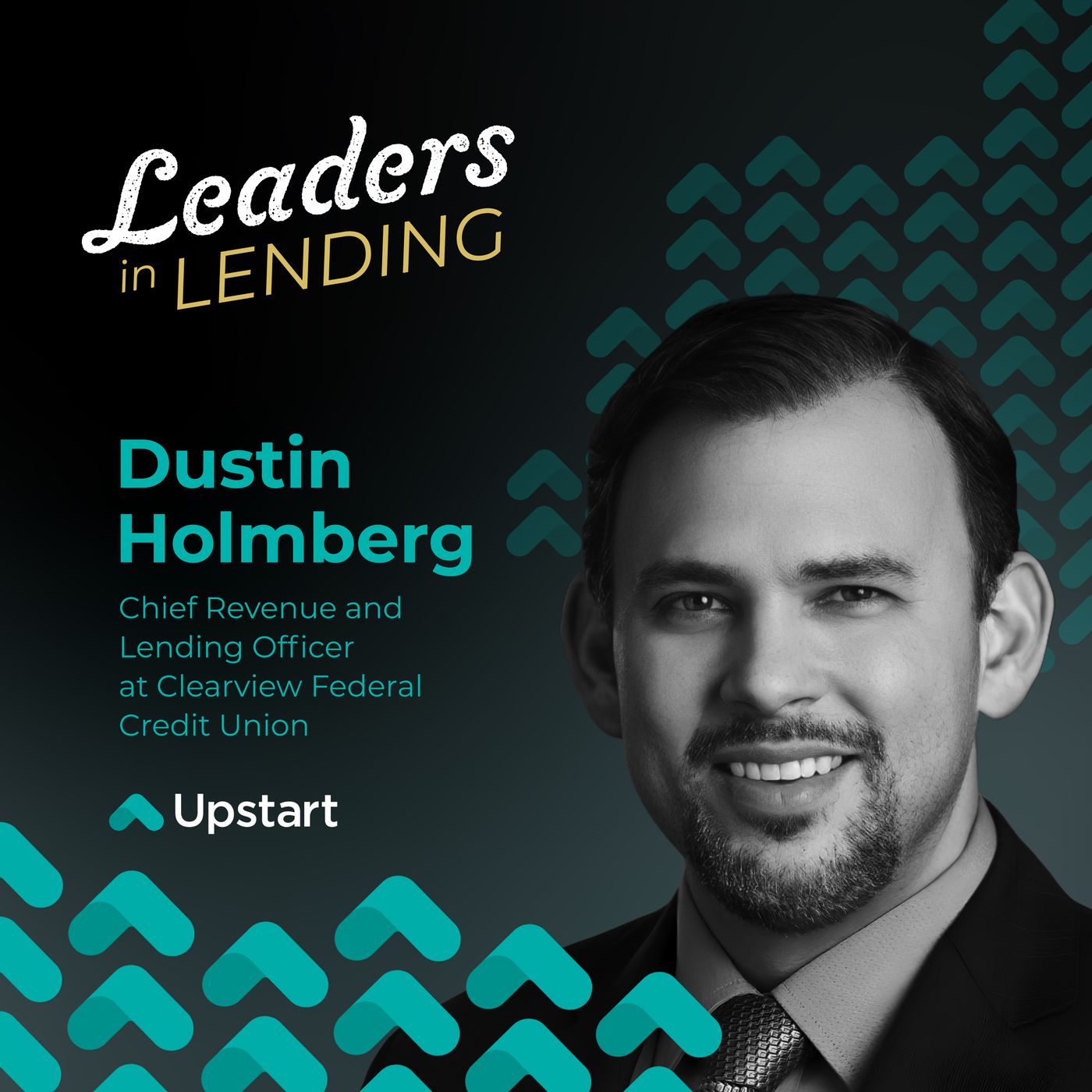
Can credit unions turn economic setbacks into stepping stones for success? Today, we sit down with https://www.linkedin.com/in/dustinholmberg, Chief Revenue and Lending Officer at https://www.clearviewfcu.org/. With $2 billion in assets and a...


Can credit unions turn economic setbacks into stepping stones for success?
Today, we sit down with Dustin Holmberg, Chief Revenue and Lending Officer at Clearview Federal Credit Union. With $2 billion in assets and a vibrant community of 120,000 members, Clearview is not only surviving but thriving in today’s financial landscape. In this episode, we explore the transformative power of AI, innovative lending strategies, and the critical role of community engagement. Dustin also shares his personal journey and insights on adaptability, revealing what it truly takes to lead in the credit union industry.
Join us as we discuss:
- How Clearview Federal Credit Union manages interest rate changes and liquidity crises through strategic oversight of margins, CD rates, and loan growth.
- The role of AI and Robotic Process Automation (RPA) in boosting efficiency in underwriting and automating repetitive tasks, empowering employees.
- Clearview's "digital-first" approach and its expansion of physical branches to enhance community engagement and member convenience.
0:02 You're listening to Leaders in Lending from Upstart, a podcast dedicated to helping consumer lenders grow their programs and improve their product offerings. Each week, here, decision makers in the finance industry offer insights into the future of the lending industry, best practices around digital transformation, and more. Let's get into the show, Hi, and welcome to Upstarts Leaders in Lending podcast. I'm your host Barry Roach. On today's show, We're joined by Dustin Holmberg, the chief revenue and lending officer at Clearview Federal Credit Union. Now. Clearview is a thriving, two billion asset credit union headquarter in Pittsburgh. They have an airline employee heritage, and they've been community chartered for the past twenty years, serving one hundred and twenty thousand members throughout western Pennsylvania. They were avoid a top workplace in twenty twenty four by the Pittsburgh Post Gazette, NUSA Today, and Cleary was named one of America's best credit unions by Newsweek. Welcome to the show, Dustin, are you today?
1:01 I'm doing well? Berry? How are you today? Good? Doing well? Thank you so? Justin a little bit about yourself kind of your your history throughout your career. I know you and I have a lot of shared history, but i'd kind of like you to tell the audience where you came from and kind of how you got to where you are today. Well, thank you. So I grew up in a military family. My dad was in the Air Force. We kind of moved around a bunch when I was young, and through that experience, I learned the value of hard work and adaptability, and you learn you learn how to make friends quickly, you know, when you move in from place to place. I think I think I actually lived in fifteen houses before I graduated high school. So you can't let the grass grow under your feet. You have to jump in, get involved when you move from place to place, and that kind of thing.
1:47 That's great. So similarly, my father was a banker and back in the day, and I'm going I won't tell you how when I was born, but you know, way back in the day, it was very common. Every couple of years or so, we moved and it was to a town, and that's when the branch manager was sort of a big deal in these smaller towns I lived in. But I was always a new kid, right and my sister, my poor sister, and take her six months to find one friend. Within a week, i'd have, you know, the whole neighborhood over in the backyard. We'd be playing baseball or something like that. So I'll say that for myself, it kind of gave me some skills early in life and adaptability to be able to get out there and to sort of meet people and certainly help me in my career. I'm sure you had a summer serve An experience.
2:30 Yeah, I mean, you really do learn how to build camaraderie. You learn how to if you're going to fit in, you got to fit in quick. And sports obviously helps you learn a lot of those lessons, Like you gain trust by giving trust first, you learn you also have to take some risks. You also learn how to speak different languages. And by when I say different languages, we talk a lot about that here internally with my team. But it's not necessarily different languages in the way that you think typically, but it's more you know, using words that that resonate with the with the audience, and you know there are different dialects around each region, and so you have to learn that speak the uh speak the home language, as it were. So there's more than one dialect around Western Pennsylvania, Is that what you're telling me?
3:13 Western Pa is its own is its own unique dialect, that's for sure. I've had to learn a few new words come out. Here, or West Texas for that matter, right. There, Yes, yes, the difference between y'all and YenS is. But you can you can play in both spaces now at this point. Right absolutely, absolutely, good good. Well, I you know, in honor of West Texas, I had to bring on my little bobble head doll here. So okay, good, Yeah. It's tough being a Cowboys fan living in Steelers Country, that's for sure, I guess. So yeah, yeah, so we have we have a low budget on Learers and Lane. That's the one prop I have. So okay, now let's let's uh uh, let's talk about things happening in the credit union industry, things happening with clear view. It's it's almost the end of twenty four.
3:55 Can't believe it's already October now, And boy, what a year it's been. Right, twelve months ago, we were in the middle of a liquidity crisis. We all thought, oh, yeah, the Fed's going to reduce rates. What four or five six rate cuts we're going to see that by now we just had one just in the past couple of weeks. The two ten spread finally has come back from being in negative territory only in the past couple of weeks, and we get into a positive shift, which you know is you know, in credit unions. I mean, now we're gaining to a point where there's sort of a natural spread that we can start to plan for. As we talk about the difference between deposit and loan rates and so on, maybe tell the audience a little bit about how Clearview has worked to sort of combat those equity challenges that have happened. And if you've had to make any sort of shifts in your business lending or deposits this case, maybe.
4:48 Well, I think if you didn't make any changes to your lending strategy you say that you haven't had to make any tweaks, then I'm not sure you were trying really in the first place. I think, you know, twenty two is really kind of the banner year for for credit unions and for the industry as a whole. You know, it was it was everybody was borrowing. That was the year when you know, rates were still kind of at that affordability level, but you know they're kind of still raising. It was one of the strongest lending production years historically. I'm not one hundred percent sure it's going to go down as one of the best as it were, but but but you know, from a production standpoint, definitely very strong. I think in many ways, something's changed within the marketplace in twenty twenty two that allowed people to have a little bit more kind of extra you know, budget to be able to borrow. Something may have changed within the borrowers' profiles that wasn't necessarily captured by the traditional underwriting or credit credit models, and so I think that was that was a that was a major shift that happened.
5:46 And coming off of twenty twenty two into twenty twenty three and twenty twenty four, if the expectation was you were going to continue to keep making loans at the same pace, and it really wasn't the case. And you know, liquidity crunch, particularly after this the Kon Valley Bank incident, put credit unions into place that they really hadn't been in a couple of decades. We found that we had an entire generation of the workforce that grew up in a historically low and flat interest rate environment, and we had to introduce this new thing. It's called a CD. It's a it's as traditional thing for banks and credit unis to offer. But if you really kind of think about it, when was the last time that CD rates even really mattered. I mean it was really kind of more before the Great Financial Crisis when that was the case.
6:28 And so we were faced, uh, you know, working with a workforce that were new to the industry and maybe they didn't even know what a CD was before they got into the industry, and so that was that was really kind of one of those major levers. I remember also too, because we were in this you know, historical rise and interest rates, having to write a bunch of articles and education pieces, different internal blogs for our team members here where I had to remind them that, you know, three percent mortgage wasn't normal, that was actually a historical outlier versus versus what the six to eight percent, which is the you know, kind of more historical averages. And so you know, it really kind of became one of those grieving processes that you helped both your team and your members kind of moved through over the last couple of years, and it's really kind of been a balancing act.
7:16 Yeah, sure, that's interesting. I hadn't really thought of the impact on the team. I mean, I've been in financial services for over thirty years, so been through the Great Financial Crisis. You know, saw things in the nineties as inflation was rising, and we had issues in the late nineties, and then the run up with tech stocks and so on, right, that little bit of a bubble. But there was a time when you could charge seven pay three. You all went home Friday night and everyone was happy. Customers were happy, members were happy. Right, it was so much, so much easier. But I hadn't really thought of that angle with the team. So how exactly do you sort of train a train those folks to sort of look for those opportun cotunities or to maybe find ways that you can that you can get solutions for your members without sort of having to make any substant changes to your product suite.
8:13 Yeah, and I think you know, we had some serious and very candidate internal conversations, and the one thing that we had to make sure of is that when we put a CD rate out there that was actually going to have an effect. You know, that was really something that we hadn't Those were muscles that we really hadn't exercised for many, many years in the financial industry, and so we didn't know that if we put a CD rate out there that members would actually respond. Again, it was also became a little bit of an education piece for them. You still saw, you know, kind of industry wide, we kind of had this balance sheet problem. So many of our so many of our assets were in these non maturing shares and these short term and kind of accounts, and members really were they didn't instantly move it the second that you put CDs out there. It was really kind of crazy to watch kind of a agile movement over time, and uh, you know, it was just it was it was something that was that was that was a challenge and something that we didn't know we were going to be successful at. But what we did find is that, you know, the investments that we made into our brand and our brand awareness helped us get to the right audience. We worked with our teams and were able to, uh, to navigate the choppy waters.
9:22 That's great. Yeah, that Sleepy Money sort of woke up right. We just called you know, I have a crediting background as well, and we called sleepy money. It was just those those regular shares that that had been in in those accounts forever and were not necessarily happy with the low rates that were being paid on savings accounts, but certainly weren't compelled to move it until we saw five percent CDs and so on. Interesting, just with clear view, how did you were you finding new deposits coming in or was it more of a strategy to try and retain the deposits that you had, or maybe it was it a bit of both. Yeah, I was a little bit of both. And right, you're looking to you understand that when you put those CD rates and those CD specials out there, that there is a certain amount of that that's going to be hot money. But you hope that you that there's enough that you get to hold on to on the back end with those members. You bring them in the door and show them good service and hope that you can retain the business.
10:18 Right, right, and the reason for those to posits, I guess you know. Lending, I've heard sort of different strategies across the country. Some credit unis and banks had no problem meeting lending growth goals in twenty three and twenty four. Some are struggling depending on the region they're in or the affordability of housing, for example, I think the mortgage spaces is a little bit different. Talk to us a little bit about in Western Pennsylvania sort of your your main market. I mean, what have been the main drivers for lending growth in well? I think industry, right, we had a balance sheet problem, you know, we had we had We've gone through so many years where interest rate risk was. It was something we discussed in Alco and Alco, but we didn't really actually think it was something that could that could sink the ship. And so we you know, we we had lent some money out and now you're starting to see your cost of funds rise because you're having to actually pay for some of those shares to keep them on the books. And so conventional wisdom tells you that you want to extend while the rates are high. Well, not every credit union was in the in the position to be able to do that. Also, you weren't used to being able to get you know, four four and a half five percent on overnight deposits. And then it became a real real question like do you take that extra interest rate, you know, do you take the interest rate risk, do you take the credit risk, or do you keep it in overnights? And I think a lot of credit unions used the last year, even if they didn't necessarily meet their their long growth goals. I think for us, it was more about balancing the you know, balancing the net interest margin and making sure that there was you know, a sufficient amount of profitability there to reach our revenue goals.
11:51 Sure, yeah, and a push pull between the finance and the lending groups. Right. Finance group is like, hey, wait, I can get risk free in the fours. The lending groups like, well wait a minute. You know, we have members that need to serve. Right, So it's not just the additional revenue that you earned from the the from from the spread of those sort of higher rate loans, but also putting money on the street, right. I Mean, that's that's really what credit inges are all about, is about making sure that that that we have funds available in the community for those who need it to buy that next house, or to buy the next vehicle and so on. So you know, not to get too deep into sort of clear view, and you know, the fistfights that might have happened in the boardrooms or so on. But but I have heard that sort of across the country that that there was a bit of a push pull between finance and lending. How do you work with with your with your executive team to to to make sure that you're served, You're you're on you maybe on different cars of the train, but you're on the same track.
12:45 Yeah. I think that that comes to the relationships that you build with the other executives and the organization. I think, uh, you know, our CFO and myself have a great relationship. We work very very closely, have regular conversations about you know, alternatives. I think we always talk about, you know, what are the what are the different options that are available to us at any given time, and we we do take a good holistic approach. I think that's with my background also not only being in the lending but also having an enterprise risk management kind of component to my background as well. I tend to take a much a much more holistic approach to the revenue and what we want to do is we want to build something that's that's sustainable. I don't want to just go and go out and make a bunch of little gains that are that are one time gains for the organization. We want to invest in business that's that's sustainable for the organization. And I think you're exactly right where you were talking about, you know, we we want to keep enough powder drive for our current membership. I think that was also a major problem coming out of twenty two and twenty three. We really had to raise rates at a very drastic rate so that we could slow the low growth because that once you start that engine, it continues like a flywheel to keep producing. And what we what we found is that, you know, we kind of had to put the brakes on.
13:59 And what you do, I don't want to do, is you don't want to put the brakes on so aggressively. Did you start communicating to the industry that you don't want their business? But it's still like you were talking about, it's that push and pull conversation about you know, making little tweaks each month. I know that there were some nervous days speaking internally between myself and our CEO and our CFO about you know, yes, we're still growing at a really rapid rate on the lending side, and the deposits aren't growing quite as quickly, and so you know it's about yes, we're making little tweaks. I know you can't see it today in the production, but everything has a long lag. Oh for sure. And that shift happened so quickly. I mean the end of twenty twenty, we were faced with record deposits. There was a stimulus one, stimulus two, and then we didn't know three was coming around. But it did just more liquid into the system, which was great for those who needed it. For those who were charged with finding new loans, not so great. No one was borrowing, right, and anyone who was boring was paying those loans back, which again great, an historically good time to lend. However, there just wasn't a whole lot of demand for it, right.
15:05 But you said before, I mean your your title. It's it's in the title. It's not just you're not just a lending officer, you're the revenue officer. So you you do have to take that sort of that broader look, I would think for clear View, because you've got some pretty significant goals around the digital experience and and enhancing that that that member experience and the ability for your members to be able to do more and more business faster online without without the aid of of of of a human or or of an employee. So the revenue side that becomes of the utmost importance I would think to be able to fuel and fund those technology investments you're making. So maybe talk with us a little bit about that if you could.
15:46 Yeah it clearview, clearview. We're a digital first credit union. And by saying that, it's not to say that we want to make all of our products and services and only offer those through digital means. What we are also not saying that we don't want to talk to our members. But what we are saying is that, if all things are equal, we believe that most members do prefer to do business on their own terms at the time that they prefer, and so I'm a big fan of meeting members where they are not overly complicating processes. Now, this is not to say that we're not we don't value our physical presence. Quite the contrary. We're actually in one of the most aggressive growth plans phases in our physical presence and in the companies more than seventy years worth of history, and so we're investing on both sides. But you know, we talked a little bit about speaking different languages.
16:34 I think in lending we're awesome at speaking the language of lending, and members might as well think that we're speaking Latin. And so it's really kind of trying to take those digital processes and make them convenient for members and meeting members where they are we want to. We're always focusing on clear and concise messaging to those members. Hey there, former host Jeff kalviner here to let you know of an exciting opportunity to strengthen your understanding of artificial intelligence and financial services. If you want to better understand the fundamentals of how AI models work and how they will impact the financial services industry, your in luck. Upstart is launched an online course and certification designed to do just that.
17:17 This course will give you the knowledge you need to lead the. Conversation about how your organization can best leverage and manage this revolutionary technology. If that sounds interesting, check out the course as it's currently free for a limited time. You can learn more at upstart dot. Com slash AI Certification. Again, that's Upstart dot com slash AI Certification. Thanks and now back to the show. Right, So, with your branching strategy. Because you and I talked a little bit before this. I started my career as a teller, you did as well, right, I still remember payday Fridays with people coming in with with physical paychecks to get cash or to put money in there in their accounts or what have you. Those days are long gone, right, and and good because you know, why line up on Friday after a hard day of work.
18:02 I mean that never made much sense, so that aspect of branching is less necessary now. So where is branching going for Cleary or what's your view, Dustine, of the need for branches, or why are branches still important and why is it worth the investment that clearly is making any branches well. I think the research out there suggests that members want you to have a relevant physical presence. It's not necessarily for the same reason that they wanted it in the past. I mean, like you said, it's not like they're going to be walking in every single Friday or every other Friday to castro check. They just want to work with and engage with their local institution, and having a physical presence is one way to show that you're local and in the community. We view our branch network as kind of an extension of our brand awareness initiatives. We want our locations to be convenient, but more than that, we're working on making them visible. We want to communicate who we are, our values and our partnership and our brand promise to the community through that network.
18:59 So is SARAH a community involvement tactic? I guess for your local branch managers. You know before, like my father as a branch manager was kind of a big deal in these smaller towns because you know, seen as sort of a leader in business and so on. Are you seeing a similar sort of or are you taking a similar approach with with clear view in your branches? And I think historically in the credit union industry it's kind of more been the branch network has kind of been had the service center managers that that weren't necessarily those business development people that that that you that you see and you know from the historical banking perspective, and I think that's where having the background of both working in a bank and a credit union is really helpful because it allows you to use the best of both best of both sides of the the business model to kind of maximize the opportunities that you have. I think that's something that we're working with and working towards and building a proper sales culture within the organization. But yeah, that's that's definitely the more locations you get, the more you kind of have to be out in the community.
19:59 That's where that's really part of that brand promise. And do you see branching and the digital experience like how do they I mean, obviously they co exist, but maybe for different reasons. But do you see sort of an integration of the two happening. Maybe it's not something you have now dustin, but something that down the road is maybe under roadmap to be able to to to provide that for for your membership. Yeah, it's a balanced approach. I mean, you know, you do need a well situated branch network that's that's member focused. Uh. And you want to create tools that are that are intuitive for them to uh to be able to use and be able to introduce to the communities. I think you know you coming from the branch network, no, uh, just and appreciate how many different things you have to know.
20:43 When you're working in the financial center, members come into you to ask you all manners of questions and that's a that's a huge that's a huge undertaking, and so we try to we really do place a focus on developing our products and services that are that are intuitive. We want tools, uh that are easy for our members and for also our frontline to use. But you talked a little bit about that integration between the lending site and also the branch network. I think you know, the branch network is a great members will come in with some questions and I think you know, there's there's certain applications where where a branch network is gonna is going to have kind of a limited amount of information that they're going to know, and then you just have to have that seamless, seamless pass off to to the more qualified lending people on the on the back end.
21:31 Right right, So you know, up Start we're a technology company. We've been using our official intelligence for underrating of lending for many years now. And and AI is it's it's a new topic but kind of misunderstood, right. I mean, there's some doomsday things around AI. People are nervous about it. Is it mean that all jobs are going to be done by robots and so on and so forth, But you know, I kind of take the view and you gave an example with brand like branch people have to know so much about everything about all products and then how you service those products, and then what if there's a problem or a complaint or you know, or or there's there's a compliance issue or something. I mean, there's just so much more to know than what you and I need to know years ago as tellers, which basically you know, stamp that check and and give cash. It's it's gotten so much more complex. Here's where I think AI can really help those branch folks, because if there's an efficient way that they can take those those questions that are coming in from from the membership and with a prompt be able to come back with an answer that aligns with your your procedures, your probably your your policies and so on and so forth. I mean that's kind of where the magic is, right. So you know, do you see with clear view like AI being being a solution to sort of help that down the road with you?
22:50 Yeah? I think that's that's the one power of AI is that's able to crunch a bunch of information and come back with relevant answers. And I think that's that's something that we're we're continuing to adapt our a our a roadmap here internally. Uh there, you know there's a as kind of a buzzword out there, right, it's it's got you know, there's a bunch of different applications and trying to figure out exactly what the best applications are. I mean, we we do use some technology here internally, but we're talking very much about how AI tools would be extremely helpful for you know, those question and answers, uh for for the frontline staff, you know, because you know it's on really us as executives to help facilitate the learning that our team has to to do and provide them with the tools that are that are ready at their fingertips to be able to answer those members.
23:37 Right. I mean, this is it can be an aid as opposed to a replacement. Right. And let's face the critits have been using our PA robotic process automation for years, right, just to sort of simplify those ROTE tasks that a lot of the operations folks may have, just just make it a lot easier to execute that on. That particular concept you mentioned earlier that sometimes people think that the abouts are going to replace our jobs. And I just tell I tell my team all the time. No, it's to make you more efficient. It's to help you focus on the things that are really really relevant to the to to the decision that you're that you're looking at in front of you. I mean, it actually empowers the team members more than replaces their their job duties.
24:18 Is it going to replace some things. Yeah, it's going to replace kind of some of those mundane things that that maybe weren't all that much fun. I mean, we all have our little things that we enjoy doing. And yes, if you if you replace those tasks that you know, we we find comfort in them and we find that we're it's valuable to at least to us to give us a little bit of a re brief for a minute. But in reality, it's not. It's not necessarily helping you be more productive or helping you be able to answer those members and be quicker with their inquiries. And so yeah, it's getting that technology there to help facilitate those processes. Also, too, doing the same thing over and over and over again every single day without without making a mistake is kind of difficult. That's the one thing that's awesome about your computer rpas and such. They do the same task and the same order every single time.
25:04 That's true. Yeah, And look, innovation is not a bad thing when we were tellers. Tellers today or tellers yesterday, very different jobs, right, but there's still a need for tellers. There's still a need for those that front line member and customer experience and support. So yeah, it will be an enhancement at a replacement. I agree with you there. Let's talk a little bit then, for clearview about twenty twenty five. So you're in the middle of business plane. I would think right now, earlier i'd said what twelve months ago looked like where the cleary was still an issue and we thought we'd see a whole bunch of rate reductions which never really came to pass. I mean, without getting too deep into or revealing sort of your secret sauce. For twenty five, what's clearview thinking in terms of where lending growth is going to go or deposit growth, or what s your focus areas I guess as we look out to the next twelve to eighteen months.
25:58 Yeah, I think you know, Cecil's really throwing a monkey wrench into all of our all of our lives on the lending side. I think it's really you have to be balanced in your approach. You can no longer say I want to grow on this part of my portfolio, that part of my portfolio, with that actually understanding what that does to the overall mix, that what kind of an effect that has on your on your revenue streams. So I think for us, twenty twenty five is going to be another year of balance. We've had an extremely successful twenty twenty four, but it hasn't looked quite the same as it did in past years. I mean, we didn't have massive loan growth in twenty twenty four, but we were able to manage our margins this year and have remained profitable. And so we want to make sure that we're putting loans on that that keep pace with the market. We understand that there is you know, we're going to come back into this rapidly reducing interest rate environment, and you know there's always that question about well, what's your runoff going to be on the back end, Really none of us know you really still you're really making project actions. What I would assume is that the run down is not necessarily going to be as quick as the run up, but sometimes it might be it might be quicker. You never quite know. I do know that the second that those the prime rate changes, we have a large percentage of a portfolio that instantly reprices, and so it's really just maximizing the internal rate of return by making sure that we're paying appropriate deposit rates. Sometimes you can't just go down the same same rate on
27:29 the deposit side as you do on the on the lending side, so you're going to see some crunching of the margins I think in twenty twenty five. But it's a balancing act putting loans on that optimize that risk and return calculus. Make sure that you're getting the you know, you're getting loans on at a you know that are good loans at a good rate, and that are going to stay on the books and not necessarily just reprice every every thirty to sixty days. Totally. Yeah. So I live in California where it's really really hard now as the first time home buyer to break in right, and it's especially hard now when you've got thirty year mortgages over six percent and so on Western Pennsylvania. What's what's what's the prospect there for first time home buyer and how does Clearview sort of match or meet that that need that that's out there for those first time home buyers.
28:15 Well, I think the you know, historically Western PA has been a little bit maybe behind, not quite as valatile as some of the other as some of the others, certainly California, UH, definitely much more volatile. But I think over the last few years you've kind of seen home values rise pretty substantially here, and so you still do have an affordability issue, I think, regardless of where you're at in the country. And I think, you know, it's a it's about trying to work with your partners to develop those first time home buyer kind of programs. Some of it's some of its education of the members. I think you talk to a lot of realtors and they you know, a lot of mortgage uh mortgage executives, and they talk about, you know, you marry the property, but you date the rate. I think, you know, we got to be a little bit careful coaching people to uh to always refinance as a you know, as a way of freeing up additional cash flow. But you know, I think if you're offering good products with a good value for your membership, and and you're pricing them appropriately, you'll be able to keep those on the books. But you know, affordability is going to be a big issue kind of across the country. I think you you know, when you're seeing new home builds go, you know, for a lot more than what I paid for my first house. I know, you know, three to four times what I paid for my first house. I look at you know, my kids nowadays and think that, yeah, this is going to be a very different world for them than it was for.
29:33 Me, right right, it's it's a new normal around rates though, because you said earlier in our conversation, how you know a three or four percent thirty became the norm. I want to say, the first mortgage I got was probably like eight and a half I think as a rate, I was pretty happy with that, right, But that was that was at the time, because you know, six months before was probably at nine. So it all becomes relative, right it does. Yeah, all right, Dustin? So uh now, bold predictions. So I need bold prediction for the business and a bold prediction for Dustin. So you know, what does the next twelve months look like for business? It could be clear of you. It could be the larger economy.
30:13 And then what's what's what's a bold prediction for Dustin? H If we get on October of twenty twenty five, what does that look like? Oh boy, So let's hope that I end twenty twenty five that I was as good at predicting the rate forecasting rates in twenty twenty five as I was in twenty twenty four. I actually got lucky. I think we only planned for two rate cuts this year, and it's actually looking looking like it's going to be closer from a from an interest expense. Well, see, you just are lucky. You gave it away, right, This was supposed to be that. Yeah, protections projections is just a guess if you if you put if you say that you're any better than that. I think that's uh, that's a little bit of humorous talking there. Sure there's a there's a there's a place in Vegas for you, right there is? Yeah, yeah, so money for real, right right on?
31:01 Yeah? So now, bold prediction for Dustin. Bold prediction for Dustin. You know, it's it's to optimize the Holy Trinity of compromise. And we talk a little bit about this is the you know, the three things that most institutions are looking for as profitability, member engagement, and growth. It's it's it's optimizing those and finding a you know, a risk smart environment for your for your team to be able to really work with their members, but also not necessarily give away the farm for the year. And that's you know, if we if we finish twenty twenty five as profitably as we finish twenty twenty four, I will be extremely excited. Well excellent, Well, thank you so much, Dustin, and let's hope for that profitability continues in twenty twenty four and twenty four five and beyond. Thank you again for your time today and look forward to talking to you again soon.
31:52 I'll start partners with banks and credit unions to grow households and expand consumer lending. Through its leading AI lending platform. Upstart powered banks and credit unions leverage AI to offer higher approval rates and experience lower loss rates, while simultaneously delivering the exceptional digital first lending experience that consumers demand. Whether you're looking to grow and enhance your existing personal and auto lending programs or you're just getting started, Upstart can help Upstart offers an end to end solution that can help you find more credit worthy borrowers within your risk profile. With all digital underwriting, verification, loan closing, and servicing, it's all possible with Upstart in your corner. Learn more about finding new borrowers, enhancing your credit decisioning process, and growing your business by visiting Upstart dot com slash Lenders.
32:41 That's Upstart dot com slash Lenders

