Shaping Pragmatic Regulations for FinTech Innovation



There’s no one-size-fits-all approach to regulation in the world of financial services. Sometimes it’s a matter of encouraging fintech companies to engage in responsible behaviors—and other times it’s a matter of allowing responsible FinTech companies to continue operating responsibly without regulatory burdens.
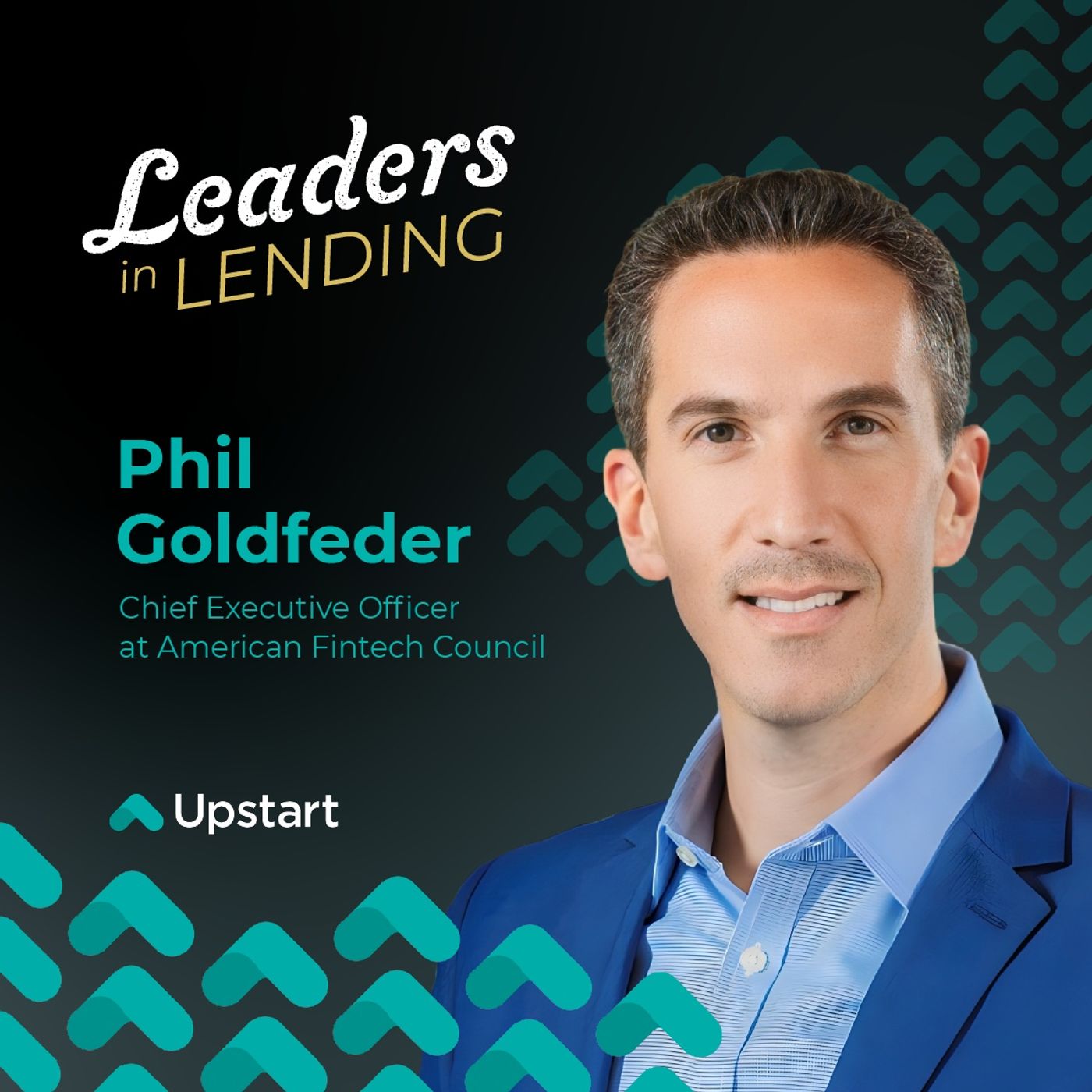
This week’s host, Lynn Sautter Beal, is joined by Phil Goldfeder, CEO at American Fintech Council, and former New York State Assembly member. Phil has a wealth of experience and knowledge in the realm of regulatory policy—and all of it is informed by the idea of practical and realistic progress that doesn’t get in the way of responsible financial service providers doing their work, or get in the way of people receiving the financial services they need and deserve.
Join us as we discuss:
- How federal regulatory structures can evolve to support FinTech advancements
- The unintended consequences of “reactionary regulation”
- Key efforts in establishing industry standards without regulatory mandates
- The value of working groups and listening sessions involving various players in FinTech
0:02 You are listening to Leaders in Lending from Upstart, a podcast dedicated to helping consumer lenders grow their programs and improve their product offerings. Each week, here decision makers in the finance industry offer insights into the future of the lending industry, best practices around digital transformation, and more. Let's get into the show. Hi everyone, This is Lyndsader Bill of Upstart, and welcome to the Leaders in Lending podcast. I will be joined today by Phil Goldfetter, who is the CEO of the American Fintech Council, which is the industry association at the intersection of technology and financial services. Phil has a fascinating background working in politics and banking, so I'm very excited to have him join us today and talk all things AI regulation and working in fintech innovation. Let's get started, all right, Hi Phil, and welcome to the Leaders in Lending. Hey really really such a pleasure to be here. Great. Well, you know, I think you've got a really interesting background and having worked in Congress becoming a legislator yourself. Can you just tell me about your path and how you made your way through government to leading the AFC that it's a great question I hope we have a couple of hours at a sign for set aside for the conversation. I'm actually I spent the vast majority of my career this far in public service. I came up in New York City politics and the City Council.
1:36 I had a very unique privilege of working for what are you, probably one of the most unique mayors of New York City ever had, in Mike Bloomer, and spent a number of their number of years working in the city administration before taking a job with Senator Chuck Schumer, who is now significantly more, significantly more popular across the country that he was back into the night. But interesting time because when I was working for the Senator it was at the same time that the President Obama had taken office in the earlier part of two thousand and nine, so really unique insight into so many different things happening in the federal government. And after spending three years working with the Senator, I actually ran for state elected office here in New York and served in the state legislature for five years. And sort of the challenge with with public service is there's sort of the question is whether you know for me, there was a political movement, right. You know, as things evolve, as people coming to office leave office, there's opportunities to sort of move around. And I was very, very lucky in sort of my time from the council to mayor working for the Senator. And the question for me after running for office was what's next? Right do we stay in public service? I will say that I loved every moment that I had in service, serving my community and serving the Great Republic. I mean the challenge is it takes its soul on your family and your life and on so many other things. And so the question was what was next for me? The opportunity presented itself to work at a
3:08 fintech focused bank bank called Cross River, and I fought long and hard about what the next step was going to be. Now. During my time in office, I represented neighborhoods that were devastated during a hurricane Sandy, so Southern Queens Rockaway, our community is about a year into my first term or devastated during the hurricane, and I learned very very quickly the challenges not just of the insurance industry, but also of the banking industry. And the next four years that I spent in office were steeped in legislation regulation specifically related to financial services, as many people who I represented it were struggling to get access to financial services because all of our bank branches were destroyed during the during the hurricane.
3:57 You know, how do you get your insurance checks signed by your bank? Right? There were so many issues that arose during the hurricane, and when the opportunity presented itself to work at cross River, sort of the idea of you know, what is next and what can I sort of continue? Where can I go in private industry? That sort of lend to my continuation of public service, and Cross River was exactly that answer right as far as as my fault was very very simply that as I continue my path in public service, it tried to find ways to help folks. Fintech seem like the real natural answer, and so the work that I did at over over six years sort of led to the continuation of the public service and finding ways to make financial services more accessible to families who have been unfortunately left out of the traditional financial services industry. After six years at cross River, it's sort of the question was how can I do more right? How can I sort of make even a larger impact, and being here at the American Fintech Council enables me not just to report in one company, but to speak on behalf of seventy five or eighty companies who were all focused singularly of creating access to finance person So it's sort of a long road, but I'm really excited to be here. Continued who I work. Sure, Now, it's interesting you mentioned Hurricane Sandy. So prior to joining Upstart, I worked for a major bank that is also headquartered in New York and one of the downtown buildings was unavailable
5:28 for several years, and I think people people took their laptops home thinking they'd be able to get back in, and in some cases it did not even take them home, and due to the water damage, that building was not operational for several years. So I can only imagine from a consumer level of people who live in those areas how impactful that was on even just accessing really any sort of basic service. So you've described the American Fintech Council as a collection of responsible innovators. What is that mean to you? So that's a great question, and I say that that that Upstarts the perfect example, right, you know, when you think about innovation, right, it's not just innovation innovation's sake the purpose of building your business. We think about members of the American Fintech Council. These are responsible innovators who are looking to create access to financial services and utilize innovation, but do it a responsible way. And so I often talk about the American Fintech Council, I say that we're probably one of the only standards based trade associations in that regulatory desk flop forward first.
6:36 And so the goal is not just you know, come one, come all for fintech innovators, it's really about your commitment to standards and I, you know, I think about again, you know, sort of one of our founding members is up Start, as you know, and the idea of using alternative data or AI underwriting decisioning is something that Upstart was a pioneer at many many years ago. But it wasn't just let's, you know, sort of open up this new innovation and see what happens. It was carefully thought out and slowly rolled out and sort of sort of walked through the challenges, the issues and worked it through to a point where when we're offering a product, we can ensure that we are not compromising on consumer safety in any way, shape or form. And so we're essentially creating the access to financial services without compromising on any regulatory compliance. And that's not what the American Fintech Council is today, where we're just shy of eighty members who are changing the future of finance, but doing it with a focus on standards and on compliance.
7:43 And that's the way you want it to be, right, I mean, when you think about building out, when you think about traditional financial services, you know, I joke about this all the time. We see the big pillars outside of traditional old school banks, and there was a reason for that. It was a you know, whether it was marketing or whatever the suit wherever it came about the idea of showing stable pillars in front of a bank assure consumers that this was a tough structure. Right, my money is going to be safe when I put it in. And I believe that AFC members are creating the exact same thing in the fintech world and innovative world by creating a strong set of standards and so that consumers know when they engage with AFC members like Upstart, you're getting the exact same tections and regulatory sort of guard rails that you would get in traditional financial institutions. And the difference is fintech is meeting consumers where they are, and that's sort of the evolution of whereas traditional banks have exited most communities, that's kind of where you know, new innovative, responsible fintech companies have stepped in to fill that gap, and they've done it remarkably well well. I can certainly say is as a guest at the policy summit last fall, fairness, access to service, is fair lending and all of the really risk and regulatory concerns were a big, big focus of the attendees there. So you know, certainly an interesting time generative AI making waves, bank failures last year, which I don't think any of us
9:15 had on our bingo card, and really everyone wanting to get into the business of regulating how these new new products and tools were used. And I think is you know, certainly your background is a state legislator. You know, lending regulation has always been on the radar of states, but I think we're seeing more state legislatures kind of increasing their focus on things like fees, interest rates, other consumer protections, and passing legislation that impacts how how banks can either import or export rates. So how do you see this impacting FinTechs and banks who offer products and services that span the entire country. So that's a great question. I think there's a sort of a lot of different directions.
9:58 Number one, first influence almost in the accent. In the absence of federal guidance, structure, rules, and regulation, you find that a lot of states tend to step in to try and fill that void. That sells good on its face. And I say that as a as a former member of a legislature. I mean there's a number of bills in my background that these are bills and laws that I that I was the author and altimately passed. But you know, every one of them was meant to solve a problem. And that's what you're seeing today as it relates to fintech, right, solving problems on the state level in the absence of federal regulatory structure. Now again it seems great on the serpents, right, that's what we want. As I mentioned earlier, AFC believes in regulatory structure. The challenge that we have is not in the regulatory structure. The challenge we have is a patchwork of regulatory structures and that every state operates independently. And I can tell you that laws that I passed here in New York were very different than the laws and the structures that were passed in New Jersey and in Connecticut and in Hell of Forna, and in states all across the country. And so in theory, we're all doing the best we can to protect our constituents. But I want to what I want people to think about is how are companies having to operate within that regulatory structure. And so, as a company that is nationally based right that is serving consumers from California to Mean and everywhere in between, the idea that they have to look at a patchwork state regulatory structures, systems, interest rates, how they monitor and jud bank fintech partnerships, how they think
11:31 about so many of the different things that innovative FinTechs have to deal with. Now, all of a sudden, while it was done with the best of intentions, laws are passed with the bench of best of attentions, you're actually you're actually doing the opposite of what you're intended to do. And what I mean by that is every state steps in and says it's our job and it's our responsibility to serve and protect our consumers. But when you're doing that, you're inherently actually making it more difficult for innovative, responsible companies to operate. And so what happens is as companies say, forget it, it's too complicated to operate in this state or in that state, and so we're actually going to take our hands off and not offer our services at those states anymore.
12:15 And so think about what you're actually doing. You're taking away access to financial services in the name of protecting consumers. And I'll give you a perfect example of that. You know, last April in the state of Colorado, they made a pretty significant change to state banking regulations. And I don't want to board the audience with the nuances and the details, but ultimately that law, if it is to take effect in this coming July of twenty four, most responsible innovative online lenders will exit the state of Colorado. And so, in the interest of consumer protection, the legislature passed this law. But ultimately what's going to happen is that it's going to significantly decrease access to credit and responsible options for Colorado family. And so I think two things. Number one is I bring my unique experience to try and work with legislators all across the country as it relates to online lending, bank fintech partnerships, innovative products like earned wage access or buy now, pay later, as we talked about, as you mentioned AI, alternative data, and underwriting. And so we try to sort of take what all of our companies are offering and work with state legislators to make them understand kind of the nuances of the various product offerings and make sure that they recognize sort of the unintended consequences. I used to say this all the time, and we were in Albany, New York every single year,
13:46 and you pick a subject, but every single year we would pass historic legislative reforms every year. And when you think about that, you can't have historic legislative reforms every year in the same subject. NATA. Yeah, that's true. It's not historic if it happens annually. So's annual annual changes exactly exactly right. And yet every legislator, everyone will say this is historic changes for education reform, for this reform for that reform, and unfortunately, again in the interest of again what I call reactionary legislating, you sometimes in your in your drive to create that reform, you don't necessarily recognize the unattended consequences. I think, as you know, well, Upstart is doing things visit uncharted territory. Right, we're doing things today in financial services that I was about to say fifteen years ago, two years ago, we would never have imagined. I mean, you see what's happening with AI today right like no one would have imagined it. And you're you know, thankfully, you're seeing the federal government act. The Senate created a working group, the House just announced a working group. Right, you're seeing that action, but it's slow on the federal level. And so at the same time in federal action, you're now seeing state actions and so that you know, while usually I'm I feel good, like I said, as a standards based organization, we'd love to see regulatory engagement. At the same time, we want it to be responsible and we want it to be thoughtful. I mean want regulators, attorneys general, state legislators are going to respond understand what we're trying to do.
15:20 Understand the process before they implement historic change. And that's kind of what we try to do and some of the challenges we face day in and day out. And I'll just end with one thing we have, you know again, companies like Upstart who spend a lot of time educating right, I mean, Upstart work with the CFPB and work with other federal regulators. Before it was cool to do it right, before all the cool kids wanted to do it, Upstart was sort of on the front lines of that. Federal regulators also need to do a good job in engaging right. It's not just about the innovator's job to engage with regulators. And one of the big themes for AFC is regulatory modernization. The regulatory structures need to evolve at the same pace as the innovators, and unfortunately today we're just not seeing that sure and I think we you know, we certainly work with many banks of various sizes, We work with many credit unions, and so that kind of patchwork of legislation, whether it's their federal crudential regulators, the NCUA, the FDA, c or we're talking about maybe state financial services or UH organizations that don't have a lot of expertise in this area, How are they really evaluating the business that those lenders are doing with us as it relates to looking at our pricing and our models and really help we make decisions. So it obviously has been in the
16:52 news a lot recently that the FDAC has made some changes as it relates to their innovation and tech offices. And I know that you and the team work closely both of the regulators and the House Financial Services Committee on efforts to improve access to fair financial services. Can you talk about what changes the FDIC has recently made and some of the statements that the various members of the housemaid that they're actually moving innovation backwards with most changes. Yeah, that's a great question. As I mentioned, in the absence of federal regulatory structure, states tend to step in. That doesn't limit our work at the federal level as well, and sort of we as I mentioned earlier, it's just as important for the regulators to commit to working with fintech companies as it is for the fintech companies to commit to working with the regulations. So, as I mentioned, you know, all AFC members are standards based and are fully committed to regulatory best practice, but that only works when you're getting clear guidance from the regulators, right. Unfortunately, you know a lot of agencies have really stepped in to try and solve for that. I think, you know, sort of chasm, right, They've tried to bridge the gap, and you've seen the FED Federal Reserve come out with what they call it Novel Activity Supervisory Program, right, which is great, Right, It's sort of the concept is we're
18:25 going to sort of really steep ourselves some of the banks that are offering BASS programs, BASS work innovative program who are doing innovative partnerships, so we can learn the systems, we can understand what they're doing, we can understand the way in which they're engaging with the financial services ecosystem, so we can actually best regulate them. Right, And that's what we want. I think that's what the fintech companies want, that's what the innovative banks want, and that's what the regulators want. We saw the same thing at the OCC and their Office of Innovation. A tremendous credit to the team there they I would argue probably the OCC was you know, was probably way ahead of the pack many many years ago. I remember my earliest days at Kors River, going back to twenty sixteen, twenty seventeen, you've had you know, we were taking meetings with people at the OCC about some of the work we were doing.
19:11 It's on our innovation. The FDI C about three years ago maybe four created what they call the FDI Tech Office, which again was essentially the same concept, which is we're going to engage with fintech. None of these innovation offices created a free pass for anybody. I want to be very clear about that because oftentimes there's this confusion that you know, it was a you know, a free pass for companies doing what they wanted to do. It was quite the opposite. It was really it was a tool for everybody to learn about the other side. Meaning again I think about a company like upstart that engages right. This was a great opportunity, an open door where we can go meet with the OCC. There was an office and an entity within the OCC or within the FED, within the FDIIC Treasury where we can go and have a on you know, whether off the record, on the record, but it was an honest conversation about what you're doing, how you're doing it, how you think about regulatory structure. I think there's a there's a good kind of upstart origin story early on that I'm sure you've heard Jeff and others tell, where as the company was being founded and this idea to start working with more banks outside of kind of a primary sponsor bank, they just walked into the office in San Francisco and introduced themselves and wanted to have a conversation and a little bit maybe early for that at the regulators. That certainly the idea, yeah, and that I mean again you give again. It sort of talks about the forward leaning in terms of fintech companies that are not hiding behind
20:47 sort of some shroud of you know, sort of algorithms, right Like, obviously they're innovating, but they they're eager, I say, they're aggressive in their transparency, right like they're putting their story out, their ideas out long before the regulators are coming in. Unfortunately, the FDI C over the last couple of years, UH has really withdrawn from that and that they've they they've turned off the spigot in that they're they're not taking those meetings. They're not the FDI Tech Office, which showed so much promise about engagement and understanding what's happening with regulated banking institutions. They've basically shut it down. And what we're seeing the the what's happening because of that is that no one understands what the rules of the road are, right. You know, innovative companies who want to be responsible don't understand or appreciate what the reight, you know, sort of what they need to do or how they need to do it. And so when you think about newcomers to this ecosystem, you know, how they're learning about it is they're learning about it by looking how other banks published.
21:53 Right. It's what we call regulation by enforcement, right, And so all of a sudden, the FDI says, well, we're going to we're going to raise enforcements because we don't like the way this bank ran x Y or Z program. They didn't communicate with that bank before they got in trouble. The nature of the engagement didn't exist with the financial institutions before they got in trouble. The bank found out after the fact. And so now how do other banks learn about the process or what they should do. They look sort of where the other guys went wrong or where at least publicly they went wrong, and they try to do it that way and work that way. It's not the way you know, regulation should work. Right. When you mix pragmatic regulators with responsible innovators, you can actually create a system that is going to serve consumers, create the access to financial services without compromising on consumer protection.
22:49 But that requires a pragmatic, forward thinking, engaging regulator, and unfortunately recently from the FDIIC we're just not seeing that. And so we for you know, sort of our services at the American Think Tech Council in sort of trying to convene that. You know, what we'd like to think is either a working group or some sort of listening session where I think sometimes you know, you need the opportunity for reasonable people on either side of the table to converse with each other, yell at each other, engage with each other, meaning if we're doing it wrong, if responsible innovative companies are doing it wrong, tell us right. The beauty of a responsible innovative bank is they understand regulatory structures right. Banks inherently are charged with protecting the integrity of the financial institution, as we learned just a year ago. Right, sometimes the regulators are just not keeping pace, and unfortunately, we see the consequences of that.
23:48 And so you would think that regulators would have learned from some of those mistakes, said let's lean in and learn what banks are doing, how they're doing it, so we've better understand it. And I credit where credit is due, because I'll say this about the CFPB and about the Federal Reserve and THEOCC. Sadly, we're not seeing that at every agency, and we're hoping that they're going to engage. Hey there, former host Jeff Kelner here to let you know about an exciting opportunity to strengthen your understanding of artificial intelligence and financial services. If you want to better understand the fundamentals of how AI models work and how they will impact the financial services industry, your in luck.
24:30 Upstart is launched an online course and certification designed to do just that. This course will give you the knowledge you need to lead the conversation about how your organization can best leverage and manage this revolutionary technology. If that sounds interesting, check out the course as it's currently free for a limited time. You can learn more at upstart dot com. Slash AI Certification. Again, that's upstart dot Com, slash AI certification. Thanks and now back to the show. Sure, sure, And I think your point earlier about sometimes that regulation has has the best of intentions but then consequences on consumers who cannot access traditional financial services and then also see limited kind of novel financial services they can they can access. I know there's been a lot of conversation about the sponsor banks or banking is a service and additional focus from the regulators, but not really a lot of clear guidance about what that means and where they fit within the overall structure, and then where the FinTechs fits. So what are your what are your thoughts about how a banking is a service or sponsor bank can navigate in this really uncertain period with what the rules are for their their businesses. So that's a great question and also sort of a key differentiator for the American Fintech Council because I speak a lot about our standards base, you know, us being a standard based trade association. We're also one of the very few organizations,
26:02 if not the only trade association that counts innovative fintech companies as members, but also the leading bass banks across the country. So in addition to Upstart and all of our fintech partners, we also count you know, Cross River and Customers and Coastal and so many other leading BASS banks as our members. And the beauty of that is is that it creates a very wide shared ecosystem of information about best practice, about sort of rules of the road, about the best ways to think about third party risk management, and hopefully create kind of you know, in the absence of federal rules or regulatory rules of the road from regulators, it creates rules of the road for you know, industry participants. And so it's that diverse membership that enables us to create the standards that we fake ultimately will best serve consumers. And I think sadly, very single day we're learning more, mostly by you know, because we're the enforcements are starting to come more and more. And it's unfortunate. It's unfortunate because there's so many industry participants who you know, we say this as members of the American Fintech Council, we never say that, No Kurgan and not you know, we're not saying we're never going to get in trouble, right or someone's not going to make a mistake. No one is perfect. I want to be very clear about that. No, fintech, I don't care how responsible and how great you are. No one is perfect, and you're gonna
27:34 make mistakes. That's not wrong. Look, I have three kids at home, right, like, we expect them to spill milk on the floor, right, I'm not gonna forever prohibit them from drinking milk a yet, right like that, as long as you just don't want them to intentionally spill milk on the floor if they accidentally spell it is different than opening the fridge. And I also have three kids, so although only only one lives at home now, two are out for you know, minor are still little, but mine are still very very little. And so, but but that happened, right, you open the fridge and the milk spills, right, we don't prohibit them from drinking milking yet. Now what you said is exactly right. If they took the milk out of the fridge just because they're in a bad mood or and they spilled it on the floor, right like, then there's a different there's a different level of consequence to that. I would use that same analogy here, right, And This is quite the opposite talking them out sort of fully mature companies. Right Upstart is not a you know, they're in emerging industries. But this is a company that's been around for a bit, right, and who has dedicated a significant amount of resources to compliance.
28:40 I'd be remiss if I didn't talk about my partner, and this is Nad Boots, who runs your public policy obviously who it probably works harder than we do in terms of engagement. That level engagement should be rewarded, not with the free paths. That level of engagement should be rewarded with engagement and worturn. Right. And when you said about what I'm saying, it's not asking for very much, right, I'm not asking for anything more than tell me what I need to be doing. Crowd should be thinking about it. Crowd should be thinking about my innovation. Same thing you do with your kids when the milk spills, right, you help them clean it up, Right, You fix up the problem, and then you talk to them. We have to be a bit more careful when you open the fridge that you know, you have to make sure that nothing is leaning on the edge that creates, you know, a future for everybody, right, unfortunately again. And I you know, I hate to be negative so much, right, I think the challenge is is that, you know, there's this what I talked about earlier, reactionary legislating right, instead of further engagement post the Silicon Valley debacle from regulators, I think the reaction the reactionary legislating right or regulating in that like, oh my gosh, we have to stop everything because we don't want to get up with our pants down like we did the first time. And that's just the wrong approach because it goes back to what I said earlier.
30:00 Perfect way to tie it all together is in the interest of protecting consumers, you're actually hurting consumers because you're removing financial you know, reasonable responsible financial options from the table. And when you think about then, you know, think about the partners of upstart right, the banks that you're helping, the credit unions that you're helping, not just you know, you think about your partners, and it's easy to forget that those partners are servicing thousands of consumers in a reasonable, responsible, you know, affordable way. All of a sudden you call into questions some of the practices and you're pulling that you know sort of that that that sheet out from under that consumer and you're taking it off.
30:45 So where does that consumer go? Right when you remove responsible options? And I talked for a moment earlier about Colorado. Responsible actors are going to comply, meaning responsible actors who are going to as I said, and all of our AFC members who are looking for are are looking always for the regulatory gold standard. If the law changes it prohibits them from operating, they will walk away from any state right, They'll stop operating because the state laws have made it more difficult. You know, who's not going to stop operating than a farious actors, right, like those folks who are looking to skirt the rules to take advantage of consumers. We talked about Hurricane Sandy before there was a lot of affarious actors who came to my neighborhood and to all neighborhoods impacted, who look to take advantage of consumers at their worst. I would say that the paycheck Protection program very similar. You know, great idea, best of intentions, but the execution of it led to a significant amount of fraud and the expanded unemployments benefit same thing. A lot of fraudulent actors who saw opportunity in a very bad situation for the country. Yeah, and so it comes back to and I talk about this a lot. Not all fintech is created equal, right, Like AFC members are responsible innovators who are doing you know, are doing the best they can to follow regulatory structure to provide that consumer access. And then there's a whole other segment of fintech companies who are not. Here's the challenge. You change the law and the responsible companies will
32:19 walk the way, right, the responsible companies, I look, it's too hard for me to offer my products in that state, are in that way. Then if faeries actors will still be there. And so I think about Colorado and I say, okay, all the good responsible bank fintech partnerships and online lenders are going to walk away. Who's left the payday lenders, the the you know sort of the triple digits digit lenders, those people who will and where does think about the consumer? The consumer who was utilizing an upstart product literally has nowhere to go. Up start, you know, sort of walks away from a state like Colorado or any state, you know. Use that as an example that consumer has nowhere else to go, and so he instead he goes to the pown shop, right, and he goes to the page lender. And so now in the interest of reaction, they're legislating who did we actually protect? Right? And again I say this as someone who spent an entire career on the public service side. Right. I worked in the US Senate, I worked in the state legislature, I serve, and I, by the way, I'll say this about myself, I'll be the first to admit it. I made mistakes in the legislature where I passed laws and realized, you know what, I may have made done more damage, and we went back to fix it and figure out what the unattended consequences are if we can. The American FINTA Council is trying to prevent that before it happens. But we do that by educating and by speaking a lot about the nuances of responsible innovation versus not a responsible innovation. And I think that's a big part of what we do for the ecosystem. Absolutely. So, you
33:51 know, one of the things we've done over really the past year and a half and put an extensive focus on is is what we call our regular readiness for our bank partners and credit union partners, and so my team worked with our risking compliance partners internally, worked with Nat Hoops of course on the work that he's been doing with the OCC and the MDI, various programs that he works with, and we're really outlining best practices for our lenders of how to oversee a third party in a fintech, how to build your oversight program, how to document your diligence, how to make sure that you have the tools to really understand how you're partnering with us, so that when you do get into that regulatory exam, you're equipped to support it. And I think we're definitely seeing from a variety of regulators that the questions vary of what they want to know and certainly their expertise in understanding and evaluating a fintech relationship. Are you seeing anything from the other fintech members of the AFC where they're feeling similar to us, that we feel like we have a responsibility to help our our banks and credit unions support themselves through regulatory exams. Yeah, I mean that's that. I mean we talk about that a lot as a sort of one of the value propositions for being a part of the AFC. So two things.
35:12 So we're one. As I have mentioned a number of times, and I say a lot, right is our commitment to regulatory deest practice and standards based. But I think what we do is we try to use the network effects and that the shared ecosystem to best educate each other and the wider world about the best ways to do it. Now, I'll start with our bank membership. Our bank membership sort of is comprised of some of the biggest banks in the fintech ecosystem who have you know, sort of large asset sizes, right north of twenty billion in assets. We also have bank members who are in the past space who are less than one hundred million in assets, right. And when you think about that, you say, well, how is it possible that a trade association is servicing an answering the needs of the biggest banks and the smallest right And the answer is is that they're both helping each other, right like that The value prop is that they're both together. Why because the biggest banks get to understand some of the newer questions from the smaller banks of the way the smaller banks thinking about things. Because sometimes you know when you're you know, look, I say this about different you know, me and my brothers, right, like you have different levels of when you reach a certain age think about the world a different way, and sometimes younger perspective is helpful even though you're older, right. And so same thing with banks in that the younger the smaller banks more nascent in terms of their engagement in the bass and the thin tech ecosystem provides additional clarity where the bigger banks
36:45 sometimes like, oh, they don't think about these things anymore because they're so long past it. I think it kind of keeps them humble and sort of asking those questions. And in that conversation, on the flip side, the younger, the smaller banks get to learn from the bigger banks, right, And so we really created a shared ecosystem that works, and most importantly, they're sharing their their compliance now and what that standard looks like. It So, as an example of that, as soon as there was a in June of twenty three, there was a joint guidance from the regulators about third party risk oversight, and immediately we brought all of our members together to think about, Okay, what does that mean and how does that change what we do, and not just in a macro sense. We had general counsels like, hey, are you changing up your contracts based on that? Like how are you looking at the nature of the partnerships, like what needs change and how do we need to change it? And so that's how we think about it.
37:38 On the bank side, as I talked a bit earlier about how putting the banks and the fintech companies in the same ecosystem inherently creates kind of like sort of who is doing what in the nature of that relationship and helping everybody get better. And then the fintech companies, right, and I similar to the banks the smallest companies, right, those who have not even raised money, to those who are in Serie C or D right like those who are are larger, and I run the gamut of those companies who literally are whether it's part of our working groups where we're talking about a specific issue. And so we got working groups related to you know, banks and dick partnerships to data privacy, to open banking and things of that nature where you're finding everybody come together to think through some of the challenges they're facing, to vocalize some of the challenges they're facing and work together. Again, you have to remember we're still competitors on some level, right, mean that in a capitalist society where folks are trying to build successful businesses. But I think they recognize that in the AFC ecosystem, there's a natural benefit. We're all you know, as they say, a rising tide raises all ships, and I think, you know, up starts a perfect example of that is that we're going to commit ourselves, our time, and our resources, whether it's you know, financially or with the expertise of a guy like Oopsie. Again, the expertise is just as important, right Your your sweat equity is just as important, is as as zero as the real equity. And so sort of building those
39:13 sharing ecosystems, you know, enables everybody to understand the challenges and then solve them long before their challenge is for them. And like I said, there's this pay it forward where we're continuously building out this ecosystem. I say, I say this a lot where we're not just the biggest sort of fintech you know, trade association where probably the fastest growing because folks see that we're doing it in a I joke about this a lot in a warm and fuzzy way, right, like where you know, we try to bring to our trade a mechanism of comfort, right, similar the way we talk about traditional banks. Right, there's a level of comfort that we could talk about innovation, we could talk about things like AI, we can talk about things like data sharing, but in a non threatening, non competitive way, so we can actually all walk away with best practice and then go change the future of finance.
40:02 Sure, And I definitely think some of the points you made about the team, the different companies working together, and what the smaller organizations can learn from the bigger, more mature ones, And certainly it is a resource challenge. I think for many of those smaller organizations, whether they're a community bank or a smaller credit union, or whether they're a startup fintech entering the space, the cost burden of having enough risk and compliance professionals that can effectively navigate all of the things that are changing is pretty large, and I think definitely gives an advantage in some ways to the bigger players that can hire and pay for all of the talent to do those things. So we use the interagency guidance as a part of the guidebook to our regulatory playbook, to work with our partners to help them understand that and where we can lean in with our with our resources. The certainly last year the Executive Order on ai came out as well, and it feels like there's just a proliferation of orders and guidance and statements made by a variety of organizations. But there was some thought that that was potentially in the way that it was written, was also maybe opening the door for the CFPB two more directly oversee non bank fintech companies. What are your thoughts on there? I know that I think the AFC, of course, as you said, is standards base and really almost like a self regulatory organization like a FINRA or similar. But what are your thoughts about the
41:38 future if you had to look out five ten years, do you think that there is a world where the you know, certainly there are state exams already, there are FTC and other audits and exams of FinTechs, but more kind of direct regulation from the national regulators. So it's a great question, and I you know, what I'll say is that I'll go as far as five years. In five years, we're no longer. It's not going to be a question of banks and FinTechs. Fintech is going to be banking. Meaning the concept that there is this divide or differentiation is is, you know, the lines are quickly getting blurred. Not in a bad way, right, somebody will hear that and say like, oh, you're blurring the lines.
42:22 No, quite the opposite. Responsible fintech companies are embracing the regulatory structure. I mean, everything you just talked about in terms of your you know, upstart is educating the banks on third party risk management and think about what you're creating through the larger ecosystem. Every time that bank now partners with another company or talks to another bank, they're using kind of that model to sort of pass it on, right, and creating a wider ecosystem. In five years from now, we're not going to call it fintech. We're just gonna call it banking. And those people and those entities who embrace the regulatory structure today will be the ones who are offering the services in five years. And I I, I, you know, I, you know, I could not say that any more emphatically in that it's sort of like it's always hard to turn a battleship right, and so the idea that you do it organically and slowly and you sort of evolved over time sort of makes for a much stronger foundation. And I think that's where companies like Upstart come in and all of I would say, all of AFC members, where we're building a strong foundation built on the structure of regulatory compliance, so that in five years we talk about who is going to be the trusted entities, it's going to be the upstarts of the world who are going to be poised to, you know, sort of displace kind of some of those traditional banks who have basically abandoned communities all across the country because they just they can't be bothered with it. Whereas
43:52 think about what your business model is, your business model is, I'm going to lean into the credit unions. I'm going to lean into the the community banks, and the community banks that are able to embrace that accepted, that provide those services are the ones that are to survive along with you to create the future financial services. And so I think, you know, again, everything I say about fintech, as I've mentioned, needs to be the same on the government side, and huge credit to the bide administrations. I think the Executive Order kind of laid out very you know, sometimes they're lofty goals, right, but like you know, shoot for the moon and hope to get to a couple of stars, right, And I think that's kind of where we're going, you know, tremendous credit. You know, oftentimes government tends to lag behind the industry. I think they recognize. I think government today is recognizing the challenges of AI, and not just in financial services obviously, but in multiple ways across the world and across society. And so I think financial service is just one aspect of that, and you're seeing more and more government agencies engaged to try and understand it. There was recently an announcement from the White House that Elizabeth Kelly, who is a senior advisor at the NEC, is going to lead a new program and you know, specifically focused on AI and regulatory structures. And I think that you know, there is a significant more learning to do as relates specifically to AI, But like I said, it's the folks who embrace it early, right. Unfortunately, you're
45:23 gonna find and let you see it every single day. They're gonna be companies we're gonna put their head in the sand, right, like, we don't know from it, we don't want to hear from it. And by the way, there'll be regulatory agencies that will do the same thing. We don't want it, we don't need it. It doesn't help, it doesn't Ultimately, it doesn't work to put your head in the sand. If you're an agency and you're a regulator, it doesn't work to put your head in the sand. If you're a you know, sort of a company, a fintech company or an innovative company, if you engage responsibly, organically and slowly, you're able to implement certain things. And again, upstarts just a great example of that, where I would argue, like AI is not something that is new to Upstart, right, the concept of alternative data and how do we sort of reach more and more consumers who have been traditionally left out is not new to Upstart and to your partners. But I would argue to thousands of community banks across the country, they're still putting their head in the sand.
46:19 Right. They don't want to hear from it, they don't want to know from it. They want to do it the same way they did it sixty years ago, they want to do it today. And the interest think about this and the interest of well, because we don't want to hurt the system or upset the system. So who loses? The consumers lose, right, because you're basically denying them their right to get bank accounts, to get access to credit, to get access to financial services. And so responsible innovation breeds access, bridges the gap to democratizes financial services, and really is preparing us for the next stages. And I think burying your head in the sand, whether your government or whether your fintech companies just the long move. Well, great, well, I think that's a fantastic one to end on. I was going to maybe ask about any other other hot takes, but I think that one is a great way to close it out. So Phil, very much appreciate you being on the show today. Glad to have you here, great insights as usual, Glad to see your your on location. I know you're you move around a lot and traverse the country in many states, talking to to AFC members and to regulators and various groups. So appreciate you taking the time for this and uh looking forward to this episode getting out there.
47:38 Yeah, no, thank you, and more importantly, not just for today, but for all the work than Upstart does and their dedication to not just you know again, not just growing their business, but to growing the entire ecosystem and lending their expertise and their capital to that. So it'sreminouschool rats, and thank you to you and the entire up Star can you love Start partners with thanks and credit unions to row households and expand consumer lending through its leading AI lending platform. Upstart powered banks and credit unions leverage AI to offer higher approval rates and experience lower loss rates while simultaneously delivering the exceptional digital first lending experience that consumers demand. Whether you're looking to grow and enhance your existing personal and auto lending programs or you're just getting started, Upstart can help. Upstart offers an end to end solution that can help you find more credit worthy borrowers within your risk profile with all digital underwriting, verification, loan closing, and servicing, It's all possible with Upstart in your corner. Learn more about finding new borrowers, enhancing your credit decisioning process, and growing your business by visiting upstart dot com slash lenders. That's upstart dot com slash lenders.

