Synchronizing Values and Operations for an Aligned Brand

Your home page highlights your bank’s main points of focus — are you conveying the right message? Whether it be blog posts serving to inform and educate the community or new lines of products available for sale, your customers can get a grasp on what...


Your home page highlights your bank’s main points of focus — are you conveying the right message?
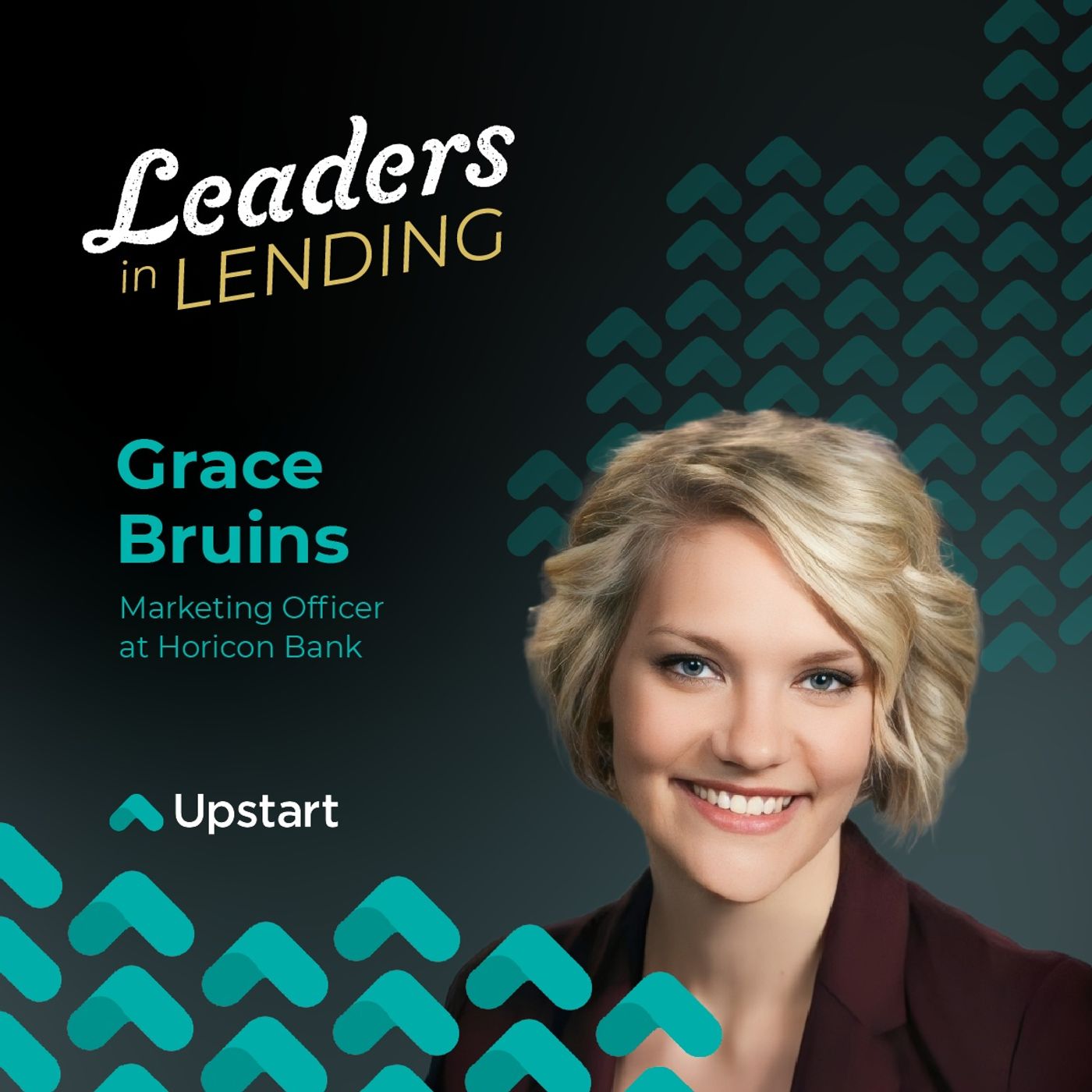
Whether it be blog posts serving to inform and educate the community or new lines of products available for sale, your customers can get a grasp on what is important to you very quickly. If your homepage creates an incomplete picture of your business, it may be time for a brand refresh. Grace Bruins, Marketing Officer at Horicon Bank, joins the podcast after recently working on a massive brand refresh with critical insights for getting your message across the right way.
Join us as we discuss:
- The three core principles of a successful brand refresh
- Enhancing communications and transparency for a cohesive brand image
- The importance of embracing collaboration or competition with FinTech companies
0:02 You're listening to Leaders and Lending from Upstart, a podcast dedicated to helping consumer lenders grow their programs and improve their product offerings. Each week, here decision makers in the finance industry offer insights into the future of the lending industry, best practices around digital transformation, and more. Let's get into the show. Welcome to Leaders in Lending. I'm your host, Jeff Keltner. This week's episode features my conversation with Grace Bruins, the a VP of marketing at a Horricon Bank. We talk about Grace's experience with multiple brand refreshes, actually thinks about the process identifying the true core values that resonate with your customers. Is how your institution really operates, what really makes you unique, how that gets represented through the process of a brand refresh. I really enjoyed the part of our conversation where we talked about fostering collaborative relationships cross functional in the order.
0:56 I think that's fantastic advice and experience for anyone. I talk about. Grace always delves into one of our passions, which is internal communications. How you get messages conveyed internally, where to do that and how to kind of think about effective internal communications with your employees. And then we talked at the end about the podcast you started. We share a few moments about being both unexpected podcast hosts, so I thought that was another fun part of the conversation for me. I'm sure you will learn as much from this conversation as I did. Please enjoy my conversation with Grace Bruns. Grace, welcome to the podcast, and thanks for making the time to join us today. Thanks for having me. I appreciate it. Yeah, I'm looking forward this. I like to start all of my podcasts with kind of same basic question, which is how did you wind up here? I doubt it was what you were dreaming of when you were you know, my teenage Sun's age fourteen, being in the banking industry. What's the path that brought you here? Oh, it's not all that exciting, Unfortunately, it was a series of I need a job. It's twenty ten and we're going out of our session. Might parents are like, you can't live at home, so figure it out? But necessity, But I yeah, absolutely. I graduated college and I was actually out in Washington, DC for about a year and doing some different internships.
2:20 A lot of learning and actually was offered a job out there, but it just didn't quite seem right, you know, something wasn't sitting well with me. So I moved home, and like I said, my parents were like, all right, you got a little time, but let's figure this out. And I you know, I'm rural Wisconsin, so communities are very close. And I remember thinking banks are a lot of times at the center of the community and a lot of times the center of the business community. So if banking isn't what I want to be in, if finance isn't when I want to be in, it's a great spot to start to get to know your community and get to know local business. So I applied at Horrorcon Bank.
3:01 Actually interviewed with someone who married my babysitter from when I was growing up, so that was pretty funny. She's like, wow, you're here an adult like you? Sure I am. It does happen. All the kids eventually do become adulting difficult for some of us to accept. So so yeah, I ended up working on the front line for maybe about nine months before an opening came in the marketing department and was really enjoying Horcon Bank and the culture and everything I was learning, So I was like, if you know, marketing was my background, so off marketing at Horricon Bank wasn't quite quite what I wanted it to be. It was just a great learning ground and a great place to be while I learned, And then turns out it was really what I enjoyed. And I've been there for twelve years now. Twelve years all right. I don't think I've ever stayed any company for twelve years success. It's just the reality of my I'm not the one year now, but I've typically been three to five and then yeah, and then find the new spot. I wanted to start by asking when we when we chatted earlier, you have mentioned that you have in the twelve years been through three or four brand refreshes, which is I think such an interesting experience. Some banks have never I think some people have never been through one, and you've been through several. So I wanted to start with kind of diving into that a little bit, just like, what do you think drives the desire the timing is saying, hey, now's the time to refresh. Then how do you think about tackling that process? Because it can be everything from like a I've
4:35 hear brand refreshes most like, oh, we hired an agency and we've got a logo and then we're gonna change the college team and we're but everything else is the same, And sometimes it's a more complete overhaul of a lot of things, down to business processes and employee manuals and how you think about what you're trying to do. And so I'm just curious, like, how you how you've seen it work out like winds, How do you know it's time and how do you think about sizing what it is you're trying to do? Well before my time, so previous to my twelve years, they went through a really big brand overhaul where they actually changed the name from Horrorcon State Bank to Horrorcon Bank, So there was a little bit of a change there, and that they really redid the logo, redid all of the branding even inside the branches. So since that time, we've built off of that kind of foundation of who Horrcon Bank is. These sort of cooler colored tones because it used to be orange and black and now we're blues and greens, and yeah, that's bold. That's a big change in right. So so then when I came into the department shortly after. We What really started it was we were looking at our website and it looked like every other bank's website. The functionality was awful. Making changes to it would take two to three hours minimum to get them to go live on the site, which is not good.
5:56 And this was ten years ago, but still you needed to have better otionality, needed it to be quicker. So we started looking into different website providers and with that came the opportunity to completely rebrand the website. Well, once you start there, you start to rebrand everything. Model project right, you start a little bit and there's always like, wow, as long as we're doing that, we might as well why not, Like I like those graphics that would look great over here, Let's let's incorporate them everywhere. So that was really where that brand refresh started. And then a few years later, actually we were going to go through another website upgrade. So the technology that our website had originally been built on was starting to become outdated, so we needed to move. We're like, again, this is just a great time to refresh the look of it. So then taking a look at all of our current materials, anything that we had out there. We were like, is this still the style we want to stay with or do we want to kind of overhaul it, And we did overhaul it. At that time, we had some newer employees, a VP of Innovation that was a part of it, and he brought in a lot of experience from different areas of the country and also had started his own fintech, so just a different marketing experience there. And so we changed and we really made the brand. I think the brand look was definitely more on that like sort of tech side, very very savvy, very cool, which was which was great, but after a
7:30 while it started to again it just didn't quite feel like who we wanted to be. We wanted to show people that we have the tech savvy of a bigger bank, but we still have this community bank, hometown bank feel right that that relationships are at the core of what we do. That doesn't mean we can't offer you great services that are provided by great tech, but in the end, it's the banker that you have a relationship with, not your computer. So again, I think through all of that, we partnered with an agency who came out visited all of our branches, really got to know us asked some really great, great questions about our brand and who we are and how our bankers feel about our brand and how they live out that brand, and then we completely overhauled again, which this one I'm hoping sticks around a little bit longer because that's a really big process. It is a big process I want to dive into. I think two things about that latest refresh that seemed really interesting to me. One of you said it was driven by in part by a chief innovation officer who is pushing things. That's it's an interesting place. I often find that brand can be down on the list for people like that. That like almost I think some senior executives and tend to think of the brand is like the paint of the code of paint you put on at the end. It's kind of like not that relevant. So talk to me about how that individual was engaged and how that changed, how they pushed your thinking and what you were trying to do or how you were looking at what you were Yeah. So he and I worked pretty cool stay together,
9:00 even though he was on the digital banking innovation side and I was on marketing. But one of the things that we really came together on was the website, and I was like, I don't like the way it functions. I don't like that any time a lender can't find a link, I have to put it on the homepage because they don't want to search for it. Like there needs to be and my marketers know what I'm talking about. There needs to be a better purpose for this website. You know, is it lead driven? What is it that we're trying to do? And we have to clean up this navigation. So he was great about just being very collaborative about what does that look like and how do we make sure that we are truly fulfilling the purpose of leagen with our website, and how do we make sure that the navigation stays where it is? And we kind of told the line of guess what, You're not going to find that link there, but I'll put it somewhere else where you can get to it really easily. I'll often it said that you cannot you can tell an organization's priorities by what makes it onto the homepage, like that the homepage now is like an indication almost of your of your actual priorities and how the organization like who actually has influenced what actually matters at the end of the day. Now what we like to say uh in calls whatever, like, at the end of the day, what makes it onto the page is sometimes an indication of what we actually value.
10:22 Yep. Yeah, So he was a big driver of it, and he especially with that original like just redoing that navigation of the website, and I think his experience in fintech and having built his own fintech and kind of having to build that brand too along with it. We just really connected on that and so I appreciated the experience that he was bringing in. I could, you know, take the other side of like, okay, but this is this is still who we are, and we can't we don't want to go too far outside of that. Like I understand exploring a piece of our brand, but once you start to make it look and not like us at all, that's that's not going to work either. So it was a great partnership between me. I think, I think let me let me ask you about that statement. It's a really interesting statement. There's this vision of brand that's like you paint what you want to be and then you become like it's like it's like a carte blanche to remake whatever you want the organization to look like when you rebrand, and then there's the kind of reality like a new brand doesn't change the way we operate, the way we've admits and operating rhythm.
11:26 That's internal values and things that are built up over years. And I find the most successful branding exercises don't really try and change who you are. They try and accentuate the parts that you like and focus on what's really true about the organization today. And I'm curious how you approached doing that because it's so easy to go, oh, well, we should value our customers first, and what you make the three corporate statements that anybody could have, and you go, that's our brand principles. It's not doesn't, doesn't, it's not us. It's just what we what we think we should say, or what we want to be, but maybe not how we operate. So how did you think about bringing who you really are through in that? It can feel so inauthentic if you're not able to do that effectively. Yeah, absolutely, I think people can tell right away, you know, this isn't you, This isn't this isn't who I get when I walk through the door.
12:11 Just because you show it on your website. For us, it was it was taking kind of this deeper dive into what makes us tick, what makes us special. And I think a lot of times as bankers in the community bank space, we rely on will we're a community bank. That's why people that's why people like us, we're community bank. But I think we had we had to take a more adjective look and say, okay, but customers don't say that. They're not like, yeah, I love my community bank like they don't. They don't talk like that. They talk about the people. They talk about, you know, the service that they're receiving and this challenge in their life that filled my lender over here in Waucon was able to help me with. And that's what we had to start exploring. So one of the cool things we did what this last refresh was we put people from all over the bank in a room. It's about twelve maybe fifteen of us there, and it was all different product lines, right, So we had retail, we had business, we had back office, we had frontline, and a lot of leadership and we were asking them questions about you know, I remember one of them distinctly was if you have an awesome day at horric On Bank. You go home and you turn to your significant other and you say, I had an awesome day, and they say, well, why, How do you answer that question? What makes a great day at Horrorcon Bank for the employee? And I think that's a lot more telling than what
13:43 makes you special? You know what I mean? You start to describe the institution versus me and myself, which is really a part, an extension of that brand, that institution. That's a fascinating question. I'm curious to go to do that exercise with a bunch of employees, but that sounds it sounds really imagine you get some great insight. My other question, how do you think about is you? Is you come up with those values or those things from those experiences. It feels like there's also this level of the institutionalizing, that kind of trying to spread what we're trying to highlight through not just brand features and logos and text on a website and an iconography and a feel, but also like how we actually train employees, what our manuals say, what our scripts look like, like, how we feel like we're actually teaching people who are maybe newer to the bank, what it means to live those values and how it looks so they will have the same answer to what is the great day it looks like, maybe not exactly the same, but feel the same things are important to them in a great day. How do you think about, like where does that fit? Is that something you have to leave aside for HR to write the manual, or is that become a part of the you know, part of the process of defining the brand. It's it's such an interesting, you know thing that kind of sit at this intersection of like what the brand is trying to be from marketing point of view, and what the operating teams are trying to generate from a processes and procedures point of view. I'm curious how you think about navigating that intersection. I think it's a it's a really collaborative effort. You know, if HR is trying to do it on their own, I don't know that it's always necessarily going to spread across the organization. So you need to have your leadership really living it out and willing to talk about it. And for us on the marketing side,
15:16 it's any time that we can include some of those brand values in especially written copy. So we use Viva Engage, which is internal for us, and we have you can create different communities for different types of communications. So one of the communities we have is called Cheers for peers, and so all employees can post on there like kudos to this slender go went out of their way to help a customer and you know that sort of thing. And so anytime that marketing posts, a lot of times we'll try to say, hey, kudos to so and so because they are carrying banker and we have a pneumonic for care and yeah, and so we just really latch onto that sort of word and trying to write that throughout the copy and then explaining like here's what a Cairen banker is. And we also were doing we do videos, we do weekly meetings, virtual meetings, and again just trying to weave it into some of that stuff to make sure people kind of understand, like, well, why do we do what we do well. It's a big part of our mission, it's part of our vision to live this way. And our training team too has collaborated very closely with marketing. When they start to bring people in, we do like a kind of a culture day, so get to know Horcom banks culture, how we speak and how we relate to one another and take care of our customers, that sort of thing. And so they have built out different presentations just about Okay, here's who we are
16:48 in the community. This is how community views us. There's certain expectations of Horkcom bankers out there that we do give of our time and we take time to help others, and so doing that right off the bat, I think sets an expectation. But then marketing has to kind of well everyone, but I think marketing has a special role to play in explaining and bringing that up. And again just like weaving it through the story, this is who we are and who we say we are, and look all these people are living it out. So you've mentioned twice now in your answers great collaboration with other groups, right, the Innovation Officer, the HR and internal teams. How do you do that? Like maybe not tactically, but like I feel like so many places I hear, well, it's hard to collaborate. We don't have a great you know, people don't get along, and there's kind of two sides of the fence and there's trains running on different tracks or pick your metaphor of the day for we're not well aligned and people don't listen. And I'm curious if you have advice or things you think make you guys effective at that collaboration, because I feel like so many the answers come down to, like, when you collaborate, well, it just kind of works. And yeah, so the question we go, well, how do you how do you build a culture or how do you as an individual kind of foster that collaborative spirit and engagement because I hear a lot of places where it doesn't work, and so I kind of want to learn the lessons like how do you are are there tis pro teps on how you make that actually be the way people work? I think I think a big part of it is up to the individual to go into each conversation, each interaction just very open minded.
18:22 You know, there's a lot of times where I'll be asked something, Hey, marketing should do this, and you know, it's really easy to look at your plate and be like, well, let's I can't fit it. It's not going to work. And instead, if you go into that conversation and just start to start to ask like, well, what is it you need to accomplish or what's what's the pain point here and being open to that. Sometimes maybe it isn't a marketing function, maybe it's somewhere else. But if I can help you figure out what that is and I can help support it in some way, I'm there for it. And I think that it has to be an individual mindset in a lot of ways. But I think you have to see that model, you know, at every level, right like you need to see it modeled across senior leadership. If they're not collaborating, the rest of us really aren't either, you know, and every manager has got to be able to show each other respect, you know, when you disagree, but just really be open to listening. I think there's been multiple times where I go in with with the thought process of either this is how this is going to work, or this is not going to work, and kind of checking that at the door and being like, there's something going on here that I really don't know anything about its surface level for me, and I need to understand a little bit deeper so that we can all be better off in the end. That's a fascinating answer, and it reminds me of there's this saying I here. Sometimes in the tech world, usually we're talking about some features some product just seems like help build that, and this
19:53 is the answer, like who the hell built that? And why? Is usually a very thoughtful, intelligent person considering a tradeoff you have not yet encountered, and you go, oh, why did you? And they go giving answer and you go, oh yeah, oh that yeah, okay, Now maybe maybe I would have like now I'm struggling with why that's the wrong answer, and that attitude of like coming in not what kind of idiot built this thing? This is so stupid, Like hey, you asked me for this thing, and now I'm like, I'm trying to understand why you think this is right, or why you did what you did, why you built the thing this way, why you have too many things in an alf that don't make any sense? Like how did we get there? Is often a better approach than like, no, way, that's not the way we do it.
20:33 That doesn't work. Whatever you're got to commit that of the mind. I love that. I love that answer in general. I know another area you are really passionate about is kind of internal communications, how we communicate our message across employees and teams, trying of related to the collaboration, but talk to me about how you kind of deliver that message and make sure it's it gets hurt and understood throughout the organization. Yeah, we've you know, as a as an organization, I would see in the last like two iss years, we've really tried to increase communication and just be very very transparent. Not that we weren't before, but we have more avenues to do it now, so we use Viva Engage. We've put a lot of messaging out there.
21:15 We're trying to get away a little bit from email all the time because things do get lost, and I think sometimes it's really tempting to be like, oh, Grace of Marketing sent that I'll look at it later. It's really easy, and I get it. I get it, I understand. But you know, we want we want a culture of I think a culture of curiosity too, that people are able to go out and find information that they're looking for, that it's right there at their fingertips. So we've created different communities and Viva Engaged to be able to do that kind of segment out the communication. But one thing we did, oh man, this was about a year or so ago, we started creating. I think we called it Porcome Bank News, and it was just maybe five to ten minute little videos that we would put out on be the Engaged. You could watch them anytime, and it was typically my self interviewing a senior manager a department that had a big project going on that they wanted to make sure everybody understood, and then we would follow up that communication with either more posts or different information on our Internet. So it was just sort of cross posting that in different channels and also in different media because people do learn and consume differently. So if you're somebody who needs to hear it, I want to make sure it's recorded or on a video. If you're somebody that would prefer to read it, I've got to make sure that that's available to you too. How do you get internal teams comfortable getting on video? Like I feel so many times like this
22:47 is nervousness around a video two of us going to the whole company going O, don't know what I mean. I'm very used to it, so I sometimes go turn the camera whatever, but people will get nervous about feel like I'm going to say something stupid or whatever. Like how do you think about getting people comfortable sharing their message, not just you posting. That's easy, but I think there's a lot of authenticity that comes from having the people doing the work coming on and saying, hey, here's what we're at, or here's what we're doing, or here's what's happening in our world. And that really feels like connecting the broader organization, not just a marketing channel. But how do you get people comfortable doing that and putting in the time that's required to actually sit down and do that. I feel like that can sometimes be a roadblock for this. It can, it can, and I think it was for us for a long time. People really tried to avoid it.
23:29 There was every reason why you shouldn't record with Grace. But one thing that helped was our he's now our president. He said, you know, told this team like you will do this, And he was starting to assign like certain dates if there was sort of a date open and so you know, the head of lending is going to talk to you on this date, or how do retail is going to talk to you on this date. But for me, what I found was, you know, finding a time that worked for them, making it feel like it wasn't an imposition to have to do this was big. And then before hitting record, just taking like ten minutes to sort of say, Okay, what do you think employees need to know?
24:15 And how can I make sure that I ask a good question to get that answer from you, and start of almost practicing the interview, which I know a lot of people are like, oh, it feels too rehearsed. Well, it really helps your guests to feel that much more comfortable. And when it's internal like that. You know, some people they were writing out scripts and I was like, it's you don't okay like the first time, but then then we would do it a second time. Hey, why don't we just talk like we're having a conversation. And I think, you know, a lot of employees really enjoyed it. They enjoyed seeing their senior leadership give this kind of feedback and explanation and it does feel very transparent and real.
24:59 And for some of those senior leaders they talk a little bit above what are most of our employees can understand. So having a second person on to say, okay, so what you're saying is and then sort of rephrasing it, I think helped understanding a lot. Yeah, there's a there's a lot more that goes into that interviewing and making sure you break down what's being said into the proper level for your audience of like context understanding, or often I find backing up to like give me, give me the big picture, because you're you know, you're you're talking in the weeds, and I want to know, like, you know, how that ties to the mission or the goals for the quarter, or the goals for the year, or what we're trying to do in ways that you can when you're talking about a project and get lost. So there's some art and making those connections, and I love the natural style. It's great. I think it's great that you get people there because I do feel like it's so different when it feels like you're reading a script into a teleprompter and then you have videos, you know, a little intro and outro, and it feels like a TV ad, which is very different than feeling like, Hey, I sat in and listen to people having a conversation and they're just talking the way they would in a meeting or stopped them at the lunch and have lunch with them and they go I think that it's got a much more natural feel to it that people connect with.
26:11 So as we talked about recording with Grace, I understand you also started a podcast. Talk to me about why why why? Why does one I get asked that question, like why why does it like a career transit. I actually got asked ones, yes, it's your next career transition now especially, But talk to me about the thought process behind getting into the podcast business. Yeah, so the podcast that has been something that we have toyed with for a while. You know, it's been a few years of talking about it. And again, our president, our current president was head of marketing at one point, so this was sort of an idea that he had had for a while and he enjoys podcasts, and years like this would be really cool. And I remember being super resistant because I was like, yes, it would be cool, but we have no plan and I don't know how to do it. Another feeling I know that feeling very well. So we eventually we kind of sort of stumbled upon actually a partner called podcast Town that's in Milwaukee area, and they do all the recording, the editing, the publishing, all of the stuff that we didn't know how to do. And they were even better than that. They helped us just sort of think through all the thoughts that we had understand and really define like who is the audience that we want to make sure is understanding this information, getting this information from us?
27:27 What kind of guests do we want to have on here? And talking through like that run of show and having a partner to be able to do that made me feel a lot more comfortable. Like my type. It was like, Okay, I have a plan, I can I can do this. I can make this work, you know, And from early on I was like, please please let me host because this is fun to me. You were interesting, yes, I was, Yeah, I love the storytelling side of it. You know. We bring in a lot of guests, a lot of them who haven't done podcasts before, and they're just on to tell the story of their business. So our podcast is banking on business and it tells the story of different entrepreneurs or partners of entrepreneurs who offer a lot of advice, usually from their own experience, and so being able to just talk to people about what they've experienced, talk to them about their story of their business, which a lot of times is like your child, right, like this is something I raised up and grew and into. Yeah. Yeah, so much pride in that, and so very early on I was like, you can put any co hosts you want, but if I could please be a part of the storytelling, I would love that. And luckily they said that was okay, So that's very cool. It is interesting. I find that with the right agency and support, it really doesn't take much more than a little confident as a host. It took me six or seven episodes before I felt like I had a rhythm where I went okay, I kind of like I kind of I was trying to over prepair and then go,
29:00 I don't even know what And now I'm you know, you feel much more comfortable and like, you know, kind of know how the rhythm goes and how to how to how to get to where you would you want to be. But that's a that's an interesting that you were younger. I think you should also. I went, really, okay, I'm not I'm not looking for it. Yeah, do you ever go back and listen to your early episodes and go, what please? Don't anybody you know? And if I were really dedicated to being good at it, I know that I was. It's like watching game tape, but I can't stand to hear my voice. So this is the only time I hear the podcast is my kids know this, and so sometimes in the car they put it on just to a name. I hear the intro welcome to Leaders, I'm like, what did you guys? Turn that off? So I can't stand to It's just I'm not ready for the criticisms I will have for myself. So I'm like, you hear about the actors who want watching themselves on the screen. I can't listen to the podcast, but I'm gonna get your take on this. I had an idea for a podcast it's not too dissimilar from yours in some ways that I'm not not up doing. I'm like, I could do that podcast.
29:56 Yeah, in mine. I didn't have a name for you yet. I had some inappropriate names my mind, but I wanted to bring on entrepreneurs or executives and ask them only about the biggest mistakes they've ever made. The like, oops, I just killed the bit, you know, because I feel so much for entrepreneurs in particular, there's kind of like this fear and there can be the impression that everybody else is doing it great, and you're just messing up because you know, what's it gonna say. You only read other people's press releases, but you know, you see, you get the picture from other businesses of what they tell the reporter, but then you go into ligature internals and go their internals look like yours. It's just that they don't go tell the report of that, and so it's a very distorted view of what other entrepreneurs or business owners are experiencing. And I kind of want to like give me just like the moment where you thought, oh my god, I'm gonna get fired. I just killed the business. I'm like, I blew it all up. Let's just talk about just those, none of the because somebody the podcasts that you could bring on this successful entrepreneur, they tell about how they killed it, and you go, well, tell me about the time you almost killed it, like almost destroyed the business, not not really had a great time, Like, tell me about that, and let's talk about those. I feel like it would just demystify this sense. So that was my like my brainstorm during COVID. I was like, yeah, this would be a fun thing to do, just like that. I've got a few of my career that I could go into. So I thought I'd just love to hear other people's like, oh my god, what did I just do. I once interviewed a popcorn business, so they do like small batch popcorn, super delicious, and one of the questions I just needed to know, and I was like, whether or not we keep this in the podcast? What was the worst flavor you've ever made? It's like, I just find it interesting. It was what was it? It was like a
31:30 boison berry or some kind of berry that like just all the popcorn got super soggy. She was like, I had like twelve gallons of popcorn that it was like mush, so it was not good. I was like, cool, Well, what did you learn? Because I think that's the next step, right, And she could tell me that. She could say, well, you know, here's what I learned and here's what I didn't do next time, And so I think it's really bad. Best learning it's usually come from from failures, not successes, right, I did you learn more from when things don't fly work out right? And sometimes we overlearned the lessons of success because you think like it was all the things you did that made a success something. It's just caught a caught lightning in a bottle kind of a particular moment in time got lucky. And then you go, oh, it's because of X, Y and Z. I mean, is it Maybe it's not, you know, and we can we can overlearn those lessons where success failure is a little more like clear, like this didn't work and this didn't work. All right, Gris. I got three questions I love to ask everybody at the end of this podcast, so here we go. Number one is what's the best career advice you've ever gotten? Oh? I think the best career advice I've ever gotten was actually probably shortly before I started my career.
32:37 I had an advisor in college who you know, we're very end of senior year and I was excited about wherever I was going next, and he was like, here's the deal. You are smart, and I think people are going to assume you're smarter than you are. Said, you're you're a very still talk right there. Yeah, And he said the thing is with that is that you you might be afraid to ask for help, you might be afraid to show them you don't know something, And don't fall into that. Don't be somebody who is so scared to ask a question that you know you make those mistakes simply because you didn't ask, simply because you didn't listen.
33:24 And I've thought about that a lot, because I think I think a lot of times when you're in a position of leadership, if you are maybe a high performer in your job, even if you're not leading a team, you start to get this mentality of like, well, I can't I can't act like I don't know that I better. Luckily I have Google at my disposal, so that helps a lot. But you know, there are people I need to listen to, people who know this industry a lot better, and so I need to be willing to hear that. So that's stuck with me for a long time. I love that one. I actually want to post that is one of my superpowers is the willingness to ask any question that makes me feel stupid. Like I think it's a total superpowers point. You said you've seen them, like everybody this industry must know that acronym, and I have no idea what it means. Maybe I'm the idiot, but can you just like walk me through that one? And the number of times I do that, and then three people text me right for me, I thank you for asking that I didn't know that I know it. Well, how come nobody asking? If nobody knows? Like I don't write, but like that's a real power to be able to do that. So I love that answer cause I think it's it's so true and so under such a simple skill and so underappreciator, and it's value that it's absolutely kind of unbelievable to me.
34:30 All right. Second question, what's the best advice you've gotten about the consumer banking industry of the banking industry in general twelve years had I think? I think forming a relationship with your lending team, especially on the marketing side, is huge, you know, having their trust in you and what you're doing, and again opening up lines of communication. Our head of mortgage lending is someone I've worked with for many years, and just stopping in his office and again asking questions when I didn't understand something, or allowing him to just over explain things to me because that's something he enjoys. Which is fine. I learn a lot, but just giving that time and space to those relationships is huge and it's going to it's going to help you continue with that trust down the road so that when you say, Okay, here's here's where we're going to spend our marketing budget. It may not be the billboard that you like because it's your picture up there, but it's here's the reasons why, and then they can trust that in you because you've built up that relationship with them. I love that. I'm imagining that this is part of why you're able to talk about collaborations so much because investing in those relationships early before it's transactional nature, before you're come and saying here's what I'm going to do for you or not do for you, It really leads to that I think ability to have a collaborative environment and relationship. Great. Last question is what is one bold prediction for the future. We always like to put these into groups of bold Yeah, something we can like, you know, come chat if you got right or got it wrong, hold your feet to the fire when
36:01 you're going to be a repeat guest, that kind of thing. Super Bowl, super Bowl winners to uh, you know, federal reserve rate heights, so you can take your pick on where you want to do with this recession. Never we get it, we'll get all sorts of stuff. Man, my bold prediction, I would say, well, I've got to I'm from Wisconsin, so not that bold packers season, don't don't expect a lot about maybe bold prediction underestimate. I love it's good. Yeah, But on the banking side, I would say, you know, especially again, I'm coming from a community bank perspective, but I think that community banks that aren't going to that don't embrace FinTechs and and fin technology that's that's coming, I think that they are destined to fail. And I think that they need to start viewing that relationship not as competitive but as collaborative because a lot of times these text can help us and they can help us serve our customers, and we need to be willing to hear that and start to think a little bit outside of what we've always done as an industry. We don't move quickly, but we're going to need to start because change is happening changes here, and so who are those partners that are going to help you change and adapt in a way that your customers are expecting from you know, I think that's a perfect place to leave it. Grace, thanks so much for joining me today.
37:28 I really appreciated the conversation. Yeah, this was a lot of fun, Thanks for having me. Upstart partners with banks and credit unions to help grow their consumer loan portfolios and deliver a modern, all digital lending experience. As the average consumer becomes more digitally savvy, it only makes sense that their bank does too. Upstarts AI lending platform uses sophisticated machine learning models to more accurately identify risk and approve more applicants than traditional credit models, which fraud rates near zero. Upstarts All Digital experience reduces manual processing for banks and offers a simple and convenient experience for consumers. Whether you're looking to grow and enhance your existing personal and auto lending programs or you're just getting started, Upstart can help.
38:14 Upstart offers an end to end solution that can help you find more credit worthy borrowers within your risk profile. With all digital underwriting, onboarding, loan closing, and servicing, It's all possible with Upstart in your corner. Learn more about finding new borrowers, enhancing your credit decisioning process, and growing your business by visiting upstart dot com Slash four dash Banks that's upstart dot Com slash four dash banks. You've been listening to Leaders and Lending from Upstart. Make sure you never miss an episode. Subscribe to Leaders in Lending in your favorite podcast player using Apple Podcasts. Leave us a quick rating by tapping the number of stars you think the show deserves. Thanks for listening, until next time.

