The Buckeye Boom: Ohio’s Growth in Tech



When it comes to the tech revolution, it’s not all about the coasts or the biggest cities. Although areas like Silicon Valley continue to dominate the headlines and the public imagination, there’s an undercurrent of tech growth and innovation in “Heartland” and “Rust Belt” areas like Ohio.
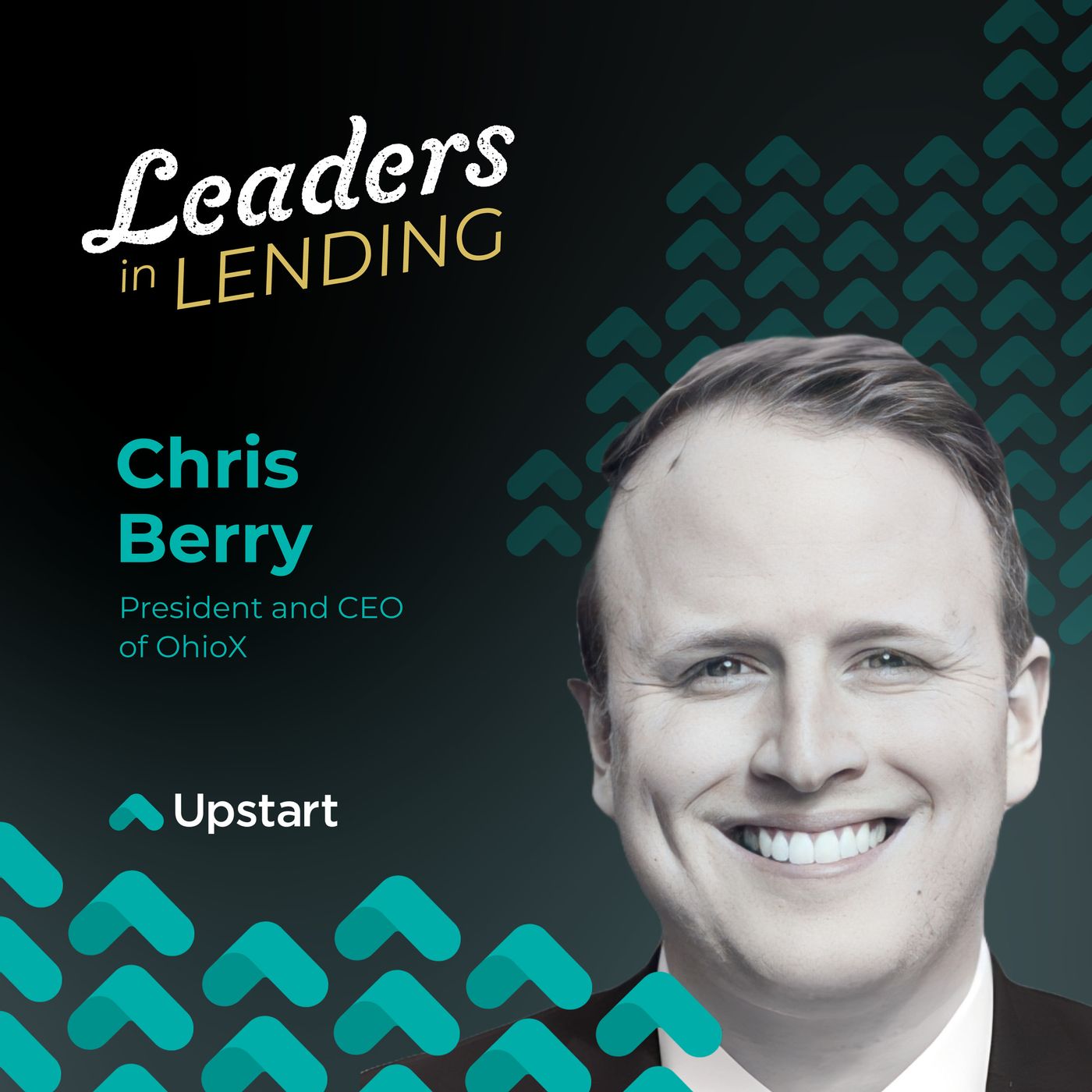
This week, host Lynn Sautter Beal talks with Chris Berry, President and CEO of OhioX, about the vibrant growth of Ohio's tech industry. Chris explains the industry’s historical evolution in the state, its current challenges, and significant breakthrough investments from major companies like Intel and Google.
Discussed in this episode:
- What strategic leadership and groundwork efforts led to multibillion-dollar investments from Fortune 500 companies
- The uniquely collaborative nature of Ohio’s tech industry
- How states like Ohio can leverage their geography to further develop their tech industry
- Initiatives to expose K-12 students in Ohio to skills and careers in tech
0:02 You are listening to Leaders in Lending from Upstart, a podcast dedicated to helping consumer lenders grow their programs and improve their product offerings. Each week, here decision makers in the finance industry offer insights into the future of the lending industry, best practices around digital transformation, and more. Let's get into the show. Hi. This is Lynd Soderbill of Upstart, and welcome to Leaders in Lending. I will be joined today by Chris Berry. Chris serves as a president and CEO of ohio X, a statewide nonprofit working to build Ohio into a tech hub. Ohio x is a member based organization with representation from Fortune five hundred companies, universities, research organization, startups, and tech focus businesses.
0:51 The work of ohio X centers around connecting, promoting, and advocating for tech and innovation in Ohio. Let's get started, all right, Hi, Chris, thanks for joining me today on Leaders in Lending. So we are We're going in a slightly different direction with today's podcast, a bit more tech and industry focused and a little bit less focused on lending. So I'm excited for our chat today. Yeah. Well, thanks for having me. Lynn, big fan of you and the Upstart team and yeah, just don't ask me any overly technical questions and we should be in good shape. Absolutely. So, you know, I think Chris, like you have a really interesting background and like honestly many of the people I've had on the podcast is guests.
1:32 You spent some time in politics, both in DC and Ohio prior to your current role. You know, can you talk me through kind of your your career path and and what led you to leading Ohio X. Yeah. Absolutely, well, so my background, as you mentioned, isn't really technology, but I worked in government. So I started my career in DC and then left and if we're talking finances at the State Treasury in Ohio for eight years. And I grew up always with a kind of a passion for government and policy, and you know, I love shows like The West Wing and you know, kind of history books and all of that, and so that's what I thought I wanted to do, and that was kind of my goal when I was growing up. In college, we moved to Washington and work in that space. Kind of quickly realized I didn't love living on the East Coast. I didn't really love, you know, the big city of Washington, d C. Not quite like New York, but still a pretty big metro area, and so I wanted to come home, and that's when moved back closer to family and started working at the State Treasury. And I think kind of government service is a very fascinating vantage point, especially for what I'm doing now, is because when I was at the State Treasury, we started doing more and more technology focused projects. Most people don't think of innovation and government just like they don't necessarily think of technology in Ohio, and so it's kind of a, you know, an interesting parallel between the two. But one of which was we made Ohio the first state to accept bitcoin tax payments, and this was a number of years ago. At this point was I think the third government in the world that did this, and so that was
3:02 an interesting space. But we were working with a fintech in Atlanta to make it possible, had a couple other interesting tech projects that were really fascinating to me, and we could see the impact where we'd work with, for instance, Silicon Valley based startups, and then through that process, we were asking ourselves, well, you know, why are we working with FinTechs in Atlanta and Silicon valley based startups and what does the tech landscape look like in Ohio. And when you work in government, you end up working across sectors, across industries, largely working with the statewide industry group. So it could be like the Ohio Bankers League or the Ohio Farm Bureau groups like that, but tech historically in Ohio hasn't had that same type of statewide industry coalition that could work to connect and promote and advocate. And so long story short. After leaving government spending time in the private sector, a group of entrepreneurs and myself saw this need and kept seeing just an opportunity to make an impact, and we slowly but surely put this Ohio x idea together and just a band of volunteers came together to make it happen, and here we are today. Yeah, that that's super interesting. I did not realize that Ohio was the first state to accept bitcoin for tax payments. I've never attempted to pay my taxes via bitcoin, but I was also surprised. This week I saw an article that the first write up by Satoshi on crypto was actually fourteen years ago, which surprised me. It feels like it's more current than that, but fourteen
4:35 years is not brand new. So I think a lot of a lot of our listeners are going to be surprised by the fact that Ohio led the charge there. So really, like you know, Ohio actually were saying, you know, it came about just kind of a group of both people in the public sector, entrepreneurs. Different folks got the idea when was that, how long's Ohios been around in the state, and you know, what do you really see as the primary goals and what the organization wants to accomplish. Yeah, so we launched in December of twenty nineteen, and as I mentioned, as a group of volunteers entrepreneurs, I was the only person actually that had a government and policy background, and so as we were thinking of you know, hey, there are some challenges that we repeatedly hear, and that was largely you know, we have to do better at promoting the tech industry in Ohio. Pre COVID especially, people didn't think of this as a destination for technology and that's just not the case. Is you know, there's incredible companies and people and ideas. The second kind of challenge or frustration that a lot of people were mentioning was we have a really big state, and Ohio is just geographic makeup is quite unique in that we're more like California and Texas and Florida, and that we have three really big metro areas Cleveland, Columbus, and Cincinnati that are spread out. Whereas you look at like a Chicago, Illinois, and Atlanta, Georgia, and New York, New York, a Boston, Massachusetts, those states typically have one really big metro area where all the tech is concentrated, and then the rest of the state is you know, kind of has different industries and sectors, and so in our state we're
6:09 spread out, which makes it really difficult. But if you think of the Bay Area we're Upstart is headquartered. It's not a single city. It's not like every It's not like Manhattan where all the financial companies are largely in Manhattan. It's it's from Berkeley to Palauto and everywhere in between. And if you were to drive through that, that wouldn't be a lot of fun to go from you know, the north end of the Bay to the south end and make a big loop. But that's really no different than Ohio, and that you look at our state and if you look at financial services, there is incredible companies in all of our major metro regions and we're connected by an easy highway system, and so in a lot of ways, it's just kind of taking something that is so simple, of thinking of this as a statewide tech opportunity. Again, financial service is a perfect example, and making it easier to connect, promote, and advocate. And so that's that's what we do today. As I mentioned as quickly we launched in December of twenty nineteen all volunteers. COVID hit like two or three months later. And so if there's ever a good time to start a nonprofit trade association that's about bringing people together, doing it at the beginning of a global pandemic that we've never lived through is a really awful time to do it. And so we kind of paused for a little bit. And so technically we're about four and a half years old, but really we're probably about two or three because we kind of had to, you know, just figure out what the world was going to be in the middle of COVID, like everyone, but we pivoted really quickly into the digital the virtual kind of the online community, which makes sense for technology and remote companies get that, and it really opened up a world of opportunity
7:43 where it helped people see and it helped accelerate our work and that hey, if I'm in Cleveland, I can just as easily connect with someone virtually in Columbus and Cincinnati and Dayton and Toledo and Acorn and Canton and Youngstown as I can someone in my own backyard now. And so COVID very much accelerated our work. And our pillars are connect, promote, and advocate. So connect the people, the companies, the ideas, celebrate, promote it, make sure that we're telling this story of Ohio successes and upstarts story is one of those leading ones, and then advocate for it. There's so much space, especially in a regulated industry. You all know of the relation between industry and government, and that's something that we're kind of filling this void for the first time in our state. Sure, And I definitely think the you talked about the size of Ohio and that you know we're connected by the highway system.
8:31 I think that's a common kind of maybe joke about the Midwest that you know, we just get in the car and drive wherever we need to go fourteen hours. It's fine, seven hours, it's around the corner. But it is true that, you know, Ohio is a very large state. I think it's a larger state that many people realize. But it is drivable and you drive between you know, the three c's as we often call them, and there's a lot of different interesting industry happening in each of the major cities. I think some of the listeners probably have not heard how how we've been describing Ohio over the past several years and much the Midwest, but the Silicon Heartland phrase. It's kind of a fun play on Silicon Valley and farmland and the you know, the heartland of the country. What do you think makes really the Silicon heartland and and Ohio, but really the Midwest what, you know, have really so much promise as we grow that's becoming such a kind of additional center of tech and innovation. Yeah, and for those that haven't heard that Silicon heartland phrase before, that was really born out of Intel coming to Ohio, where a couple of years ago at this point, Intel made an announcement that for our state is transformational because we have never had a semiconductor industry in Ohio. And so when that came to be, Intel's CEO and some others started playing with that phrase Silicon Heartland like Silicon Valley, and it's really caught caught hold, and I I think it shows the promise, the
10:01 potential, but also just the passion of the the technologists across Ohio at companies from Fortune five hundreds to startups and everything in between that have kind of used that phrase as like a bit of a rallying cry. And I like that it's not about one city, it's it's you know, it's it's where does the heartland start? And ind so there's a lot of people that can take pride in that. And so, you know, in terms of what is the kind of the Midwest the Ohio specific opportunity, I think in a lot of ways, Well, one, it's quite big in its areas and our state of excellence that we have a long, rich tradition and so financial services, insurance, agriculture, manufacturing industry four point zero, advanced manufacturing, healthcare.
10:45 Those are all areas that our state especially really excels at. And whether you're in northeastern Ohio, Central Ohio, southwestern Ohio for as diverse as are our state and region. Is the sectors and industries are all really really similar. I think they also happen to be areas that really frankly matter. I jokingly, you know, like to say that I don't know if the next TikTok is going to be built and born in Ohio. But banks and financial services that allow people to transact and get money for lending and grow companies, you know, that takes place here. Insurance that is something that we have a fantastic pillar in. Again, healthcare, We're better place in the world to come for healthcare than Ohio. You have the Cleveland Clinic on one end of the state, with University hospitals and Metro Health. You have Ohio State, Wexner Medical Center in Columbus and Cincinnati. Cincinnati Children's has been ranked the number one children's hospital in the US. And so people literally fly to the or fly to Ohio from across the world for healthcare. And so we have these, you know, really pillars of excellence that are incredible sectors, industries that matter and are important. And that's the Ohio tech opportunity. And then if you think about kind of beyond that, I think in a lot of ways. You know, we have to seize this for for America in some ways because we've seen what reshoring or what taking companies abroad has done. I grew up in northeastern Ohio and Akron, which is the rubber capital of the world historically goodyear in fire snowver there. My family is there because of that
12:15 industry and what that has done to places like Ohio and other states when those jobs go overseas well. We all kind of know that the geopolitical trends of of what's just happening in the world and how complicated that is. So COVID kind of created these opportunities, and Intel and others are deciding to make things that really matter and that are you know, so strategically important right here, and so we're kind of capturing these opportunities for the first time in a long time. And our friends at Jobs Ohio like to call it a generational opportunity where we haven't seen this type of momentum and opportunity capture before and so hopefully we can take advantage of it, which I think we are, But you know that work isn't done by any means. Yeah, I think the Intel piece has been super interesting and then kind of what's fall it on beyond that.
13:00 I think lately we've been talking about the you know, the megaloads as they're bringing supplies and to build that intel plant, and the amount of planning that goes on and just transporting the raw materials that they need to start building that facility is really significant. Uh. And it's a good point you made about the kind of the rubber industry and the various industries and and really across the Ohio and much the Midwest of what became the rest Belt. And you know, I grew up an hour north of Columbus and a small town and had a number of industries Mansfield tire, Ohio brass ak steel, so a lot of that kind of core industry that that used to exist in the Midwest.
13:43 And certainly watch that move away and watch you know, my my parents' friends lose their jobs and and have to retrain to do to do new things, whether they were you know, working at a factory or in a management level. And and uh and my parents both actually had the opportunity to train people overseas as part of that being on the more on the management side of it. So uh, it is really exciting, I think to see this this amount of development and growth. And I've lived in Ohio my entire life and have not seen this this amount of positive change until until recently. So you know, we've definitely seen the data centers come in, like the Meta Google and and a w S has some some cloud centers here. What do you think makes makes really Ohio or just even the central Ohio region, Uh, the right opportunity for them? Like, what do you think is is do you think there's just some you know a little bit of fomo Now that everyone's there, it makes sense, But but kind of what's bringing them here?
14:43 And what do you see that as creating opportunities for employees, especially kind of new younger people entering the employment market, Like what will that mean for them as there as they try to define and develop careers. Yeah, so I think that the data centers a couple all of the things that you know, we've heard, and those companies you mentioned are great partners and members of ours as well. You know a lot of it's land where central Ohio you know, we don't have It's a great place to live, but we don't have the mountains, we don't have the beaches, those types of things. So and so there's and also Columbus is just historically like a younger town. It's people like you and me moving here from you know, north of north of Columbus by an hour. I'm north northeast of Columbus by two hours.
15:26 And so Columbus has really had this population growth from other parts of the state over the years. And so we don't have the mountains, we don't have the rivers like as Cincinnati does, or the lake like Cleveland, and as a younger city, we just have had a lot of land and so land energy. There's incredible energy kind of energy environment here, AEP and others that just you know, the data centers they needed the energy of course, and so there's some of those pieces. I think there's also a lot of business leadership that helped pave the way for this. There's groups like Jobs Ohio again that are out there aggressively recruiting and kind of going after some of these really big opportunities for our state. There's also groups like the Columbus Partnership, which is a coalition of the largest businesses in central Ohio that have been laying the groundwork for like this, For many many years. It's not something that just you know, happened. I think that's one of the stories that you know, certainly you all know and and and the upstart story has been part of that. But I think sometimes people just think these opportunities come, but largely it's leadership that you know, they're taking things again like the land and the energy. Well, people could kind of just stop there, but you know that they set the stage of you know, placing you know, strategic bets that that helped attract these and so it's been fantastic to see over the really the past just five years or so where these companies are really coming in and droves. And this hasn't as you know, also being from Ohio like that, these opportunities haven't always occurred to our state. And when you can have
16:57 a map of the state with logo like Intel and Google and Meta and Aws and Microsoft and Honda and LG and their four billion dollar electric vehicle plant and Ford and their ev plant in northeastern Ohio, I mean these are literally multi billion dollar investments that are adding up and talk about a powerful signal where I remember when Intel broke ground on the state, I had the opportunity to go then President flew In and CNBC and Swalk on the Street they were broadcasting live from from the from the announcement and the site, and so you know, we're in these headlines with global names and people have to notice and pay attention. And I think there's a real opportunity here that is happening and being seized because of because of a lot of great leaders that have been laying this work, laying the groundwork for this for a long time. Hey there, former host Jeff Kelviner here to let you know about an exciting opportunity to strengthen your understanding of artificial intelligence and financial services. If you want to better understand the fundamentals of how AI models work and how they will impact the financial services industry, your in luck. Upstart is launched an online course and certification designed to do just that. This course will give you the knowledge you need to leave the conversation about how your organization can best leverage and manage this revolutionary technology.
18:15 If that sounds interesting, check out the course as it's currently free for a limited time. You can learn more at upstart dot com Slash AI Certification. Again, that's upstart dot com. Slash AI certification. Thanks and now back to the show. Yeah, I think Ohio surprises a lot of people. I know you mentioned upstart when we opened our offices here as the leadership of the company, and the headquarters was in San Mateo, so in the Bay area was looking for Actually it was in San Carlos at that point and not moved to Salmonteo. But we're looking for that second headquarters location. Ohio hit all of the boxes and I think once that decision was made, it was about ninety days until they're were, you know, people on the ground, uh in an office and Columbus and and we've only really grown since then.
19:04 And while we are primarily remote and we maintain our offices here and and spend a lot of time in them. So it's been a great location for us. And I think the it's you know, been super interesting as we have people come in from around the country who may not have traveled here, it may not have been in Ohio. They are always surprised how much they like Columbus, Like, wow, this is really walkable. There's all these great restaurants, I can walk to the hotel. There's so many interesting things to do. It's a variety of people, and uh, and so it's it's for those of us who are big champions of the middle Aston, champions of Ohio. It's it's definitely validating to uh to show it off and and to to to have everyone see what you know, what we see here. Uh.
19:49 But you know, I think, of course, everything's not always perfect, not not always roses. What are some of the obstacles that that maybe you hear or you see as you or jobs Ohio where the various organizations are working to encourage new companies to come to the states, What sort of things are you hearing that are maybe obstacles to them choosing the Midwest versus a wanting to be in a on the coast or in a larger metropolitan area. Yeah, definitely. I would say there's kind of two big ones, capital and talent, which which very much makes sense, but to kind of dig into both of those on the capital side, Ohio and really anywhere outside of San Francisco, Boston, New York, that's where the vast majority of venture capital dollars just flow. And Ohio I think last year got like one percent of national funding, which for a state that is the eighth largest I believe in terms of population with all these big industries, I think we have fifty four fortune one thousand companies, so you know, very clearly they're a very large base of potential sales opportunities for startups. We are still not a tracting and kind of earning the venture capital investment dollars and kind of a larger share of the pie than we should. So that's an area that's not anything necessarily new.
21:10 And I think now, as you mentioned, you know, a lot of startups, especially younger tech companies, are are typically you know remote first, or maybe they have like a couple people at their quote unquote headquarters, but then you know, then they have seventy five percent of their team in other places. And so I think covid is in some ways helped the opportunity for not being in San Francisco or not being in Boston if you're a life science as or biotech company. But that is still a really, really big struggle, and so that is an area that we just have to do better. And there's a lot of smart people, you know, working on that and trying to you know, change that for the better. And we're hopefully playing a small role in that too. On the other side, talent where Ohio just as a state, you know, our population isn't isn't growing like a lot of southern and western states. Columbus, we're upstart is hq' in our state and where we both live. As you're mentioning, you know, there's a really vibrancy and growth to it. But it's because of people like me that grew up in northeastern Ohio and move here. And so the typical kind of you know Ohio story is is you go to you know, whatever Ohio university, whether it's literally Ohio University or Ohio State or Miami or some others, and then a lot of students will go off to Chicago or they'll go off to New York. I went to the East Coast myself, and I came back a couple of years later. But we have a ton of universities, a ton of community colleges, but we also export a lot of talent, and so I think there's some population, you know, challenges and just in terms of keeping that talent. And that is one where if you
22:42 ask a college grad that's maybe a computer science major or something else in that space, you know they want to go where the jobs are, and they want to go to companies like Upstart in others and so you know the volume there of companies like Upstart when it was a you know, a non iPod company, as a series A, Series B, series C. Those are the exciting opportunities that especially younger college grads that are in this tech space want to want to go after. And so a lot of them, again because of that venture capital kind of chicken or the egg, what what what? Which is the real key, will leave and again go to a much bigger city, leave the state. What we find is that oftentimes a good chunk of them want to come back Ohio boomerangs. But we have to make it easier by hopefully building up more companies that make it a really simple decision where hey, it's not just one or two companies they could potentially work at that are really exciting and tech focused and really leaders in innovation. But you know, how do you multiply that? And there's there's all sorts of good groups like the Ohio Angel Collective and a few others out there that are doing work in this space to hopefully help with that funding side. But I think it's talent and capital is largely some of the big challenges. Yeah, that's a that's a great point because I think as you're you know, if you're going to growing up in Ohio, and particularly if you're in one of the more rural areas as which much of the state is, outside of the three major cities, you may just not know what is out there. And so you think about tech and all you hear about is is Silicon Valley. You think about banking, and you know, you hear about New York, and you
24:14 don't really know what is available locally. I think that that Ohio ex you guys do a great kind of tech education uh Tech Day in the fall that is aimed at at really exposing that to to high schoolers. Can you talk a little bit about that and and how I think your organization is really helping expand that and build that desire to to stay local and to think about staying in the state and keeping your talents here versus moving. Yeah. Absolutely so. Our group, as we've been discussing, we're an industry organization, but one of the inter stream things that's come out of our work that we didn't necessarily expect was a couple of things. One is well the known knowns of We knew that the talent side was something that our companies and just the tech sector was really passionate about, and so as we've gotten deeper into that work, I kind of think that there's, well, there's kind of two pieces of the talent. There's like the university is a higher education there's a lot of great work happening there. There's also a lot of movement around the reskilling and upskilling, and I think that's a fantastic thing, whether it's like tech apprenticeships or you know, helping companies maybe at some of the larger you know, think of a grocery store chain of how do they take someone that maybe has been a cashier or a bagger or a stock shelfer that knows the industry because they're actually there, they're interacting with customers, but how do you move them perhaps into career trajectory opportunities And so they'll kind of be a lot of reskilling or upskilling initiatives, which are fantastic. Where I think there's been a
25:45 bit of a void and really more of an opportunity is in the K through twelve because largely if we just wait for students to self select that they're going to go to Ohio State or Case Western or Miami or the University of Cincinnati, and then self select that they're going to go into computer science and then self select that they want to go into a tech career. Like we've already lost out on ninety five or ninety nine point nine percent of potential tech workers because you just don't know it's an option, or a lot of students, you know, don't have the opportunities that other students have that they can get into tech careers. And so that K through twelve space has been really interesting because the earlier we can help expose that there are these opportunities, that there are tech companies here, that there are tech opportunities here is a really really powerful thing. And so with our members, we about three years ago started this initiative called Ohio Tech Day. As simple as it is, it's about inspiring students to consider and explore innovation careers. And where it's kind of been morphing is really connecting schools at the local level, connecting the schools and tech companies where they can build relationships, you know, actively, and that can be through you know, career days that can be school visas into the companies, companies going to visit schools. There's a big push around high school tech interns in the state and so building those relationships because what we found is largely the tech companies we work with didn't necessarily have relationships with their local school districts or education centers. And then at the school level, you know, we
27:15 all know how difficult it is for things like school funding and others, but oftentimes there was just a lot of entrepreneurial teachers that saw the need to help provide their students with tech and innovation kind of inspiration or opportunities. But they didn't necessarily, you know, have a background as a computer science teacher. They certainly weren't a technologist by training. They were maybe a science teacher or even just a social studies teacher, and so they kind of took it upon themselves to just create some of these opportunities. And so it's held annually on the final Friday in September, and it's about again inspiring students to consider innovation careers, but really about connecting schools and tech companies at the local level so they can build relationships that hopefully, you know, create opportunities for things like internships, career exploration, and just inspiration. Because again, if we wait till someone's a computer science graduate at a four year university, there are a whole host of potential, you know, amazing tech professionals out there that we just will never get to meet because it's just you know, it's not like going to a restaurant you know you want to be a chef, or going to a dentist or a doctor know you wanted to be a dentist or doctor.
28:22 A lot of tech people just sit find a computer and do a lot of work, and so there's not necessarily that kind of welcome sign to make it easy to figure out how you might want to be someone who works in a technology career field. Yeah, and definitely I think if you if you don't have somebody in your family or your immediate circle, who who does, I think it's hard it's hard to to maybe understand what those careers are. So like, as you said, it's very easy. Everyone knows what a dentist does, everyone knows what a doctor does. There's a lot of jobs where there's a single word that can describe them, and I think in the tech industry particularly, there's so many roles that are not as easily described. I know personally, if I talk about my job, and you know, we joke that we should have a podcast where we have all of our parents come on and explain what we do for a living, and our kids come on for that matter, and explain what we do for a living and see how that episode goes. Yeah. So yeah, yeah, tell us what tell us what lynd does for a living and uh and we can all be be entertained by that. But you know, I think, I think, particularly in Columbus, but even in the you know, Cleveland and since study both have some some regional banks headquartered there, we've got really some large, big bank banking centers here in Columbus. JP Morgan as over twenty thousand employees.
29:41 Wells Fargo recently opened up a technology center and is making Columbus part of their geographic footprint. Do you see that as really helping build talent and and kind of expanding those those types of tech roles that people could have in the state. Yeah, absolutely, Because again we're spread out, as we've discussed, and we have all these metro areas, and so I think that's sometimes the kind of you know, piecing that together, and Columbus is a perfect example. JP Morgan an upstart, and Wells Fargo and Huntington. I mean, there is a large, large financial services presence. I think I should know the stat but I think Ohio has the third or the fourth largest financial services sector in the United States. And so even for our kind of population being about the eighth largest state, you know, we very much outpaced when it comes to financial services just the base that we have here, and of course that means employees, and so I think that that is a huge opportunity, especially if we think of you know, younger companies, whether they're startups that are you know, zero to one built in Ohio or you know, hey, how do how do we perhaps recruit more those startups from the Bay Area and others in New York that maybe want to replicate the upstart story where they where they open up a second office and come to a place like Columbus because everything from access to customers to a talent base that has worked at large financial institutions, we have those, and I think again your company is that perfect example of that that we really probably need to do a better job of
31:12 you know, telling that and shouting that and trying to be active and recruiting more because again, you all have literally lived in so there's no better story. And I love when I get to hear team members of yours or you know, read stories about upstart, because that is exactly what I think the Ohio opportunity is. It's in a space where we have a deep expertise, a deep knowledge, a deep talent base, and we should be you know, trying to do more of that. And so I love the financial services space and I think it is an opportunity, especially when you think about tech that is very much untapped, and there's a lot of activity in some of those other pillars of excellence like manufacturing and Intel being the biggest example. Again some of the Honda and Lgs and they're manufacturing, so there's a lot in that. You know, healthcare has these giant innovation districts that our state is making, you know, large investments and you know anchored around again groups like the Cleveland Clinic and University hospitals and Cincinnati Children and the universities. But I think kind of financial services is still that one untapped one, and so you know, there's probably some work to do there that that we could all collaborate on, because I think it is a massive opportunity for the state for sure.
32:23 Well I'm I'm personally now even more pumped than I was before we talked about about it. I you know, I think that the upstart story in Ohio has been fantastic. We've had a really great experience here as a company. H And I think I think one thing that I've found that is very unique among technology companies, maybe in the Midwest compared to on the coast, is just how collaborative the companies are. Things like recommending talent that maybe maybe we know somebody who's looking for a role and isn't exactly the right fit for us, or we don't have the right opportunity. I know, our recruiters weren't closed. See with recruiters at other companies, we may refer them in say hey, this is a really great candidate, but it's not the right spot for us. You know, company, why do you want to interview this person? You know, we we'd really recommend them. And I think that has been a real benefit as we've grown since twenty nineteen uh here locally, that that we can find top talent and and and hopefully both you know, elevate the talent in the industry, but also partner really closely with with so many other great, great firms locally. So, uh I think any you know, we we've certainly talked about a variety of things as it relates to Ohio and the Midwest, but any kind of uh hot takes from you on kind of the state of tech and what you're what you see coming in the Midwest. To close things out again, I think it's the areas that that as simple as it is, it's it's it's almost a mindset around thinking of it as a regional opportunity, just like the Bay Area and you know,
33:58 again to drive around you know, the the Bay and go from downtown San Francisco to Coopertino and Mountain View and Palo Alto and Berkeley, you know that that's a region and I think, as simple as it is, that is something that our state can can do a better job and that we're you know, trying to work on in terms of the Ohio opportunity kind of moving forward. It's it's also I think somewhat simple. It's the areas that we happen to already excel in financial services being a perfect case. As I mentioned earlier, it's also areas that matter. And so you know, we have to be able to transact, and we have to be able to bank, and we have to be able to lend. You know, we take care of people when they're sick with our healthcare institutions. We build things. We're building semiconductors now, which is really really exciting. And so the more we can keep making investments and strategic you know, bets and those areas, I think we're just going to become even more and more important, especially as the world seems to get more and more complicated. And then another thing we didn't talk about, but just Ohio's geographic kind of place. We're in the Eastern time zone. If you draw kind of a circle around us, you can drive essentially to sixty percent of the US population within about you know, a day. And you're joking that anyone in the Midwest as you hop in the car for ten hours and you know you're at the beach, and that's what we do. But there's that, And then I also think though you know, is the world, you know, climate change in others you know, we are positioned right on the Great Lakes, and I think that is something that you know, access to fresh water, just our geographic placement as a
35:29 state, which you know has nothing to do with us, and and but you can't replicate Great Lakes with fresh water. And so some of those things that are only going to become more and more and more important. You mentioned the data centers. They're also here partially because of our weather. And we don't have hurricanes, we don't have earthquakes, we don't have forest fires, we do have tornadoes, but you know, in the grand scheme, that's something that you know, is probably something a little more easily defensible than others, and so kind of you know, our weather, access to things like fresh water are real opportunities I think for our state. That again there's some really good people working on some thesises around those and kind of making bets. But that's something that you know, it's kind of literally if you go up to Cleveland, it stares you in the face, this massive great leg But that's something that the world gets more complicated, it's only going to become more important. Yeah, absolutely, it's definitely interesting that natural resources are a driver of tech coming here, so kind of two very different things but depend on each other. So well, well great, I mean I really appreciate the conversation. Chris. Thanks thanks for joining us here on the podcast today.
36:39 Yeah, well thanks for having me Lynn. I'll Start partners with banks and credit unions to grow households and expand consumer lending through its leading AI lending platform. Off Start powered banks and credit unions leverage AI to offer higher approval rates and experience lower loss rates while simultaneously delivering the exceptional digital first lending experience that consume demand. Whether you're looking to grow and enhance your existing personal and auto lending programs or you're just getting started, Upstart can help. Upstart offers an end to end solution that can help you find more credit worthy borrowers within your risk profile with all digital underwriting, verification, loan closing, and servicing.
37:19 It's all possible with Upstart in your corner. Learn more about finding new borrowers, enhancing your credit decisioning process, and growing your business by visiting upstart dot com slash lenders. That's upstart dot com slash lenders

