The CFPB, Financial Regulation and Generative AI… Oh My!


Although the US Supreme Court recently upheld the CFPB’s funding system—and removed a major threat to the agency’s ability to regulate financial products and services—the future of financial regulation is far from settled or certain.
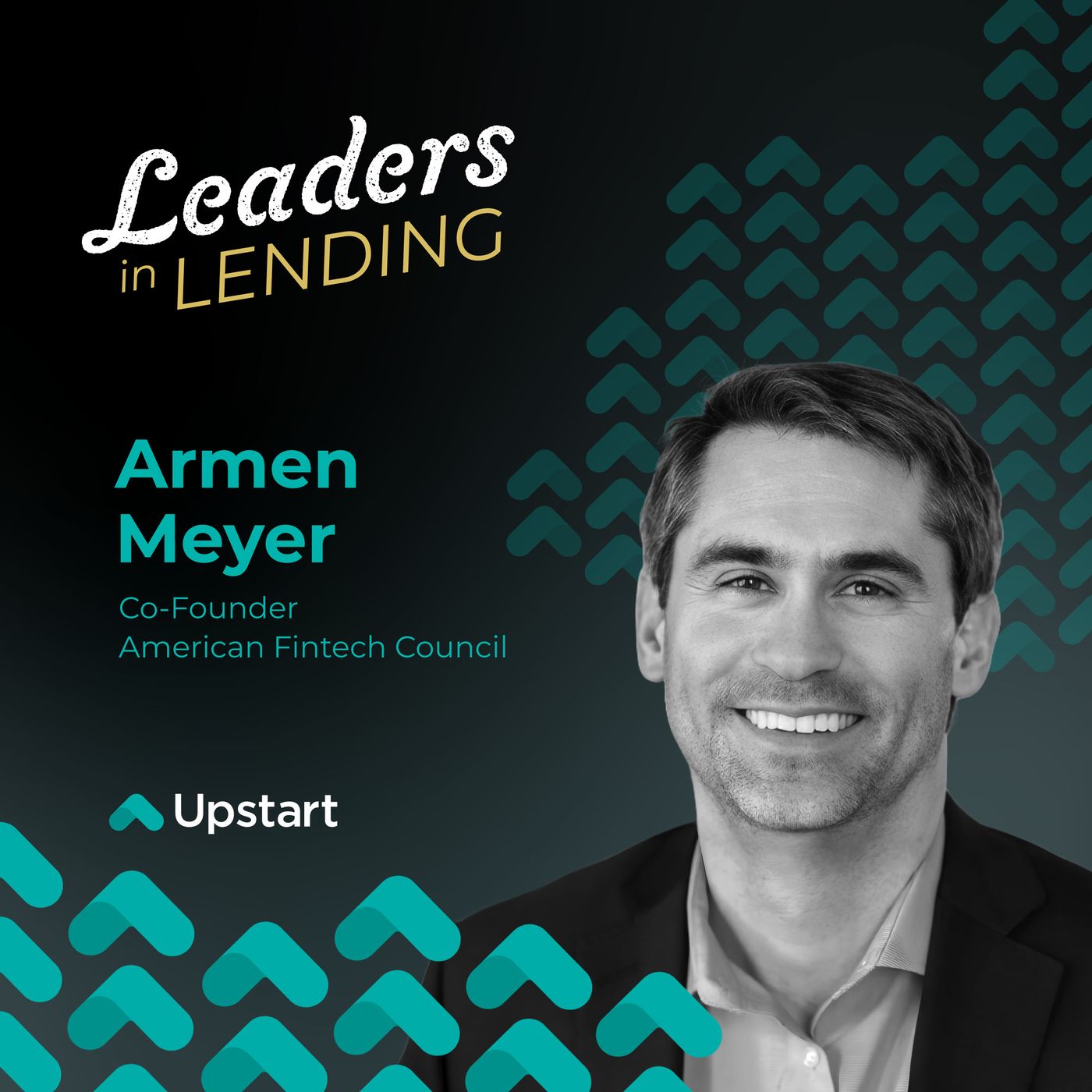
On today’s episode, host Matt Snow speaks with Armen Meyer, Co-Founder of the American Fintech Council, about the implications of the CFPB ruling on the financial industry and other regulatory and government institutions. Matt and Armen also explore the growth of the FinTech industry, the role of regulatory technology, and the potential risks and benefits of generative AI.
Discussed in this episode:
- Why finding a middle ground between pragmatism and aspiration is essential for regulatory stability
- The relationship between rising interest rates and the decline in bond prices
- How open banking rules facilitate the free flow of data and enhance competition in the banking sector
- The disparity in tech investment between big banks and small regional banks
0:02 You're listening to Leaders in Lending from Upstart, a podcast dedicated to helping consumer lenders grow their programs and improve their product offerings. Each week, here, decision makers in the finance industry offer insights into the future of the lending industry, best practices around digital transformation, and more. Let's get into the show, all. Right, welcome to another episode of Leaders in Lending. This episode, I'm joined by Arman Meyer. Arman, welcome to the show. Thank you for having me. It's great to see you again and chat live. I know we've had a little bit of. Time getting on each other's calendars. We've been chatting a little bit about the recent CFPB ruling and the Supreme Court's take on you know, it's funding and legality of that.
0:50 So I'm interested to hear your perspective on that even a few weeks after that, if anything's changed, or maybe we should start by just going in to the case a little bit. And you know, who brought the suit, why did they have reason to bring in? What happened? Well? Sure, the good news on this topic is no matter when we discuss it, it's a gift that keeps giving. There will always be challenges at CFPB. Like since we last spoke, two new arguments against the CFPB have arisen in public forums. Will probably see them make their way into litigation. So just because we're talking about something that was ruled on a couple of weeks ago doesn't mean it's not gonna be relevant for in my view, unfortunately, many more years.
1:31 But this particular case was an extension of other efforts to kind of, i'm gonna say, almost blow up the CFPB. This was the latest version came from a trade association of higher price shorter term lenders who did not like a particular rule which affects payday lenders defined as those who make loans with the duration that's a full repayment under forty five days, and higher price long term lenders those whose loans extend over forty five days but their rate exceeds thirty six percent. You can imagine why some in industry would be okay with this. You can also imagine why some in some sets of industry would hate this.
2:17 So that was the origin was taking on this rule and making one of many claims. The typical claims you make in these cases, are you exceeded your satutory authority, You didn't follow the Administrative Procedures Act. You were arbitrarying and rule making. But this one in past we've seen and your. Structure is horrible because you should be a board and not an individual leader. We've seen those in the past and that's been decided. We'll get back to that later perhaps, but in this case, the argument was and the CFPD shouldn't be getting money anyway because it's unconstituently funded, despite the fact that Congress laid out the law for how it should get funded. The idea is that that's unconstitutional because of violate the appropriations caused the Constitution. And I'll spare getting into the legalities of that, but that was the thrust of it. And what we saw, of course, was the Supreme Court rejected that argument pretty heavily. I think Clarence Thomas wrote the opinion, and I think a reason it was rejected, and I think it's good at what's rejected.
3:23 But a reason was rejected is. Because the implications of such a finding that Congress is not going to interpret its own appropriations clause and we're going to decide that the structure of the CFPD, where it's funded through the federal Reserve rather than directly from Treasury, therefore makes the whole thing not constitutional and essentially gone. I can go to more details on what that means. It's a pretty uncomfortable position to be in because you can it's not even a slippery slope, just right adjacent to that. It's almost hard to distinguish is blowing up many many other agencies who are funded not through appropriation. There's a thing called the Federal Reserve. A lot of people hate it, but a lot of people recognize, wow, COVID could have been a lot worse, and we got out of the potential serious depression because the facility is the FED created. Or Wow, that thing called the financial crisis could have been a lot worse.
4:21 We thought it was potentially the end of financial capitalism if you talk to bankers back in two thousand and nine and how bad that was. But the Federal Reserve was a huge part of getting out of it. So you can see why a court might be uncomfortable ruling in favor of the plaintiffs here at CFPB. The slippery slope is not very slippery, nor much of a slope. It's right there to other agencies, and I could list many more. I don't want to bore your audience. Yeah, well, you're right, there are lots of rabbit holes we could go down. And I started in preparation for our conversation doing a little research. And like you said, on the appropriations clause, it's interesting how some of these suits can you know, you're trying to find like any foothole. Maybe it's tangential to your real beef with with someone in a case that you find any reason to try to bring a suit to bring them down. But it was I think ruled seven to two, so pretty pretty unanimous almost you know, considering the court's makeup, might think you're right.
5:18 Most most people found. Reason for for affirming the CFPBS funding in this case, which which is good. And I think it is. It is important. I think maybe hit on a little bit on the appropriations calls because they're the Fed does have oversight, they are I think maybe some of the argument was about the independence of the CFPB or could they just run wild, But it seems that it fit within the appropriation's clause that there was clear delineation around, you know, how how. They could use their funds or how they could operate. Yeah, I think it's also important, though, to be pragmatic here as well. Besides the legal arguments, I think those of us who had businesses to run have to do things and serve customers and make big decisions and invest in very big decisions what our productal look like if we listen. I mean, just like taking like now three steps back, like do we really want to be in a world and frankly, we're entering this world and it's a scary place to be. Do we really want to be in a world where we're constantly taking institutions on and blowing them up? Where I mean, if you're if you believe that you need government for capitalism to work, because we've seen a world where there's unregulated capitalism before there was regulation, we.
6:35 Saw what that did to people. But if you go to the other extreme, we've also seen command economy say you know, we don't trust you capitalists, so we're gonna do it ourselves. It's super boring, but like, let's be a little moderate. I mean, I know it's not cool. I know my position is not cool here, but the idea that I'm going to keep trying to blow up agencies. Or we're gonna we're gonna. Look for the next selection for to get our way leads to an unlasting piece where we can win victories today as an industry, but they're going to be lost as tomorrow. And there are plenty examples of winning a rule and then seeing it get repealed on both sides.
7:19 And if we could work a little more together and focus less on blowing up the agency and focus more on what's the rule of the road that protects consumers and allows growth and creates continuity and allows us to invest, we've been a lot better place and there's a lot of brain damage if you ask me on how the CFB is ruining our lives when in fact, there are ways in which it has been aggressive and we should talk about that, But there are ways is which has been quite moderate and it's been helpful to the market and to consumers. We can talk about those two. Not all regulation is bad and we kind of should get out of our corners and the cf you come like the lightning rod of this macro argument regulation and we should stop post China CFB and we should kind of be a little more adult. I think about regulation and what it can do for our bitsiness to grow and not just how is the source of imposition.
8:09 Yeah, that's a great point, and I think sometimes regulation is viewed maybe in this adversarial lens, but I think you bring up great points around you know, balance or stability and let's find the middle ground here, because I think in any system there's going to be bad actors and people trying to exploit weaknesses or for their own gain or take advantage of consumers. But you know, I think there are also groups out there trying to lay that common groundwork or find fair rules for everyone to play by, and there's still spots for innovation within that if everyone agrees to what's best. One example, if I could, I mean, I was chiefest staff of New York's bank regulator and during that time we were diagnosing the France crisis. I went over there during the crisis to see if I could be of some help and that was kind of my entry point from broad economic policy with some franch services into full blown and financial service policy about fifteen years ago. And a thing that came out of Dot Frank that we could all agree to was regulation that was not just good for the consumer, but was good for the economy and good for the banks and good for the lenders.
9:12 So that the. One example I'll make of this, which I think is probably best for a lending audience, but I believe is our audience, and there are many, is of course, the qualified mortgage rule, which basically says we need regulation that ends this idea of opacity and non transparency to consumers because it's not just bad for a consumer. We end up having to have a race to the bottom. We have to compete on grounds we in industry don't want to compete on because someone else is going to obfuscate or mislead. So let's just create a mortgage product that is qualified to get out of this liar loan scenario and other scenarios that ended up being erased to the bottom increase sales. But it was all short term, and it's one of many reasons, but it is an important reason why the French has happened, that we were selling loans p that they couldn't afford industry with doing that, and it didn't have to be. And I think that what came out of the crisis was, Wow, we do need rules that stop these races at the bottom and that then allow investment in a more firm landscape so that you don't have to change your investment over time because others are cutting corners. You can actually stick to that good product and then products actually get better. So those are two reasons if you ask me why we want regulation and why if the CFV was if this rule went down under this theory, in this case with the petty lending rule, you would have seen all sorts of other rules go down. And I can make the same argument for why the pety lending rule itself is a good thing. But the mortgage one, I think is
10:43 a bigger one that really I saw firsthand when I was at the New York Banking Department now called the Partner Fan Services. Yeah great, and you read my mind kind of tying the connection to maybe some of your other earlier experience in your career. What about as a co founder of the American Fintech Council up starts a member of that as well, what was some of the need you saw that arose to bring that to life? You no, thanks, thanks for raising that. And Upstart is a member and and and an important member. It's you know, it's a similar theme in matter respects. I think the American fit a council when a few us got together and created it. We were thinking about how. You can exploit regulatory gaps, which we've seen some businesses do, or you can fill them yourself with higher standards than what currently exists, so that you're paving the regulatory road for the regulators, for the enforcement agencies. And that's a good thing to do as you grow up as an industry because if you don't and you don't paint it for them, it will get painted for you one way or another. And if it's not the CFPB because it magically blows up because of litigation, it's going to be in a trade general, it's going to be the FTC.
11:59 So there's no avoiding it. You are much better off figuring out for yourself what's good for consumers and good for your business. To delay that foundation for your investment to prevent those races to the bottom, then you are leaving it up to an agency that is now reacting to customer harm. So we want to get on our front foot, and that was a major reason to start the American Fintech Council. It was also a great way of bringing companies together who really believed in doing good for customers, not just through rhetoric, but through actions and data. And I think actions and data is the way you distinguish yourselves from those who just say things. And I think the American Fintech Council members, including the board members, like I've started, I've done a great job walking the walk on some issues. I'm sure the regulators would disagree with AFC on several things, but they certainly have to concede that we've walked the walk on several issues and have pushed regulatory landscape forward and have ourselves obviated some risks of bad role making because we got on our front foot with some good rolemaking.
13:04 Yeah, that's great. Did you find it was easier bringing a disparate group of companies together under an umbrella or getting regulator's attention or did you find maybe describe some of the challenges or opportunities in that experience. No? Sure, I think at first, when you tell people what you're trying to do, they think you're crazy. To be honest, why are you going to raise standards? Are you nuts? And then what I. Found was maybe we didn't get everyone we wanted in the beginning, back in twenty early twenty twenty one. But as the Biden administration came in and they started creating the standards by enforcment actions that weren't always visible or by behind the scenes supervision. I always said, if we build the umbrella of people who are pushing yambot and crazy standards together, others will join us as opposed to be repulsed by us, because they're going to see the value of being in a group that is forward thinking and they're going to be a part of us. So as twenty twenty one went on, we did find our membership increase by folks who were feeling the impact of the new administration and needed help getting on their front foot and telling their product story because it's too easy without some help to leave value on the table in terms of the good you're doing and to just allow the regulators to see the bad. So I think we were able to bring folks in. And then we also wanted I mean Lending Club where I was at at the time, we didn't want to just create an umbrella of actors who wanted to push the envelope. We wanted to create an ecosystem. We started very very early on
14:37 in the Legacy organization one of the legacy groups of the AFC as just lenders, non bank lenders. But as fintech evolved and fintech started doing more and more different things, Lending Club, for instance, bought a bank. We saw and banks were now part of the fintech in a lot of new ways that weren't just focused on landing. So this whole bass banking thing that unfortunately some there have been some there's been some negative headline, but some not awesome conduct which is now staining those that are actually doing greed for consumers and doing great partnerships. Anyway, we wanted to bring some of those folks together because the ecosystem was evolving and we wanted to create the synergies between folks who work together to advance better policy and work with partners who are more responsible and to kind of help create that ecosystem.
15:24 And I think we succeeded there. And I want to really command our management, our current management for what we're doing. Yeah, absolutely, definitely important work. And so you mentioned London Club. Yeah, a lot has changed since the Great Financial Crisis, the CFPB that we've talked about, American Fintech Council, the introduction to more FinTechs and partnerships, or fintech's becoming banks, any other major trends that you've noticed and that. I mean to me, what's so exciting is the regulatory technology trend hastened by generative AI. And I know you know, AI a very big word. And just like fintech, everyone wanted to be a fintech seven eight years ago when when fintech started, suddenly everyone was a fintech. Right now we're seeing everyone wants to be AI. But regardless, I don't mean to jump into hype.
16:14 Generative AI creating content or analyzing on structured data and structuring it in ways that humans have not really been good at and in ways that machines have been horrible at. This new technology is the basis of a huge regulatory technology and supervisor technology framework, if you ask me, and we're going to see really interesting companies emerge more and more that are going to figure out how to meet regulatory standards. And I know it's scary, it sounds scary in the beginning, but think of AI as your junior compliance officer to take that first cut. It has to all be supervised, but we're really going to be able to automate and improve and a lot of compliance heard which are going to better for consumers, going to do it better, and it's going to be better for smaller entities who can now compete more and create a more competitive market because they're not throwing.
17:10 So much at compliance costs. So I am super excited by. Regulatory technology and the use genera AI, and I hope we don't ruin it by having folks be a little cavalier and use generator AI a little avant garde without the proper controls in place. It is on us in industry often to see the value of our work by being incremental and by communicating the regulators what we're doing and not starting with the most risky area. So I hope we're not going to take our GENI and start underwriting. I don't think people will do that, or start or engaging with customers directly and leading to bad outcomes. This is risky stuff that people are too smart to do. And I think we educate regulators and policy makers on the great use case of GENI which are not going to be customer facing, which can be heavily supervised, which we have great model wors and and over what you're actually going to make ecoremy a lot better and empower small banks and small.
18:04 Entities who grow. Hey there, former host Jeff Kelner here to let you know about an exciting opportunity to strengthen your understanding of artificial intelligence and financial services. If you want to better understand the fundamentals of how AI models work and how they will impact the financial services industry, your in luck. Upstart is launched an online course and certification designed to do just that. This course will give you the knowledge you need to lead the. Conversation about how your organization can best leverage and manage this revolutionary technology. If that sounds interesting, check out the course as it's currently free for a limited time. You can learn more at upstart dot com slash AI Certification. Again, that's upstart dot com slash AI Certification.
18:46 Thanks and now back to the show. Yeah. I totally agree, and I think again like the themes around transparency or explainability and using these keeping the human and. The loop so to speak, I think are really important. And these are early days, super exciting times and lots of use cases and technology and companies coming up right now. But I think you're right. I think it could be used a lot proactively doing research or the way it's enriched and helped search anytime there's a huge body of work you're trying to sort through. It can accelerate the degree of which we can comprehend or just get a handle on something as complex as regulation. So definitely excited to see what comes out of that.
19:28 You know, a lot of work to do, but a lot of opportunity. And I'm normally one of these people who is skeptical on these things. And I think you put your head in your sand if you're overly skeptical on the potential here, But you're putting your head of sand if you're not looking at the risks that you just laid out that we have to get a grasp both. So I guess we've talked about this a little bit. But would you say the CFPP has been successful in the decade and a half since it's been around, like overall all things considered. I was reading some stats. It looks like they know they've taken in maybe four million complaints the last figure I end of last year, billions of dollars in funds back to consumers. Like, how would you judge its success?
20:09 Yeah, I mean, I think those are important metrics, they're not the ones that I would focus on first. I guess I like to look at how as a CFPB made the market more stable. And improved almost the thing you can't see. Have we seen companies. Emerge and grow up because of a more stable environment that protected consumers. That these companies weren't age out. Of existence or force out of existence, but there were rules of the world that allowed them to thrive that were reasonable enough and out of consumers so that the product was long lasting. And I think, like that metric boy, hasn't a lot of great stuff happened in the last fifteen years. I mean, I take issue with something that CFP has done. And I think any one that like loves the CFPB every action is going to UH. I think it's hard to pick any agency, including the cfp B and love everything they've done. But I'll actually let's lament on two things I think are not the greatest and that we should UH ask for more from a cfp B and from government on. One is going back to the seesaw. You know, I like the initial five year structure where the where the there's independence of the cfp B, where the director was in for five years. Unfortunately, some in industry in an effort to blow up the CFP be similar to this case, we started all talking
21:40 about with the PATI lending rule when at the CFB hoping to blow it up, and what they got was the end of the five year structure and instead serve at the pleasure to president. Why is this bad? Because we just reinforced the idea of short termism and partisanship in regulatory bodies. And that's bad because now we are seeing people who just want to survive the next election in terms of a certain regulatory regime and not actually pushing for law and lasting regulation. And I think we're going to see more and more partsnership and our regulators, and we are seeing it and to see if it be as unfortunately in that lightning rod. So I really do lament that we have lost that five year structure.
22:22 I think it creates more parts of it than necessary and it's a rotten apple on all of our regulators. The other thing I lament is I thought i'd see. If you did under quadarie to allow companies not to get out of regulation, which is how some critics who I disagree with but call it these no action letters or these sandboxes. But let's be honest, regulation can be vague, and sometimes that clarity is needed to. Invest and grow and serve customers. And I don't think ending a program that created clarity to allow companies to grow was the best idea, but then replacing it saying and saying frankly rhetoric, we don't pick winners on losers, so we're not going to do that with some of the rhetoric got to CFP at that time ending it's no action letter prior programs ending its sandbox programs. I think then to replace that with but we're going to pick winners and losers for risk based supervision.
23:24 That's a little alarming. I wish to see I FPB would rethink those approaches, because you can't say you're not picking winners and losers, but then pick winners and losers. And I think it's. Important to focus on how the economy can grow and regulation of that nature rather than just saying, oh, we want to learn more about this company or this industry, so we're taking for supervision. That's a little scary to me. And we've seen that movie with the financial stability Overside Council when Dot Frank created a body to do just that, and I think there was a lot more reason to do it then, because we're talking a very, very large organizations that could bring the whole system down, and there were many, many votes involved, not just one agency. I'm a little uncomfortable with the current regime on that. But other than some of those examples where I do think the cfp's overreached, overall, I would say it's been quite successful.
24:14 We haven't seen anything like a crisis. We've seen the alignment of consumer protection and safety and soundness. We prevented some of those races at the bottom that I was talking about. But yeah, we have an overreach issue, and that's just life, right. We need to push background and seepeople relentlessly when we think they're overreaching, But we also need to not be potshotters on the sidelines criticizing everything. Absolutely, yeah, I think fair to criticize, but also important to be a part of the solution as well. So again it comes back to the balance and. Like you said, you know, painting the picture before someone else paints it for you, it's important to be a part of that. Any other trends you're seeing. I think one of the things I'm anxious about lately is kind of the regional banks and how they're faring through some of the collapses recently capital requirements, and how they maintained competitiveness in their space.
25:05 Yeah. Well, two thoughts there. One is it's such a tragy that Silicon Valley Bank went down. Yes, we can say they were poorly risk managed, and we wouldn't be wrong. What's interesting by Silicon Valley Bank, though, is what brought them down wasn't the thing you would have thought would have brought them down. And banks and banks similar to it. In other words, you're making loans to risky businesses, but the underwriting worked out. It wasn't that the loans scaled to the startup culture in San Francisco. Who failed was the connectivity of the deposits to venture capitalists. That's what failed. You know, some people will want to blame their risk management, But if any of us had a bunch of depositors connected to a dozen or a few dozen people who could get on the phone to talk and decide to pull our money, any bank would be in a lot of trouble. You don't and you don't need these arguments of oh it's because of the Internet.
26:03 Oh it's because of like able to pull your money quickly. This was unfortunately a shot in the foot of the venture capital industry to the venture capital industry, and that then exposed, of course, the decline these bond prices. And so now we have banks that are working their way out of the decline of bond prices because of rising interest rates. But they're different from Silicon Valley Bank because of the deposit base, and that is I think one of the major stingcation features that we don't focus on enough. So the crisis is it is somewhat contained, but there is trouble. But I'll go back to where we started. I think that the mark of success for regulators and the CFPB and US as an industry will be can smaller entities thrive or do we keep having to consolidate To your point in our regional banks. We want these smaller banks to be able to invest in technology, whether it's the right tech conversation already had, or an ability to reach consumers partnering with and upstart partnering with other providers, because if they can't then they got to buy the tech or building in the house themselves, these smaller regional players, and it's just not realistic.
27:15 In this world. The big banks have gotten so big they have an infinite tech budget compared to I don't know, the bottom one thousand, two thousand banks one versus two thousand. Of course, they're going to need to outsource some tech because if they don't. They're going to lose and keep losing the big banks. So we can't, on one hand say they got out to preserve the small banks and the regional bank, so we don't want to take solide about regionals. But then say, but if you partner, we're going to look really dis favorably on that with technology companies. But then let the big tech companies go ahead, and if that's all they wanted technology, it's just it's an obvious cycle, and I want the big tech companies invest, but I want the smaller company. They're sorry, the big banks daily to the vast attach one of the smaller banks and the regional banks we invest as well, and you can't all investment is an equal in a world where one has a ton of money and one doesn't after years and years and years in consolidation. So that's kind of my worry for the regional banks and in the more medium long term, but we do have to get through the present situation, you know.
28:17 It's like add one more thought. This brings us kind of the Open Banking Rule, which is the same idea, and it's another source where I hope the CFV gets it right and I'm glad they finally issued it. And basically what it does is if the economy has highways that allow infrastructure allows. Companies to grow. One of those, of course a financial system and money in finance, but the and there are others and the other of his data. And what the CFPV is doing with its Open Banking Rule, which is pending right now, hopefully is allowing data to flow more. How does this relate to the conversation on big banks and medium sized banks, because again, we've allowed big banks to get so big that they have monopoly on this data. So either we use regulation. There's another example, I have good regulation I mentioned too earlier, ability to invest and not have to raise the bottom. A third one, which I'm glad to see if he's doing, is creating an infrastructure that allows competition.
29:14 And in this case, the infrastructure is not payment rails, but it's data rails and free flow of data, because if we don't have this free flow of data and the customer can't own its own data, then all we're doing is reinforcing was the trend for decades, which is big banks using their power in this case data power, not market power, to grow faster and hoard and put us at a disadvantage. So we need the open Data Banking rule to allow other entities access that data to underwrite better, to provide better products, to transfer funds sorry, to transfer accounts from customer customer easily, and that's going to really open up competition. So going back toward start on success a CFPB, if this rule comes out the way it should, I would get the CFPB huge credit for doing what a regulator should do, which is create a foundation for great you can on a prosperity while kind the customers, and I really hope they can be balanced right here as they finalize this.
30:09 Yeah, great point, and maybe we'll have to put a pin in that and come back and talk after that's been settled on a future episode and see see how that's landed. I guess selfishly, one of the things I like to ask guests, especially as this continues to increase in complexity. Is there a thought leader you follow, a source of information, maybe a recent book you've read, or a podcast, like how do you stay abreast of everything going on in this space? Well besides Upstarts podcast, of course. You know, if you haven't read him, I think he's really making a name for himself, and he's been really deep on a lot of the issues in ways that almost no one else is. Jason mccoolaugh who issues Fintech Business Weekly. It is subscription only, but he does give you tidbits to get a sense of what he covers for free. But I do recommend a subscription, don't. I'm not like his agent or anything, but I've been so impressed. I want to give credit where credit is due on someone who can really dig on some of the big fintech issues in a way that I haven't seen others be able to do.
31:11 There's a lot of. Credit, and you know, broadly, I just want to credit the reporters. I mean, you know, we trash reports a lot in the public media and in government, but maybe we in industry can pay some respect to the way we just so quickly learn about Road Schoprah's latest speech or whatever from a really amazing reporter network in the business and finance space that I'm constantly impressed by. But Jason, I don't think we'll call him some reporter is more of a deep diver and I'll keep I'll make those two points here. Awesome. Yeah, that's new to me, so I'll have to add him to my regular reading. I think you're right, Like it seems like journalism isn't dead in this age of social media and everyone kind of pretends to be a journalist or can get their opinion out there. It's good that we have people still out there searching for the true and researching it.
32:03 Yeah. I've been a big fan lately of the podcast Acquired if you haven't found that one, But they take you a three to four hour deep dive into company's foundings or acquisitions, and you know, largely to subscribe to the theory there's nothing new under the sun, so it's always good to go back and hear how companies have faced similar challenges to we're seeing today at different times, or how they've gotten through. Well, I'll check that out. Thanks, I've heard of it, and I think I might listen to once, but I'm not connecting it, so I'm gonna double check that. Thanks for mentioning acquired awesome. Well thanks for the time, Armin. Always great to catch up, but appreciate it. No, thank you, great talking again. I'll start partners with banks and credit unions to grow households and expand consumer lending through its leading AI lending platform.
32:48 Off Start powered banks and credit unions leverage AI to offer higher approval rates and experience lower loss rates while simultaneously delivering the exceptional digital first lending experience that consumers demand. Whether you're looking to grow and enhance your existing personal and auto lending programs or you're just getting started, Upstart can help. Upstart offers an end to end solution that can help you find more credit worthy borrowers within your risk profile with all digital underwriting, verification, loan closing, and servicing. It's all possible with Upstart in your corner. Learn more about finding new borrowers, enhancing your credit decisioning process, and growing your business by visiting upstart dot com slash lenders.
33:29 That's upstart dot com slash lenders

