The Credit Crunch and Beyond: Bold Predictions for 2026
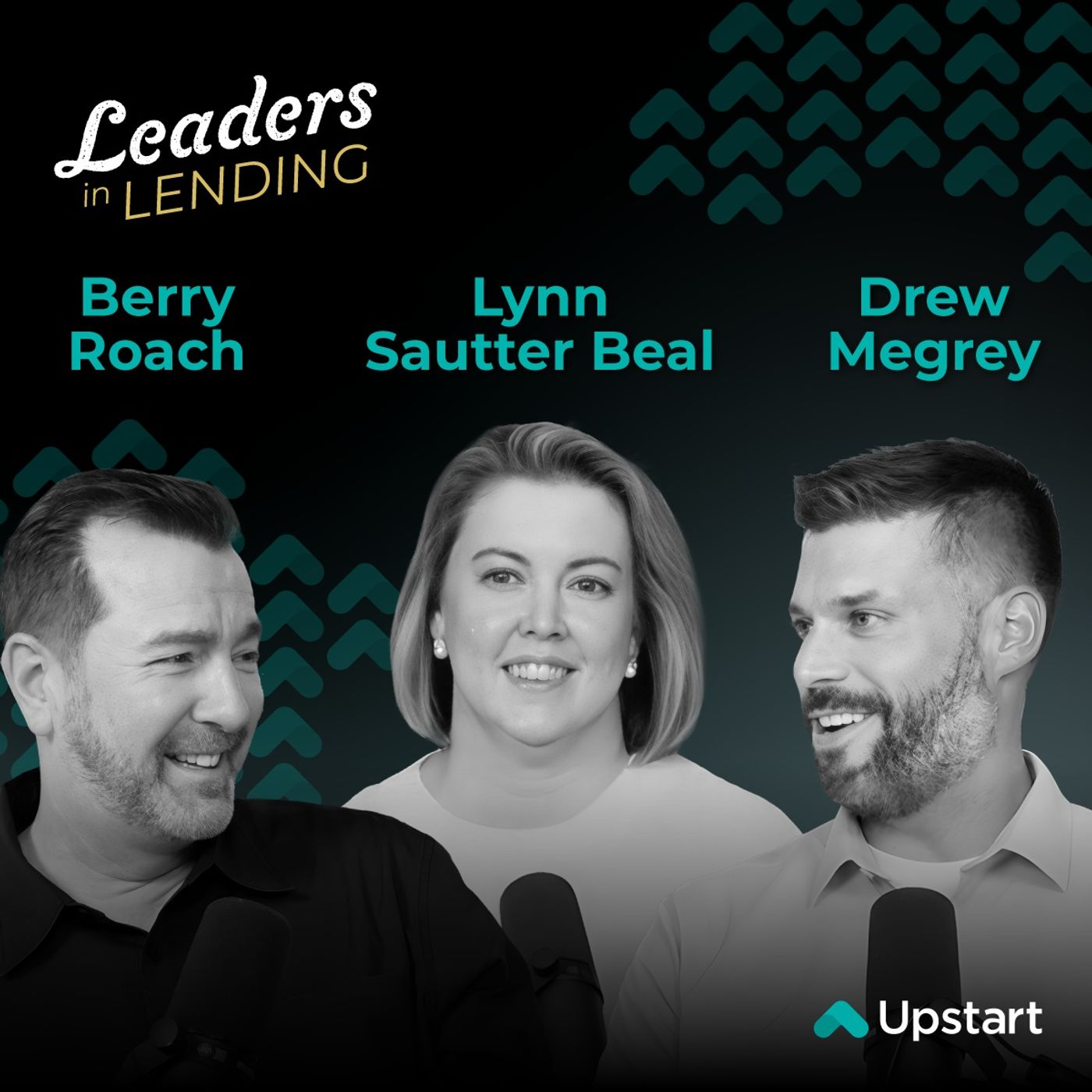


2025 has been all about the crunch. Credit is tight, uncertainty is everywhere and lenders are asking: is this the new normal or just another cycle? In this episode, we unpack what’s driving the squeeze, from regulation and rates to global risk, and how smart institutions are staying ahead.
We also look forward. 2026 will not be business as usual. AI, new lending models and shifting borrower behavior could reshape the landscape. Hear how leaders are finding opportunity in a market defined by uncertainty.
00:00 Anticipating a Fed Rate Cut
03:48 Embracing a New Financial Normal
08:48 Model Accuracy Relies on Recent Data
12:14 Advocating for Participation Loans
14:39 Credit Union Credit Builder Insights
19:16 Economic Uncertainty and Market Resilience
20:04 "Seizing High Yield Opportunities"
0:00 I wish we had three percent thirty year mortgages again. We may never see those again, Like this is a new Normally, this type. Of environment could also last for an extended period. And this is what it looks like for five eight years. I almost don't see that changing all that much in twenty six, and then we're going to get into twenty seven, and there's gonna be election in twenty eight and who knows, right will. AI take jobs? It will take some, but it will create others. How does that impact the economy? All right, welcome to another episode of leaders in Lending. Today, we're going to talk about the twenty twenty five credit crunch. As we all know, most institutions are tightening credit, probably not for the best, but it's been something that's been ongoing now for the remitt for the entire year. Barry would love to get your perspective on kind of what's what's driving the titan credit in twenty twenty five.
0:50 Overall, I think just uncertainty. Right since we've had a new administration come in in January, there were threats of reductions in government workforce, which some have come to pass and some haven't. The regulatory environment has sort of been turned a little bit upside down. The CFPB doesn't seem to have as much maybe forward influence as an expectation than maybe what they had in the past. But then, just in the economy, we've been waiting for a recession hasn't come, been waiting for rates to reduce, hasn't come, been waiting for unemployment to climb, hasn't necessarily I mean, it's come up a little bit, but the labor market is still really strong. So all the sort of fundamental economic conditions that would normally predate a credit crunch haven't necessarily come to pass. So it's been more about our expectation or worry that's coming. And that's actually a prudent approach in the face of uncertainty. May not necessarily be the time to take on a whole lot of risk, Although I'll argue with myself a little bit on this.
1:56 The counterpoint is, if everyone else is pulling back, isn't that a really good time for you to pull forward in a in an aggressive but in somewhat measured fashion. When I say measured meaning more about the quality of risk. You know, maybe that's something that that where some credit unions and banks could win on. Sure, and I definitely think you know, geopolitical uncertainty as well. I mean you touched on the regulatory and the economic uncertainty, but you know, we continue to see turmoil in different areas of the world, and you know, particularly in the Middle East. And then you know tariffs on off do we have tariff do we not? On what products? Uh? And those rollbacks and the impact of that just continues to We've got uncertainty almost in every area of things that normally would be kind of part of the fundamentals of driving those decisions.
2:44 Everyone's been waiting for a rate cut, right stock market up, labor market's still pretty good. Inflation is running around three percent right now. I know the Fed has won it at two for a while, but we haven't been there for a long time. Like, there's a lot of conditions that traditionally wouldn't call for a rate cut. And I think as as consumers, we all want to see a rate cut. Even in our business, certainly a rate cut would help to create maybe more in demand. And I think as a as someone who manages the balance sheet, if you're a CFO today, you're thinking about, Okay, can I put more of the higher rate business on my books now in the face of perhaps seeing the lower rates going forward, you know, maybe that's that's suprett approach to.
3:29 Take everything's not ebbing and flowing like it should, right, So you think about there's many different reasons to tighten credit. You talked about geopolitical, We're talking you know, there's delinquencies that are rising. Do you think there's one honed in area that is driving the crunch or is it just a holistic view of all of them. Do you think about the you know, financial crisis in LA the GFC. Everything felt unprecedented right after, and it was this idea, you know, of the new normal, like the world has changed, and I think we're there's a lot of conversations like this where people are saying, how are we going to get back to that? Like how are we going to get to less uncertainty into more stability and to being able to see those you know, leading and trailing indicators and use them to make decisions.
4:17 And it could be that we don't. And it could be that this is similar to how zero interest rates we thought that was a short term thing and it lasted for an extended period. This type of environment could also last for an extended period, and maybe this is what it looks like for five eight years, and there's not going to be a sudden return to the same fundamentals of what we thought were fundamentals before. There are now new fundamentals. Right, this is a new normal basically, right. Yeah, there's not been an event like COVID and the pandemic that sort of caused that really brief recession we add in twenty twenty. There's not been an event like the mortgage backed securities and the housie market kind of floating back in two thousand and eight. I laughed, because of the conditions at the time, it was very apparent to while you know, we were all in the business at that time, and you know, certainly in California we could see if as as a money mooning quarterback looking back at everything that was happening around the housing markets, like, yeah, of course this was unsustainable, right, But there's nothing like that happening right now.
5:24 There's no one thing to see. And so to your point, this is somewhat of the new normal. You know, I hear from people saying, oh boy, I wish we had three percent thirty year mortgages again. We may never see those again, Like this is the new normal. If you're paying six or seven percent for thirty year mortgage, that's probably all as good as you're going to get. It's not like early eighties numbers. I mean, we're not you know, we could be paying fifteen percent seventeen. It's more like the nineties. You know, when I bought my first house, I think, you know, at my rate was somewhere around in the eighth and I was happy with it and that was just just the way it was. So do you think the ongoing uncertainty though, Like you think about talk to lending professionals on a daily basis, and they've been telling us that inflation is going to arise, We're tightening credit. They've been saying it now for almost three years, and we haven't really got to that that it factor similar to what the GFC was. Do you think that that's going to be the new Norman because there's so much tightening, it's just going to keep translating as is. Or do you think if we see a surge of untightened that things would pop or what are your thoughts there?
6:23 I mean, you just sort of introduced maybe a concept of this arbitrary tightening across the industry, maybe that is somewhat governing things today, that that's why we're not seeing abundant losses. And I'll go back again to the PREGFC with housing, where it was stated income applications and no down payments and things like this, like all those sort of risky conditions somewhat cavalier underwrite standards that went into that that anyone can get a mortgage right And perhaps now to your point, drew that by lenders tightening more and more, that there's just less of a less of a risk out there of this becoming something that would be beyond the risk of what might other rest be expected.
7:13 Well, there's such a reaction too, I mean, there was such a I guess penalization, and I mean people could people have different opinions of whether there was enough penalization of the financial industry after or you know, and how much the ownership the consumer versus the institutions had. But like there was there were certainly a lot of repercussions and consequences, and like DoD frank and and a lot of other regulation Federal Reserve, Triprairie repro reform came out of came out of the GFC, and so it is possible that a lot of those things are actually working well and better than maybe we think, because maybe we're all kind of waiting for that other shoot to drop and maybe it's. It's not Maybe there isn't another stree, it will.
7:53 Not drop right, or maybe it'll drop in a different way next time that hasn't happened before. So then maybe we put our foot on the gas again, not all the way to the floor, right, but take it a little bit less off the brake, a little more on the gas than maybe that would be That would be a. Good approach right now, Yeah, I know we've talked a lot about this and prior podcast of leveraging the use of AI models to predict risk more effectively. Right, so you think about you wanted to take your foot off the brake and press the gas a little bit again, And going back to a prior podcast, we're giving more of a description of how to have the knowledge base to explain having these types of partnerships. But in actuality, about seventy percent of financial institutions do use some form of AI driven modeling for decisioning credit right, So how do you think financial institutions are adapting those models to have less risk or even to open things up and be more predictive and bringing in the types of borrowers that doesn't add the risk there.
8:48 So models are only good as good as a data that's that's in them. And so what sort of data is being used to train those models? Is lending data from the past, call it ten years, twelve years? Now, what's been happening in the last ten to twelve years? Who went from zero from ZERP into you know, a little recession around COVID and you could almost sort of throw out that little eighteen month period because it just was unprecedented in terms of what happened with deposits and then you know it's kind of dropping again. So these models are trained on that data over that time period, which if we are in a new normal, then wouldn't that mean that the data that's in those models is actually going to be maybe a better predictive value than maybe data that was happening before the GFC for example.
9:40 Sure that, yeah, like you need to need to actually look at them more like have a little bit more recency bias, like intentionally in how you're thinking about training a model, because I think there's a lot of times, you know, like COVID's a great example that people looked back at that and said, oh, well that was an unusual environment. Well maybe it was, but it also happened in real life. So things that are unusual environments actually occurred. So you can't skip it right in your model. Can't just toss that data. Yeah, Like you have to understand that there were you know, there were liquidity injections from the federal government and deposit increases and also with a zero interest rate. So it was unusual, but it wasn't but it actually occurred, And so like, how do you incorporate that in thinking about what could happen next and how to plan for it.
10:26 I think most often, too, like we've seen it over the past few years, the resiliency of the American consumers is there. They figure it out whether a piece of paper tells us inflation has increased x percent, like, things have stayed fairly stable, at least to my knowledge base, to be able to be able to open up the risk the risk door a little bit more so thinking about you know, most institutions in some face that are leveraging an AI driven model for predictive risk. Is there a way that credit unions can expand their approval without adding additional risk outside of leverage the use of models. So outside of using models, like, how else can they kind of expand their approval? I mean, I certainly think you know, a key theme automation and it doesn't have to be predictive AI. Right, Like we talk a lot about underwriting, which is more of a predictive AI, but you know, thinking about using generative AI agent AI chat agents to improve their customer member experience, improve the digital process.
11:27 I think a lot of those things can also drive improval because they reduce friction in the flow, They increase the chance of that new member being you know, satisfied and getting the product that they need. And that's not taking on any additional risk. It's actually reducing operational risk while increasing the likelihood of approvals. All right, So going back to the whole theme of different levers, So we talked about non model type of approvals leveraging models, which seems to be the kind of the new norm. Credit unions have their fingertips at a bulk of different ways of leveraging risk through participations through whole lowned purchases, through many different areas. So what are the smartest levers you think current state that credit unions can kind of pull to expand their access without adding that risk.
12:14 Yeah, I've I've always been an advocate for participation loans as a way of changing risk on your balance sheet. You know, you may be over index and certain asset classes and under in others, so it's it's a smart way to manage risk. It's also a smart way to sort of manage any sort of pre payment risk you may have duration of your portfolio, and also just to to expand your balance sheet, you know, your it was always sort of the dilemma between the CFO and and and the lending professional ads to well, are we going to put investments, We're going to put in participations, but sort of looking at at the at the mathemats of it, participations usually one out, depending on of course the ASCID class you're looking at. But I've just always felt that that's an underused lever in a lot of creditings. It's easier to go out and buy treasuries. It's easier, you know, your brokers are always sort of offering those sorts of things.
13:09 Not every broker is offering participation loan pools at the same rate and level as they. Are other investments, and probably allows smaller institutions access to a market that they may not be able to direct originate it. Right that they may not be of the size to set up a full partnership or whether a director and direct origination of a product, but they can access certain types areas of the credit market. With only commercial loans. For example, right, the small crediting that I ran years ago, we didn't have a small business platform, we didn't have the we didn't even have commercial loan experience, but we could certainly go out and participate in a loan or or a piece of an apartment building or a piece of an office building in the case may be, and you know not just give bair diversity to the balance sheet and diverse find that risk a little bit, but take a little bit of a return.
13:55 We could also use it like a geographic segmentation for risk as well. I mean, just because certain stats come out that the holistic view of the output inflation or employment as X, y Z, it may be more or less in different areas of the US. So you can there are still regional differences in this country right, may. Can even dial down to the state county level as well. Sure well, I think particularly as you mentioned commercial real estate. I mean that's a very different market depending on what region you're in. Like Austin, for an example, is getting getting hit hard, but an area like Columbus actually isn't having the same impact. You know, return to office is pretty entrenched, like companies are are, you know, back at work, so the office office space is pretty full here compared to certain markets.
14:37 Definitely. Yeah. Another area that credit unions are very in depth with our credit builders or shared secure types of loans. I know that's not a large portion of the balance sheet, but you think about from a d risk perspective, Let's say a credit union was to pull back significantly in their unsecured business to d risk and take on more collateralized types of loans. How do you think I think the credit builder system or the share secured system would drive a risk reduction. Do you think the consumer just doesn't understand that product. Is it not as appealing as being able to get an unsecured personal loan or what are your thoughts there on de risking and using that as leverage, even though it's not as much of a growth parameter.
15:21 Yeah, and a fair point. I think access to credit is so much more abundant now than it was maybe a generation ago. Do I need to have a secured do I need to put security down for a personal loan? Now? There's just between FinTechs such as upstart and others out there, and then the products that banks and credit unies have themselves. There's just far more access for consumers to find affordable credit for them now where they don't necessarily need to tie up their own security on it. And I also think in new products that earned wage access products where people get kind of a you know, can tap their paid check in a more modern way, a digital way. And then also as you think about the you know, buy now, pay later, like point of sale transactions, you can take those kind of things that maybe somebody who would be using like a secured credit card for can now take out that sort of product and it's doing a more of a fixed installment loan today and those products didn't exist.
16:21 Ten fifteen, ten years ago. Yeah, that is that is a very common which is an entirely different topic of you know, are those on balance sheet? Do we see those on credit reports? I think there's a lot of industry changes coming to how those are reported. But but you know, you think about you know, we've talked about CASHL underwriting and and CASHL underwriting can help you see some of those things that may not be present on a credit report. So as you think about managing risk, do you are you actually looking for those new products in a credit report versus just looking at or in the information data you have versus what is just on on kind. Of the balance That's a great point leveraging cash flow modeling through a depository product. To see that you're making four installment payments to Amazon for a one hundred dollars purchase, like that's probably going to be baked into your risk assessment from undwriting as well too.
17:13 By now pay later on my brito right, four payments of six dollars? Yeah sure, yeah exactly? Did this episode shift how you think about the credit landscape in twenty twenty five? Subscribe to us on YouTube for full video uploads and helpful bonus clips to share with your team. So we talked a lot about the credit crunch in twenty twenty five. I want to end the end the podcast here with what are your thoughts or bold predictions as it relates to what's coming in twenty twenty six? Sure, so I think we talked a lot about like the idea of this is this another yet another new normal? And is it the world kind of fundamentally changing in a new way. I do think a lot of the uncertainty is driven by AI, and what will the impact of AI be, whether that's predictive, AI, generative, AIG to AI.
18:01 I think most people don't even know the difference between the types of AI today they have chat, GPT on their phone or perplexity. But I suspect that that type of just rapid industry change is going to have such an impact that it's unknown. We can predict all we want, but will AI take jobs? It will take some, but it will create others. So how does that impact the economy. I think the shift is going to look more something like how the creation of the computer chip looked than it will just another kind of economic cycle. So I think it's you know, anybody's guest really of what that happens. But I think that will be the primary driver of continued uncertainty until we reset on some new set of fundamentals.
18:48 Yeah, I mean, isn't AI really if you think about the Internet age, right, which only came about thirty years ago roughly right where you know, and then twenty years ago, well fifteen years ago, we started to have it in our pockets, right, isn't AI just taking that to a different level altogether, which will again result in the brand new new normal. Right, here's my bold prediction, and all predictions are free or your money back. In twenty twenty six, much the same. I mean, like I think there's again we talked a little bit about tariffs and so on, and the regulatory environment, and there's been so much uncertainty with the direction of this administration. I almost don't see that changing all that much in twenty six, And then we're gonna get into twenty seven, and there's gonna be election in twenty eight and who knows, right, But so I think with all that uncertainty, there's gonna be a lot of inertia. We're just gonna sort of stay where we are. Maybe rates go down a little bit, maybe they don't. But even if they do go down, I don't see them going down all that much. It's still sort of perplexing to me that despite all this uncertainty, despite the inertia and so on, the stock market keeps going up. Now, why is that? You know, earnings have been pretty good so far twenty twenty five, and there's really nothing on the horizon sort of a geopolitical event or something, you know, another COVID pandemic sort of thing.
20:10 There's it doesn't feel like there's anything that's going to be sort of changing that momentum all that much. So if I'm sitting in a CFO chair or a CEO chair or a lenders chair, you know, I am maybe putting my foot on the gas a little bit more now as rates are still a little bit higher, I can maybe pull a little more yield. And if rates do drop, then maybe that just helps me from a boring costs down the road for that higher rate stuff that I've I've kept my books knowing that there's a pre payment risk with that. But nonetheless, you know that old adage of you know, the farmer makes hey while the sun shines, I mean the sun shining from a high yield perspective, So why not take advantage of that as much as you can right now? It's done a smart way, right, you know, in a without taking on a whole lot more credit risk. But you could maybe look to other asset classes that you're not participating in now, or other unique ways of looking at underwriting so that you are sort of either increasing approval rates or or improving the wide array of borders that you may have today.
21:13 A little bit of a traditional asset allocation dollar cost averaging you a little bit of everything, and go in step wise over time. And I mean it's tried and true from an investment strategy. So put your foot on the gas, but stay in the school section where you can't go above twenty miles an hour. Test it out right, I mean you maybe, yeah, you've covered your your your speed, but but yeah, I think faster rather than slower. Well, thank you for listening to another episode of Leaders in Lending. We'll see you next time.

