The Difference Between Managing and Leading Lending
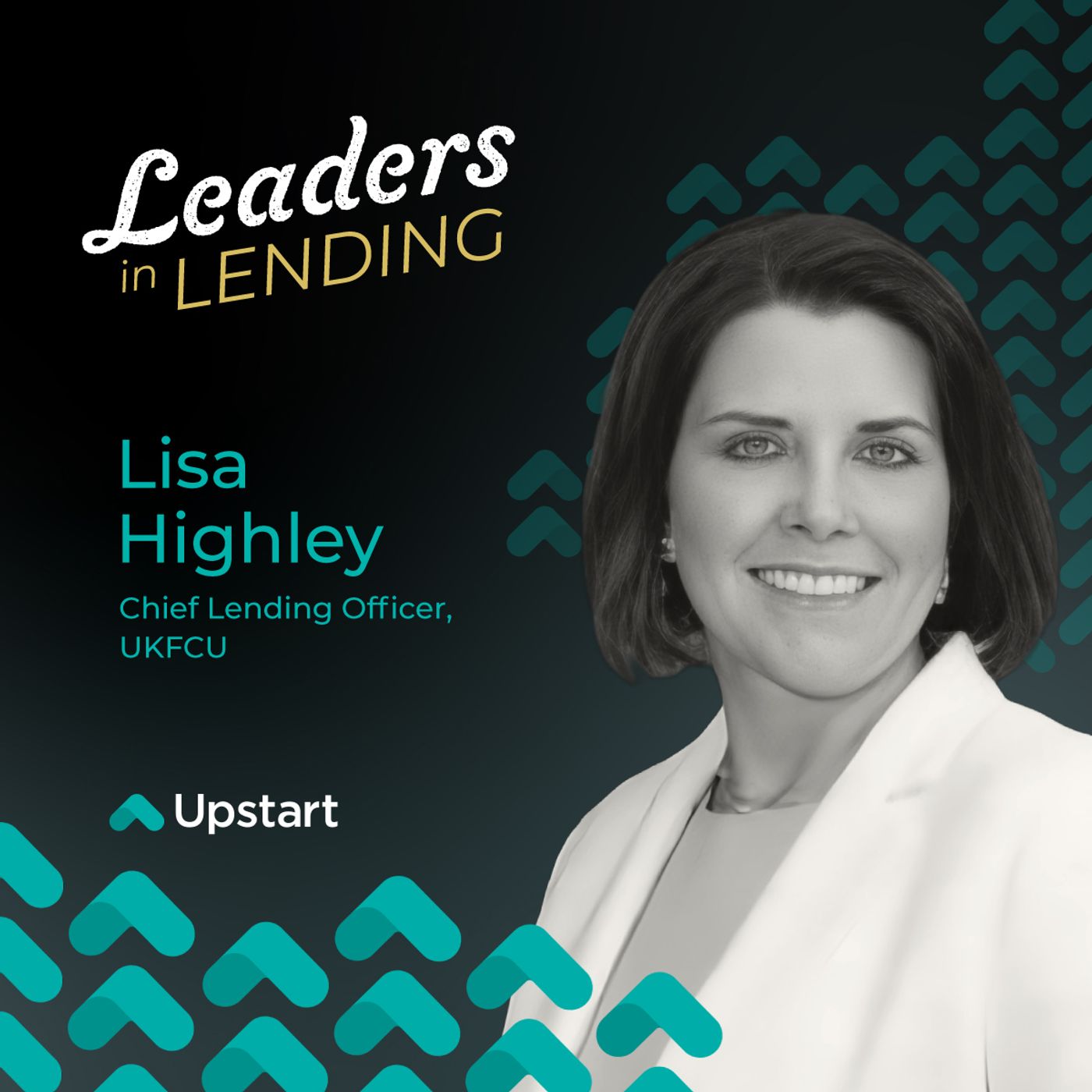


In this episode of Leaders in Lending, host Barry Roach sits down with Lisa Highley, Chief Lending Officer at the University of Kentucky Federal Credit Union, for a candid conversation about what truly separates managing from leading in today’s lending environment. Highley shares her unconventional rise from part-time teller to executive leader and recalls the moment she realized that operational skill and technical expertise do not automatically translate into effective leadership.
The discussion also highlights UKFCU’s period of rapid transformation, including the launch of a mortgage department, the expansion of commercial lending, major investments in digital channels, and the use of AI-driven underwriting technology to serve members more effectively. Barry and Highley explore servant leadership, building trust across lending teams, and how credit union leaders can prepare their organizations for the future while maintaining a strong focus on culture, accountability and the member experience.
0:00 I was more focused on the work that I needed to get done, and I didn't really understand what it meant to be a leader of a group of people. So many people we put into managerial roles and we don't give them any tools, we don't give them any training on what that really means and how you go from being an individual employee to a manager to a leader. It's about the people on my team, and I'm here to serve them. I have a job to do as well, but my main focus is to serve them, to help them, to coach them, to mentor them and help them to be successful. So that's what I try to focus on. Now. We can draw inspiration from many different places, but you've got to be open to it, right, And I think by seeking those sorts of opportunities out it says a lot about you as a leader. All Right, Hi, everyone, welcome to Off Starts, Leaders and Lending. I'm your host for today, Barry Roach and with me today joining us on the podcast is Lisa Highley, who's a chief lending officer at University of Kentucky Federal Credit Union in Lexton, Kentucky. Welcome, Lisa, how are you today?
1:09 I'm good Barry, thank you all for having me, just trying to stay warm here and out of the snow. So just so our audience knows, it's a little bit before Christmas. We're in the holiday season. It is starting to get chilly across the country, not so much in southern California. I'm fortunate enough to have palm trees and sunshine out here, so hopefully wherever you're viewing us or listening from your staying ace of warm. So Lisa again, thanks for joining us today. Really the purpose of our podcast we want to talk to lending professionals from across the country and sort of get their perspectives on things that are happy in the industry. You know, you bring a unique perspective, I think, because I know you've got a bit of a banking background and you have a crediting background. So let's sort of start there with sort of your journey how you ended up in financial services in the first place.
1:58 Sure, so, when I I graduated high school, I was actually going to college to be an agricultural teacher. I grew up on the farm and took AD classes, was in four HNFFA and thought I'm going to be an ag teacher, and I got a couple of years in probably a year, and actually and wanted a job. And my mom knew someone who worked at the local bank, and so she went and talked to her. And you know, this was back in nineteen ninety eight, so things were a little bit different. You could call someone up and you know, say, hey, my daughter wants a job at the bank. And so I went in met with the head of HR there. I happened to know the branch manager as well, and they basically hired me on the spot as a part time teller while I was in college.
2:47 So after working there for a little while, I decided that I wanted to change my major, that I didn't want to be an agricultural teacher and I was going to go into finance and management. So I started as a part time tailor and I stayed at that bank for twenty three years, and I worked through being a tailor, internal auditor, a trust officer, and then my last years I spent in lending. So I started out as a consumer and mortgage lender, and then I was a mortgage and commercial lender, and then my last twelve years there I spent in mortgage lending. As the director of our mortgage lending area.
3:28 Wow, that's quite a journey. You know. It's funny, like when you're a little kid, no one really grows up and says, well, I want to be a part time teller. I want to be a trust officer. I mean not that there might be some kids that are like that, but most want to be, you know, a fireman or you know, I wanted to be a relief pitcher for the Yankees, you know, like things like that. So it's it's really it's really funny sort of how you fell into this sort of role. But starting from an agriculture background and then going into banking, like there must have been something about banking that, I mean, it made you change your meat. What was it specifically about banking that sort of really appealed to you. I loved being a teller, uh, you know, and I just loved working there at the bank, and that being a teller, we had fun. I loved serving the members, I loved working with cash. I'm a little bit of a perfectionist, maybe a recovering perfectionist, so I loved balancing that drawer every day to the penny and making sure that was correct and I just I really fell in love with, you know, I guess, just business, and it happened to be a good company that you know, I enjoyed working for and the people were good. And before I ever graduated college, I got the opportunity to start in the internal audit area, so you know, they just kind of made a career for me there. They kind of helped me out and helped make a career for it.
4:56 So I think that's why, you know, changed my major and state in. That took it from there. And so you and I have a similar background because I also started as a part time teller in high school actually, and then continued that and turned into a banking and financial services career. And you know, I've always felt that having that frontline experience was very powerful at several stages throughout my career. Maybe you've had a similar sort of an experience. Yeah, well, I think it helps you always remember when you are in operations or back office or you know, on the executive team now that the core of our business is the members and that's that's who we are here to serve, And it helps me remember the teller experience.
5:43 And then also when I was a lender it helps me to remember what it's like on that side. So now I oversee you know, mostly back office people, our commercial lenders and our mortgage loan originators are under me, but you know, we have all of the processing and the underwriting. And so I have worked hard over my career to bridge the gap between those two areas. You know, a lot of times they like to look at each other and say, this is your fault and this is your fault, and things aren't going boot because of that, and so I have tried to bridge that gap and make them work as a team. So I think my working on the front end helps me have that perspective of both sides, and both sides are extremely important, and it takes both sides to make it work, and so I try to help both sides see that that they need each other and work as a team.
6:36 That's right. I mean, the product developers can come to some great ideas, but if if your frontline people can't explain it, or if if you can't execute very well from an operational or even from a digital perspective, then what are we doing where you're really giving somewhat of a false promise, either to ourselves or as I value proposition out out to your to your customers, to your members. So yeah, that's that's thank you for sharing. That's that's really really informative. So let's talk about UKFCU a little bit. I know you're on a tremendous growth trajectory right now, a lot of change happening with the credit union. Sort of what are some of the things that stood out for you. It's a time of year where we do the retrospective. We're almost the end of twenty five and sort of thinking about, well, gee, what was in year's eve twenty four like, and then where are we today?
7:25 Kind of what are a couple of things Lisa that you share with your audience that you're particularly proud of that ukfc FCU has been able to accomplish. If it's okay, I'll go back a little bit and say that I started at the credit Union in twenty and twenty one, so left the banking world, join the credit union world, really like it, really love our credit union. And then in October of twenty twenty four we got a new CEO and so it has been a very exciting year. Since our new CEO started, we have done so many different things we've kind of looked at twenty twenty five as a foundational year to put some things in place that we felt like we needed to get up to speed. And there it is such a long list of things that we have started and completed or started and are still working on. So one big thing we did in my area was start a mortgage department.
8:25 When I got here in twenty twenty one, that was one of the things they wanted me to do with you know, my background is get a mortgage department started. So we had some things that I wanted to work on first, and so we hired someone in twenty twenty four and that was their goal was to start our mortgage department. So we got that up and running at the end of August and we have had tremendous success in that department already very pleased with how that's going. So that was a big lift in lending. Also in lending in our commercial lending area, we hired a new head of commercial banking because we want to diversify. We have a very large indirect and home equity portfolio and we want to diversify that with our mortgages and commercial.
9:12 So we've had a very good year for commercial lending and grown that portfolio tremendously this year as well. We're also in the middle of implementing zest, so we hope to have that going live in the next couple of weeks, and you know, it's a long process to get that exactly where we want it, but we hope to start using it before the end of the year. So those are kind of major things we've had going on in lending, but there's a lot more things across the credit union. We have implemented Mantle for deposit account opening. We have also created a new checking and product, Blue Vantage, that comes with ancillary services attached to it. We're also going through rebrand so we're not changing our name, but we are changing our logo and working on our mission and our vision and our values. You know, we as a team talked about what is that we exactly want to do with this credit union, and our main focus is to provide better services and products for our members and to serve the communities that we are in. So you know, we want to give a lot back to our communities as well, so that's part of our part of our rebrand.
10:28 We're also building new branches so in the next one to two years or one and a half, we will have three new branches, and we have we have moved out of Fayette County for many years, we have had all of our branches in Fayette County. So we opened up in one opened one up in the neighboring county, Jessamine County a couple of years ago, and now we are going out to Georgetown and Richmond. So those are our next branches that we're doing, and another one in Lexing as well. And we also have a merger going on. So yeah, so we're also moving up to Northern Kentucky. There's a credit union in Northern Kentucky that we are in the process of completing that merger. We hope to have our legal date on that April first of next year.
11:18 And then probably the last big thing is creating a foundation. So that was one of the things that our CEO wanted to do when he first got here and as part of that giving back to our community. So that's in process and we hope to get that up and running next year as well. Wow. Yeah, it's been a busy year, but it has been fun and we are all full of energy, you know, to go forward and do these things. Yeah, wow, thanks for sharing. So us quite a year. You've pretty much filled the entire crediting Bengal card. I think right, we're looking at digital transformation, we're looking at a brick and mortar transformation as well. Expanding out that way, you're creating community foundation or foundation so you can give back to the community. You're trying to improve things on the lending side, improve things on the deposit side. Yeah, there's kind of not much left their lease, so you've got a lot on your plate. And I know you don't do this in a vacuum or in isolation. You've got a whole team around you with that. But I will go back a little bit. You were talking about utilizing zest and we recognize this using artificial intelligence in the lending space, so kind of maybe because it's really upstart.
12:26 That was how we got our start was really how can we use AI machine learning to create a better idea of the true credit risk of people coming through our platform. And we've been pretty stressful at that. So it's encouraging to see other credit unions out there who are trying to do a similar servi of thing. What was the reasoning then really for you to to change your approach in underwriting and to maybe use some of these fintech partners and tools for your undwriting decisions. So I think it all goes back to serving our members better, and we were probably probably have been missing out on helping some members by using our manual underwriting guidelines because we do believe in those models and we do believe that we can help more people without adding a tremendous amount of risk to the credit union. So we studies show that we should be able to approve more loans without adding a lot of risk and having a large increase in delinquency. So it's it again kind of goes back to that core value of wanting to help more people.
13:34 Right, and you think about now you're breaking into new markets as well, You've got that much more power under you to be able to actually serve those new markets in a way that you would not have been able to do a few years ago. So, you know, kudos for you and UKFC you for recognizing that and understanding that, hey, we can't keep doing things the way we're doing it. The marketplace has changed, the consumers have changed, and their expectations have changed. Consumers are expecting visions faster, and they're they're expecting service to come in in different ways as well. So, uh, as you're looking at your digital transformation as well, how does that sort of marry with your brick and mortar strategy of sort of moving into new markets like digitally?
14:15 How do you how's UKFCU also looking at at meeting those member needs in a in a a in a digital fashion. So one of the things that we have done in the past year as well is pulled out digital from our deposit operations area and hired a specific person to run digital and we have moved that under our Chief Information Officer. So we recognize that that's the way of the future and you know, so that person is going to work to make the digital experience better. You know. One example that we've already done is Mantle. We wanted to get our account opening time down. We wanted to make it easier for people to be able to open accounts online and so Antle has been tremendous in being able to do that. You know, we have open we have loan origination systems that allow people to apply online. Uh, you know, we hope to improve those as well. Our We currently use Meridian Link for our consumer loans, and you know we will We're going to upgrade that or change that next year a little bit that will hopefully make that process better. Our mortgage software it's new, and so we think that's a pretty pretty good process. But we are going to be making investments in our digital and we've charged that one area to help us do that because we recognize we have to do that in
15:46 order to keep up with the FinTechs and the other places in the world that are that are doing that or else will be left behind. For sure, for sure. So that's really more in sort of the consumer side of the lending. How let's go back to first mortgages for a little bit, because I live in southern California. It is the real estate market here is very different from the rest of the country. You live in a more affordable area of the country. There's no question. Are you seeing now as your credit union has gotten more and more into residential mortgages and so on, how it is the market out there? Is it? Are you seeing a lot more first time home buyers than maybe we were a few years ago? Are people still on the sidelines waiting for rates? To come down.
16:32 We've had what six or seven rate cuts in the past fourteen fifteen months, and yet you know, mortgage rates haven't really changed all that much in the past year. Kind of what are you seeing out in your area than Lisa. So, our real estate market is very stable. That has been one thing about Central Kentucky my career, I think in banking is that it has been a very stable. We don't see the ups and downs in values, so our values stay pretty stable and our you know, our business fluctuates just like anywhere else. With the rates, I wouldn't say that right now, we've seen much increase in first time home buyers. You know, we're getting some purchases of people moving in, you know, taking jobs. You know, we have a large university, University of Kentucky and then University of Kentucky Hospital, you know, so we have people moving in to take jobs at those places, and then we've got some refinances. Our retail team is doing an excellent job of referring business to our mortgage loan originators.
17:40 They are just excellent at seeing opportunities and making sure that they are trying to get our members all in with us. So sometimes they refer somebody that has a four and a half rate and they call the mortgage loan originator and says, hey, I've got four and a half. Is there anything you can do for me? And it's like no, you just sit on that and wait. So you know, as you know, mortgage rates are tied to treasuries and so those haven't moved like prime has. So yeah, the raids have gone down a little bit, but not a lot. So there it has stirred a little bit of business because they have come down some, you know, but I think our success that we're having thus far is mainly due to our retail team bringing those referrals to our mortgagelone originators. You know, they have contacts as well with their real estate agents, but we've had a lot of success due to the referrals.
18:35 That's great, that's great. So you know, again in southern California, it's hard for first time home buyer to break in here and thinking of your membership base. So University of Kentucky, Kentucky, so you've got a lot of faculty that probably have good incomes. You've got the hospital which probably has good incomes as well, but you've also got a whole cool heart of students who are just coming out, maybe breaking the first job, and so on and so forth. You know, it used to be, I'll go back a generation or so, in your twenties, it was possible for you to save enough for a down payment and go out and buy a house that you could afford. That that that that that payment that you you had the debt to income ratio to be able to support that. That's our first payment.
19:18 You know, are you seeing that with your student cohort or your graduating student cohort? And if not, like, how is your credit uns for helping those students save for that first home or find that first home. So we do have some portfolio products that we don't sell on the secondary market. We have one that's called a Professionals Program, and we'll go up to one hundred percent LTB so they don't have to have a down payment. You know, there's some stipulations that goes along with that for us to go up to the one hundred percent, but that helps some of the students coming out of school. We go up to higher LTV on some other products without requiring them to have private mortgage insurance as well, and we haven't gotten to participate in this yet here, but like in the spring, we will participate in Federal Home Loan Banks Welcome Home program. So that is a great thing to help first time home buyers so they can get grants. Last year, I believe it was up to twenty thousand dollars to go put towards down payment and closing costs. And so we are a member of Federal Home Loan Bank and we will participate in that come the spring. So you know, we're looking for opportunities to help those people. We are, you know, just a few months in so we still have some more products to build out. We're getting ready to start FAHA lending, so we haven't had that up and going yet, but we will have that up and going in the next month or so, and then we'll get into VA and
20:50 RHS and also Kentucky Housing Corporation. They have down payment programs. Some of those are repayable, but it's still you know, helps them get a down payment. So we'll excuse me, we will participate in that as well. Good good, Yeah, I think just sort of going back to something you said, these all these products and that you're creating are really nonconforming, Right, And I do wonder if there's a real need for for those rules from Faniling and Freddy to change to better accommodate those first home buyers, because, uh, your institution and many others across the country have to come up with your own programs which carry a different degree of risk and different degrees of of of leverage required around that in order to satisfy what is a critical need for for for these younger folks that are just entering the workforce and and trying to become productive members of our of our economy. Uh, the old American dream of a I'll get my first house and and my job and sort of go on from there is is further and further away from many people, I think than it was maybe when you and I started in our careers.
22:01 Right, yes, I would agree, you know, and I think Freddie Fanny and Freddy have made some changes, you know, to try to help people out, and some new programs that they have and changed how you calculate student debt. You know, student debt has brought a new difficulty. You know, years ago, people didn't come out of school. College didn't cost as much then as it does now, So people did not come out of school with the type of student debt that they seem to come out with now and then you know, having to count those payments again against them. So there has been a little bit of relief there, but I think there you know, can still be work to do. It is not as easy as it used to be, the dream of voting the home for sure.
22:47 Good good, Thank you for that. Let's switch gears a little bit. You know our the name of our podcast is leaders in Lending. Let's talk about the leader part for a second, because I know, Lisa, Uh, you and I talked a little bit before the podcast, and you really honed in a lot on sort of that leadership aspect, and it is something that you've sort of I've always been interested in, almost a lifelong learner of how you could be a better leader with your team. So maybe sort of take us a little bit through that journey, because you've been through a lot of different roles, a lot of different spheres of responsibility to where you are today, where you're leading a pretty large lending group and a very important component of the Credit Unions executive team. So maybe tell us a little bit about your leadership journeyings and maybe even something that you think in twenty six would be something that at the end of it you go, oh, wow, I'm really glad that I did X. In terms of developing my own leadership.
23:43 There's a difference between a leader and a supervisor or a manager. And when I was first charged with being the director of mortgage, I didn't really understand that. You know, I was excited to get to be the manager of a group of people, but I also was kind of a working manager, and that I was also the underwriter at the time, and I was more focused on the work that I needed to get done, and I didn't really understand what it meant to be a leader of a group of people. So for the first few years I was in that role, you know, I was more focused on the things that I needed to get done, and I answered their questions, I did their performance evaluations, but it wasn't about them, you know. And so a few years after being into that, I went to a leadership conference here in Lexington called Emerge and we heard a speaker there, very dynamic speaker who talked about leadership and a lot of the things he said just resonated with me and a light bulb came on that you're not doing these things. You know, you are not a leader.
24:54 And so many people we put into managerial roles and we don't give them any tools, we don't give them any training on what that really means and how you go from being an individual employee to a manager to a leader. So when I went to that conference and I heard those things, I said, Okay, I need to learn so much more about leadership and what I'm supposed to be doing. And so I started reading a lot of books, listening to a lot of podcasts, and a couple of my favorite people are John Maxwell and Patrick Lyncioni. I love Patrick Lencioni's books how they tell a story and then you learn from that story. And I've used several of his books as well as well as others to do book clubs with leaders that report up to me and even just individual employees as well. So I learned a lot from those and learned servant leadership that you know, that kind of sums you know my style up now, and it's about the people on my team and I'm here to serve them. I have a job to do as well, but my main focus is to serve them, to help them, to coach them, to mentor them and help them to be successful. So that's what I try to focus on now. And you know, we do.
26:15 We read the books together, and it's just one of the things I love, you know, love to learn how to be more humble and you know, learn all those things that I just talked about. And it was I always teased that I was a slow learner. Took me two or three years to learn that I was that. You know, the manager and the supervisor is different than being a leader. And I still have a lot more to learn, and you know, a lot more that I can do to be better. But I'm glad that I went to that conference that day and you know, learned that and took that and have really dived deeper into the whole leadership faucet and how you need to be as a leader.
26:58 That's great. I mean, we can draw from many different places, but you've got to be open to it, right, And I think by seeking those sorts of opportunities out, it says a lot about you as a leader. And knowing that, look I'm in a leadership role, I've attained a certain stature. I guess in my career. But that's not good enough. You've got to keep sort of building, you've got to keep developing your own skills and so on. I love the book club idea because it's such an old school idea, but there's a fellowship with it, and there's an accountability because I'm not showing up to the book club next week if I didn't read the chapters that we all you know, I want to participate. I don't want to just be an observer, right, And so you get a bunch of like minded people in a room talking about the same topic and maybe having different interpretations of a lentcy Oni book, which I've got a couple over here.
27:46 By the way. They're very consumable and very easy to read. But and the thing about Lency, he doesn't necessarily tell you exactly what this means, but he'll sort of show you the possibility and allows you to sort of think on your own of, well, how would I approach this problem, or how would I approach this what's the best solution for it? But the fellowship and accountability, I think really goes a long way in terms of developing all of us as leaders. I'm always looking for an opportunity to learn, you know, and just even very small, minuscule things that something might go wrong and I'll be like, well, what can I learn from that, you know? And it might just be something very small. But I think that's one of the keys too, is just being open to like you said, and always trying to learn from the different experiences that you have.
28:34 We're recording this before the holiday season. This may drop a little bit after the holiday season. So I'm gonna I'm gonna change this a little bit. I'm not going to necessarily say who's naughty, you're nice, and twenty five. I'm going to ask you to sort of look out another year, so we're a year out from now. What's on the naughty list and what's on the nice list? So I'll start with one. The interest rate environment. At the end of twenty six, are we going to say, oh, that was very naughty or that was very nice? For consumers and for financial services. Well, that's gonna depend a little bit. We have a huge helock portfolio, so when the rates go down, that is the you know, a little bit of a negative for us. But for first mortgages, if the rates go down, I think that's going to be really positive for us, because you know, there could be a small refinance boom.
29:24 You know, if rates get down consistently in the fives. There's a lot of people out there that did loans in the sevens. So, uh, I think it's a mixed bag for the credit union. Uh if it goes down, if it goes down more. But I'm gonna say for consumers, it's nice for certain. Okay, So nice for consumers may be naughty for banks and credit unions. Right, maybe possible. Yeah, we can see. We're gonna hold you these. By the way, Lisa, we'll come back in the here. We'll say, well, Lisa, was you know corrector? And great? No, Well, I think it will if if they go down, it will generate more business. So even though our helocked portfolio interest will go down, it will generate more business.
30:06 Things will be happening more in the economy. So overall, I think loan volume might go up, so it will help us in the end. But I can't ever ignore our helock portfolio. The reason why home equally bounces are up is because no one's leaving their home with their three percent mortgage, right, So, but I hate my kitchen or I want another bedroom or you know, my bathroom's old or whatever like I need to. I may not necessarily love the house I'm in, but I'm stuck because I've got this low rate mortgage. So I'd better find a way of making this my house a nicer home for me to live in. So maybe that's that's part of it. And if rates do continue to decrease, you know, maybe some of that, some of that will transition from the home from a second to a first as people do trade down or trade up.
30:52 This case, maybe yes, add anticipate we'd see a good amount of cash out refinances. Very great, good down. Okay, not your now. So consumer sentiment around the economy, because right now the economic numbers are actually not that bad. Right Unemployment is still pretty good. I know, the race haven't necessarily dropped us as we want them to. But GDP is still maintaining as it is right now. Where do you think in twenty six is consumer sentiment going to be saying, Hey, this economy has been really naughty or the economy has been really nice. I think at the end of twenty twenty six there may be a more positive outlook. I'm not going to say it's going to be to the point where it's great and people are satisfied and happy and things are easier on individual consumers because I know things have been very tight, but I think there might be some positivity.
31:47 All right, good, I will hold you to that one, because we all need a little bit of positivity in our life, right, Okay? How about so AI AI is a topic again, I'll start. We use AI. We've been using it for many, many years as a core part of our business and our under eighty models and so on. But we're also starting to use AI as agents to make my job easier, to make all of our jobs a little easier. Where do you is that gonna? Is AI going to be naughty or is it? Is it going to be nice in terms of how it's going to be helping us in financial services or us as just employees do our jobs better? I think nice. Are you using anything right now, Lisa. Like co plot chat, GPT. Yes, we use that throughout the company.
32:30 Good good? I mean it's uh, it is a bit of a game changer. I'm not one of these dooming loom people that thinks it's going to take a bunch of jobs away. If anything, I think it's just going to enhance your ability to do the jobs you have. I don't necessarily see it reducing a number of jobs. And you know, a little plug. I use Gemini because I don't cook very well. But you know my wife, you know, we're dual income, right, and we got to share responsibility. So sometimes I'll use Gemini and I'll say, hey, i've got a chicken thigh, I've got a lemon, and I've some broccolini. How do I cook this? What do I do? And surprisingly it actually makes even me a decent cook. So yeah, I haven't done that, but I have some friends that say they'll put in what they have available in their kitchen and it spits out exactly what they can do, and they've been very pleased with the results.
33:19 Right right, And you can root around your fridge and find whatever, and it'll say, oh, we'll do this with rosemary. And I have rosemary, you know, but I have some sage, you know, left or from Thanksgiving whatever. So yeah, so it's it's pretty cool. Yeah, I agree, it can make us much more efficient, you know. I mean sometimes I can sit there and stare at an email for five minutes, wanting to make sure that that email sounds professional, you know, and doesn't sound negative. And you can throw that in AI and tell it what tone you want to have and it will spit something back out and that's beautiful, you know. And it only takes thirty seconds. So I do see it also as being used more for efficiency than been taking a lot.
34:03 Of jobs, for sure. Yeah, I mean first draft or mill draft. Maybe not the Final Cup, but yeah, I hear what you're saying, for sure. Okay, a bit of a niche one naughty or nice University of Kentucky Wildcat basketball. Oh goodness, man, that's a hard one to say. We're on a bit of a bit of a roller coaster right now. But I'm going to choose to be optimistic and say by the end of twenty twenty six nice. Okay, well, then we'll go with that. I mean, UK basketball is legendary national championships and all Americans and these coaching greats and so on and so forth, right, so we all have sort of up and down periods, right, So you're thinking upwards directories can be nice at the end of twenty six I think so.
34:51 And you know, the UK fans are not very patient or forgiving. So you know, we if we don't win a national championship every year, it's been a good year. So but I'm going to be optimistic and say that it's going to be okay, terrific. Good, all right, Lisa, Well, thanks very much for joining us today. Really enjoyed the conversation with you. Learned a lot about you and about UK and UK basketball and UKFCU, and really really excited to see all the things that you and your company have been doing and looking forward to to seeing you again in twenty twenty six. Thank you. I appreciate you all having me and we are having a fun time here at UKFCU.
35:34 Right the Credit Union for all y'all? Right, that's right for all y'all. Thank you, Lisa, Thank you,

