The ‘Moonshot versus the Pragmatic Approach’ to Digitization



Technology is revolutionizing the world. With continuous iterations of tools and processes, people juggle between implementing with careful consideration and jumping head-first into large-scale digital transformation projects.
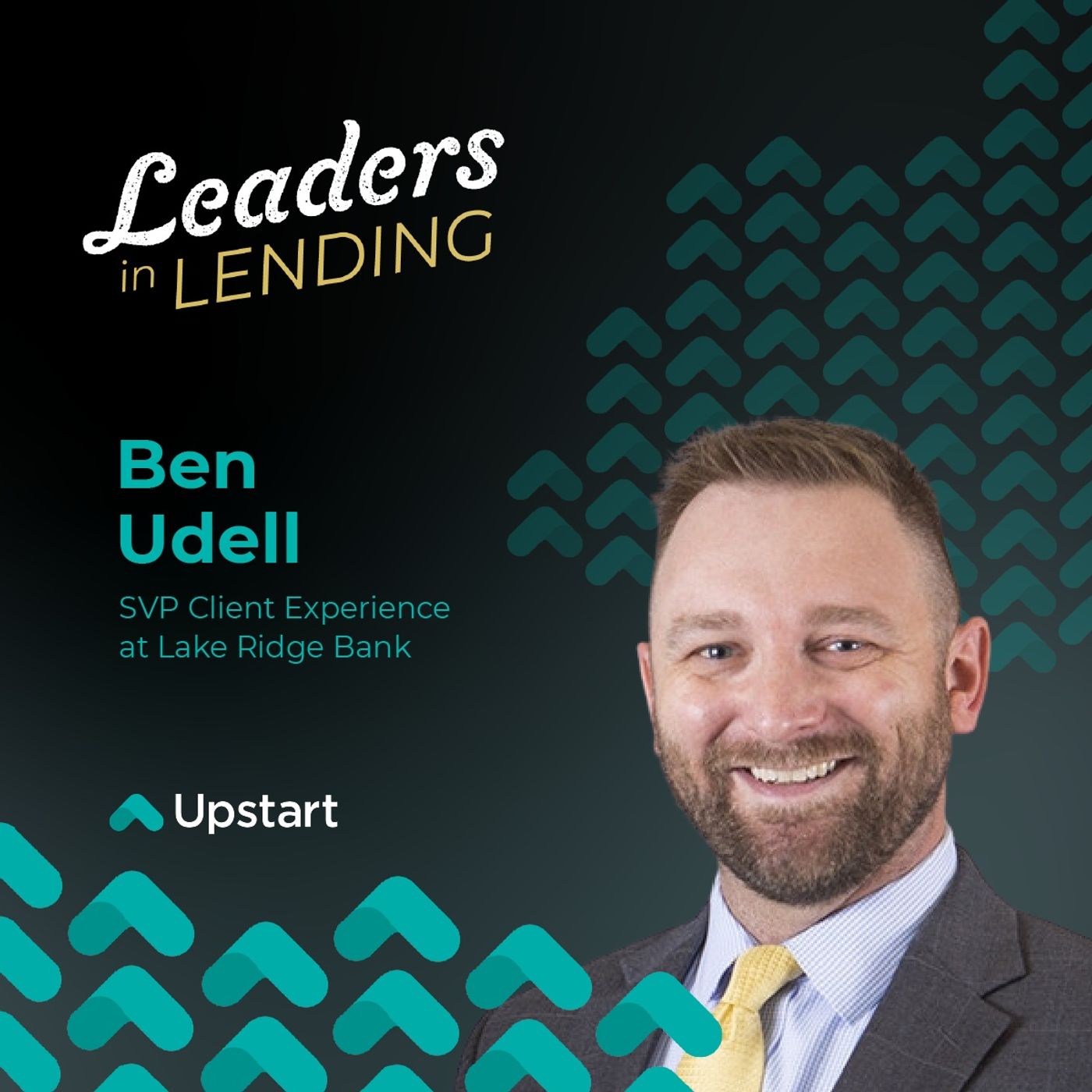
How can banks pragmatically embrace these digital advancements without losing touch with in-person experiences? Ben Udell, SVP Client Experience at Lake Ridge Bank, is the guide to the future of banking, and how to successfully integrate helpful technologies while retaining the value of face-to-face experiences.
Join us as we discuss:
- Balancing pragmatic and moonshot approaches
- How community banks can compete with enterprise banks with service
- Consumer credit trends, including BNPL and personal loans
0:02 You're listening to Leaders and Lending from Upstart, a podcast dedicated to helping consumer lenders grow their programs and improve their product offerings. Each week, here, decision makers in the finance industry offer insights into the future of the lending industry, best practices around digital transformation, and more. Let's get into the show. Welcome to Leaders in Lending. I'm your host, Jeff Keltner. This week's episode features my conversation with Ben Yudell, the SVP of Client Experience at Lake Ridge Bank, about a three billion dollars what he calls a classic community bank. That was a really interesting discussion. We touched on what he calls a pragmatic approach to technology projects versus the more moonshot, bye in the sky or shiny object syndrome. I think we're all phrases used to describe a kind of different approach. Why they take that approach, what they think the core competency is. Meaning of a classic community bank? What does that mean mean to him? What role the branches play and that experience and how does that fit into a technology enabled future. And we also touched on a couple other areas including buy now, pay later, what the I think the interesting topic and being pl isn't just the product, but what the innovation represents, how it came about it, and why it wasn't banks that developed that innovation, and what we can kind of learn from the experience. So a lot of interesting topics. I thought it was a really fascinating conversation. So please enjoy this conversation with Ben you dell. Ben, Welcome to the podcast, and thanks for making the time to join us today. I really appreciate it.
1:27 I'm happy, happy to be here, happy to be here. Maybe you should save that until afterward done to make sure you're actually happy to be here when we when we finish, so well, a little bit of at halftime, and well again, if we need to readjust we'll judge the success of it after we've done it. There's a lot of interesting things I wanted to cover with you today, but I wanted to start. You know, when we spoke Grillier, you talked about the difference between what you call your pragmatic approach to innovation some technology deployment, and what you call pie in the sky or moonshot approaches you've seen taken by others, And I thought it was a really interesting framing of different approaches to the deployment of technology and innovation in the context of a financial institution. Tell me a little bit what you mean by the more pragmatic approach versus behind the sky. Yeah, I think what happens is we get so excited about all the new technology that's coming out, the technology that's available to us by providers, and so we look for these gigantic moonshot space jumps with how we're operating as a business, either internally or with clients. And what happens is, I think with a lot of these moon shots, you need to really have a really great level of technological savvy within your organization. You need to be really great with change management. There's a cost structure that goes into all of that. And so when I when I started thinking about that, how many of our organizations that have been doing something one way for a long time, even though we know we need to change,
2:57 even though we know that our own going to change, that's still a lot of change. And so, you know, you think about becoming more efficient, is that some of the simple stuff that happens either with deployed tools, you know, I think of like the Microsoft three sixty five products that we already buy and we don't use. I think of just simply moving away from paper and whether that's PDF and fillable to no code, low code. I mean, that's all really cheap, really easy. You can get a lot of simple solutions out of that that makes people feel really good about it, just being more efficient during the days any there time on higher quality opportunities. So again, I just I think that's that's one of the hardest things we deal with, is how big of moonshot do we want to make?
3:43 And is squeeze at this point in time in our organization's development, I juice forth to squeeze one of my favorite phrases. But I think it's so interesting and a lot of what I'm hearing from your description is kind of like, in some ways the kind of front office versus bad Off as a kind of fancy new I mean, we're now in the moment where everybody's got a chatbot, or at least the chatbots keep evolving, right, and the new large language models are out there, and everybody wants this kind of whiz banging interface, and yet so much of the opportunity is in producing the processing time, reducing the inefficiency internally simplifying internal operations. Do you see it primarily falling down along those kind of like external facing crazy new product or new feature or blockchain or something totally different than what you're doing, And we're like, let's let's kind of meet the meat and potatoes that the bread and butter and actually like kind of fixing the internal and kind of back office elements. Yeah, that take a really great question, you know, part of the backstory for me and coming into this as we literally just merged with another bank, and so you really get to start to see how people want to make some decisions on resources and strategy and allocation. And it's not that one is writing one that's wrong. It's just different. And you know, I think about all this technology we might spend to add new systems or add more digital and you know, I think online accounting is a really Online account owning is a really great example where we fread a lot about the quality of that client experience. But I don't think we get a lot of clients who are like, you know,
5:13 I got halfway through this online account own forget this, I'm going to go somewhere else, right, They kind of trudge through because they want to go with you, because you have the promotion. And it still takes five ten minutes and they're done, and you know it. Don't get me wrong, it might not be the best experience, but they have account that's open now and they're happy. And I think you take that cost we could have had to go from like a B level to an A level. How much are we how much just happening in the branch where we're doing stuff by paper, We're pushing paper around, we're filing stuff into two different systems. You know, we don't have a file system that's great for auditing, So we file this document here and then we ship something off to the audit team or the compliance team or depiles it ups. And so when you think about how we spend our money and resources, you know, across our industry, we love that moon shot, but if you know, you think about the costs that if we could take ten thousand dollars the moon shot and invested into a program that allows us to be simply more efficient with that client experience on the front and or more efficient in the branch, do we have time for more of our clients? You know, I think that's that's that's where you know, I think it especially at the senior level management side of the world, we get really excited about these shots and nobody's talking to bankers, tellers, frontline staff, credit analysts about, um, what can we just streamline that makes you better, better with your role, better with clients. So I I I that's that to me. There's a lot of wins that can take
6:45 place there, and that's probably winning hearts and minds. I think as well when you consider, you know, wanting to really look after the people that look after our clients, and how do you think about I mean another interesting distinction, which is kind of the self driving I mean self ring kind out really the analogy here, but the kind of like user control, pure digital, no human interaction version of digital, right, we would still have it. The digital account opening is mental like there's no banker involved, right, there's no human in that process, and you're just totally self service. It's probably a better phrase and self driving. And yet there's also this version of technology. It's like, how do I enable my staff when you're talking to them, to have a holistic picture of you and your needs and your history with the institution, to have the right processes and be the best version of you know, an advisor, a consultant, the banker for you in that moment, which is a very different set of technologies and processes and change management that going to a total You know, when I have a digital richination solution where you can get a mortgage, you never talk to human being well or do I want to make my mortgage officer a more effective mortgage officer and have better tools and faster processing in their hands without trying to replace them. And I'm curious how you think about the deployment of technology and then pieces aren't pure technology that are involved in putting those tools in the hands of a human to use in the context of a conversation. Yeah, what I really think about and I think about this a lot as I talk to my friends and peers and some of these conferences and you kind of, you know, over lunch or over drinks, you talk about what everybody's doing. I think what I really find is everybody wants to move forward in really big ways to be more
8:16 productive, more growth, more successful, but they really seem to lose sight of their original strategy that they want to carry forward. So back to this, this moonshot idea with a lot of how we talk about technology. You know, for us, we're a community bank. We're serving you know, the cell central part of Wisconsin. We've got twenty plus locations. You know, I think in many ways we are very probably a classic community bank. And how many of our clients in these communities only want digital or how many only want this face to face. So from our strategy, we're trying to provide that solution that's you can bank with us digitally, or you can bank with us in person, or you can contact us. And I think what starts to happen with some of this decision making and this bright shiny object that that that moon shot is we start to get out of balance and how we're trying to to work with our clients. And so I think for me, it's very much about the strategy focus on who do you want to be at, how do you want to apply that, how does that fit? And I think we we wrap our decisions around that relatively well. And you know, I think that's what helps us be successful with clients, at least in our marketplace. And I think if you're a digital player that really wants to have you know, that a plus digital only experience wonderful. If you want to be this high touch, high in person white glove treatment, wonderful.
9:39 I think it's when we start veering away from those too far that we need to come back and find some some balance with how were operating as an organiza. I think the phrase a classic community bank is interesting. How do you think about the strategic Like what is your the strategy? How would you encapsulate what it is that you can do differently and differentiate as a classic community bank in the new age? Like what does that strategy look like for you? Yeah, I think what it looks like for us, And I think in many ways for a lot of classic community banks, we want to be able to bank how clients want to bank with us. The reason I say that is we're not going to have the resources to have an amazing digital experience that's going to compete with the Bank of America. But I do think on the flip side, we can have a stronger in branch experience that's going to be better than some of these larger players. I think if we invest wisely in the digital side, we can be stronger than some of the smaller financial institutions in our world, and I know they're going to stay. They want to compete on that customer experience. So I think it's it's trying to find both of those. So we're not going to be again a really amazing at technology, but we're also going to have I think this real strong commitment to clients.
10:52 I think we have to start thinking then about what does that really mean? Because everybody listening to this podcast is going to say, well, bad, we have an amazing commitment to our clients, and I think that the question is like, what does that really mean and stuff like For us, that means you walk into the branch, We're going to be able to solve issues of topics within the branch. We're not kicking them off to somebody else. We don't have to make phone calls to answer solutions, we don't have to get back to them. They're empowered to help clients. They're empowered a wave fees if that's an issue, right, I think when you call us, you know, with a wrong phone call, you're getting in touch with a live person, something that I know is difficult to do in these days. Right, when we communicate to individuals, we're communicating we're using our names.
11:33 If you need to follow back up to an email that I sent you, you can actually find me, and we make it easy to find me. So you know, not that those are solutions for everybody, but when I when I think through, you know, how do we validate that when we say we want to be a strong player in the community and be easy to work with in person. That's that's what that means. And then you know, we'll we'll build out our online and mobile to be you know, pretty darn good too if you're not A plus a pretty darn good too. And Clutch are going to be happy with that, right because they're getting a fair deal and they enjoy working with us. We are their their their advisor. Well use another phrase there, that's I think a classic wins silk shiny object syndrome, which is I think it's a question of like, is the A plus digital experience really the thing that wins a client's trust, that wins a client's business over time, or is it something else? And you can pour a lot of money into having the slickest digital experience and a lot of the I mean, frankly, if you're trying to keep up with the Big four or five, like their their annual tech budgets look like most people's operating budgets, right, So you can't really compete on that level. But the question is like, is that what it takes to compete or does my client want something simpler and do I pour my resource into something else. I think it's important their table stakes, But if you look at a lot of the studies that come out, you know, people want institution that's you know, nearby where they live, maybe where they work. They want a low fee situation on easy access to the money, which is often interpreted these days by you know, ATM digital payments. And then what else you need? You
13:07 know, you need mobile deposit, you need an app like those are all basic table stakes. And I'll tell you when we you know, talk to my team or we talked to bankers about what our clients asking the banker. The customers aren't coming in say now I need to compare your mobile app with the cell the banks mobile app before I make a decision. Like they're coming in because they looked at your website and they looked at refuse and they called you and it was just a welcoming environment that you know, people think they're gonna have a good relationship with Right, we spend all this money on stuff that people are going to figure out after the after down the road, and I'm not even sure that's a retention topic for a lot of these topics either.
13:50 Right, if your mobile deposit is clunky or slow, I can't imagine you're going to have very many clients for like I'm out of here, right, they're gonna Yeah. I can't say as I've like opened up five mobile banking apps to check to check the mobile check deposit and go, hey, this is mine. This is my deciding factor around where I'm going to bank, is who's got the slickest mobile check deposit capability? I agree. I think it's such a great case for our marketing friends on the brand you're creating and putting out, is that a brand that's welcoming to your community or you know, I have some friends that work at banks that have some websites that are very very very much created by bankers, long time bankers, and you know, for our family members that are down in banking, where do you see the branch fitting into the future, Like what is the We've talked about the branch and the kind of experience you can deliver there on the phone being a differentiator. But how do you think about the way the branches work, how you change your strategy with what the branches are intended to do, built out for, and what kinds of interactions you expect to happen in the branch as you move forward. Yeah, I think about it from this perspective.
15:00 I think if I think branches are not going away, of course they're consolidating, they're getting smaller. You know, some people have a strategy and no branch is wonderful, right, but but big pictures, they're not going away. So what I think about is why are people coming to our branch? It's probably because they need to open an account right checking account online? They don't want to do it or check it account lending, they don't want to do it online. So how do we make that process really streamlined so we can't use that time to build a relationship. I think people are a luxury these days, And I wish I knew where I heard that quote from, but I think that's so true with you know how often you need to support and just can't talk to somebody quickly or somebody person, So I think it's solving that. But most people come in and you know, we have two check it accounts. We're not spending time talking about how they're going to use the account. We're gonna you know, this one or this one. Here's the benefits, and then we go for We get everything set up, and that needs to be easy. I think the other thing is it's this problem solving, right. They don't want to go online, they don't want to make a call, or they try to do that. It's just hard to communicate. So that's a very different model than transactional based. I think what that means is there's something to be said about investing into an inviting environment.
16:18 I think a comfortable environment you offer, you know, crappy coffee that people don't want to they're gonna they're gonna leave half of it because it's junk, rather than sit there and talk to you because it's enjoyable. I think about how investing into the property of being first class and it looks like you can take care and secure money. I mean all of us can think through driving through town and seeing different levels of should we say repair of certain businesses, including banks, and you know who's going to drive into that bank. If you have a choice, you've got three banks, that's you strong, why would they take a hard ride into yours and go So you know, I might be getting a little long winded there, but I think we really have to think about if people need everyday transactional items, they're probably not coming to the branch. It's because they have a financial need to open an account to talk about alone. They have a problem. And I think we're also seeing a lot of the studies say that the younger generation they know that going online can be a little challenging for accurate information. When you see somebody that is younger in your branch, that might be the only time all year they visit, and you cannot oil that opportunity to be right, I think I think maybe I'd summarize that all by saying, I think where we're at is the value of in person is much higher than we think it is, and we've really got to recognize that and have a really strong approach to how we're interacting
17:52 and engaging with clients in the branch. Are there things you're doing in terms of how you train branch staff or how you prepare people, because it's I mean I do think there's this massive shift going on, not recent but kind of continuing, which is kind of the shift from transactional interactions in the bank in the branch to something more consulted. Me. I'm not coming into deposit of check anymore. I'll do that on my phone. I'm coming in to ask a question. And so I don't need people who can just deposit checks and hand out I need people who can. I need a staff that's prepared to handle difficult questions as a predominant role that they're playing in the branch. And how do you prepare the staff for that reality because it's a different it's kind of a different job in some ways than it was ten or twenty years ago. And I think if we looked at the average age of our our bankers, for instance, the banking team is only getting younger. And if they're getting younger, they have different life experiences. So it's you know, it's a different conversation when you've you know, never opened a CD or a money market or a whole equity, or you know, you have a small credit card because you're scared of credit, and now you're talking to somebody that has an established financial picture So there's two things that stand out to me when I hear that. The first is I think examining the products that you have.
19:03 If your products require math, if they require fine print to understand a how is a banker who's under the age of thirty really going to quote sell this product? How are they going to explain it? I think we often think about we need to coach and train bankers to sell our products well, but if you're trying to sell them a complicated products, it's not a lot of selling, it's a lot of telling. It's it's a lot of explosion. And I think that really makes the banker's job more difficult, and then it doesn't connect well with the customer. You know. The only thing that comes to my mind is we we as bankers, we really love to put rules together and we love to have things black and white. And if you think about why people leave a bank, it's because of customer service and fees, right, and those are very entertainer very interrelated. But what I think about is how do we empower our frontline staff to just simply take care of issues and do more. And when you get down to it, there's not a lot of activities that bankers can do unchecked in a branch. That's going to crush the bank. Right, So they gave away four hundred dollars in fees on accident, not the biggest deal in the world to banks, right.
20:26 Maybe they gave out an exceptionally high interest rate, not the biggest deal. Kind of hard to scroup lending if you think about sexualized underwriting and guter systems that we have. So, you know, I think a lot of my when I talk to peers, they put these restrictions on what a banker can and can't do. And the reality is that only makes it harder to service a client in the branch. It makes it harder to build some loyalty. It's more friction for a relationship. And I think really examining that is a way to win some hearts and minds with your team and with your clients, and just it just makes some things easier in the branch. Right. The last thing you want to do is have somebody walk in the branch.
21:06 They can't get an answer. They got to call their manager over, they got to elevate it up the chain. And you know that's not loyalty building us to build. I love that I love that story and that concept, Like I think a lot of organizations trying to figure out how we push down authority to the person who's in the room and has the most information to make a decision. But also it reminds me if I think one thing, so many financial incisions kind of can can go astray in the sense of risk management being prevention of any kind of risking it well, like, how badly can they screw this thing up? And are we willing to take that risk given the cost it might be associated with it? And or do we do we lose sight of the upside of giving that that branch employee ability to make the decision real tell will they do exactly what the what the centralized risk management you would have done? Probably not exactly, but how much is it going to cost us? And how much good will do we build with the customers by enable that local employee or something like, am I making a good trade off?
22:03 And I put tons of rules and restrictions around that employee? And I think sometimes we optimize for the risk minimization as opposed to the right balance between empowering those lower level employees and building customer customer respect and loyalty. I think what I see happening in and fiess I kind of talk more broadly across banking with you peers and conferences and whatnot, is we're making these decisions and vacuums. So we're making a decision about I'm only going to let bankers wave up to forty dollars and fees for I need to get a manager evolver. It needs higher level approval. While the whole time that client is just ticked off right the banker can't fight for the client. And then over here in this bucket, you might have a finance team or a strategy team saying, our average client is here for eight years and we make x hundreds or thousands of dollars on the client. Like theoretically for us to give away so many fetes and they'll break even and lose money on our clients. As a portfolio, it's way higher than forty dollars, So give away a one hundred dollars and move on. Or you think about these programs we run where we give away you know, cash or incentives, Like in some ways it's almost like if I'm willing to give away three hundred dollars for a new client relationship. I almost feel like you'd be willing to give away three hundred dollars in fees because what's the difference, right, You want the want the cloning. And it's not perfect math, of course, but it's these things happening in a vacuum or you know another example, our risk or compliance team, or an operations
23:33 team or ranch too. You know, we're all we're all in this together. You make a decision because this happened, and then it goes down the chain and all of a sudden, people are like, but I can do this task over here and that's way more risk. Well that we didn't look at it as a whole. We didn't have this evaluate well. We just said something happened once, so I'm going to adjust for it. And then we don't realize how the unlevel that to kind of plane field is for everything else. So it's oh, that's what makes it fun, right, But it's also creates a lot of opportunity. It keeps it keeps me, he keeps it busy. Yeah, I love it. There was one other topic I wanted to bring up and get your thoughts on, which is kind of the innovation in the payment space. Particularly the buy now, pay later.
24:18 I know we talked about this a bit, and what is it that has driven the adoption that? In some ways is not it we talked about. It's not a new pot. I mean buying something and paying for it later on credit. It's like we've had that for a long time. And it is also something that came from outside the banking sectors. So what do you think it was that is driving the interest in that product? And why wasn't it something that financial institutions came up with you a while ago as a way to bring consumers on board. Yeah. I first of all, I think buy now, pay later is one of the more fascinating consumer topics right now. I mean the ability for early non financial players to do a better job of marketing financial products is wild to me, right, I mean that should be very interesting, and I opening everybody in our space. What I think it is is we are so tied into our legacy of how credit cards work and how personal loans work that as soon as we have to start getting out of that box being a little more innovative, it's just really challenging. And I get it. You know, there's there's compliance needs and there's exam and audit needs, and we as bankers don't like to take some of that risk.
25:29 But I also wonder allowed how much of that risk is what we're impartying on ourself, right if we go buy now, pay later, loan U versus a credit card for five hundred dollars to somebody like like it, and I'm going to have my compliance for my you know, my risk management friends maybe push back on that statement, but you know, big picture, what's what's that big risk? Right? And so I think you take that and even without doing something innovative. I just think this is a great case of these innovators understanding the marketplace better. I saw stat recently that surprise me. I don't I didn't have the data behind us like quote it. But the number of you know, millennials and gen z who don't own a credit card or never to use it is exceptionally high. And so here they are going to final pay later, which they might end up spending more money on versus a credit card with rewards through a partner that they could potentially walk into a ranch to solve issues with. And and I just I think it's that disconnective marketing between the who our marketing teams are comprised of in the industry. You know, we've got twenty five years of experience, but I don't, you know, I'm not twenty five years old again, so what like it's hard to understand. And I think this is this great taste of really using our resources eternally within our own financial institutions, and there's there's just this lack of
27:00 connection and I think we maybe one other way to wrap that up is we feel often like is that really worth Are we going to get an ROI out of it? And I mean maybe not today, but it's part of an overall package of developing longer term relationships, which you know, Kennidy is kind of funny. We'll get you know, virtually no ROI on some of these junior savers accounts and some really early checking accounts because we know they're going to build into something more. So why don't why don't we do that in credit and help people build credit and have a program around it and and um, you know, it's it's not just about handing money, it's it's about that education piece. So you know, again I'm kind of rambling on that, but I think, um, that's hard for us. That's hard for us when we've been around for a while. I get it. I also think it's um, there's interesting. I love your reaction to this, this thing that occursed me, which is like, I feel like there's this you know, kind of easy ability to dismiss just BUYO puy later, you know, as a simple example. But where you go, well, I mean, customer can already do that if they just use their credit card and then paid it off in four months, like the same thing right for payments over a month, it would cost you nothing. But I do think that, you know, there's this, particularly in a numbers business like financial institutions like banking, it can be easy to kind of assume rationality. And maybe one of the biggest mistakes we all assume is that people behave totally rationally by the numbers.
28:23 And the reality is consumers reacted differently to a no interest installment plan credit then they do to a credit card, particularly after the financial crisis, and so many people caught up with the credit card debt. And I think it's easy to go, hey, we don't need that, we got a credit card. They could use the same thing. Why would anybody do that and to miss the point that, like consumers actually really like it, whether or not it's meaningfully different in some ways or not, they do and we kind of have to react to that. Maybe it's lack of rationality. Maybe it is a behavioral economics kind of hits rational just not in the numbers in sense way, and a human behavioral economics, you know, psychological way. But I think it's easy for us to miss those things, those trends. Credit is such a funny thing to me, where we it's inherently so easy to think about how we personally use credit and we will just automatically strong and I know people use credit differently, and I still struggle without how would somebody use credit and how do they want to talk about it? And that's that's much harder than a checking account, and it is. I do think it's interesting that we are seeing now real innovation in the credit products being offered. I mean, BNPL if nothing else is a it's a different expression from a user point of view, like a different product. And for many years we've since credit cards, we've had kind of the same rough products in terms of what pricing may change and the rates change, and we make it easier to get and whatever. But like you know, a fundamentally different kind of actual offering to the consumer is a bit new and we're seeing that an investment with like robo advisors, and I think it's interesting to see that evolve in that innovation
29:53 though I do think ultimately we will find you know, financial institutions and the trust say Garner will be where people a turn for those. But it's interesting to see real innovation in the actual underlying offerings, which is you know, which is a little bit more rare at yeah, and I think even the simple piece, so it's just personal loans, you know, we're we're an organization that it just hasn't been bread and butter. It's been certainly home equity, certainly mortgage, it's a little bit of credit card it. So I think inherently we feel like should we do that or not? But when you start looking at the math, there is a huge volume of personal loans every year, and you take a step back and say, well, what sonship of the population doesn't own a home so they can't get a home equity, what preciage of the population doesn't want to use whole equity and all of a sudden, you've got this gigantic marketplace for helping people with personal loans, and you know, it's it's one thing to think whether we should or shouldn't do it, but it's another then take a step back and say somebody else is doing it and are then going to do a better job, and then now takes relationship from us. So you know, what point do we really have to get to the that that point of staying we just have to be really good with this as well. It's it's a bit of a defensive plug as much as it is an offensive play. That's a really interesting point in the personals, and I do think it's It's also the point you made earlier, one of those examples where go why I don't why would someone like I don't need such a thing? Right like I? But yet that kind of bias, we all naturally have to our own use cases the way we would all
31:26 we would I would get a home equity line if I wanted to do that, or I would you know, but you know, like that's the banker is assuming that the average customer looks like them. It's a sure way to not get in the right place for punks, because the average consumer is not nearly as informed and uses credit differently than than than the average banker, And so I think that's a it's I think one of those things people miss because the personal bias is saying, hey, that's not something I would feel like the need for. I think a kind of just a funny personal example, as I traveled for a wedding recently with a bunch of friends to go see you know, our friends get married, and so you got to Danny, you got to drinks, and you know you do either do everybody buys around or you kind of still just put it in. We'll all split it four ways. Right When I have four different you know, credit or debit cards sitting on the table, and you know, a couple of my friends are more financially inclined, are like, why would you have that card? Like why would you have that card? And it's it's like it's like imagine, you know, for a little market research to go out with friends and family and split it and say why did you get that card? And some people are going to be this is the best points card I can get, hands down. Others are gonna be like, I like the design, or I've had it for twenty years, and it's the first one I pull out, And that's so informative to us, not about maybe how we're going to market to those to our clients, but maybe more informative about what we what we are marketing is maybe not hitting the spot, maybe it's not responating because it's it's too narrow of a message for such a broad audience. Well, then this has been a fantastic conversation. I've got three questions I end all my episodes with Ready for him? All right? Question one, what's the best
33:00 piece of career advice you've ever done? Yeah? The short version is when I was when I was much younger, I had a manager of mine and I was interested in this job and he said, Ben, what do you want to be when you grow up? And I said, I don't know what do you want to be? And he's like, I'm asking the questions here, and his point was very clearly most of us don't really know what we want to be when we grow up. And his guidance to me was, you know most people don't, So what are the experiences, what's the knowledge? Where do you want to get involved and what do you want to try? Who do you want to get to know do all of that, because through time, if you do that with earnest, you're going to start figuring out like, I'm really good with this, and funny things happen when you focus on areas you do well and I don't enjoy doing this, so then you stopped doing it, and maybe you're more fulfilled and you're not.
33:49 You know, we all think of our friends who are in this role in rules where they're like that you're going to burn out. You are not good at that job, right, And so I thought that was really interesting and I have always try to impart that on people I work with and mentor on. Don't worry about it, but figure out stuff to learn and get better at and get involved in and test yourself. And this bubble is going to grow in weird shape and that's just fine. It reminds me of the one of the most famous commencement addresses ever Steve jobs Is at Stanford, when I said, you can only really understand a career looking backward, but you can only live it going forward, Like you don't really know where you're going to end up, but if you follow the things you're interested in, it'll make sense when you look back, but you probably don't don't see where it's going to lead. Absolutely everybody wants this specific next step, and it's like, I don't know, take ten baby steps and then see which one you rise up rather than fall down on and keep moving all right. Second question, what's the best piece of advice you've gotten about the consumer banking space in general?
34:47 Oh, that's a that's a great question. I don't know if it's so much the advice I've been given specifically, but I think over time it's just this reminder that when you live and breathe it every day, it seems so easy and you forget about what that standard average person is like. And I think the better job we do of asking our friends and family, like the card example of having your card in the middle of table, you know what would my mom say? Does that make sense? To my dad? Is my niece going to be okay with that? Is? Man? That would really that would maybe tick off my sister if we did that. And I think, you know, using the your friends and family to really say, you know that makes sense, that's good advice. I think of some of the banks that have gotten themselves in some ethical issues right, would your mother be ticked off if you did this to her? Yeah? You know, hey, you know, back away. But I think it's also like back to the marketing decisions we make as well and the product development decisions.
35:47 So again not a specific piece, but um holistic that i've you know, we always talk about for time. Yeah, I remember when I was at Google, there's a similar thing where the Eric Schmidt used to say to that the whole company go like, just every email, you're right, like, assume it's going to end up on the front page of the New York Times. Would you be proud of what you're saying in that email? Because like, welcome to the big leagues, guys, it may actually end up on the front page of the New York Times. Like you should be willing to stand behind the things you say, even if it may be uncomfortable to have to do it publicly, Like you shouldn't be embarrassed or good mind, I really shouldn't have it. And you should be able to take pride in the way you make decisions of the things that you do and be able to defend them with a straight face. And I think that's same thing for speaking up at work when something's not working well, or you need to present an opposite opinion or perspective. Its it's you know, how do you feel comfortable being a part of the solo shuttle? All right, last question, Ben, here we go. What is one bold prediction for the future. Well, bold prediction for the future. Again, I don't know if this is bold.
36:47 I just I really worry about losing more of our smaller financial institutions. And I believe Jeff when we talked, I think we talked before we talk about No, we talked after Silicon Valley, right, we talked after Silicon Value. Yeah. And I just it's just this other example of how taking systematic risk out of or I shouldn't say system the organizational risk out of the system, and valuing community organizations. I just think the the the pace of digital technology, the pace of change, that's all moving much faster than how a lot of our organizations are keeping up with it. Another great example right now is AI and I've been playing around with it and it's amazing how it can help you with just day to day easy things that I would have to search forever to find. And I type it in and this is the expression that I want to put into Excel and there's just not the resource system maybe keep up with the joneses for that, and that's that's going to crush.
37:51 I think a lot of community focused organizations, smaller organizations, and it's just not healthy. And I don't I don't think a lot of these organizations think that. And I think that's where that's probably maybe to really answer your question, I think that's what worries me. And I think that's the hot take is if you asked a lot of banks our size, I don't they didn't worry, but they wouldn't they wouldn't be ready to make big changes. Yeah. I worry about that too, because I mean I think I think you're maybe seeing policymakers and legislators see the reality of the value of the community institution today, because what I've seen is as people are getting nervous about their regional bank or their community bank and they're saying, Hey, we're going to go move our checking accounter. I had a checking account at SVB and now I need to go I'm gonna know somewhere else. And they call up Chase and they go, how do I sell you know, I'm a new I'm a new digital first company. What's your dress? I don't don't have an address, we don't know how to we don't know how to help you, right, or uh, you know, I'm a new restaurant opening up here, Well, how do I you know? Like, those small businesses in particular really rely on the capabilities of community financial institutions to support their growth. And I think it's easy to think you can do everything digitally, but I think those things that those investments in the community are gonna be hard to replicate for the for the large national banks. And it's a it's a real service to the American economy and to the small businesses and their and their employees to have those institutions out there. And at least I see from some of the comments from the fact that they that they kind of get that and they want to make sure we're not in a position where the sense that big four banks are safe and everybody else's, even your deposits, are at risk causes a flee
39:23 from the community institutions that causes their demands. I think that would ultimately, at least as what it stands today, be real detriment to the to the country. And I think, you know, a lot of times we think about it's just money solves the right money adds the digital products that improves the experience, which digital transformation and improves the branches that allows you to you know, grow branches or or I just associay ad branches or you know, renovate. And but there's a talent gap that's going to start to exist. You know, AI will go back to that. If there's one or two people in your bank doing work with AI and you go to a much larger organization and there's fifty people doing it, you know that that's you know, it's I like to use often two plus two can equal four, or if there's fifty people in an organization with two plus two equals eight or nine or twelve.
40:09 Like that's just that exponential rate of growth that happens from these efficiencies and uses of transformation. It's just it really is kind of mind blowing you think about the spread between some of these organizations these days. So that's gonna be tough. It's gonna be tough, it's gonna take a lot. So that's why we're here. Well, I think that's that's why we're here. That's what makes it fun. Every day to show up to work right, All right? Well, Ben, thank you so much for your time today. This was a great conversation. I appreciate your joining us for it. You're welcome. I enjoyed it, Thanks Jeff. Upstart partners with banks and credit unions to help grow their consumer loan portfolios and deliver a modern all digital lending experiments. As the average consumer becomes more digitally savvy, it only makes sense that their bank does too. Up Starts AI lending platform uses sophistic hated machine learning models to more accurately identify risk and approve more applicants than traditional credit models.
41:06 With fraud rates near zero, upstarts all digital experience reduces manual processing for banks and offers a simple and convenient experience for consumers. Whether you're looking to grow and enhance your existing personal and auto lending programs or you're just getting started, Upstart can help. Upstart offers an end to end solution that can help you find more credit worthy borrowers within your risk profile. With all digital underwriting, onboarding, loan closing, and servicing, It's all possible with Upstart in your quarter. Learn more about finding new borrowers enhancing your credit decisioning process and growing your business by visiting upstart dot com Slash four dash banks. That's upstart dot com Slash four dash Banks. You've been listening to Leaders in Lending from Upstart. Make sure you never miss an episode. Subscribe to Leaders in Lending in your favorite podcast player using Apple Podcasts. Leave us a quick rating by tapping the number of stars you think the show deserves. Thanks for listening until next time.

