What the Collapse of SVB Means For Deposits and Interest Rate Increases



The recent collapse of the Silicon Valley Bank has been one of the most significant bank failures since the global financial crisis and is the second-largest bank failure in the history of the United States. With ripple effects spreading around the globe, this bank failure has thousands of experts diving deep into the details to identify exactly where things went wrong, what the collapse means for the future and how we can avoid similar failures.
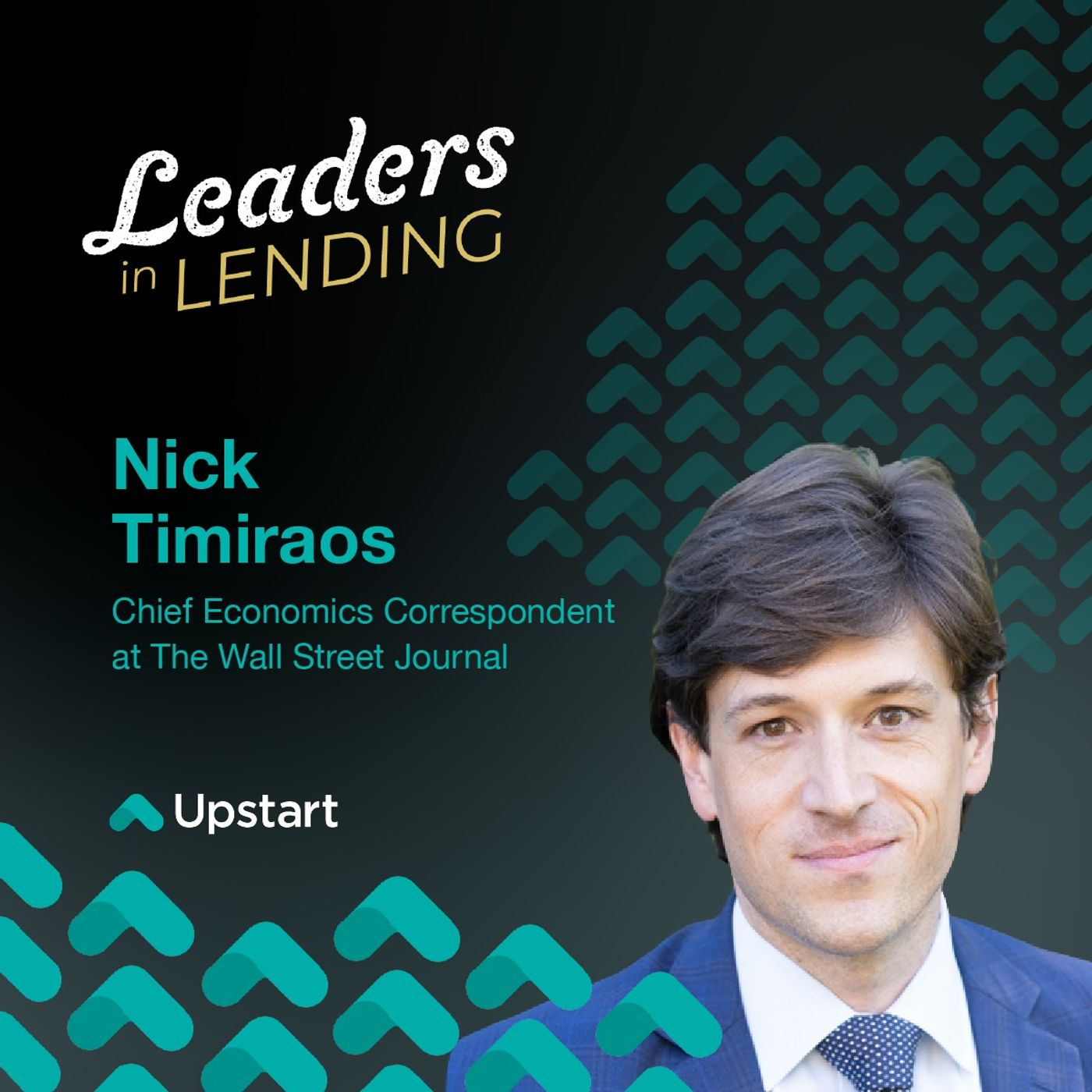
In this episode, we speak with Nick Timiraos, Chief Economics Correspondent at The Wall Street Journal, who shares his take on the unfolding events and gives us a glimpse into what the future of finance may hold.
Join us as we discuss:
- An outlook on the future of deposit insurance
- Navigating crises in the financial sector
- Macroeconomic balancing tools utilized by the federal government
Note: This was recorded on 3/16. For updated reporting by Nick Timiraos on this story please visit The Wall Street Journal.
0:02 You're listening to Leaders and Lending from Upstart, a podcast dedicated to helping consumer lenders grow their programs and improve their product offerings. Each week, here, decision makers in the finance industry offer insights into the future of the lending industry, best practices around digital transformation, and more. Let's get into the show. Welcome to Leaders in Lending. I'm your host, Jeff Keltner. This week's episode features my conversation with Nick Timorrose, the chief economics correspondent for The Wall Street Journal. Nick and I had originally planned to talk mostly about the FED, but given that we recorded this podcast on Thursday, marks the sixteenth, less than a week after the collapse of Silicon Valley Bank and Signature Bank, we decided to delve a little bit into what happened with those institutions, what the response from the federal government has been and how effective it's been, and a lot about how that might impact stimulus monetary policy of the government policy moving forward we think the after effects of those collapses might be. It was a very timely conversation and we are glad that we can have Nick on to talk about this very important topic with us. So it was. It was a really interesting conversation. I know, I learned a lot about something that doesn't happen all that often and kind of what the causes and impossible after effects are. And I hope you will as well, So please enjoy this conversation with Nick timorros Nick, Welcome to the podcast. Thanks for making the time to join us today. Thanks for having me. You know, we're recording this here on what is it, Thursday, the sixteenth of March. And we talked last week about things we might talk about, and I feel like
1:34 over the weekend the world changed and there's maybe timely topics that we don't want to ignore that have occurred. So I thought I might just start off with, you know, roughly the takeaways you have from what happened. Obviously, I'm talking about Silicon Valley Bank and the kind of failure of that bank, that stepping in of the federal government, the FDIC, and kind of where we're at, Like, what's your takeaways as we talk about this a couple of days after the you know, the ultimate takeover by the FDIC, of what happened and how how we responded. Well, I think there are a couple of things. One question has been, of course, what was going to break in this FED interest rate cycle? Right the Fed? The saying is, the Fed always raises rates until something breaks or someone always goes through the windshield. And so now we now we're beginning to see I mean we knew last year obviously Crypto and some of the other digital assets that had you know, gone parabolic in twenty twenty one came back down. But this is you know, now now you're getting into things that obviously policymakers are more concerned about because if you damage credit creation, you know, credits the lifeblood of the economy. So now we're beginning to see some of the casualties of the Fed's rate increases, and I think it's raising questions about how the FED will respond because the FED wants the economy to slow down. They want demand, and they want to restrict demand to bring inflation down yet supply demand into balance,
3:05 but they don't want to do it by causing a banking crisis. And so the analogy I use Jeff is sometimes you know, the FED doesn't know how it's moves are going to affect the economy. They call those the lags of monetary policy, and It's like hitting that glass ketchup bottle. You keep hitting it, nothing comes out, nothing comes out, and then you smack at another time and everything comes out. They want more of a squeezeable bottle where they can kind of control it carefully, but that is not how the economy and infrastrate policy works. Is there anything you think gets them close? I love the squeeze bottle analogy, and I've got the ones now that you store upside down, so they're not only squeezable, but the ketchups right now right there for you. Yeah, is there anything that is it equating to that? That? I mean, obviously not to the upside down squeeze bottle, but to the more real time understanding of the impact of changes to the economy that they can respond to, because that's a that's an interesting analogy.
4:00 I'm curious if you see anything that moves them closer to a squeeze moodel from banging on the fifty seven on the glass one. Well, you know, so, I think the challenge here for the FED is they have a mandate to bring inflation down, but it is harder to do that if you have an unstable financial system. So what we saw you know this past Sunday was they came out. They made two big moves. The first one was they said they would They said, also, by the way, Signature Bank has been closed in New York, and we're gon we're gonna stand behind the uninsured depositors of Silicon Valley Bank and Signature Bank. And they did that by invoking what's called the systemic risk exception. The FDIC has to resolve failed banks in the least cost manner for their deposit insurance fund unless they deem they and the Fed and the Treasury deem there to be a systemic risk, which allows them to not focus on the least cost to the deposit insurance fund. So that was the first step. The second step was because there was some concern, there was a lot of concern that you would have a bank run on Monday morning if uninsured depositors of a bank that was seen, as you know, fairly stable. I read that Signature Bank had by rating from more than half of the Wall Street analysts to cover it. So if you know, people wake up on Monday and they say, well, the equity analysts who cover this bank couldn't do the credit risk analysis, what prospect to uninsured depositors have
5:31 you would have had runs on other banks that we're seeing is not large enough to have the government in there. So they created this facility at the FED called the Bank Term Funding Bank Term Funding Facility. I'm missing one of the acronyms there, but essentially it said, if people want to get their money out of the bank, we will provide a way for banks to borrow from us in order to meet demands for withdrawals. And the whole was that that would sort of cauterize this problem, and you know, you don't actually have to use it, right, like Hank Paulson said about backing the GSCs in two thousand and eight, if you have a bazooka, people know you have it, maybe you won't have to use it. So this was really an insurance policy to say, all right, if there is if there are deposit outflows on Monday, banks are going to be able to meet them. So maybe there won't need to be deposit outflows on Monday. Yeah. Yeah.
6:25 Do you sense that there is movement of foot to evaluate I mean, this kind of feels like an admission that, on some level, for any reasonable institution, we're going to step in and ensure all deposits, and that feels like I think a lot of people. I mean, I think many consumers and even businesses don't understand that the idea that they're ensure the deposits are not actually at the bank, that they're at some risk they're kind of lending the bank the money to make loans, and that there's risk in doing that. I mean, I think most of us just as when you put your money in the bank and if you leave in the bank account, that should be the safest place it could be. It can't go anywhere. And I don't know if there's going to be a movement to actually make that more formal and official and more holistic way where it's kind of implicit for the systemically important financial institutions, where it's kind of an implicit guarantee from the government beyond the standard insurance limits and now a questionable one for at least two institutions, and make you assume that in the future such similar measures might be taken. I'm curious if you think there's some movement to make that a more official stance, to make like an unlimited deposit guarantee, to remove the limits on the deposit insurance.
7:27 It really raises questions about what's the future for deposit insurance, right because regulators said after two thousand and eight that they had tried to address too big to fail, and Silicon Valley Bank wasn't considered by anybody to be too big to fail, the sixteenth largest bank in the country. But I think a couple of things to note here. One is the speed of the run on that bank was just shocking, right, a quarter of the deposits out the door in one day, forty two billion dollars out of deposits being withdrawn. And when you look at, you know, the customers of the bank, I mean this was a very concentrated customer base, non insured deposits. These were these were not stable deposits, right, There was a risk that if people thought the bank wasn't safe, they would run. And so I think now you probably are hoping bank supervisors are going through and looking at other banks that are in the same situation where they might not have such stable deposits.
8:28 So that's one point. I think. You know, this is not new though, this problem for regulators, And I wrote a book last year about the Fed's response to the COVID crisis called trillion dollars triage, and I focus a lot on the FED chair J. Powe. He worked at the Treasury Department in nineteen ninety one, in January nineteen ninety one, so this is in the thick of resolving the bank failures that came out of the interest rate increases in the nineteen eighties. And there was a Sunday, I think the first weekend of the year ninety one, the Bank of New England was failing and they were talking about what to do with the uninsured depositors. This was the thirty third largest bank in the country at the time. It was going to be the third largest bank failure in the country at the time. One point, I want to say, nineteen billion dollars in deposits, only ten percent uninsured. So really the inverse it was, you know more than you know, ninety percent of those deposits of Silicon Valley Bank were not insured.
9:28 So what did they do. Powell's boss was a Harvard academic. His name was Bob Glauber, and he kind of got up on his soapbox and he said, this is moral hazard. If we'd step in and bail out these uninsured depositors. Then there won't be any risk discipline, risk taking by bank management or you know, the you know, the wealthy people or customers that put their money in the bank, they should know, you know, what that bank was up to. And the FED then there was a FED governor the name of John Laware, and he said, okay, well, if you do that, here's what we think is going to happen. Every money sent there will be a run on every bank in the country as they're uninjured. Depositors try to get their money out on Monday morning, they will come to us and then we will be dealing with that problem. So you're the government, you can do whatever you want, but that's what we think is going to happen. And Powell later explained, you know, we chose the we chose the backstop of the depositors without dissent. So people, you know, are surprised this happened, but this is it's not surprising really if you look at the history of this. This is how policymakers have responded on this on this topic. Yeah, and I think the comment, I think the President made the same comment of kind of like the equity holders, the bond holders those guys are taking risk and they deserve to be wiped out. But I do think there's, at least in the common man's perspective, a pretty big difference between the depositor who and their money a checking account and the person who had equity your bond. And I thought, I don't know what you're taking. But my sense that like um, that that small businesses were supposed
11:01 to be looking at the financials of a bank to understand if they had their money at a safe bank that was making responsible lending or not, that that was supposed to be a backstop, when to your point, you know, the buyside analysts in the equity markets were telling me these were good banks, you know, both of them having been through their audits relatively recently and coming out with clean bills of health from auditors. Like it seems to me a bit unrealistic to think that the depositor is the is the one who's supposed to impose some sort of financial discipline by being unlinked deposit with banks making risky moves with money. That if that's the idea that that's a backstop, that seems a bit misguided to me. It does, though, raise questions about all right, well, if if every time this happens, then the government's going to step in and you know, ensure the uninsured depositors. What what are we doing with deposit insurance going forward? Should that be priced differently? I think the other thing that we saw, you know, this week again it's it's March sixteenth or so, but what we saw the beginning of the week was it didn't actually provide maybe the measure confidence that you might have hoped that these actions. Obviously we don't know the counterfactual. A lot of people think it would have been a lot worse if the government hadn't had done what they did. But I think a couple of people I've talked to have said, what's spooked folks about? This is one Silicon Valley bank, you know, the beginning of March, even though they had had some people knew generally what the problems were there. They had some interest rate risk that was causing problems
12:31 for them. They had bought a lot of lower yielding long duration mortgages and treasury securities when they had all these deposits coming in in twenty twenty and twenty twenty one, think of a kind of the pandemic tech boom or bubble that we had, and so this bank benefited from that. They put that money to work. They didn't manage the interest rate risk, perhaps as prudently as other banks have, and that caught up to them. But the concern was that was seen as a fairly strong, healthy franchise. I talked to somebody who said, you know, two weeks ago, if you had said you want to own this franchise, they would have said, of course I do. Then people see how quickly the money can leave the bank. Now it's March sixteenth, no one has bought the bank. I think the FDIC is doing a second auction for the assets on Friday the seventeenth, and but that then people begin to say, well, wait a minute, this thing that I thought had great value, the values gone, the depositors fled. That leads to questions now around other similarly situated midsize regional banks. And that's a concern because if the deposits are seen deposits are usually seen as sticky, and if they're now seen as flighty, at least for these regional players, then you have a unstable equilibrium potentially, especially as deposit rates have been stayed fairly low, and the FED is raised in restrates a lot, and so there's a gap you can close there by raising deposit rates, but that could create
14:05 a negative funding spread for banks or certainly you know, lower margins. And so I think those are the concerns that haven't been fully addressed or resolved yet. Yeah, it's one of the things when I talk to banks that I definitely here is the stickiness of deposits and the question of if that the historical stickiness can be maintained in the future. Particularly, I mean, you know, the banks have this idea of beta, like how much they have to raise interest rates on deposits to keep deposits As interest rates in the market's rise, do you really have to match that? And the answer has typically been not that much. But we've also for quite a period of time, I haven't had interest rates go so far so quickly that people are going, wait a minute, I can go get three and a half points on a checking account at one of these new fintechy banks, Like, that's a pretty big delta from the OZO point five or whatever I might be getting. And so I do think there's more concern that those deposits are becoming less sticky, both because there's a big beta, big delta in terms of yield available from a traditional you know, most banks a day and the most aggressive banks on the forefront. And to your point, just how rapidly and easy it is for people to move money, I mean not forty two billion dollars in a day was just I think terrifying people that it can just I mean, it's just a click on the cell phone away from moving from A to B. And I think that's a new reality that people are not quite sure what to deal with, what to do about, and how to think about how much stickiness of deposits really has been more or less permanently shed, particularly if there's a big, big gap in return rates. Yeah, it's it's I mean people have called it the first you know bank run of the digital age or the
15:39 twenty first century, right, this kind of social media and you know it's a cliche to say perfect storm, but you did kind of have a perfect storm here. You had all these very you know, these startups that need a stable source of funding. They're on tech, they're talking to each other, they're all being financed by some of the same you know, their portfolio companies of the same venture capital firms. So once word went out, get your money out of this bank, you know, there wasn't a whole lot to do at that point. It really and it took I think it took the regulators just by surprise because we're not used to seeing deposits flee that quickly. I'm sure they thought they had more time to try to do what normally happens, which is, well, if this bank is going to make it, we're going to find a buyer, we'll go in, take it over on the weekend, announce it after close a business Friday. But here you had the state regulator in California going in at eight fifty in the morning, and I think that also spooked people that ge that this could just happen that fast. Yeah, yeah, I think it's probably if you looked at the depositor to Twitter user ratio at Silicon valid base quite a bit higher than most institutions, and that kind of like the meme stocks, it kind of went crazy on Reddit. I mean, it was it was an environment where those customers were highly concentrated a small number of information channels, which it could cause you know, at least within that depositor based a high degree of contagion really rapidly, which is probably a bit unique to some of these you know it's
17:10 Silicon Valley Bank and others, but in the general concept of how much more quickly this thing can spread in the age of social media is probably a very real phenomenon for for every institution. Yeah, definitely. And you know, I think it's something where people are only going to now have to figure out how to deal with it. I mean I saw something from a communications a PR shop this week sort of telling their clients like, you got to get on top of this when it happens. Now, you've got to have a plan and tell people what it is you're actually doing so that they if they're feeling sick, you can make them feel well. Yeah. Yeah, I do think the other the other piece of that, if you think of this as being a Silicon Valley banks experience too, with being kind of a combination of some mismanaged interest rate and duration risk along with a kind of very rapid bank run. The communications seems to have been one of the places people want.
18:00 They did not do the best job of kind of calming their customers and their crisis. Communications pr firms I think are using this as an example did not really effectively manage that the communications and the risk through that as they could have. Is probably a good a good note for others. It was. I mean, what the catalyst for all of this was On Wednesday night they announced they were going to raise capital, I think to two point two five billion dollars. They were going to have to sell they were going to have to take losses on some of these hold formaturity securities, and so they were going to record a loss and that just made people ask questions, and so you want to try to answer those questions before people can say, well, wait a minute, what else might we not know? Well, what's going on here? Right? So I'd like to shift a little bit from the story to you know, we had originally talked about talking about the FED, and I think a lot of people are debating what will the FED do now?
18:56 Are they going to stop interest rate rising? Is? You know, how are they going to respond? And the thing you and I talked about that I think is fascinating is getting beyond this kind of simplistic view of the FED as kind of things happen in the world, and then just the FED responds as if it's a monolithic institution that just is an input output kind of you know, we just keep raising rates until inflation hits the nart number we want, and then we decrease rates intileration. But it's really it's really ultimately run by individuals, and particularly Chairman Powell. And so tell me a little bit about how you think his perspective, like, where is he coming from when he thinks about I mean, obviously it was an unusual world pre this particular incident in terms of the interest rate rises we'd seen in the economy we've been experiencing. Where do you think he's coming from and the motivations that are driving him? And then and then I guess after that we talk about what you think we might see from the Fed and moving forward. So Powell, just to give some background, He's spent his career mostly in the private sector.
19:52 As I said before, he worked in the Bush administration, the first Bush administration in the early nineties, and then private sector, private equity, you know, came back to He's from Washington, so he was living in Washington, not really working in twenty eleven and worked on the debt limit problem. He really helped the Geithner. Tim Guyler, the Treasury Secretary, convinced Republicans here was a Republican private equity guy saying, you guys got to raise a debt limit even though you don't want to, because you'll just really screw everything up if you don't. And so they sort of thanked him for it, and they put him on the fedboard. They were also having trouble getting Republicans to agree to one of their nominees for the FED. So he's on the FED for five years under Bernanke and Yellen, and he sort of became a centrist. You know, Republicans were quite unhappy with the policies have been Bernankie and Janet Yellen, and Peel supported them. Donald Trump becomes president and he sort of likes Janet Yellen's policies, even though he wants to have his own person in the job. So Peel becomes the FED chair and Powell had had taken sort of in that same tradition of Bernake and yelling of view that you know, the economy needed more support. After the COVID shock, the FED went all in. And the concern before the COVID shock had been that actually growth is too weak across the world, inflations and interest rates are going to be low. That's going to leave central banks with less room to stimulate.
21:26 Then of course you get hit with this inflation in twenty twenty one. And now, you know, I think Powell is focused on making sure that that he isn't remembered as the central banker who undoes forty years of relatively successful inflation control, or what was seen as inflation control by the central bank, by the FED, you know, Vulker, Greenspan, Bernakee and Yellen. And obviously there were other forces at play that helped inflation to stay low as it came down. But I think that's the concern now is you can't you know, if you're the FED and your job is to maintain price stability and maximum employment. But the Fed has already sort of said, you can't have great employment if you don't have price stability, if you don't have real wages going up, what good is a job? So so that's that, you know, That's I think where he's coming from, where he's been coming from as he raises rates quite aggressively, is there's no reason for this place to exist if we fail on inflation. Now, one thing he has that Paul Volker didn't have, for better or worse, is the FED is said they've set this new American inflation target of two percent. Volker didn't have to worry about that. He knew inflation was too high. He knew he needed to get it lower. In nineteen eighty two, as inflation came down from you know, double digits down to four or five percent, he said, Okay, I think I've done enough, and he backed off. But the Fed now, and we can talk about this if you want, he has made two percent sort of the the what they need to have. They've set that
23:00 as their target, and so there's a you know, the credibility is at stake for the institution but also for Powell, and I think that is important in thinking about how this institution's approaching what they're dealing with here. So let's let's dive into a little bit. Where did the two percent come from? What's the nature of the target for two percent? The rationale for a specific, specific target on that So two percent wasn't something that you know, economists did finally tuned empirical analysis to get to arrive at it actually came from New Zealand. New Zealand had had, like many countries of bad inflation problem in nineteen eighties, and so in nineteen ninety they said, all right, we're going to set a target of zero or two percent, and actually we could fire you central bank governor if you don't hit the target. The idea though, was if you tell people what it is you're trying to do. You know, monetary policy, interest rate policy operates through the financial sector, and so before the nineteen nineties, the FED didn't tell anybody what they were doing with interest rates. It was all a big mystery and you just kind of figured it out from what was happening in the overnight borrowing market. But there began to be this revolution glassnost in monetary policy, where if you actually tell people what it is you're trying to do and how you will react incoming data the Fed's reaction function. If you tell people what your reaction function is, then as the economy unfolds, people in the markets they were guessing, but
24:30 they're really educated, well better educated guesses about how you're going to respond, and so interest rates began to move as people began to understand, well, actually, here's how the Fed's going to react to this, because we know the FED is seeking in this case two percent inflation. So the FED also up until that point in nineteen ninety six, inflation hadn't you know, inflation had been too high, and so they always knew the direction of travel was we want to bring inflation down. But by the early two thousands, and you yet to worry maybe about interest rates went to one percent in two thousand and three, there were concerns that maybe the problem could be too low as opposed to too high on inflation. Japan was dealing with deflation and it was a very difficult problem for that central bank to get out of. It has been up until very recently. So Burnanky Ben Burnanky goes and says, we should set an inflation target. And they had sort of already informally been conducting policy with the eye of you know, one maybe it was one and a half, maybe it was two percent. Finally, the financial crisis hits in two thousand and eight and they say, okay, this is you know, this is it. We could have deflation here, Let's set a target, let's announce what it's going to be. And there's a great quote from Bernanke.
25:45 Before he became chair, he was a governor at the FED, and in two thousand and three at an FOMC meeting, he said to his colleagues, you know, ambiguity has its uses in games like poker, but monetary policy is a cooperative endeavor, and so if we tell people what it is that we're trying to do, we actually improve our odds of achieving it. And so that's really where this two percent inflation targeting came from, and it's something that's become a global standard. Really, most central banks around the world have inflation targets, with maybe some differences, but generally two percent has sort of become the standard that the goal thin. What do you think happens if impacts like like what we saw this weekend are in conflict with two percent because inflation is obviously not there yet, and yet there's some sense that maybe they will stop raising rates for a little while based on the reaction to the failures of the banks, the concerns about contagion. How do you think they weigh different factors in the economy against that inflation target, because that becomes once you've got an explicit target and you're not there you kind of ties your hands if you At the same time, there are other things that you might want to take into consideration that might change your point of view. It curious how you think the FED up weighing things. So before the banking issues, the FED had been able to say, well, this is pretty easy inflations. We have two mandates and kind of a silent third mandate. The two mandates are inflation, employment, maximum employment. The silent third mandate, I think is
27:15 financial stability. But financial stability was fine and employment was three point six percent unemployment in February. What's not to like about that? So they were saying, well, we can just go all in on fighting inflation. Now if unemployment rises or if you have financial instability. Now you have to actually say, what are the trade offs? How do we manage these tradeoffs. One way they can manage it, and you hear some people talking about this is well, we never said we have to get to two percent tomorrow, right, you can get to two percent over time. And so right now a lot of their forecasts and projections are consistent with getting their buy twenty twenty five, So they're giving themselves two or three years to get to two percent you don't need to get you ten percent of the work force unemployed tomorrow to try to get two percent by December. This is referred to sometimes as optimal control.
28:07 Right where you're trying you you know, you know, you want to balance these two things or these three things. The banking problems, though, I think, are you know, a wild card certainly for the FED right now if they can, you know, if they can deal with these with other tools, like the things that they came out with on Sunday, that would be their first choice is not to have to use monetary policy to deal with you know, the right tool for the right job, so monitor, if monetary policy is the tool you're using to deal with macroeconomic management and inflation, then you come up with other tools. Sometimes they're called macroprudential tools, regulatory tools. You know, you can intervene in the markets, but continue to focus interest rates on bring inflation down. But if the if the banking crisis gets really bad, then you're going to have much tougher conversations I think, and decisions around that. And I would just you know, point to two thousand and eight. You know, the day after Lehman went down, there was a FED meeting, and the transcript is public, so anybody can go look up what they were talking about at the FOMC meeting on September sixteenth, two thousand and eight, and it makes for fascinating reading because there was an inflation problem. Actually, that summer, oil prices went to one forty a barrel CPI, the consumer price index went above five percent. Now core, which is what the FED is more focused on, wasn't so high, but they were worried about inflation. And you read what people were saying that
29:37 day, and I'm not you know, this isn't a gotcha exercise. You can see that there were a lot of people around the table who were worried about inflation as they were about financial sector instability. And in hindsight, you say, oh my gosh, how could you You know inflation wasn't going to be a problem anymore and we had the financial crisis, But at that point in time, you know, so I've been wondering for months, wh happens if we get into a situation like that. And I'm not saying we're in a situation like that, but if we were in a place where you're worried about inflation, you feel like your hands are taught. Even there's a financial stability issue, but you feel like your hands are tied because you really got to focus on inflation. Um the you know, it's it's It creates much much more difficult decisions. Yeah, and I do think the concept of financial instability at large scale feels more real and recent. I think the idea that that is a thing that can happen, I think after two thousand and eight probably doesn't feel as abstract to policymakers as it does as it might have at that time. In some ways, maybe a little recency bias in having seen some of those all right, last topic areas. I know we're running up on the time I told you we take, but you mentioned the kind of data and responsiveness of the FAT and I wanted to ask what you see in terms of, obviously the kinds of data that uses there. I know there's a lot of survey data that goes into this, and at least in my world, in a lot of consumer spaces that the validity and kind of usefulness
31:10 assertive day data is coming into questions that becomes less People are less responsive to various ways that we've taken surveys we're trying to find new ways? Are are there interesting trends you see in the kinds of types of data that are available to policymakers at the FED and other places and shifts maybe and how they think about those data sources as they try and respond to pretty rapidly changing conditions. I mean, even right now, like waiting for a survey response feels out of date compared to how quickly you might have to make choices in some of these situations. So I'm curious if you see the trends kind of data side of how they look at what I think. You know, I think big data or these new data sources do offer opportunities. I think one of the drawbacks is maybe that there isn't a long time history with some of them. So you know, the great thing about the payroll report is it goes back to nineteen forty eight. You know, there have been changes over time, but you do have a long time series on it um where you where you've seen some of these newer data sources being really helpful. I think during the pandemic, you know, the open table um and some of the you know, there was small business payment processors Wampley there was a home base, which was way to tracks kind of small business payroll, those real time sources when something really crazy was happening, we were shutting down the economy, or people were staying home out of their own choice because they were afraid of getting sick, and so you were trying to figure out, well, what's happening out there were you know what we're um, what's mobility like, what's what's foot
32:40 traffic like? You could use some of these data sources to try to figure out if we were actually getting out of the worst of it. Uh And and the FED did use those insided some of those um just in their kind of um analysis of the US economy. And so it will be interesting to see if more of those data sources, you know, the FED gets some I think credit card data, real time credit card data. If you have you know, if you have companies that are that have a fairly good market share, then and the market share is stable, you're not having to worry about mixed shifts polluting the data. There is more data that might be you can bring to bear to try to figure out where those turning points are in the economy. Yeah, well, certainly I'll add that to my list of interesting things to watch, Nick. I appreciate you taking the time today.
33:35 I know it's a very timely conversation. I guess we'll all be watching what actually happens over the next couple of weeks, because I said, this a pretty fast moving environment and it'll be curious to see how how things play out compared to some of the things we talked about today. So I appreciate your coming and sharing your perspective. Thank you, Jeff. Pleasure to be with you. Help Start partners with banks and credit unions to help grow their consumer loan portfolios and deliver a modern all digital lending experience. As the average consumer becomes more digitally savvy, it only makes sense that their bank does too. Upstarts AI lending platform uses sophisticated machine learning models to more accurately identify risk and approve more applicants than traditional credit models. With fraud rates near zero, upstarts all digital experience reduces manual processing for banks and offers a simple and convenient experience for consumers. Whether you're looking to grow and enhance your existing personal and auto lending programs or you're just getting started, Upstart can help Upstart offers an end to end solution that can help you find more credit worthy borrowers within your risk profile. With all digital underwriting, onboarding, loan closing, and servicing, It's all possible with Upstart in your quarter. Learn more about finding new borrowers, enhancing your credit decisioning process, and growing your business by visiting upstart dot com slash four dash banks. That's upstart dot com slash board dash banks.
35:01 You've been listening to leaders and lending from Upstart, make sure you never missed an episode. Subscribe to Leaders in Lending in your favorite podcast player using Apple Podcasts. Leave us a quick rating by capping the number of stars you think the show deserves. Thanks for listening, until next time.

