Where Corporate Growth and Community Impact Collide

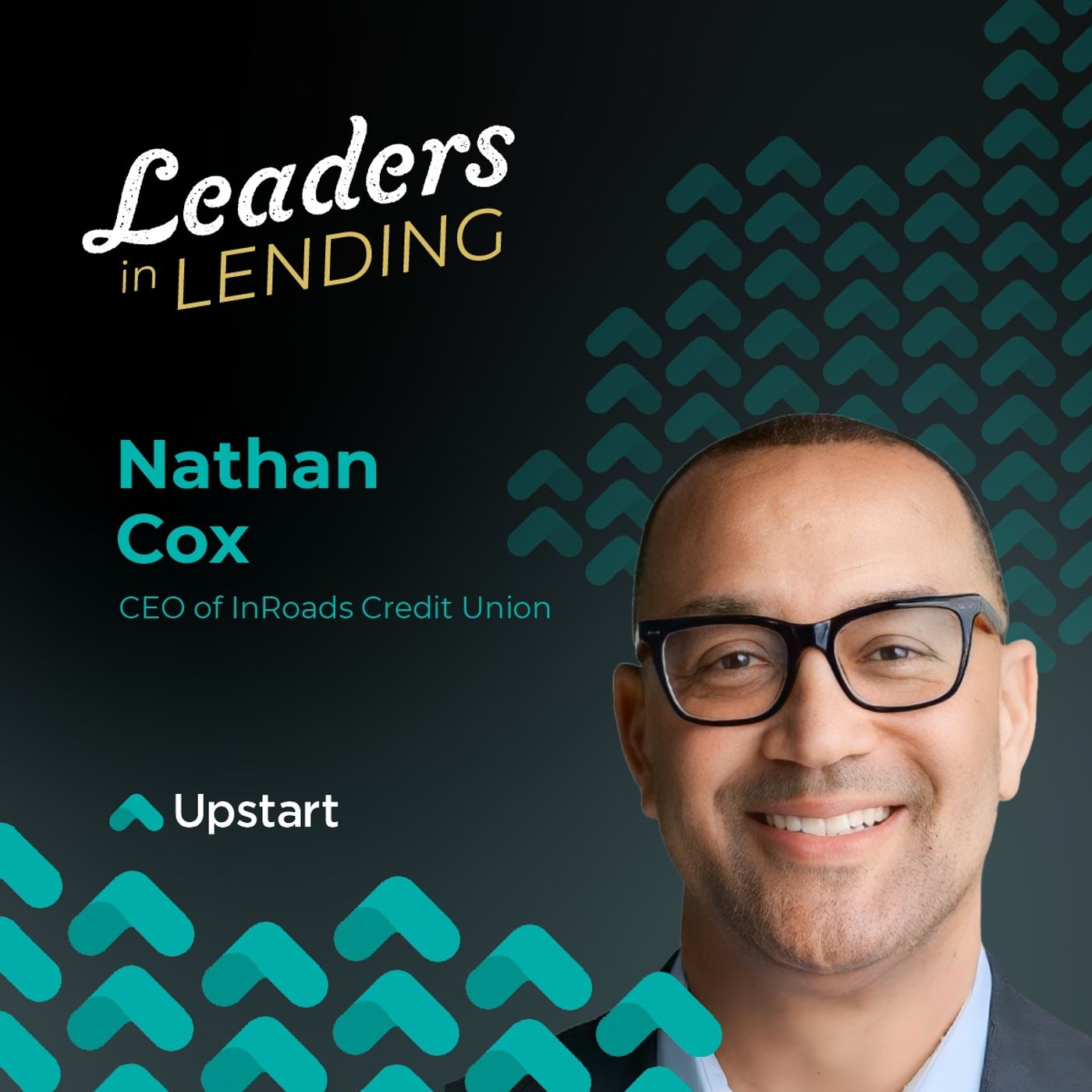
This week, our host Barry Roach is joined by https://www.linkedin.com/in/-nathan-cox/, CEO of https://www.inroadscu.org/, to discuss his transition from banking to the world of credit unions, as well as the stakeholder-focused culture and societal...


This week, our host Barry Roach is joined by Nathan Cox, CEO of InRoads Credit Union, to discuss his transition from banking to the world of credit unions, as well as the stakeholder-focused culture and societal impact of credit unions.
Nathan’s position and insights have been hard-won, as he’s put no shortage of work into bettering himself—from his days as a walk-on D1 basketball player to an MBA student seeking to address any and all shortcomings. It’s this same level of insightfulness and dedication to growth and personal betterment that Nathan brings to his vision for improved consumer experience.
Barry and Nathan discuss:
- The importance of involving employees in decision-making
- Why organizations should prioritize member experience and stakeholder value over shareholder growth
- The relationship between financial literacy and economic development
0:02 You are listening to Leaders in Lending from Upstart, a podcast dedicated to helping consumer lenders grow their programs and improve their product offerings. Each week, here, decision makers in the finance industry offer insights into the future of the lending industry, best practices around digital transformation, and more. Let's get into the show. Hello and welcome to Leaders and Lending, brought to you by Upstart. I'm your host, Barry Roach, and I'm happy to be joined today by Nathan Cox, who's the CEO of Inroads Credit Union in St. Helens, Oregon. Nathan's taking a winding road on his way to the CEO chair. Started in the wine industry, worked his way through some incrementally challenging roles at banks and credit unions across California, but he's really blazed his own trail to hit this career milestone a CEO of a credit union. But the quote unquote finish line is really only the beginning for Nathan. In today's episode, Nathan's going to talk about embracing failure, overcoming doubt, taking lessons from adversity, and also enlighten us on the vital role of credit unions play in community economic development and the unique approach of the Inroads team has on improving the financial wellness of their members. Let's get started. Hello everyone, thanks for joining us on the Leaders and lending podcasts with Upstart. I have the pleasure today of talking to our good friend Nathan Cox, who's the CEO of Inroads Credit Union. Really glad to have you on today, Nathan, I know you are a fairly new CEO in the credit union space. Maybe tell us a little bit about your background and starting from going way back to when you started in your career to where you are right now, and a little bit of
1:34 that history and that path that you've taken. No, sounds good. Thank you again, Barry. I'm honored to be on the podcast. Look forward to our dialogue so way back when. I've been in the industry for over thirty years. However, this industry isn't my first job, so to speak. My first job out of college was with the Galla Wine Company, where I was selling and building displays and I got promoted a couple times. Tis then that brought me from southern California to northern California and I got in the banking industry literally on a fluke in nineteen eighty nine. A friend of mine had recommended that I go to a job there, and I said, well, I am happy and I enjoy what I do, but I'll go on and go anyway. And by chance I ran across someone for HR. There was a recruiter and they worked for Wells Fargo, and Wells Fargo at the time was recruiting outside salespeople to grow their banking business. So in September of eighty nine, I went from the wine industry to financial services industry and have been in the industry since September of nineteen eighty nine. Wow, that's a non traditional path, Nathan, right, going from wine to banking. Any lessons from the wine industry that helped you when you go into banking, well, timing is everything. I left the wine industry when I thought it was tailing off, and the wine industry took off and the banking industry had a recession. So I tried to predict the future too much. That's a good idea. Yeah, So a little bit about your banking history then, I
3:06 know you started with some fairly large banks in northern California, correct, Yes, so started off with Wells Fargo and I've worked for both domestic, publicly traded banks and large international banks. Most of my career has been with Wells Fargo and Bank of the West, where I spent ten years each. But my most recent kind of bank background was with US Bank, being the market executive for Sacramento and kind of the greater Central Valley area. That was my last stop before I hopped into the credit union movement, which I'm enjoying thoroughly. And was it about the credit union movement that kind of made you feel like this was a good move for Nathan, a good move for your career, you know? For me, it really is three things. Number One, I love the entrepreneurial attitude to where you know, we can partner with FinTechs or vendors that can help us go our business. That's number one.
3:59 Number two two is that for me it's the greatest combination of taking the financial expertise and having impact on the community. So again that would be number two. And the number three is that it's a growth opportunity. I think the movement is really expanding its lines of business, and for me, coming to Inroads, it was a chance to help transform this company to prepare for the future given everything it's taking place in the industry terrific. Yeah, you know, you and I have similar backgrounds. I started banking as well and evolved into credit unions, and you know, nothing against banks or anything like that, but one of the biggest differences I found was and I worked for very large bank, like a very large bank, and there was a lot of talk in the bank about we'll focus on the customer, put the customer at the center of everything you do, and looking in the rear for mirror of that. Now, it's they didn't necessarily follow that ethos, right. There were a lot of decisions and a lot of strategies that were made in that bank that clearly were not in the best interests of the customer. It was more about the shareholder or some other constituent. Right. You go to credit unions and it is completely all about that member, right, Like, if you are not focused on that member and on that member experience, then really you don't have much of a business to grow on. Just kind of wanted to get a sense from you. Did you feel the same sorts of things coming into the credit union industry or did you have a bit of a different experience barrier spot on for me. I think, and again, banks are bad per se, but I think they're focused is shareholder driven and shareholder value.
5:30 When you look at the crediting movement, it's more focused on stakeholder value and that member experience and stakeholders can be working with vendors, various business partners, community partners, but at the end of the day, everyone is properly aligned to drive and optimize the member experience. Right, That's great, And now you're a CEO, So congratulations on that. I mean, it's been almost a year for you now, right, yep, yep, coming up on nine months next week. Time flies still standing and you've got one hundred different things coming at you on a daily basis, right Whereas I believe your past role was very much more focused more on the lending side of things, and now you've got such a broader view of the whole organization. Just maybe talk a little bit about the transition there, Nathan, like, how that's been going and sort of what's been most helpful for you. I guess through that transition. You know, the transition has been great. I had a dialogue with my board Shair a few weeks ago, and you know she was talking about a few things that were unexpected, and I said, well, to be honest and said, I'm enjoying the transition because if everything went the way it's planned, we're not really going to grow as a company or grow as leaders. So for me, transforming the company into what is capable of being has been a great honor and a great privilege, and I'm having a ton of fun. I think for me, the move from California, you know, Oregon has been great. I think the people up here are very I love the food scenes. I gotta watch. I don't need too much.
7:02 But the transition actually has gone fairly well. I think for me it's integrating a fail forward, fail fast mindset because I want people to take risk so that way we can grow the company. And I guess, if I had to summarize it into one simple phrase, we are transforming the company through digitization. Love it. So there's a connotation there that perhaps the company was on a path of digitization that wasn't quite where it needs to be today to compete. Was it more of an internal thing, more of a member focused digitization strategy, or maybe a little bit of both. I think a little bit of both, and probably the mentality that I've tried to implement the most is don't operate with both feet in the business today. Operate with one foot in today and one foot in the future, because you always have to look forward. And what I'm doing is ideally inspiring and transforming our leadership mentality to be more forward thinking. And also with the board as well, which they've totally embraced. Right, that's great. And those board relationships are so critical, right. They are the ones who who can be your biggest supporter sometimes can also bring in some challenges for you. Right, So describe how you successfully create those those effective board relationships, not just with the chair but with the broader board. No, thank you, that's an excellent question. I think number one. To have a strong relationship with the board, there has
8:33 to be transparency. So when I first started having my monthly one on ones with the board chair and so, look, there's one rule that we're going to have this non negotiable and it's called no surprises. You don't surprise me and I don't surprise you. And I think that level of transparency has been respected to appreciate it. Also, I think the next thing is accountability. We have to hold each other accountable, and lastly, really making it a partnership. I've really had an open dialogue with the board and it's just about accomplishing those things, being transparent, being accountable, and just being open. And again they've completely engaged kind of forward thinking mentality and they support me.
9:15 So it's a lot of fun, a lot of hard work, but a lot of fun. Terrific. Yeah, not a lot of pleasant surprises in the credit union industry, right, Like, usually pleasant is not the adjective you think of with surprises, usually something that's really gone badly. So that effect of communication, I think is kind of the number one thing, so that everyone's always on the same page, right correct. And you talk before about failing fast, and there's a lot of people in the credit union industry who don't really think of it that way. They think, oh my god, you know, we don't want to We can't really fail at anything because our members are relying on us for something. But my experience has been that sometimes your best lessons come from adversity, right and how you deal with it, how resilient your team is in dealing with it, how you respond to these unpleasant surprises that can happen. Maybe walk us through a little bit of how that fail fast mentality has worked at Mwroards. You know, it has worked fairly well. We still have a ways to go. But I'm just a firm believer that you learn more from your failures than you do your successes.
10:16 And I'll give you a little bit of a basketball analogy. When I walked on at Loyel and Marymount to the basketball team the summer before and for workouts alliday, was just shooting. I mean, I'm practicing shooting, a little bit of dribbling, but more shooting, more defense. So when I got to the actual tryout and I was trying to compete for a backup point guard spot, my dribbling was not where it needed to be. So I still made the team. But the coach pointed out to me, he says, hey, your role is not to be a shooter. Your role is to be a dribbler, a facilitator, and to play great defense. So I learned from that my weakness was dribbling, especially my off end. So during the season I worked that much harder on my dribbling so that way I can fulfill my role. But if I can focus on the shooting, and I'm not asked to be a shooter, then I haven't really grown. So that's why I say it's important that you learn more from your weaknesses than you do your strengths. Right, I promise I wasn't going a fanboy about your basketball career, but you know, hats off, right, congratulations, Like not everyone can say that they played D one basketball and you weren't recruited by anyway, really right, this was just your hard work and efforts that got you into that position and gave you that experience, right, well, and thank you, and really that's it. Yeah, I was not recruited athletically, had a host of academic scholarships and opportunities, but you know, I love challenges. And my high school coach, when I asked him after the season where I could go walk on at a Division one school, he just
11:48 looked me in the eye and said, hey, you're just not that good. You need to go find a small Division III or in AIA school to go play and hopefully they'll make the team. But you're not that good. So I internalized that challenge and again did the work, put in the effort, and got to the point where you know I made the team. And the funny thing about making the team, I couldn't get a playwright, couldn't make a pass, right, And as you know, fall practice starts at the beginning November. And I went to the coach's office on November first, and you know, my head's down thinking, yeah, you know what, I didn't make the team. And I walked up the stairs to the office and he had my my practice uniform, my game uniform, my shoes. Isay, you made the team. Go put your stuff in your locker and then get your ass on the floor. Practice starts in a half an hour.
12:35 And again that's the success story. So hard work does pay off. Hard work, But in the motivation of that challenge, right, people doubting you, people saying oh you can't do this, right, that's fuel for you. Right. And this was quite I won't say, but it was a few years ago before I had right hair at the boss spot. Mary, Yeah, you've experienced it those for your career, and Eathan, I mean, you know, we've all had people in our careers who maybe down to this, we've even downed ourselves sometimes, right, and yet you continue to persist and try and strive forward. You talked about how shooting was great. Now, back then you didn't necessarily have designated shooters. Right now, the game has evolved. If you can shoot the three, you can play anywhere now, right, So you worked on dribbling. You didn't have a three point line. That's a good point. Yeah, and short shorts.
13:20 Your point line came in two years after I graduated. Yeah, there you go. So there were all two pointers exactly. So, but you worked on dribbling, right, You worked on and with your off hand. So all those maybe weaknesses you had, right, I know in your academic career, because you've talked about this in the past, that you had some weaknesses academically or with your own knowledge base that you knew you needed to correct that to be able to get to where you want to be in your career. So talk about that a little bit. Because you graduate from LMU, you ended up going off to getting a second degree. How that all happened? Yes, I had some great mentorship early on in my career at Wells Fargo and just had some great managers. And one of the pieces of advice I got was to go back and get my MBA Master's in Business and the logic was, and this is what the executive told me. He says, you don't want to be in a situation where you're competing for a job and the only reason the other person gets the jobs because they had an MBA and you didn't. And that was when the light went on. So I said, okay, I'll go back and get an NBA in marketing. He said, nope, go get an MBA in corporate finance. And I said why So that was my worst subject in undergrad. He says, no matter what line of business you're in, in a financial institution, HR, marketing operations, or lending, whatever, it all revolves around finance. So the more you can have a strong understanding of finance, that will help you. So that goes back to our conversation about the weaknesses. I put all the effort into
14:52 the weakness and for me, graduate school was much easier than undergrad because I was working during the day and going to school at night. So in nineteen ninety six I got my MBA and corporate fininance from Goldigate University and just missed Magna cum latte. So wow, I had a little hiccup at the end of my term, but I was very happy with my GPA and my experience impressive, Nathan. And so I know because that finance background again similar similar experiences what you've had. I also got my NBA and finance because it was in a strong suit. But now as the CEO, I mean, if you don't have that fascile understanding of the numbers and the relations between the numbers, it's really really hard for you to make informed decisions. Right. So you've mentored many people through your career as well, right, I'm sure as you've been in leadership positions and trying to help those who work with you and beside you really achieve the best they can be. Maybe describe a little bit how you've been able to sort of mentor people throughout your career. Because we're not going to be here forever, Nathan, Right, we need those players on the bench to be coming up and taking these roles for us as well.
15:56 So maybe talk a little bit about how you've been able to do that successfully. Yeah, just had that conversation last week with our executive team. So Number one, I think an NBA doesn't necessarily make you smarter, for what it does is it makes you think in a more analytical mindset, and you need that mindset to be a successful leader in the financial services industry. So I've taken that along with what I think is a very high level of self awareness and saying, Okay, here's where I'm at, here's I want to go. How am I going to get there? And I think we talk a lot about servant leadership or you know, all these different management tenants. I think really being an effective leader is about communicating with your people and earning and keeping trust. So the big thing I've done in the company, a lot of the business decisions were centered at the executive level, and what I've done in myself and our head of HR, we did a listening tour.
16:56 So for ninety days, all we did was visit every department, every division, and we took notes to put everything together. And I realize that we have really, really good people. We empowered them to make decisions. So over the last couple of months, I've taken a lot of decisions that were done at either the executive level or the leader level, pushed them down to the organization and we're getting great ideas, great engagement. Because the executive team can't do everything to change a company. It's going to take the entire company to move the needle and help transform where we need to be. And we're getting some phenomenal ideas from the staff and they were always there, we just never solicited them. Right, terrific. I mean, kudos to you, first off for listening to the staff, because sometimes they don't feel like that's they've ever had a voice that way. Secondly, kuz to you for actually acting on it, because the worst thing you could do is go and ask for that feedback and then do nothing with it, right, stick it in the bottom drawer and go, oh that was great. I kind of check that box. I'm going to go on and do my own thing.
17:57 No, you're absolutely those best ideas are really coming from They may not be fully formed ideas from the German population of the staff, but there's enough initiatives there that that's where your executive team can come in and really turn those those germs of ideas into real positive solutions for both your members and for your staff. No, you're spot on. And one of the things I'm doing, we're out on a listening tour and one of the branch staff they called me out of something that I promised to do and I didn't. I say, you know what, You're right, So we changed it and shifted. So I think this is it goes back to the whole thing about transparency. So once a quarter, I actually spend a day working in a branch where I'm actually the greeter, or maybe I'll work behind the desk somewhere. But I want to be visible. So when the members come in and I don't say who I am, I just greet them and say how can I help them?
18:48 And then during the course of the conversation I let them know on the CEO. But there's nothing that can't be done that I won't do. And if I can impart that mentality in the company, then the other employees will also say, Wow, he's willing to make sales calls, he's willing to solve problems with the members, then I can do that as well. So really trying to empower and engage the entire company to move us forward totally. Oh that's awesome, Nathan. So if you really want the unfiltered opinion from your members, go to the call center for a day, right, Because people over the phone tend to be a little braver in their opinions of things and so on and so forth. So you know, if they've got a beef with the CEO, and the CEO actually answers a call, hey maybe you can maybe you can knock that problem out right away, right, you know, it's funny you bring that up. I actually did that one day, spend half a day with our live staff taking calls as people are going up to the ATM. And because we have these interactive ATMs, so you can do a video or you can do a regular chat. And it was interesting some of the feedback you got. And then but the best part, and this is one of the coolest things about the job, we decided to give members fifty dollars on a random basis to credit in their account. So they didn't know it, but we had this one lady and she had a small child on the back seat, and you know, she's kind of going through a transaction. So I said, he you know, by the way, I'm the CEO, blah blah blah, and I'll turn it over and so and so to do the transactions. They completed the transaction that I came back on and said, hey, just to thank you for being a member, we're going to give you a fifty dollars credit and your account and make the deposit right now. So thank you for being a member. And Barry
20:22 was so moving. She looked at us, she looked at the baby in the backseat. You can see the tears coming down her eyes because that fifty dollars made a difference. But for me, it wasn't the fifty dollars. It was the fact that I as a CEO connected with the member and deepen that relationship and built that trust. So that's what our business is about, establishing trust to optimize the member experience. Yeah, one member at a time. Right. So you're in that Portland metro area slash rural Oregon, you're somewhere in between, and we all know metro areas teem to expand, so it becomes maybe less rural daily and more metro, right, that's true. But you're also competing with a lot of large banks are important in a lot of large credit unions as well. So for inroads, Like, what's your vision for for how you see inroads sort of owning whatever it is that element of the market that you want to own, Like, what's it going to take for you all to get there? You know? I think our focus, and I've tried to tell people we can't be all things to all people.
21:21 Let's be excellent at what we're really good at. So we're going to build a foundation of financial wellness, and that financial wellness, if you can envision a three legac stool, is financial health, physical health, and mental health. And we're going to go to market branding that three leged stool, part for the consumer member and then the other part for the small business member. We can't compete with the larger of the regional banks because we don't have the infrastructure and the product set, and we have very friendly competition with the other credit unions. I mean I sit on councils with the other CEOs and we trade ideas all the time. So our focus is we have a very strong market share in Columbia County where our branches are, and we're expanding into Washington County because that's one of the growth areas. So again, we can't be everywhere. But my vision going forward is that as we digitize the company, we leverage our what we call our segs, our specialized employee groups where we basically do banking services for large local employers. We leverage that using our digital technology to grow our membership base and expend our footprint. That's terrific.
22:33 Two of those three legs, right, Physical health and mental health not something you typically hear from a credit unit, right, But admirable that you're thinking of it in a much larger sense rather than just financial health. I mean, financial health is maybe a component or it can be a detriment to someone's mental health as well. Right, So why did you choose those two elements of the stool Because it's so unlike what I've heard from other credit unions and certainly some banks. We have lots of banks and credit unis who maybe are donating to certain causes and so on and so forth. But you're actually making this part of your corporate ethos almost right? How did that come about? Nathan? You know, you bring up a really good point about the banks, and again, just being very realistic, I think a lot of times financial institutions will make charitable contributions because it's the right thing to do for a variety of reasons. If you look at a credit union, we're driven by community involvement and community impact. And if you look at the data, and no matter what the source, you'll see, there's a direct correlation between the strength of someone's financial health and the strength of their mental or physical health, and if their financial health is not strong, that stress impacts their mental health and that mental health impacts their physical health. So we're working with we have great programs for middle schools and high schools to help them about the budget and what we call financial reality fair, and then doing the same thing for small business owners because by default, crediting is serve a lot of the underserved or
24:10 underrepresented communities, and those communities do not have financial equity. So we could take all three of those areas financial health, mental health, and physical health and really use them to have an impact. That's why we're changing lives and leaving a legacy at Inroads, and the companies completely bought off on that. So now we're going to execute that strategy going forward. Impressive, so impressive, Nathan. So that's part of that's through digitization, right, the ability to provide more services faster and at the time and in the channel in which the members need to access them. So you've obviously had to establish some new fintech partnerships right up starts of fintech, So we partner with hundreds of banks and creditings across the country for making sure that we are providing lending in a more inclusive and more accessible man across the country. So talk about at inroads and maybe even personally, what you look for in a fintech partner or what really is a catalyst to make inroads feel that this is going to be something that's going to be sustainable and a fully functioning partnership going forward. I think my definition of a great partner would be what I would call a stakeholder.
25:21 They have a vested interest in the company because they want to optimize the member experience, not just complete a sales transaction. And literally I'm starting to draw the line for the company between partners and stakeholders. I would consider obviously a company like Upstart being a stakeholder because based on my knowledge of the company, which goes back several years, you're really making a difference in the underserved community. And that's what I look for is you know, there's an old saying Barry said, if you really want to know where somebody's at, don't watch their lips, watch their feet, because they can tell you one thing, but their feet will say something different. I think companies upstart when you watch your feet, you guys are doing all the right things really, you know, being a stakeholder with credit unis to try to drive lending to underserved, underrepresented areas. So just using you as an example, that's what I look for. I don't want a vendor just to come to me and said, oh, we have the solution, click on here for a meeting, invite.
26:22 No, I want to know your value proposition, how you can help us, help the community. And I think when you have a mutually beneficial relationship, that's a win win for everybody. Awesome. Yeah, No, So it goes beyond just what the solution is, right, it gets into what are the values of the company. Was a vision of the company? Does it match what Inroads is trying to do, Because then you know that you've got a partner for life basically on this right exactly. Terrific, Nathan, this has been a great discussion. A couple other things I do want to touch on. You work on a lot of economic development initiatives, and you've got a long career as a commercial or small business banker, so you've sort of seen the impact that credit can have to really the lifeblood of certainly new businesses as well. So talk a little bit about in the inroads area in your market, how you see inroads sort of helping from that perspective, and it could be from either better access to credit for small businesses or you talk a little bit about your work with schools, but any other sort of economic development initiates that you think you guys can be at the forefront ome.
27:23 I think two areas. Very one would be obviously small business, but also focusing on the micro lending or loans under one hundred thousand dollars. You have a local dentist that needs to get more equipment to expand his or her practice, or a local restaurant chain that wants to do something put up a distribution facility financing that I think when you really zero in on small business lending, the economic impact isn't just the financial viability the company, but it's also job creation and then have that job creation trickle down through the community because it affects so many people, you know, the daycare provider, the local grocery store, so forth, and so on. So what I've been able to do is in part kind of a long gain view of economic development here and having people invest in the community and really look at it from a relationship standpoint, not a transaction standpoint. Right. What's statistic, Nathan, You probably know better than I do that every dollar that gets put into the community for supporting small business turns into eight dollars in GDP or something like that. Right, And so as you're supporting that small business community in your area, it just has that much of a greater impact on the whole community at large from an employment perspective and so on and so forth. And I think one of the things that's really fun about working in a rural a suburban community the passion for the success of the community is great. So as a native California now working
28:56 in Oregon, I've been well received because I'm taking this personal and I want people to see my passion for the community to be successful. It is not just about inroads credit union, but what the community can do to band together across political lines, across governmental lines. How can we have impact Because Verry, what people are starting to see now is that if we don't reach out to the middle school and the high school kids and get them going a financial wellness and they go down a different path not only are we losing an economic impact, but these are potential employees that we're going to have five to ten years down the road, and if we don't move them along properly through that financial wellness, how can they be employable down the road if they've been exposed to other things that will have a negative impact on their lives. So that's what I think the aha moment hit folks locally, is like, Wow, this really is important, and everybody's on board. Yeah, amen to that.
29:55 Financial literacy is not in the curriculum. I have school aged daughters. They're not learning through their school, and there's two camps in that that may think that it's necessary or it should be part of what the school system allows, but you're sort of ignoring that aspect of it and just going ahead and saying, Hey, we know this is a gap in our community. This is something that Inrods can certainly help with, and you're just going forward with a program on that. So is this something Neathing that Inrods has had for a long time or does it serve of a new thing that you brought in. It's a new concept that I brought in, and it parallels with some legislative approvals that were done in the state of Oregon of mandating financial literacy being taught at a certain school age level. So again we're running kind of side by side on this, but really, to me, it's just common sense for a financial institution because we have a great community impact in the communities that we serve. That's part of our mission is, you know, we have to help transform lives and help them be better off, not just for our benefit, but for the benefit of the community. So I didn't know this was a state legislator concept. So then I guess the school boards have to find institutions that are willing to partner with them on this unless they're building this curriculum themselves. Potentially, yes, there was some legislation passed I believe came through the Oregon State Senate. It's not going to be implemented for a few more years. But in Roads has had partnerships with local high schools for the last few years. So now we're going to deepen those partnerships. We're also
31:26 going to go to the middle school level, and as we expand out our footprint, we're going to reach out to other local high schools and explain to them about our financial reality fairs, our Team Up for Schools program. So as an example with our Team Up for Schools, the local high school gets a branded debit card and it's like a cash back rewards program. They get five percent of all the debit cards spin back to them at the end of the year. So we've been able to present checks from maybe ten or fifteen thousand to his high as six thousand and one check we present was over one hundred thousands, So this is real money and again as part of our financial wellness commitment, terrific, terrific. Well kuno's again to you guys for taking that initiative and to you Nathan, I mean this was your brain job coming in. This was one of these new ideas. The CEO has maybe a disproportionate effect on sort of the future of the organization, and this is maybe one example of where you're really coming in and this isn't just rhetoric. You're truly making a tangible impact to the lives of your community. So again, props to you and the Inroads for that. Thank you. I'm going to close with what we typically do on leaders and Lending podcasts where we talk about your bold prediction for the future. I'm gonna put a little bit of a twist out of here, Nathan. I want to know a bold prediction that you think more from a financial services perspective, and then maybe a bold prediction for Nathan, because you're a well rounded person, right, you have a lot of things going on personally in your life. So one bold prediction for Francise services, one bowl prediction for Nathan, and then we'll hold you accountable
32:58 for this X number of mine from now. I won't say how many months, but at some point bold prediction for financial services, I think you will see continued mergers amongst credit unions and acquisitions of credit unis buying small banks or bank branches. The regulatory environment and the increased cost of technology is becoming an issue for most of us, and then when you layer that over intrastrate risk and liquidity risk that we deal with on a daily basis, at some point, I think it just makes sense to merge. And I'm not saying that for us, I'm just saying generally speaking for the industry. And then a lot of CEOs are retiring, so you'll see that come together more and more in the next twelve to twenty four months. Definitely bold prediction for Nathan.
33:45 In fairness, I sprung this on you, but that's when you get the most genuine and authentic answer. Right, let's see consistently. Shoot, I have a golf scorer in the mid eighties, mid eighties. Okay, I've been playing the rain up here. I really tried to get better. Well, there's you know, there's driving ranges, right, there's putting greens and stuff like that. But are you at one hundred and twenty right now? We are you at ninety? Like? I kind of no. No, My handicap has been seventeen for the last six years because I just don't play enough. And you quick, funny story, So we're as you know, we had a pretty bad ice and snowstorm up here a couple weeks ago, so it was pretty harsh, I think for about four days pretty much the city got shut down. So I'm tired of staying inside. So on Sunday, I was like, all right, the sun is out even though there's snow, and the sun is out, and I took a picture of sent it to my friends. I went to this driving range and a lot of the range is covered with snow. And I'm out there hitting balls and it's forty degrees and snow on the ground. But I'm out there hitting balls trying to get better. So we had a good laugh about that. That's dedication right now. These are yellow balls that you can find the snow, right, not not white balls because that'd be pretty hard for the for the you know, some were yellow summer white. But that's on the fact of these guys at the driving range. But in all serious I think it really comes back to what we start off on. You got to put in the work.
35:07 And I always tell people I don't have the perfect answer for everything. I don't have all the answers, but my breath of experience and my death of experience gives me a really good perspective about problem solving and how to get things done. So I've imparted on my executive team. As we talked about earlier, fail forward, fail fast, but just don't look you straight ahead, broaden your perspective when you learn a lot more, and when you learn more, you become a better leader. Nathan, no better way to attend the podcast. And on that note, thank you so much for your time today. I really appreciate it. I want to run through a wall for you at this point right now, you're just very motivating and I just think that that you and n Roads are in for some some great successes in twenty four and beyond. So again, congratulations and everything that you've accomplished so far.
35:54 You've got a long road to go. I'm rooting for you, and I'm sure that you'll all make it. So thank you again, Thank you, very friend, and utter thank you. We'll see you all sometime soon. Thank you. Upstart partners with banks and credit unions to grow households and expand consumer lending through its leading AI lending platform. Upstart powered banks and credit unions leverage AI to offer higher approval rates and experience lower loss rates while simultaneously delivering the exceptional digital first lending experience that consumers demand. Whether you're looking to grow and enhance your existing personal and auto lending programs or you're just getting started, Upstart can help. Upstart offers an end to end solution that can help you find more credit worthy borrowers within your risk profile with all digital underwriting, verification, loan closing, and servicing. It's all possible with Upstart in your corner. Learn more about finding new borrowers, enhancing your credit decisioning process, and growing your business by visiting upstart dot com slash lenders. That's upstart dot com slash lenders.

