Winning the Lending Game: What Smart Credit Unions Are Doing Differently
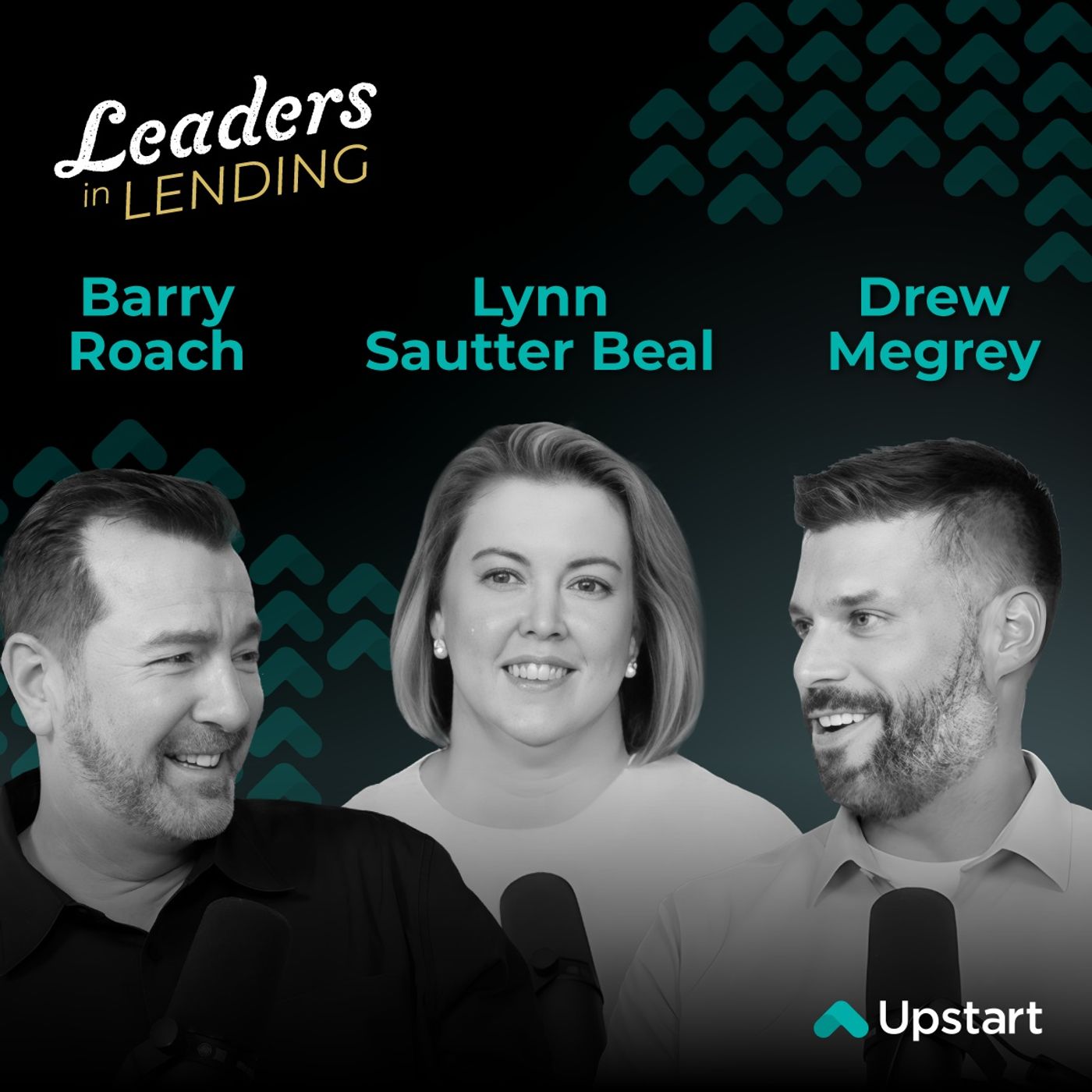


Credit unions are operating in a new lending environment defined by risk, regulation and rapid innovation. In this episode of Leaders in Lending, hosts Barry Roach, Drew Megrey and Lynn Sautter Beal share how forward-thinking credit unions are adapting to win.
They explore how to build confidence in AI-driven models, balance compliance with growth, and strengthen governance through smarter data. The hosts also discuss why being too conservative on credit can cost market share, how approval experience matters more than rates and why data-driven models now outperform traditional underwriting.
From model oversight to regulatory readiness, this conversation gives credit union leaders practical strategies to stay competitive, confident and compliant in today’s lending landscape.
Don’t risk falling behind. Learn how to strengthen your governance, leverage smarter data, and prepare for the future of lending today.
0:00 Credit scores and credit reports are a record of what has happened. They are not a record of what will happen. You may not know exactly what the rules are. You may not know exactly what the rules will be. You do know that you should understand how models work. People want to know the answer right away if they don't want to wait ten minutes. Some days it's in some done frames just to then get declined, anything just to get to climb. Approval rates matter more than interest rate in today's work. I think I would say facts. Hi, Welcome to Leers and lending. Today. We're going to be talking about how credit unions can manage risk through smarter lending decisions and how that works within the regulatory environment that credit unions have. Talking to Drew and Linn today, managing lending risk has never been more complex we have.
0:49 If you think of the how lending regulations have evolved through the years. You know, TILA came out in like the seventies, and then you know we all the way to sort of Dodd Frank in twenty ten, and it just seems there's always more and more regulations that are coming up for credit unis and banks to have to deal with. So, how do we get regulators comfortable with partnering with FinTechs and those FinTechs specifically that we leveraging AI based underrating models thinking of the regulatory environment that we're dealing with today. Yeah, it's a good question, and I think it's a shifting regulatory environment on a day to day basis. I think all of us have certainly watched the changes with the various financial regulators this year than now some court challenges to the leadership and who's on the board and who's not on the board, and what the rules are.
1:44 So I would recommend for a credit union or really any lending institution, like just focus on the fundamentals. You may not know exactly what the rules are, You may not know exactly what the rules will be, but you do know that you should understand how models work. You should understand who owns which part. Of the decision. You should do your due diligence on any vendors that you partner with in a traditional way where you're looking at compliance risk, financial health, reputational risk, like even though those things are may not be explicitly called out anymore, like reputational risk as an example, that doesn't mean that you don't want.
2:26 To do that for your business. So think about from a core business standpoint, what do you care about? What do you think the key areas are that you should be able to both understand and document and then how can you up level your organization to really be confident in understanding and monitoring AI models? And I think that's a very big challenge. And I think similar to a lot of conversations we've had about different sized organizations, Like there's choices of partnering. There are many vendors, there are many consultants who. Help in this space today. So you may not be able to hire deep AI experts internally you don't need to, but can you find trusted partners that can help you do that evaluation and help and opportunities for your team to become to kind of deepen their subject matter expertise as it relates to.
3:14 AI and. New and more innovative ways of evaluating risk and lending. Yeah, and that's a good like having a good general high level knowledge base of all things AI. I mean, it's the topic at hand most often anymore, right, but digging even deeper. So if you are partnered with some type of institution that is driving AI and some metric. How can you get more knowledge base into your internal teams on this company, does X, Y, and Z we kind of understand the full rails of it. Maybe we don't understand all of it, but we have confidence in going into a regulatory exam or speaking to regulators of why we're comfortable with this approach and having that for every single vendor that you have that leverages AI, so you have the high level knowledge base and then you have all the double clicks and everything else you're using it for.
4:03 Right, So you don't have to be the expert thing. You just have to partner with experts in some respects. Yeah, well, I mean I think you have to have some level of expertise. But like if we go back to like thinking about how say phycostore example is created, could you, as a credit union executive, tell me how that number is calculating exactly? So I think think about it that way, like you know, putting an oversight of an AI lender, an AI vendor, or an AI model into your overall model risk management framework, Like how do you think about managing model risk? How do you think about evaluating. Model risk that does not mean that you need to be able to build, build, and recreate the entire thing, but you have to be able to articulate and understand it and are doing enough kind of due diligence on your partner to feel confident in their capabilities and their depth.
4:53 Yeah, and if you get the further digged in details, you're able to create risk assessments if XYZ and happen. If XYZ happened, we mitigate this way, and that just gives more comfort to regulators on why you're able to adopt those types of rights of partnerships. So shifting gears a little bit. How do you believe the credit unions are using data today to sort of balance unsecured versus secured lending? I would say from an organic perspective, if it's an existing member base that's coming through to get unsecured. The biggest thing from a data perspective today is the credit unions have a large source of data for that consumer. They have their in and outs via AH, they know their cash flows, they understand their spending habits. Just because DTI percent is X does not mean that they're an actual DTI percent of X, right, So they're able to leverage that from a decisioning basis. Then you think about all of that data and different rails that you can put it in. You're getting an output of pre approval or denial at a snap of a finger. So I think that's one real good aspect of comparing underwriting today compared to the prior.
5:59 Yeah, I'm true. If you have their main deposit account, their main transaction account, you can learn a lot about a person's behaviors or next like does it you know, are they buying it? Did they recently get married? Did they maybe open a joint account? Like can you did they move? And can you you know? Will they need potentially additional types of of lending to support that. So I think using that, using that data that they've had and have rich sources of, and using it to figure out how they're lending or engaging with those people. And even if they're not a depository or using a depository product, you can paint a picture from a credit report and you don't need an underwriter to sit there and look at the fifty different tradelight lines that were opened over the past twenty years to paint that picture.
6:43 You can tell that that borrower has never missed a payment, or maybe they'll miss a payment at month on book thirty six, but things start to level back out. You can kind of get sense of that. And what's nice now is with the use of AI and with automated fashions, you don't have to sit and read it. You can get an output again going back to kind of like the cash flows of their depository product to be able to paint that picture again on a snap up, because. It's just data. It's just there. It's just a bunch of data. And it's how you actually ingest that data into some sort of an AI system that will take data and turn into really live information. That's yes, were for you. You know, it's really good at this are the credit card companies right, absolutely, because and we're talking on secure lending, right, so they have a lens into purchasing behavior. They know that you booked a flight to Columbus, Ohio, and so they would expect, well, there should be a hotel charge in Columbus, Ohio, and restaurant charges and so on, and so instead of now I'm getting declined because I'm no longer and you know close to home. I'm two thousand miles from home. Credit card companies have sort of figured this out. I mean, is this something that is there an opportunity here for creditings?
7:50 Many creditings don't own their credit card balances anymore, but they do have partnerships where there should be some sort of sharing of that data. Sure, and at about years ago, when you, particularly if you traveled internationally, you had to notify your credit cards. Sometimes you still do. You had to go in and say here's where I'm going on these dates, or you risk your credit card not working when you got on vacation. And now that it happens organically because they're using the data to make those make those assumptions. Yeah, I do think that's interesting. I think particularly with me, and I don't want to don't want to segue too far into the open banking kind of quagmire that's happening today because there's a lot of competing conversations around it. But I think that's a good question of like who owns the data? So they may be partnering with a credit card vendor to extend that product to their members, but that is still their member.
8:43 They still hold the economic risk. And so because they hold that economic risk, what level of data do they have access to and how can they use that, particularly to make new offers. And I think that's I think is a lot of this open banking. Like the legal challenges play out too, I think we'll see more clarity und what they can do in the future. Do you think overall that data driven models outperform traditional linderwriting. Yes, being biased since we come from upstart, of course we use data driven models, but we're able to see and it's not just upstarted across the board is you have borrowers that under traditional underwriting guidelines probably wouldn't qualify for a credit union type of credit, right, whether that be a secured versus an unsecured type of asset. Whereas these types of models are able to separate risk much better than an underwriter sitting in front of a computer or some automated prequal type of logic that, Okay, maybe this six forty FICO borrower we would decline, but they're really transacting more of like a prime type of borrower.
9:44 But they're too new into the system take a chance on them, right, So I would be very biased in saying that, yes, they're better separators of risk. Yeah, And you think about and We've talked about this a lot at at our company. Of course, where credit scores and credit report sports are a record of what has happened, they are not a record. Of what will happen. And while you know, we'll put the disclaimer like historical results are in an. Indicator of a future, there certainly. Is that idea that that you know, if you've behaved a certain way, particularly if you behave really risky you could expect risky behavior. But like you're to the point you used, what if it's a person who is, you know, a new citizen in the US or a recent college student who maybe didn't have the benefit of their parents helping them build that credit profile and that credit score growing up, but they have a a good job and they're making money, and they are are most likely going to pay in the future. How do you use that data to lend to those borrowers where they may in traditional kind of rate rate based models may may not be lent to.
10:53 Another example of that, too, is going back to my previous kind of comment, is the credit report has this this whole slew of everything that this individual has transacted on. Maybe there was a life changing event that took them into that six point forty. But they've always been a super prime type of consumer. But something happened along along the way, and to your point, forward thinking, this borrower is probably going to transact that same way. But death, divorce, there's a bunch of different things that could bring you into a lower fight Coban, Yeah. And I think that trending data of like which direction are you trending? That can definitely be seen in the. Credit report data. Are your balances increasing, are they decreasing? Are the number of tradelines you have increasing decreasing? Is your mix improving of the types of tradelines? I think all of those things, not just like the snapshot of what your credit report looks like today, but what does it look like today compared to maybe two years ago.
11:46 You know, maybe you lost your job and during COVID or you you know, had a period of time you were underemployed. Does that mean you won't pay your bills next year? I think that's a very different. And another benefit of that is a standard underwriting models they cannot train underwriter sees what they're seeing, whereas models that are leveraging decisioning processes are able to train on subsets of data over and over and over again based on this credit report kind of mimics that credit report or this cash flow mix of that cash flow, So the output of risk and the output of approval odds is going to be much better. Yeah. I'm experienced enough in my career that I was making lending decisions as a lending officer. Now it was assisted by what was the information that was in our system and assisted by credit report, but inherently I probably had some bias as I was making decisions, right, And if you think of an AI underwriting model, it's intentionally supposed to reduce some of that bias programmatically within the algorithms, correct.
12:48 Yeah, I mean you would you assuming that you're testing for that bias. And I think that's an important thing. And you know, we talked a little bit earlier about getting comfortable with ai A lending models and fareness is a key component, and that's those are great questions to ask your partner, your vendor. How are they testing for it? How are they validating that? Is there any independent testing of of fair lending within their model? You know, what sort of demographic data do they have access to? If so? And how are they using it, and then as they're making changes to that model, they're adding in new data, new data sources. How are what does their model change management process look like? Their fair lending testing component look like?
13:32 To get comfortable that they are choosing. A model that you know, are there least. Discriminatory alternatives that they could pursue that have the same output? And I think knowing enough to ask those sorts of questions are are the key parts even if you can't kind of rebuild the model yourself from. Scratch, and in most oftentimes it's more approval odds with less bias. Great. How do you think credit unions can prepare for their regulatory examination and all make the specific to those that are maybe partnering with FinTechs who may be using AI or machine learning for the render any models. Yeah, I can start night. I honestly would be interested.
14:13 Drew in your perspective too as a farmer credit union CEO and very that you know the way you thought about this as a CEO. Of a credit union. But I think ultimately is have a plan. Right, like know how you want to do diligence, how you want to think about what your use cases like, what what do I want to solve? What am I looking for this vendor to help me do? Is it an end to end of all one product? Is it multiple products? Is it a very limited scope? And uh? And doing an RFP and asking those questions and making sure that you're documenting that that diligence process and doing a real risk based assessment of the value, not just get Really it's really easy to get excited about AI and it's shiny, and you know, there's so many things that you can you can solve, and everyone's getting a mandate top down, but doing your diligence, building that partnership, finding a partner that you really can build a business relationship with, not just a transactional vendor relationship. I think that to me is the first thing is document that.
15:15 So when your field examiner comes in, they say, we know you have a new partnership with X, y Z. Tell us how it's going, and you can lay out your work. You can kind of show your work. These are the things that we did to get comfortable working with this vendor and have a plan for oversight. What does that look like annually? What does that look like periodically? And it should be risk based, how much. You know, if you're doing a very small bit of business, it's you know, a couple percent of your balance sheet with a particular vendor, you don't need to build a whole organization around it. If it's something that's going to be twenty five percent, you need a much more robust oversight. So I think your oversight should be scale with both the size of the of the fintech vendor you're working with, but also with the size of your organization and the importance of that product placement within your organization.
16:06 I'm just going to be transparent. So a majority of the credit unions a little over ninety percent or Campbe's one or Campbell's two rating, that's that's a great rating. If you're three to four are about to become insolvent, you probably have other things to be talking to your field executions exactly. You shouldn't even be having those conversations. And everything that you've built from a diligence perspective preparing for an exam is already doing very well, or else you wouldn't be a Campbell's one or a Cameos two. Your lending strategy is built, your deposit strategy is built. Everything on the back end that you're monitoring all of that with to make sure that it is in line with regulatory guidance is probably there in some aspect, and you probably have the risk assessments in place to be able to rinse and repeat here right now. If you're starting to bring in AI types of partnerships or usage of AI, whether it be in your branch or in your call centers or things of that nature, you need to do the build of what you've already built for lending and for does it build risk assessments, become knowledgeable that I was talking about earlier, and or be very confident in talking about it and why it's beneficial for your institution, because if you know, I mean, we've all gone through exams with maybe not the NCUA, but if you don't know what you're talking about, there's a red flag there and they're going to double click and double click and double click. And since you are already so ingrained on your your lending and your deposit strategy and all the risk that is associated with that, they're going to start double clicking into this use of AI. And if you're not confident, not confident in your delivery of your knowledge base, then it's going to create issue. So you have to build the knowledge base, build procedures, policies,
17:40 and then monitor on the back end and then recurring what reoccurring basis. Confidence in your governance is a very underrated character. Yes, yep. And knowing that it's your governance, I think that's an important thing. Someone else that you as the credit union to ultimately have that responsibility. You are the frontline to your regulators. You're the front line to your examiner and talk to them in a else if you are thinking about a partnership in a certain area, they're there to they will work with you, so you have you know, I know there's been a lot of retirements and turnovers, so I think that those like maybe kind of extended relationships with those specific examiners have been broken in a lot of cases. But you definitely reach out to them in advance of a partnership and talk to them about what you're doing. And that definitely a surprise when they come in the door is not a good idea.
18:28 One hundred percent agree, And don't be afraid to challenge your examiner with within respect, with right reason, within reason, but just because the examiner thinks it should be this way doesn't mean that it has to be that way. If you're able to give them a good reasoning as to why you think that this is the way that we're doing it is sufficient enough, maybe that will create an aha moment and then other exams. Okay, I remember talking to x y Z from Credit Union one, two three. They had a really good perspective. I'm going to go with that type of approach next time I'm in the field right and be. Open to the regulator or the examiners opinion on games right. You may not agree with it, but at least be open and try and see it from their perspective. I've been on the other side with institutions where we just dug our heels in and said no, no, no, the way you're saying it is, that's not the way. This is the way that never turns out very well. It certainly didn't for us, and as it was a good learning.
19:20 Moment that could put you into Camels three or four. So then well, you know, hopefully not. But yes, I mean, I guess that's that's under the management waiting. Yes, absolutely, yeah, for sure. Some additional drs that you don't want. If today's episode gave you some new ideas around lending and risk, please take a second to rate us on Spotify or Apple or wherever you get your podcasts. It will help more creditings find our show. Okay, it's time for fact and fiction. We're going to break down your opinions about managing risk and deciding whether we're on board or not. You ready ready? Being conservative on credit risk is costing credit unions market share factor fiction. Fact with all capitals. You think about balance sheets with with credit union that have tightened and maybe they started their tightening journey post the GFC. Maybe some started tightening during COVID and kind of have kept that trend right, It just depends on where in the timeframe they decided to tighten, and as a result they are now not seeing much of a return and their margins are very very thin. So you think about large and even mid sized credit unions that took on this slew of lending during COVID at very reduced rates, they're starting to see some even pressures on margin as it relates to kind of the inverse now where they're paying high on apy for certificates of deposit and savings accounts. That their cost of funds has arisen, and their cost of funds is still super high, and those margins because they've tightened their credits so much, it doesn't allow for them to get those aprs that they would have originated for maybe a
20:50 six hundred type of Fyco borrow or so on and so forth. And then even the risk segment, maybe they're more focused on collateralized types of loans now compared to either card or unsecured or even if they're seeing a growth in unsecured lending, terms and tightening probably are a little bit different than they were five ten years. Yeah, do you think? And I would kind of add, I think the. Risk aversion is good to a point, but it's the risk reward trade off, Like you know, you could you take a little bit more risk even and even accept slightly higher losses versus like zero losses, but make a lot more money at the end of the day and grow your member base and figuring out that balance is key.
21:34 Yeah, and you have to be able to if you diversify in that sense and take on I don't know, fifty basis points of more risk across any type of basset that's going to have an increase to my margin of why and if it makes sense when you're you know, validating the CECIL methodology calculation and correlation to interest income, then it might make sense to be more diverse and more risk type of loans and get your margins or your spreads back to something that's more desirable good. Uh. Data driven lending is only as strong as the models behind it. Factor fiction definitely, definitely fact. I think anybody, you know, it's kind of like that. What's the uh lies lies and statistics or it's betraying the quote damn lies and statistics. But but I think anybody can take data and can misinterpret it, misuse it, uh, well in in with good intention, right, It doesn't mean that they're doing it with some some bad intention. But I think how you use that data and what data you need? Like it doesn't you don't have to use every data point available. What are the things that are actually meaningful to use in making and how do you use those in making that decision?
22:45 Uh? And so I think from that perspective, like you really need a very strong, a very strong model that can use that data in a powerful way because there's also a cost to compute, so it does cost money to run models, and it costs money to to hire high quality vendors, and I think those things are are worth it. But I think that the model itself is the key importance. And even a very strong model can make very great predictive results with smaller sets of data than a weaker model could do with even larger amounts of data. Good point. I agree. Fact, going back to a prior point, you know, models are trainable. People are trainable, but not with that many data points. And as things shift, just because we have fifteen hundred variables that gives you an output doesn't mean that six aren't important right now, and then you know six others will be important two years from now as things evolve. So one hundred percent fact.
23:39 And that's what training does. Yeah, kind of identifies. Maybe some variables drop off and some get better. Yeah. I mean the more time you have and the more data you have, I think the more precise you can get in terms of a predictability of your model. Ye, approval rates matter more than interest rate in today's market. I think I would say fact if we said approval experience versus maybe rates like not everyone, so I would say not everyone has to have a kind of an instant approval, but a quicker decision and a quicker time to kind of the end result. Whether Hey, tell me if I'm getting a loan or not, and if I'm getting alan, I want to get it quickly and with as little friction as possible. If you're not going to lend me money or for whether it's a personal loan, a helock, a car, tell me that right up front and tell me what I think. Yeah, I don't want to jump through hoops to get.
24:35 To that final decision. So I think you know that's reflected in the approval rates, But I would almost say like instant decision rates matter more than the rate itself. That people will do things like consumer behavior. It's one of the big increases in drivers Originally in personal loans was things that folks may go to a helock or a refi for to do things like replace the roof, or replace a data bathroom or replace their HVAC. You can take a personal loan. Is the rate higher? Yes? Is the speed at which you get access to that money also much lower with a lot less hoops to jump through. Absolutely, I would say fact as well to your point, people want to know the answer right away. They don't want to wait ten minutes, ten days, it's in some timeframes.
25:20 Just to then get declined anywhere, just to get declimbed. And then, I mean, rate does matter to a sense to most consumers, right, But again we've talked about this in prior podcasts. They care more about their payment and they care about they need the money right right away. So I would say approval odds is more important than rate, but make sure you're pricing right. If you're pricing correctly, then those approval ods are going to be even greater. Right. Thanks for watching this episode of Leaders in Lending. We'll see you next time.

